BTC $81,520.02 -0.48%
ETH $2,432.59 -0.68%
BNB $720.14 -1.35%
XRP $1.30 -2.27%
SOL $104.59 -1.27%
TRX $0.3355 +0.03%
DOGE $0.0801 -2.37%
ADA $0.2228 -3.22%
BCH $274.64 -2.81%
LINK $12.20 -3.01%
HYPE $79.64 -1.85%
AAVE $155.19 -3.75%
SUI $0.9994 -3.96%
XLM $0.1791 -2.31%
ZEC $1,176.68 -3.92%
AAPL $343.30 +0.16%
AMZN $250.09 -2.03%
GOOGL $340.53 -2.71%
MSFT $528.91 -2.22%
META $708.69 -4.10%
NVDA $214.93 -1.40%
TSLA $353.67 -6.68%
SNDK $1,299.85 -5.03%
INTC $89.82 -4.99%
SPCX $145.84 -3.91%
MU $882.88 -3.63%
AMD $532.09 -4.00%
BTC $81,520.02 -0.48%
ETH $2,432.59 -0.68%
BNB $720.14 -1.35%
XRP $1.30 -2.27%
SOL $104.59 -1.27%
TRX $0.3355 +0.03%
DOGE $0.0801 -2.37%
ADA $0.2228 -3.22%
BCH $274.64 -2.81%
LINK $12.20 -3.01%
HYPE $79.64 -1.85%
AAVE $155.19 -3.75%
SUI $0.9994 -3.96%
XLM $0.1791 -2.31%
ZEC $1,176.68 -3.92%
AAPL $343.30 +0.16%
AMZN $250.09 -2.03%
GOOGL $340.53 -2.71%
MSFT $528.91 -2.22%
META $708.69 -4.10%
NVDA $214.93 -1.40%
TSLA $353.67 -6.68%
SNDK $1,299.85 -5.03%
INTC $89.82 -4.99%
SPCX $145.84 -3.91%
MU $882.88 -3.63%
AMD $532.09 -4.00%

electricity

All
Article
Flash

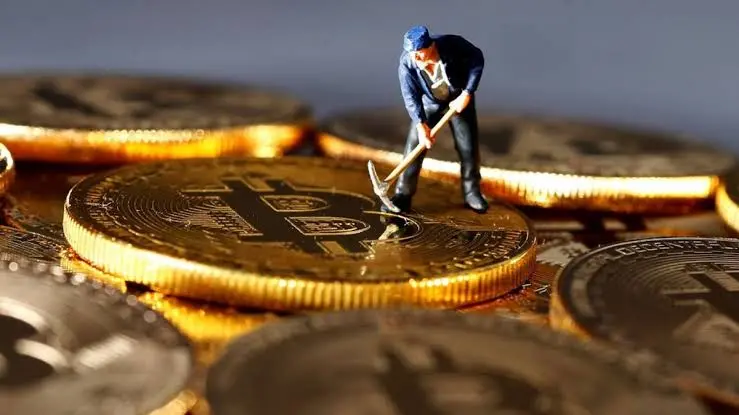
Vitalik compared the mining costs of BTC and the inference costs of AI: the former has electricity costs accounting for nearly half, while the latter relies more on capital expenditures for computing power

Ethereum co-founder Vitalik Buterin shared that the cost of Bitcoin mining is roughly half derived from capital expenditures on computing power equipment and the other half from electricity consumption; in contrast, the cost of AI inference is almost entirely dominated by capital expenditures on computing power. This difference reflects the distinct cost structures of the two computing businesses. Bitcoin miners need to continuously pay for electricity and determine their profit margins based on mining machine efficiency, coin prices, and network difficulty changes; AI inference, on the other hand, relies more on investments in expensive hardware like GPUs, as well as equipment utilization and computing efficiency.The industrial boundaries of both are also changing. As the demand for AI computing power grows, some Bitcoin mining companies are beginning to shift their existing electricity resources and data center facilities towards AI and high-performance computing businesses, hoping to transition from pure mining to computing infrastructure services. Some mining companies are leveraging previously allocated electricity capacity for mining to enter the AI data center market. However, transformation does not mean that cost pressures disappear: mining operations are more directly exposed to fluctuations in electricity prices and Bitcoin prices, while AI computing businesses must bear risks related to GPU procurement, depreciation, and underutilization. Both types of businesses compete for electricity and computing resources, but ultimately, profitability depends on how these resources are converted into revenue.

first_img Doubao adds life payment services, allowing users to initiate payments for water, electricity, and gas

According to the WeChat public account "Du Jia," ByteDance's AI assistant Doubao has added a utility payment feature. Users can initiate payment instructions for water, electricity, gas, and other services through voice or text in the Doubao app, with other life service scenarios also in development. Sources close to Doubao told "Du Jia" that Doubao is gradually building capabilities for handling tasks in life scenarios, including travel services and utility payments."Du Jia" claims to have tested that after issuing commands for paying electricity and water bills in the dialogue box, corresponding service cards pop up and redirect to the utility payment page. The interface is divided into electricity, water, and gas fees, with some regions showing that services are not yet available, while some cities have fully or partially opened them. The relevant framework has been established, and city coverage and service provider integration are still in progress, with actual payments requiring further permission to be granted.Currently, the dialogue only serves to invoke services; steps such as binding account numbers, confirmation, and payment will still be retained, and users will not be charged directly with a single command. Alibaba's Tongyi Qianwen integrated utility payments earlier and can complete payments within the dialogue; Doubao at this stage redirects to handle tasks after invoking the card, and capabilities like food delivery have not yet been launched. The above content comes from "Du Jia" reports and tests, not an official announcement from Doubao.

Vans attributed the data center protests to power shortages, stating that electricity in the United States should be cheap enough not to require metering

U.S. Vice President JD Vance stated at the All-In Summit that U.S. AI data centers are facing increasing opposition, largely because the power supply has not kept up. Residents see data centers being built continuously while their electricity bills are rising, which naturally leads to backlash. He believes the solution is not to build fewer data centers but to increase power generation capacity accordingly.Vance mentioned that the U.S. has not built enough power facilities in the past generation, and in the future, it should pursue a state where "electricity is so cheap that it doesn't need to be metered." He also compared this to China, arguing that the slow growth of power generation in the U.S. in recent years has already affected the development of new industries like AI. "So cheap that it doesn't need to be metered" is an old slogan from the history of U.S. nuclear energy. In 1954, Lewis Strauss, the chairman of the U.S. Atomic Energy Commission, used it to describe the era of cheap electricity brought by atomic energy.The IEA estimates that data centers will contribute to about half of the new electricity demand in the U.S. by 2025; the U.S. Congress is also advancing legislation this week to try to prevent the costs of expanding data centers from being passed on to ordinary households.

first_img Maharashtra, the richest state in India, plans to tokenize its electricity assets for financing

The wealthiest state in India, Maharashtra, is formulating policies to tokenize state government assets (including power transmission infrastructure), with the funds raised to be used for constructing new transmission lines and energy storage facilities. The Chief Minister's Chief Economic Advisor and CEO of the Maharashtra Transformation Institute (MITRA), Praveen Pardeshi, introduced this plan at an invitation-only event called "The Box Launch," hosted by the real estate tokenization company RealX and MST Blockchain at the Mumbai World Trade Center.Pardeshi stated that transmission lines could be partially tokenized, for example, 40% to 50%, allowing investors holding tokens to receive a portion of the revenue from Maharashtra Transco. The new funds generated from token sales could be used to build more transmission lines and solar energy storage centers. He pointed out that the state currently has a significant surplus of solar power but lacks the grid capacity to deliver it to where it is needed; distribution companies must pay high prices of 16 to 18 rupees per unit during peak hours, while the price during surplus periods on the power exchange is only 2 paise per unit.He also illustrated the practice of real estate tokenization with the example of the Mumbai Express Towers commercial building tokenized under a REIT structure, emphasizing that tokenization does not equate to privatization but rather allows more citizens to participate in the development activities of public asset creation. Additionally, the state is drafting the Maharashtra Digital and Land Token Asset Trading Act (DELTA Act), which, if passed, will make it the first state in India to legislate for blockchain-based property tokenization.

hot_img BNEF: U.S. data centers may account for 20% of electricity consumption by 2035, Bitcoin mining companies are accelerating the shift to AI computing power

Bloomberg New Energy Finance (BNEF) latest forecast shows that by 2035, electricity consumption by data centers in the United States will account for about 20% of the nation's total electricity consumption, a significant increase from the current level of about 5.9%. The agency has raised its forecast for data center electricity demand in 2035 to 106 GW, which is 36% higher than the 78 GW predicted in April this year. Currently, the operating capacity of data centers in the U.S. is about 40 GW, accounting for approximately 3.5%-4% of the national electricity demand, while under BNEF's baseline scenario, this proportion is expected to reach 8.6% by 2035. The high-growth model from the Electric Power Research Institute (EPRI) indicates that if the combined effects of cryptocurrency mining and AI computing power are taken into account, the upper limit of this proportion also points to 20%.In response to the explosive growth in AI computing power demand, Bitcoin mining companies are actively transforming. Companies like Core Scientific and Riot Platforms have partnered with tech giants such as AWS and Google to convert their existing mining sites into AI data centers. Currently, Bitcoin mining companies have secured about 6 GW of electricity capacity, which is expected to expand to 12 GW by 2027, with some analysts estimating that about 20% of mining companies' computing power capacity will shift towards AI workloads by then. Data from the Electric Reliability Council of Texas (ERCOT) shows that data centers now account for about 90% of local large load applications, with many sites originally used for cryptocurrency mining being repurposed as AI computing facilities. This trend is also directly reflected in the capital markets, as Core Scientific has seen a significant rebound in its stock price after emerging from bankruptcy and partnering with AI cloud service provider CoreWeave.
app_icon
ChainCatcher Building the Web3 world with innovations.