Scan to download
BTC $78,955.37 -2.26%
ETH $2,223.01 -1.81%
BNB $661.65 -2.49%
XRP $1.42 -3.28%
SOL $88.71 -2.82%
TRX $0.3510 -0.76%
DOGE $0.1116 -2.43%
ADA $0.2590 -3.45%
BCH $426.86 -1.80%
LINK $9.99 -3.48%
HYPE $42.69 -7.78%
AAVE $91.47 -6.22%
SUI $1.08 -6.92%
XLM $0.1533 -4.25%
ZEC $504.84 -7.04%
BTC $78,955.37 -2.26%
ETH $2,223.01 -1.81%
BNB $661.65 -2.49%
XRP $1.42 -3.28%
SOL $88.71 -2.82%
TRX $0.3510 -0.76%
DOGE $0.1116 -2.43%
ADA $0.2590 -3.45%
BCH $426.86 -1.80%
LINK $9.99 -3.48%
HYPE $42.69 -7.78%
AAVE $91.47 -6.22%
SUI $1.08 -6.92%
XLM $0.1533 -4.25%
ZEC $504.84 -7.04%

negotiation

The bipartisan negotiations on the "CLARITY Act" have not reached an agreement, and the Democrats still have differences regarding the BRCA provisions

According to crypto journalist Eleanor Terrett, sources say that a bipartisan group of minority senators in the U.S. Senate held discussions last night regarding the CLARITY Act, attempting to push the Democrats to make concessions on at least two outstanding issues, but ultimately failed to reach an agreement.Senator Cynthia Lummis stated that both sides had reached consensus on "99% of the content" of the bill and expressed hope that the Democrats would continue to address the remaining issues after the bill passes committee review; otherwise, if a similar incident to FTX occurs in the future, "they can only blame themselves."Reports indicate that Democratic Senators Adam Schiff and Ruben Gallego have been pushing for a compromise on the ethical standards and conflict of interest clauses involving the president's family before the committee review, making it one of the conditions for supporting the bill.Additionally, some Democratic lawmakers have raised concerns about provisions related to the Blockchain Regulatory Certainty Act (BRCA). This provision aims to prohibit lawsuits against non-custodial software developers based on money transfer laws.Sources say that both sides have made substantial progress on ethical and conflict of interest issues, but disagreements over amendments to the BRCA ultimately led to the breakdown of negotiations. The market currently widely expects that this committee review will show clear partisanship.

Kuaishou plans to spin off Keling AI and raise $2 billion at a valuation of $20 billion, with Tencent participating in the negotiations

According to an exclusive report by LatePost, Kuaishou plans to spin off its video generation large model business "Keling AI" and initiate a $2 billion financing round with an estimated valuation of about $20 billion. They are currently in talks with investors such as Tencent, and the deal has not yet been completed. Based on the current market value, Keling's valuation is already close to 70% of Kuaishou's overall market value.The report states that Keling's current annual recurring revenue (ARR) has reached $500 million, doubling since before the Spring Festival, significantly exceeding Kuaishou's previous expectations. At the beginning of 2025, Kuaishou set an annual revenue target of $60 million for Keling, but the final annual revenue reached $150 million. In the face of increased competition from giants like ByteDance and Alibaba in the video generation field, Kuaishou has established an independent option pool and special incentive mechanisms for Keling.It is reported that if the future IPO valuation reaches $40 billion, team incentives will be further enhanced. Currently, Keling has become one of the fastest-growing products in the global video generation field. By early 2026, it ranked first in the iOS drawing and design charts in nearly 40 countries and regions, including Brazil, Russia, and Singapore, and became one of the highest-grossing graphic design applications in South Korea and Russia.

DeepSeek's financing negotiations with Alibaba have broken down, with ecological binding and control rights differences becoming the focal point

DeepSeek's financing negotiations with Alibaba have broken down. DeepSeek launched a massive financing round, attracting major companies like Tencent and Alibaba to participate, but the two sides ultimately failed to reach an agreement. The core conflict lies in Alibaba's desire to strengthen its AI ecosystem through investment, while DeepSeek, as an independent model company, insists on minimizing binding terms and maintaining technological independence, unwilling to accept excessive ecosystem ties.DeepSeek founder Liang Wenfeng has long rejected external equity financing. Although this time he has opened the door for the first time, his bottom line remains unchanged, with the most emphasis on offers with "the least additional conditions." DeepSeek's current financing round is valued at approximately 300 billion RMB (about 45 billion USD), with the fundraising focus on supplementing computing power and R&D funds, while also providing a market valuation anchor for employees to retain talent. Tencent had proposed to subscribe for up to 20% of the shares, but this was politely declined by DeepSeek as they did not want to relinquish a large proportion of control. Ultimately, the China National Investment Fund and others may lead the investment, with relatively loose terms that align more closely with DeepSeek's technological idealism.

Charles Schwab opens BTC/ETH spot trading to 39 million customers, Alcoa enters deep negotiations with NYDIG regarding the sale of its New York smelting plant

According to BBX data, the bidirectional penetration of traditional financial institutions and industrial infrastructure into the crypto space has accelerated over the weekend, with the following core dynamics:The Charles Schwab Corporation (NYSE: $SCHW) officially launched the Schwab Crypto platform in phases on April 17, opening direct trading of Bitcoin and Ethereum spot to 39 million active brokerage account customers through its Charles Schwab Premier Bank, SSB, with compliance custody and trade execution provided by Paxos, and a fee of 75 basis points per transaction; initially excluding New York and Louisiana. The company recorded earnings per share of $1.43 and revenue of $6.48 billion in Q1 2026, with total customer assets of approximately $12.22 trillion as of early 2026.Alcoa Corporation (NYSE: $AA) CEO Bill Oplinger confirmed in a Bloomberg interview on April 17 that the company is in deep negotiations with Bitcoin financial services company NYDIG regarding the sale of the Massena East smelter site in New York (1,300 acres, closed since 2014), which "should be completed by mid-year." The site is adjacent to the St. Lawrence River and can access hydroelectric resources provided by the New York Power Authority; NYDIG has been operating Bitcoin mining facilities there since 2024 and will gain full control of the infrastructure after the acquisition. The financial terms of the transaction have not been disclosed.

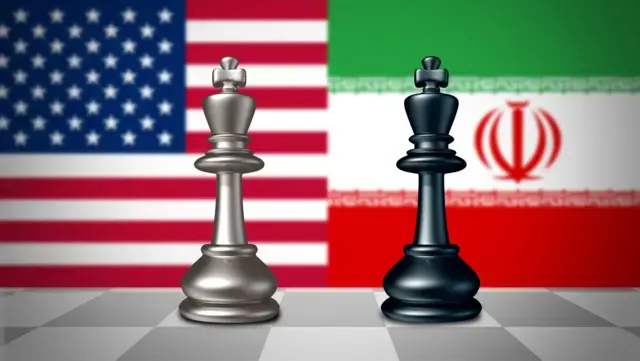
Next week's macro outlook: Focus on US-Iran negotiations and changes in the Federal Reserve personnel, with the Middle East situation repeatedly disturbing the market

According to Jinshi reports, global markets significantly rebounded over the past week driven by expectations of easing tensions in the Middle East, but core uncertainties remain unresolved. Iran once announced the opening of the Strait of Hormuz, leading to a rapid decline in oil prices, a broad strengthening of risk assets, U.S. stocks reaching new highs, a weakening dollar, and gold approaching the $4900 mark. However, Iran subsequently signaled that it "is still under military control," combined with the U.S. maintaining sanctions against Iran, which has heightened market concerns about the volatility of the situation.On the macro level, the biggest variable next week will still be the progress of U.S.-Iran negotiations. U.S. President Trump stated that negotiations may advance over the weekend and warned that if an agreement is not reached by next Wednesday, the ceasefire could end, and there is a risk of renewed conflict; meanwhile, Iran's attitude towards negotiations remains cautious, especially with significant differences on key issues such as uranium enrichment. The market has currently shifted from "pricing in conflict escalation" to "pricing in a path to easing," but any sudden changes could still trigger sharp asset fluctuations.In terms of interest rate expectations, the decline in energy prices has alleviated inflationary pressures, and the market's expectations for a rate cut by the Federal Reserve this year have risen to about 60%. At the same time, Federal Reserve Chair nominee Kevin Warsh will attend a Senate hearing next week, and his policy stance (especially whether it leans dovish) will become an important variable affecting gold and risk assets.On Tuesday at 20:30, U.S. March retail sales month-on-month;On Thursday at 20:30, U.S. initial jobless claims for the week ending April 18;On Thursday at 21:45, U.S. April S&P Global Manufacturing/Services PMI preliminary;On Friday at 22:00, U.S. April University of Michigan Consumer Sentiment Index final value, one-year inflation expectations final value;In the short term, the market's main focus will revolve around three major variables: progress in U.S.-Iran negotiations, oil price trends, and signals from the Federal Reserve.

J.P. Morgan: Negotiations on the CLARITY Act have entered the final stage, with disputes narrowed down to 2-3 core issues

JPMorgan analysts have stated that negotiations for the U.S. "Cryptocurrency Market Structure Act" (i.e., the CLARITY Act) have entered the final stages, with both sides reaching compromises on a few remaining contentious points. The number of disputes has been reduced from over a dozen to 2-3 core issues, with discussions on stablecoin rewards being "in a good place." While banks express concerns about stablecoins offering similar yields to deposits, there is an overall bipartisan compromise trend. JPMorgan believes that "there is no perfect bill," and once passed, the bill will provide important regulatory clarity for the integration of digital assets into the U.S. financial system.The "Cryptocurrency Market Structure Act" is currently in advanced negotiations in the U.S. Senate, with Senate staff stating that the draft is "very close" to resolution, but the final text has not yet been released, nor has a formal vote been scheduled. The remaining major disagreements focus on stablecoin rewards, DeFi regulation, and token classification issues. Although optimism is rising, there is still a risk of delays due to the 2026 midterm elections, which could lead to a more uncertain political environment. If the bill is ultimately passed, it will delineate the regulatory authority between the SEC and CFTC, providing a long-term regulatory framework for stablecoins, DeFi, and the entire cryptocurrency industry.
app_icon
ChainCatcher Building the Web3 world with innovations.