BTC $69,272.25 -6.02%
ETH $1,959.06 -4.46%
BNB $637.57 -6.01%
XRP $1.01 -2.91%
SOL $79.11 -4.71%
TRX $0.3142 -0.88%
DOGE $0.0641 -4.51%
ADA $0.1685 -2.66%
BCH $218.62 -4.66%
LINK $9.76 -3.39%
HYPE $71.86 -0.28%
AAVE $111.34 -6.36%
SUI $0.7804 -4.60%
XLM $0.1429 -2.38%
ZEC $929.53 -5.64%
AAPL $357.10 +0.32%
AMZN $268.20 +0.75%
GOOGL $300.92 +2.02%
MSFT $522.51 +0.16%
META $625.52 -0.86%
NVDA $163.94 +1.90%
TSLA $398.70 +3.03%
SNDK $931.88 -2.80%
INTC $61.12 +0.49%
SPCX $140.71 +0.77%
MU $798.73 +0.84%
AMD $577.66 +2.23%
BTC $69,272.25 -6.02%
ETH $1,959.06 -4.46%
BNB $637.57 -6.01%
XRP $1.01 -2.91%
SOL $79.11 -4.71%
TRX $0.3142 -0.88%
DOGE $0.0641 -4.51%
ADA $0.1685 -2.66%
BCH $218.62 -4.66%
LINK $9.76 -3.39%
HYPE $71.86 -0.28%
AAVE $111.34 -6.36%
SUI $0.7804 -4.60%
XLM $0.1429 -2.38%
ZEC $929.53 -5.64%
AAPL $357.10 +0.32%
AMZN $268.20 +0.75%
GOOGL $300.92 +2.02%
MSFT $522.51 +0.16%
META $625.52 -0.86%
NVDA $163.94 +1.90%
TSLA $398.70 +3.03%
SNDK $931.88 -2.80%
INTC $61.12 +0.49%
SPCX $140.71 +0.77%
MU $798.73 +0.84%
AMD $577.66 +2.23%

basis

All
Article
Flash

Glassnode: Bitcoin has fallen below the cost basis for short-term holders, with stablecoin supply decreasing by 14.2 billion USD over 30 days

Glassnode posted on platform X that Bitcoin has fallen below the short-term holder cost price of $75,600, underperforming compared to U.S. stocks, and the funds that could drive its rise are continuously flowing out. Currently, about 35% of short-term holders are in profit, with sellers averaging small losses.In terms of capital, the total supply of stablecoins has decreased by $14.2 billion over the past 30 days, marking the fastest contraction since June 2022; the U.S. spot Bitcoin ETF has seen a net outflow of $1.6 billion over the past 20 trading days; excluding the impact of USDT falling below $1, the 30-day average premium on Coinbase has remained negative, with the discount being the deepest since February. On the macro front, the two-year U.S. Treasury yield is at 4.75%, which is 75 basis points higher than the current 4% rate of the Federal Reserve, indicating that the bond market expects further rate hikes, but it is far from the level of 244 basis points in June 2022.However, there are also positive signals, as the decline has cleared most of the long leverage near the price, with the largest concentration of liquidations located between $59,500 and $62,600; since the sell-off on November 5, buy orders within a 5% price range in the Binance and Coinbase spot order books have consistently outnumbered sell orders; wallets holding between 100 to 1,000 BTC and 1,000 to 10,000 BTC have started to accumulate over the past week.Glassnode stated that if it returns to $75,600, it will support the judgment of a trend reversal in August; if it continues to fall below $73,000, it may enter a longer period of consolidation; if it closes below the June low of $58,500, the trend reversal since August will be broken.

first_img Yield Basis launched the permissionless propAMM, prioritizing the deployment of the WETH pool

The automated market-making protocol Yield Basis, founded by Curve founder Michael Egorov, announced the launch of a permissionless propAMM, aiming to upgrade its liquidity mechanism on Curve. This design combines market perception pricing with dynamic fees, aiming to increase trading volume, reduce arbitrage losses, and improve liquidity provider returns. According to its simulations over the past 18 months, Yield Basis's WETH position is projected to grow at an annualized rate of 8.5% in ETH terms under the new design, compared to 3.6% under existing parameters.Officials stated that WETH liquidity providers do not need to take additional actions, as the new design will directly affect their respective liquidity pools. The small transaction fee for pulling the pool price back to the market price is 0.50%, and anyone can submit prices or deposit funds, with the relevant code being open source. The WETH pool will be deployed first, and Bitcoin-related liquidity pools will follow after the successful deployment of the WETH pool.According to the announcement, the liquidity pool will charge based on the profits earned by arbitrageurs from trades, retaining about two-thirds of the profits above the minimum fee. The new design features lower single transaction fees, with simulated trading volumes approaching three times the current levels, requiring donations of about one-quarter of the current amount. The Yield Basis DAO owns the strategy, and the Curve Emergency DAO can shut it down in emergencies, while the Curve liquidity pool contract itself remains unchanged. Curve DAO vote 1508 will connect the strategy to the WETH pool and set the reserved profit ratio, while Yield Basis vote 60 will set the LevAMM fee at 1.5% (currently 1.3%), with the donation rate being about 1.2% of the pool value per year (currently about 5%). The above simulations only include arbitrage exchanges and do not account for regular trading and liquidation.

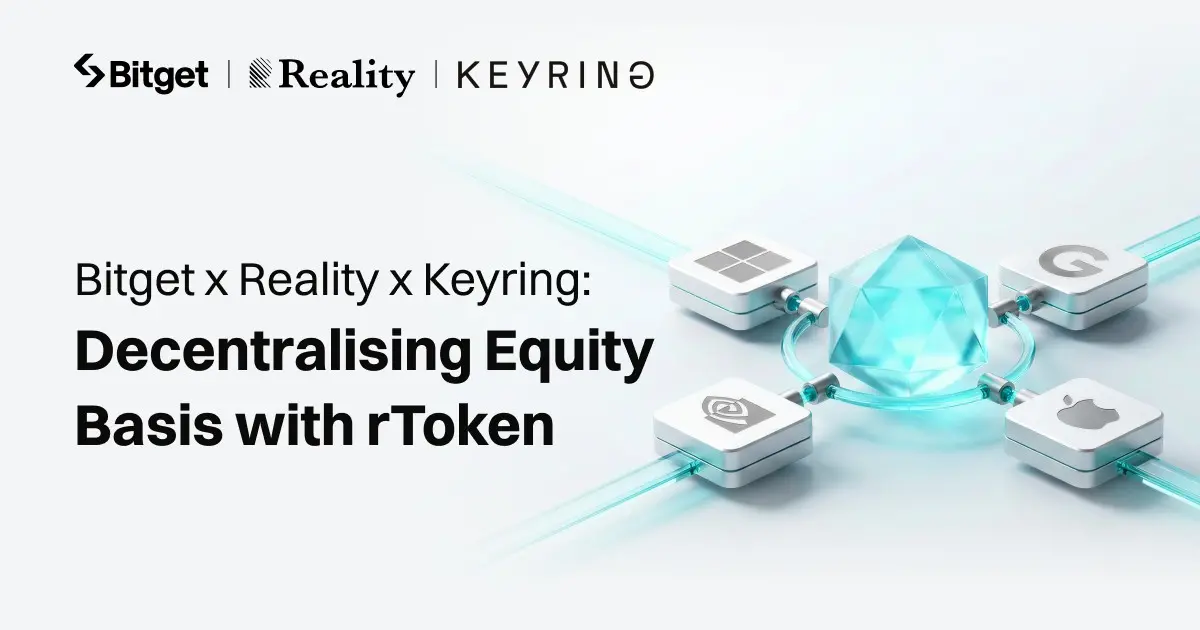
Bitget, in collaboration with Reality and Keyring, released a research report and plans to launch the first on-chain stock basis trading strategy

Bitget, in collaboration with Reality and Keyring, has released a research report exploring the synergy mechanisms of tokenized stocks, perpetual contracts, and decentralized lending, and evaluating the potential returns and risks of related strategies through simulation calculations. The report points out that the application of tokenized stocks is extending from traditional stock trading to more scenarios such as collateralized lending, asset management, and systematic investment strategies.The research is based on Reality's rToken, combined with stock perpetual contract hedging and on-chain lending mechanisms, to explore stock basis yield strategies. Historical simulation data shows that from December 15, 2025, to October 19, 2026, the annualized net return of the strategy index is approximately 7% and 4% for in-sample and out-of-sample, respectively, with a gross funding cost rate premium of about 11% to 14%. The report also notes that financing costs, transaction execution fees, market liquidity, and risk management are key factors affecting the actual returns of the strategy.It is reported that Bitget and Keyring plan to jointly develop a stock basis index and build an on-chain lending market based on Reality's rToken. Among them, Reality provides exposure to tokenized stock assets, while Keyring is responsible for developing the index methodology and constructing the related lending market. The index aims to capture funding rate and basis yield opportunities by combining rToken holdings with corresponding stock perpetual contract hedging positions, providing new strategic pathways for the application of tokenized stocks in on-chain financial scenarios.
app_icon
ChainCatcher Building the Web3 world with innovations.