BTC $68,762.42 -6.66%
ETH $1,926.03 -6.09%
BNB $633.61 -6.45%
XRP $1.00 -3.62%
SOL $78.56 -5.44%
TRX $0.3109 -1.96%
DOGE $0.0634 -5.52%
ADA $0.1678 -2.94%
BCH $216.62 -5.68%
LINK $9.69 -4.02%
HYPE $70.81 -1.95%
AAVE $110.32 -6.92%
SUI $0.7709 -5.79%
XLM $0.1419 -3.14%
ZEC $916.91 -6.74%
AAPL $357.16 +0.31%
AMZN $268.19 +0.72%
GOOGL $300.05 +1.56%
MSFT $521.07 -0.05%
META $625.20 -0.56%
NVDA $163.41 +1.31%
TSLA $398.07 +2.62%
SNDK $918.02 -4.13%
INTC $60.75 -0.05%
SPCX $140.22 +0.30%
MU $790.21 -0.16%
AMD $573.04 +1.72%

avo

All
Article
Flash

Crypto journalists say the midterm elections are unfavorable for crypto, with several pro-crypto lawmakers losing their seats

Crypto journalist Eleanor Terrett published an article summarizing the key results of the U.S. midterm elections, stating that the outcomes are generally unfavorable for the Republican Party and the crypto industry. She pointed out that despite over $64 million invested by the crypto industry, it was unable to prevent Sherrod Brown from returning to the Senate, where Brown may gain a leadership position on a committee with jurisdiction over crypto issues. Sherrod Brown previously served as the chairman of the Senate Banking Committee and holds significant influence over legislation and regulation of digital assets.Eleanor Terrett noted that Brown is cautious and even skeptical about crypto, emphasizing that consumer and investor protection should take priority. He advocates for enhanced information disclosure, segregation of customer assets, combating conflicts of interest, and anti-money laundering measures, opposing industry-led lax legislation. While he does not outright reject reforms on stablecoins and market structure, he insists that the regulatory framework must become stricter and not dilute the standards of traditional financial markets.Additionally, pro-crypto representatives Bryan Steil, Zach Nunn, and Ann Wagner were defeated, and Mike Lawler has conceded to Cait Conley, although the Associated Press has yet to make a final determination on New York's 17th congressional district. Kirsten Gillibrand, chair of the Democratic Senatorial Campaign Committee, helped the Democrats secure a Senate majority that exceeded expectations. After the Republican Party lost control of the Senate, Tim Scott is expected to transition from chairman of the Banking Committee to minority leader; the outcome in French Hill's district has not yet been determined, but it appears he may narrowly win and is expected to become minority leader, with the chairmanship taken over by Maxine Waters. Pete Ricketts won in Nebraska, and Andy Barr secured the vacant Senate seat in Kentucky, succeeding Mitch McConnell and potentially competing for a position on the Banking Committee.

first_img CoinEx founder Yang Haipo: The theft at Binance exposed three issues that could have been avoided, including the incomplete isolation of its development and operation environment

ViaBTC mining pool and CoinEx trading platform founder and CEO Yang Haipo posted on X, commenting on the Binance security incident. He stated that the incident exposed at least three avoidable mistakes, which do not require complex technology; what is lacking is discipline.Yang Haipo pointed out that first, the development and operation environments were not completely isolated. Personnel with production environment permissions should use dedicated devices and not install third-party software; coding, chatting, and web browsing should be done on another device. Second, the operation and maintenance system lacked effective dual verification. A single key could operate production services, and once the key was leaked, attackers could gain full production access. He believes that production operations could be conducted in a manner similar to AWS browser-based Session Manager, using hardware security keys as a second factor to prevent a single credential leak from constituting a breach. Third, MPC multi-signature is merely nominal; the signers did not perform substantial independent verification of the transactions. Compromising one node could render the entire mechanism ineffective, resulting in the same effect as a single signature. Multi-signature is only effective when the signers do not trust each other, independently verify the transaction itself, rather than trusting upstream requests.On November 3, Binance released preliminary investigation results regarding the security incident on October 29. Binance stated that approximately $6.34 billion in digital assets were affected, and as of the update, about $2.85 billion had been frozen or intercepted, with 98% of the affected tokens having been replenished. The report indicated that attackers gained unauthorized access to the internal wallet signature service and exploited Ethereum EIP-7702 to authorize the hot wallet; due to the hot wallet using multi-party computation, it could not immediately revoke the relevant authorization with a single private key. Binance cited information from the FBI stating that North Korea is responsible for this incident.
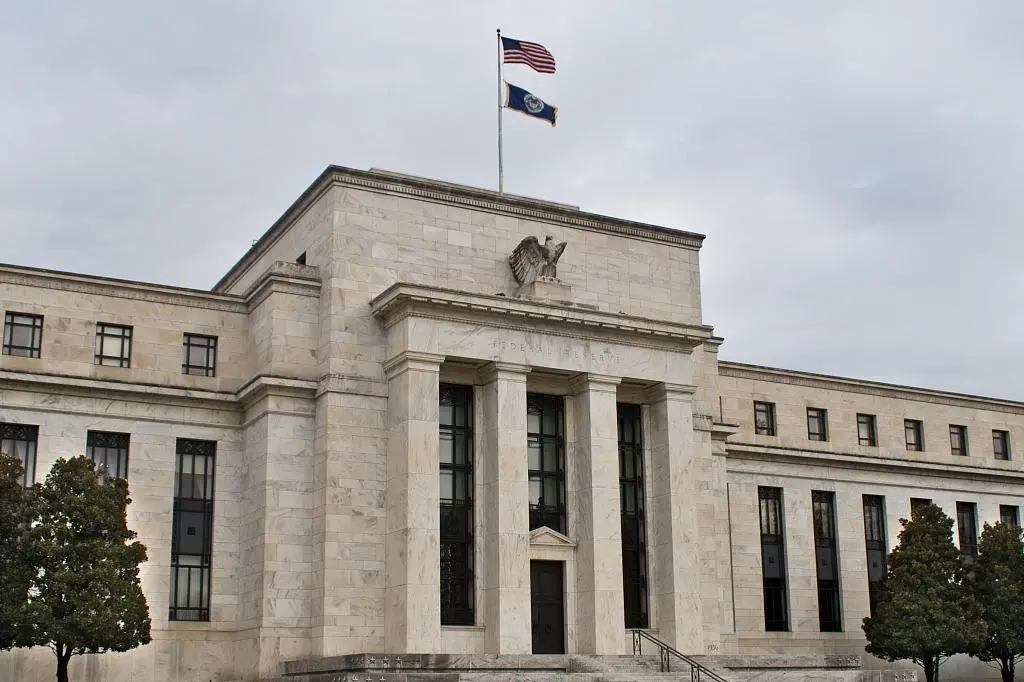
The three major political action committees in the U.S. cryptocurrency industry spent approximately $170 million to influence the midterm elections, with funding clearly favoring the Republican Party

According to CoinDesk, as the U.S. midterm elections on November 3 approach, the three major political action committees (PACs) in the cryptocurrency industry have collectively invested about $170 million to support congressional candidates, with the overall funding flow clearly favoring the Republican Party, despite recent polls and prediction markets indicating that the Democratic Party is more likely to expand its influence in Congress.Among them, Fairshake, supported by Coinbase, a16z, and Ripple Labs, has invested about $154 million and retained approximately $56 million for the next round of elections. The Digital Freedom Fund, backed by the Winklevoss brothers, has invested over $8 million this month, focusing on preventing Democratic candidates in Ohio, Texas, and Iowa from winning Senate seats. The Fellowship Fund, closely related to Cantor Fitzgerald and Tether, primarily supports Republican candidates while providing a total of $600,000 to three incumbent Democratic lawmakers.Reports indicate that Fairshake has invested nearly $56 million to prevent former Democratic Senator Sherrod Brown from returning to the Senate and has invested nearly $11 million to support Nebraska Republican Senator Pete Ricketts.Currently, the prediction market Kalshi gives the Democratic Party about a 70% chance of controlling both the House and Senate simultaneously. Even if the Republican candidates supported by the cryptocurrency industry win, significant legislation regarding the future structure of the cryptocurrency market and taxation will still need to seek Democratic support to overcome the procedural threshold of 60 votes typically required in the Senate.

The cryptocurrency industry has invested over 200 million dollars to prepare for the midterm elections in 2026, aiming to promote favorable regulatory rules

According to a report by CNBC, data from Public Citizen shows that crypto-related organizations have donated over $200 million in this round of the U.S. election cycle, attempting to influence the 2026 midterm elections and push Congress to pass regulations favorable to the industry. One of the current priority goals for the industry is to promote comprehensive digital asset market structure legislation after the Clarity Act was stalled.Fairshake and its affiliated super PAC are supporting 33 House candidates, including 19 Republicans and 14 Democrats. Coinbase and Ripple each donated $25 million to Fairshake's midterm election efforts in 2025. The Ohio Senate election is a key battleground.Fairshake stated that this election cycle has spent $55 million opposing long-time critic of the crypto industry, Democratic candidate Sherrod Brown, whose opponent is pro-crypto Republican incumbent Senator Jon Husted.The advocacy organization Stand With Crypto, initiated by Coinbase, has endorsed 45 candidates, including 42 House candidates and 3 Senate candidates. The Clarity Act was stalled in the Senate in September, with Democratic lawmakers arguing that it is insufficient to prevent government officials from profiting from crypto businesses.Reports indicate that if the bill cannot advance by the end of the year, the new Congress will need to restart market structure legislation. Coinbase Vice Chairman Ryan VanGrack stated that regardless of who is elected, the industry will still gain more regulatory clarity, but there remains uncertainty about whether legislation can ultimately be completed.

"Bitcoin Jesus" Roger Ver renounced his U.S. citizenship to avoid taxes, and ten years later was pursued for nearly 50 million dollars in expatriation taxes

According to Reuters, earlier this month, the U.S. Department of Justice announced a deferred prosecution agreement with "Bitcoin Jesus" Roger Ver, under which his fraud and tax evasion charges will be dismissed in exchange for a payment of up to $49.9 million in fines.Roger Ver, one of the earliest Bitcoin evangelists, bought a large amount of Bitcoin in 2011 for less than $3 million. In February 2014, to avoid high tax burdens, he acquired citizenship in the Caribbean nation of Saint Kitts and Nevis and renounced his U.S. citizenship the following month. At that time, he and his companies held at least 131,000 Bitcoins, valued at over $70 million based on the price at that time. He believed that by changing his nationality, he could put an end to the high tax burden in the U.S.However, the U.S.'s stringent "exit tax" completely thwarted his plans. According to U.S. tax law, eligible expatriates must treat their global assets as if they were "sold the day before expatriation" and pay capital gains tax. Although Ver reported and paid $1.03 million in taxes, he not only failed to report his personal holdings of Bitcoin but also severely undervalued his company's assets. Ten years later, the IRS confirmed his fraudulent tax evasion (which is not subject to the statute of limitations), ultimately forcing him to pay back up to $49.9 million in taxes, fines, and interest, which is 48 times the amount he reported paying in taxes that year.
app_icon
ChainCatcher Building the Web3 world with innovations.