BTC $83,527.58 -1.13%
ETH $2,688.23 +0.03%
BNB $763.52 -1.94%
XRP $1.50 -1.43%
SOL $118.84 -2.67%
TRX $0.3353 +0.63%
DOGE $0.0938 -3.33%
ADA $0.2470 -3.32%
BCH $310.20 -6.79%
LINK $15.46 +10.06%
HYPE $87.43 -4.63%
AAVE $149.22 -3.73%
SUI $1.15 -8.24%
XLM $0.2317 +7.19%
ZEC $1,483.65 -6.79%
AAPL $338.57 -0.38%
AMZN $246.56 -1.24%
GOOGL $342.65 -0.20%
MSFT $509.76 -1.30%
META $718.67 -4.11%
NVDA $229.60 +2.20%
TSLA $358.50 -3.92%
SNDK $1,713.77 -3.33%
INTC $116.12 -5.78%
SPCX $146.26 -2.13%
MU $1,056.24 -3.13%
AMD $611.04 -3.20%
BTC $83,527.58 -1.13%
ETH $2,688.23 +0.03%
BNB $763.52 -1.94%
XRP $1.50 -1.43%
SOL $118.84 -2.67%
TRX $0.3353 +0.63%
DOGE $0.0938 -3.33%
ADA $0.2470 -3.32%
BCH $310.20 -6.79%
LINK $15.46 +10.06%
HYPE $87.43 -4.63%
AAVE $149.22 -3.73%
SUI $1.15 -8.24%
XLM $0.2317 +7.19%
ZEC $1,483.65 -6.79%
AAPL $338.57 -0.38%
AMZN $246.56 -1.24%
GOOGL $342.65 -0.20%
MSFT $509.76 -1.30%
META $718.67 -4.11%
NVDA $229.60 +2.20%
TSLA $358.50 -3.92%
SNDK $1,713.77 -3.33%
INTC $116.12 -5.78%
SPCX $146.26 -2.13%
MU $1,056.24 -3.13%
AMD $611.04 -3.20%

roll

All
Article
Flash

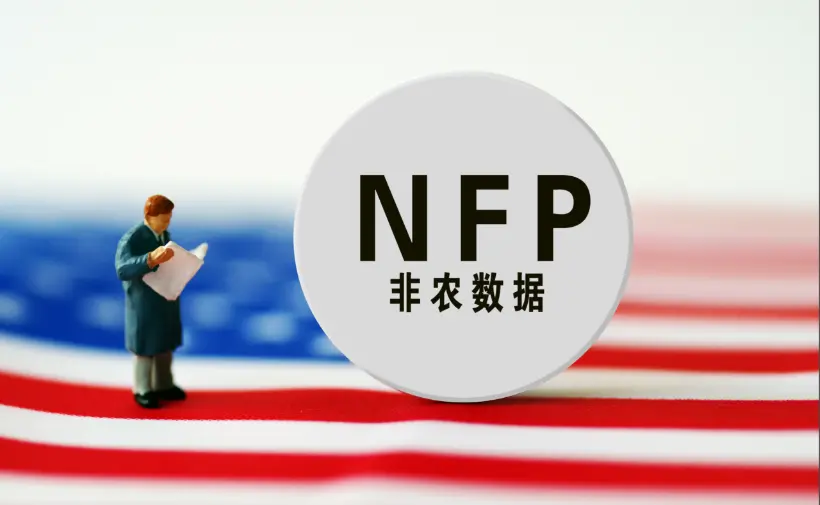
Next week, the U.S. non-farm payroll and core PCE will be announced, and Micron will release its earnings report after the market closes on Wednesday

Next week's macro data focus will be on Friday's U.S. non-farm payroll report, including non-farm employment population, unemployment rate, and average hourly wage, which are directly related to the Federal Reserve's interest rate path and are important employment data ahead of the October monetary policy meeting. According to Beijing time, on Wednesday at 20:15, the U.S. September ADP employment figures will be released, and at 20:30, the U.S. August core PCE price index year-on-year will be announced; on Thursday at 20:30, the number of initial jobless claims in the U.S. for the week ending September 26 will be released, and on Friday at 20:30, the U.S. September seasonally adjusted non-farm employment population and unemployment rate will be published.Regarding officials' speeches, on Thursday at 16:00, Bank of England Governor Bailey will speak, and at 21:30, European Central Bank President Lagarde will speak. Starting from early Wednesday, Federal Reserve officials will have a series of public activities; 2027 FOMC voting member and Chicago Fed President Goolsbee, along with 2028 FOMC voting member and St. Louis Fed President Bullard, will speak in succession, and FOMC permanent voting member and New York Fed President Williams will deliver a keynote speech at the University at Buffalo. On Thursday, Federal Reserve Governor Cook, Minneapolis Fed President Kashkari, and Richmond Fed President Barkin will speak in turn, and on Friday, Williams and Dallas Fed President Logan will still have public activities. In terms of U.S. stocks, Micron will release its earnings report after the market on Wednesday, and Nike will announce its latest quarterly earnings report on Thursday, with both companies corresponding to storage chips and consumer demand.

Meta rolled back Muse for phone call testing, with some calls completed by real people

According to internal information obtained by 404 Media and Reuters, after Meta expanded the Muse "Call for You" testing, it was revealed that some calls were actually completed by real people. Muse can transfer tasks to real contractors at call centers, who then make calls on behalf of users and fulfill requests. Some testers only realized there was human intervention after the call ended.Meta adopted this approach mainly to improve success rates. Internal testing showed that the success rate of phone tasks could reach 95% to 98% with human intervention, higher than pure AI. Some merchants hang up directly when they hear the other party is AI, and there are also testers in the community who reported that merchants hung up after Muse identified itself as an AI assistant.Human intervention raises privacy concerns, as users originally believed their information was only shared with AI, but it may actually be seen by outsourced personnel. Some people within Meta also questioned that providing privacy training to contractors does not equate to a real safety mechanism. A Meta official later admitted that failing to inform testers in advance about human intervention was a mistake, and this feature has been rolled back. Meta stated that the phone function is still in testing and will only be officially launched after ensuring safety, privacy, and clear communication.

The Rollup founder Andy: The U.S. SEC may introduce a tokenized securities innovation exemption

The Rollup founder Andy posted that market rumors suggest the U.S. Securities and Exchange Commission (SEC) is preparing to launch the largest tokenization innovation exemption policy to date, which may allow tokenized securities to be traded solely through registered transfer agents, without the need for broker-dealer licenses, and without adhering to traditional trading platform or ATS-related rules. It is also reported that this could cover U.S. retail investors and overseas investors.Andy stated that if the above news is true, its potential impact would be significant. Tokenized funds could be issued and traded directly in the form of on-chain tokens, with transfer agents maintaining legal ownership records on-chain, while the underlying assets held by the fund, such as stocks and bonds, could also be further tokenized, thus forming an on-chain trading system of "fund tokens + underlying asset tokens."Andy later mentioned that a large fund has already received the SEC's "green light," but this has not yet been officially confirmed. He speculated that ARK, Fidelity, or BlackRock could be potential participants. If the policy is ultimately implemented, U.S. asset management firms may accelerate the issuance of native equity tokens to compete for around-the-clock liquidity and on-chain distribution channels, rather than waiting for third parties to mirror tokenize traditional securities. He further linked this potential policy change to the recent push by the Trump administration for regulatory openness in the crypto market, as well as the CFTC's efforts to bring perpetual contracts to the U.S. market, believing that the U.S. regulatory environment may be gradually opening the policy floodgates for on-chain finance.

first_img Scroll plans to transform into an AI dedicated network, SCR will migrate to the Ethereum mainnet

Scroll Governance Forum posted that the team will recently apply AI extensively in operations and product development. Previously, core chain operations required over 20 engineers, but now it is completed by fewer dedicated engineers in conjunction with AI agents, while maintaining existing usability and security standards. The team believes that blockchain can provide a trusted coordination layer to define and execute rules, and ZK can help agents interact with credentials, private data, and computations without exposing underlying information.The team is building an interconnected product stack: Compass is an iOS application that can access the large models and functions provided by the Compass API, and includes VPN and eSIM; Compass API is the AI routing infrastructure, connecting over 30 large models; CENO provides a trust layer through ZK, protecting credentials, agent context, and privacy computations; USX is used for payments and settlements; SCR continues to coordinate governance; the Scroll network serves as a trust and coordination layer. CENO has reached out to over 30 potential clients, of which 12 are participating in proof of concept testing.The team plans to gradually transform Scroll from a general public chain into a dedicated network centered around Compass and the AI product stack, with an overall transition expected to take about nine months. According to the current plan, SCR will migrate to the Ethereum mainnet to maintain accessibility and liquidity, with supply and token economics remaining unchanged, and will continue to serve as a governance token. This post is only a progress update, not an official proposal or vote, and further proposals regarding the network transformation and matters requiring DAO approval will be made separately.

first_img Cronos rolled back the blockchain to recover 111 million USD in stolen funds

Cronos confirmed in a post-mortem report that the attack on the lending platform Tectonic on August 30 involved $120.4 million in borrowing activities. The validators made the "difficult decision" to roll back the on-chain history, successfully recovering approximately $111.2 million (about 92% of the affected funds), while about $9.19 million flowed out before the network was paused and could not be recovered. The attacker leveraged weak DEX liquidity to inflate the price of Tectonic token TONIC by about 100 times within minutes and borrowed $120.4 million through a single transaction across nine markets. The validators paused the network about two hours later, restoring the chain to the last block before the suspicious activity, with block production resuming approximately 11 hours after the attack. The rollback involved reversing 1 hour and 54 minutes of on-chain history, totaling 10,961 blocks, with all transactions within that window being canceled, regardless of whether they were involved in the attack. Cronos stated that the alternative would have been to restart the network without restoring the previous state, which would have left the stolen assets in the hands of the attacker. This rollback closely followed Harmony's announcement of a similar plan, while Flow abandoned its rollback proposal last December due to community opposition. The validator cap for Cronos is 100, which facilitated quick coordination for the pause and restart, but also indicated that the network's finality in emergencies depends on validator consensus.

first_img Hacken Report: Half of USDT is controlled by only two signing keys

Blockchain security company Hacken released an assessment report indicating that approximately half of the circulating USDT (about $91.3 billion on the Tron network) is controlled by a 2-of-3 multi-signature contract, which lacks built-in delays, cancellation processes, or reliable revocation mechanisms. Attackers only need to compromise two signature keys to change contract ownership, mint tokens, freeze addresses, clear frozen balances, or set transfer fees without accessing any user wallets. Hacken also discovered that Tether reuses the same set of six signature keys across three chains: Ethereum, Avalanche, and Celo, posing a risk of cross-chain spread.Meanwhile, stablecoin rating agency Bluechip upgraded Tether's company rating from D to C, citing that KPMG's audit showed Tether's reserves exceeded liabilities by $6.8 billion as of December 31, 2025. This is the first time Bluechip has adopted the expanded SMIDGE methodology, which incorporates Hacken's technical risk analysis. However, Hacken only gave USDT a cybersecurity score of 3.3 out of 10 and pointed out that the USDT smart contract does not have automatic reserve proof checks or a token minting cap. Once signers authorize a transaction, the contract can mint an unlimited number of tokens without a bank reserve proof.Hacken stated that it has not yet completed an equivalent assessment of Circle's USDC, and Bluechip's previous B+ rating for USDC was based on an old methodology, which cannot be directly used for technical comparison.

QCP Capital: BTC Enters Non-Farm Payroll Data Window

QCP Capital's market weekly report shows that after Federal Reserve Chairman Warsh's speech in Jackson Hole, the probability of a rate hike in September rose from 35% to 70%. BTC fell approximately 2.5% in a single day, and after nine consecutive days of net inflow, the ETF recorded a net outflow of $202 million. However, the dollar failed to maintain a hawkish pricing, with the DXY falling below 99.5, and gold, silver, and BTC all regained their losses.On the Treasury side, on September 9, the first long-end liquidity support operation will be launched, with the purchase limit raised to at least $4 billion (previously $2 billion). The yield on the 30-year Treasury bond auction on August 30 was reported at 5.216%, the highest since 2001, and the market will closely monitor whether this operation can effectively improve long-end liquidity.In terms of inflation, July PCE was reported at 3.7% (core 3.3%), CPI at 3.4% (core 2.5%), and Brent crude oil rose about 10% in a week due to attacks in the Strait of Hormuz and a force majeure event in Qatar LNG, with inflationary pressures continuing. Waller stated that if the data continues to trend as it has over the next two weeks, it would support a pause in rate hikes. Coupled with the ADP employment data showing only 38,000 jobs added (the weakest since January), the probability of a rate hike in September has fallen to 45-50%.
app_icon
ChainCatcher Building the Web3 world with innovations.