BTC $82,922.23 -0.73%
ETH $2,654.50 +0.12%
BNB $754.56 -2.46%
XRP $1.47 -2.25%
SOL $116.47 -3.31%
TRX $0.3345 +0.24%
DOGE $0.0918 -3.34%
ADA $0.2398 -5.34%
BCH $303.75 -6.83%
LINK $15.02 +7.14%
HYPE $86.01 -5.17%
AAVE $146.25 -3.26%
SUI $1.10 -11.82%
XLM $0.2230 +3.94%
ZEC $1,374.43 -12.82%
AAPL $338.00 -0.74%
AMZN $246.30 -0.98%
GOOGL $342.43 +0.17%
MSFT $508.75 -1.55%
META $716.44 -2.43%
NVDA $228.74 +1.99%
TSLA $357.24 -3.48%
SNDK $1,700.19 -2.09%
INTC $114.58 -4.30%
SPCX $145.82 -2.15%
MU $1,050.64 -1.57%
AMD $606.53 -2.27%
BTC $82,922.23 -0.73%
ETH $2,654.50 +0.12%
BNB $754.56 -2.46%
XRP $1.47 -2.25%
SOL $116.47 -3.31%
TRX $0.3345 +0.24%
DOGE $0.0918 -3.34%
ADA $0.2398 -5.34%
BCH $303.75 -6.83%
LINK $15.02 +7.14%
HYPE $86.01 -5.17%
AAVE $146.25 -3.26%
SUI $1.10 -11.82%
XLM $0.2230 +3.94%
ZEC $1,374.43 -12.82%
AAPL $338.00 -0.74%
AMZN $246.30 -0.98%
GOOGL $342.43 +0.17%
MSFT $508.75 -1.55%
META $716.44 -2.43%
NVDA $228.74 +1.99%
TSLA $357.24 -3.48%
SNDK $1,700.19 -2.09%
INTC $114.58 -4.30%
SPCX $145.82 -2.15%
MU $1,050.64 -1.57%
AMD $606.53 -2.27%

nato

All
Article
Flash

Tether released a dataset of 191.4 billion Token STEM, betting on the "explanatory ability" of local small models

The stablecoin giant Tether's Tether AI Research today released QVAC Genesis III, a synthetic training dataset aimed at the fields of science, technology, engineering, and mathematics, with a scale of 19.143 billion tokens, covering 159.6 million documents.It is reported that Tether hopes to enhance the reasoning and teaching capabilities of small AI models, allowing more AI assistants to run directly on laptops, mobile phones, and local servers, reducing the ongoing reliance on large cloud models.Genesis III continues the data lineage of Genesis I and Genesis II, covering 19 curriculum-related fields including biology, chemistry, physics, mathematics, computer science, medicine, electrical engineering, and machine learning, aimed at high school, university, and professional applications. Tether states that the dataset will focus on training models to explain problem-solving paths, identify erroneous reasoning, and provide corrections, rather than just outputting final answers.According to Tether's disclosed test results, a 1.7 billion parameter model trained with Genesis III option-level data achieved an effective answer rate of 99.45% in relevant benchmark tests. Compared to the Cosmopedia-v2 training model of similar token scale, Genesis III improved scores on the ARC-Easy, ARC-Challenge, and MMLU STEM benchmarks by 28.57, 21.35, and 15.03 percentage points, respectively.

U.S. Republican Senator John Curtis called for an investigation into Donald Trump Jr. and Hunter Biden, involving cryptocurrency business

U.S. Senator John Curtis from Utah, a Republican, wrote to Chuck Grassley, the Chairman of the U.S. Senate Judiciary Committee, and Dick Durbin, the Chief Minority Whip, calling for an investigation into whether Donald Trump Jr. and Hunter Biden exploited their presidential family connections for personal financial gain, and requested subpoenas for both individuals. Curtis pointed out that Donald Trump Jr. had accepted wedding gifts from Russian oligarch Umar Kremlev, actively promoted family-backed cryptocurrency ventures, and served as an advisor for a prediction market platform; the related companies are regulated by the Commodity Futures Trading Commission. Donald Trump stated that his son has returned the relevant funds to Umar Kremlev.Curtis also called for an investigation into Hunter Biden's substantial business dealings with foreign entities, as well as whether the two utilized their relationship with the president to create commercial value. He mentioned that Joe Biden pardoned Hunter Biden in December 2024, who had previously denied involving his father in business transactions. A week prior to this investigation call, Senate Republicans failed to garner enough Democratic support to advance the Digital Asset Market Clear Act. Some Democratic senators opposed the bill, citing reasons including Donald Trump's use of cryptocurrency ventures to gain benefits related to the presidency; Donald Trump disclosed that he earned $1.4 billion from digital asset-related businesses in 2025.

first_img U.S. Senators Discuss Requirement for AI Companies to Fulfill Duty of Care

According to a report by Reuters, U.S. Senate negotiators are discussing legislation that would require artificial intelligence companies to demonstrate that they are taking reasonable precautions to prevent their tools from causing harm. The proposal aims to grant the U.S. Secretary of Commerce the authority to require developers to provide proof of reasonable steps taken to prevent harm, referred to as "duty of care," and to authorize the dispatch of government auditors to test relevant products. Reuters was unable to immediately determine what constitutes "reasonable," and the related legislation is still under discussion.Even if Congress passes the measure, its prospects of becoming law still face significant resistance. U.S. President Donald Trump stated on Monday that existing authorities are sufficient to regulate and prosecute technology companies, suggesting that he would not sign a bill that sets new rules for artificial intelligence. Senate Majority Leader John Thune, Senate Commerce Committee Chairman Ted Cruz, and Democratic Senator Amy Klobuchar, who is involved in the negotiations, are discussing the proposal. Thune told reporters on Monday that Congress could set safeguards against more significant threats without compromising the U.S.'s leading position in the artificial intelligence race.Klobuchar stated in a statement that she is continuing to push for bipartisan legislation to oversee the greatest risks posed by artificial intelligence models, including requiring developers to work with government experts to validate and test models to ensure safety. Senior Democratic member of the Commerce Committee Maria Cantwell is also involved in the discussions. Reuters reported on Friday that negotiators are also discussing the possibility that if the government determines that certain artificial intelligence models are unsafe and wishes to prevent their release, it could be brought to federal court, where companies could challenge that decision. The portion of the measure involving federal courts would also prevent states from enforcing their own laws regarding specific risks associated with artificial intelligence models.

hot_img U.S. Senator demands that Waller disclose his conversations with Trump, questioning the transparency of the Federal Reserve

Nick Timiraos, the chief economic reporter for The Wall Street Journal and known as the "mouthpiece of the Federal Reserve," recently wrote that Federal Reserve Chairman Kevin Warsh is facing intense scrutiny from Congress. On Wednesday local time, four members of the Senate Banking Committee, led by Senator Chris Van Hollen, jointly sent a letter to Warsh, demanding that he publicly disclose all communication details with President Donald Trump.Earlier reports indicated that Warsh had maintained frequent phone contact with Trump since taking office, but the publicly available schedule from the Federal Reserve does not record any related calls during Warsh's early days in office. Lawmakers believe that this "selective transparency" could raise concerns about government interference in monetary policy.Kevin Hassett, the director of the White House Council of Economic Advisers, previously stated that Warsh has long engaged in economic discussions with Trump but claimed that Trump would not pressure the Federal Reserve. Trump later denied the related reports, stating that he had only had a brief conversation with Warsh a few days prior.Currently, the Federal Reserve has stated that it will continue to delay the disclosure of the chairman's schedule according to established rules. The market is watching to see if Warsh will provide additional information and whether this matter will affect public confidence in the independence of the Federal Reserve.

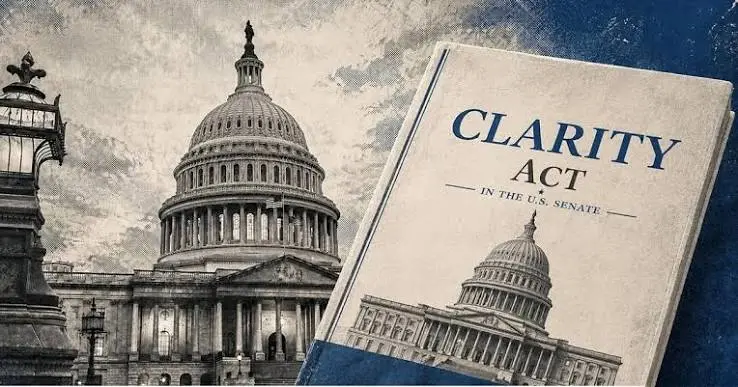
U.S. Senator Warren: Supports cryptocurrency regulatory legislation, but opposes the CLARITY Act

According to CoinDesk, U.S. Senator Elizabeth Warren stated that she supports pushing for cryptocurrency-related legislation but does not support the current CLARITY Act, believing that the bill fails to adequately address key issues such as corruption, consumer protection, national security, and economic risks.Warren pointed out that the crypto industry needs a clear regulatory framework, but the regulatory plan must ensure investor rights and the safety of the financial system. She believes that the CLARITY Act is lacking in preventing conflicts of interest, protecting consumers, and reducing potential systemic risks.The CLARITY Act aims to further clarify the division of regulatory responsibilities for the U.S. digital asset market, establishing a clearer legal framework for cryptocurrency asset trading, issuance, and market participants. Supporters believe that the bill helps enhance industry certainty and promote innovation.However, some Democratic lawmakers, including Warren, have previously expressed concerns about cryptocurrency regulatory legislation, arguing that some proposals could weaken the power of regulatory agencies and create regulatory arbitrage opportunities for large crypto companies.Warren has long taken a cautious stance on crypto assets, focusing on consumer protection, financial stability, and the risks of illegal activities in the crypto market. This statement indicates that U.S. cryptocurrency regulatory legislation still faces a struggle between the two parties and different interest groups.
app_icon
ChainCatcher Building the Web3 world with innovations.