BTC $83,150.14 -1.45%
ETH $2,667.90 -0.29%
BNB $760.20 -2.30%
XRP $1.48 -2.10%
SOL $117.40 -3.68%
TRX $0.3355 +0.65%
DOGE $0.0927 -3.72%
ADA $0.2428 -4.04%
BCH $306.91 -7.52%
LINK $15.04 +7.89%
HYPE $86.69 -5.08%
AAVE $145.83 -5.02%
SUI $1.13 -9.19%
XLM $0.2242 +4.31%
ZEC $1,459.64 -8.11%
AAPL $338.58 -0.39%
AMZN $246.31 -1.22%
GOOGL $342.62 -0.29%
MSFT $511.01 -1.12%
META $717.90 -4.01%
NVDA $229.40 +2.22%
TSLA $358.23 -3.92%
SNDK $1,713.50 -3.37%
INTC $116.10 -6.25%
SPCX $146.03 -2.24%
MU $1,054.78 -3.16%
AMD $609.16 -3.35%
BTC $83,150.14 -1.45%
ETH $2,667.90 -0.29%
BNB $760.20 -2.30%
XRP $1.48 -2.10%
SOL $117.40 -3.68%
TRX $0.3355 +0.65%
DOGE $0.0927 -3.72%
ADA $0.2428 -4.04%
BCH $306.91 -7.52%
LINK $15.04 +7.89%
HYPE $86.69 -5.08%
AAVE $145.83 -5.02%
SUI $1.13 -9.19%
XLM $0.2242 +4.31%
ZEC $1,459.64 -8.11%
AAPL $338.58 -0.39%
AMZN $246.31 -1.22%
GOOGL $342.62 -0.29%
MSFT $511.01 -1.12%
META $717.90 -4.01%
NVDA $229.40 +2.22%
TSLA $358.23 -3.92%
SNDK $1,713.50 -3.37%
INTC $116.10 -6.25%
SPCX $146.03 -2.24%
MU $1,054.78 -3.16%
AMD $609.16 -3.35%

clarity

All
Article
Flash

The U.S. Clarity Act legislative efforts have collapsed, and cryptocurrency regulation is at a standstill

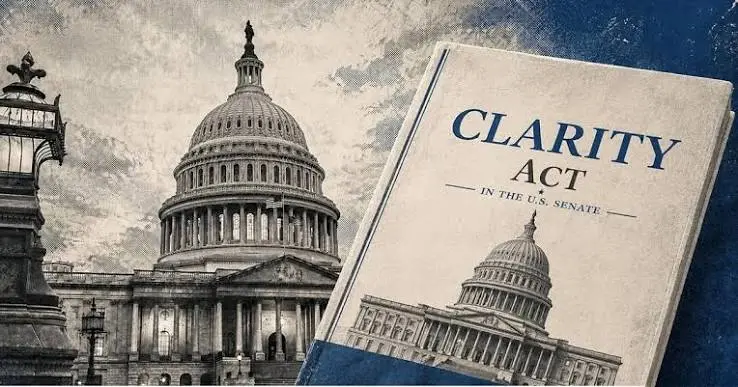
According to CoinDesk, the Clarity Act, aimed at establishing a clear regulatory framework for cryptocurrency in the United States, has been declared a failure after months of intense negotiations. The bill was originally intended to address the definition of digital assets at the federal level, but it failed to reach the final voting process due to fierce interest group conflicts.Multiple sources indicate that the core reason for the legislative collapse lies in complex jurisdictional conflicts and disputes over terms. The CFTC (Commodity Futures Trading Commission) and SEC (Securities and Exchange Commission) are in disagreement over the management rights of certain digital assets, while lawmakers also struggle to reach a consensus on how to define the legal attributes of NFTs, DeFi protocols, and stablecoins. Despite calls from organizations to eliminate market uncertainty through legislation, a key compromise proposal ultimately could not be reached.The Fintech Association and other industry organizations had previously lobbied actively in support of the bill, hoping to establish clear industry standards. With the failure of this legislation, traditional financial institutions on Wall Street and cryptocurrency projects will continue to face legal gray areas, and the industry's compliance process will thus be forced to delay.

first_img White House crypto advisor denies Trump's crypto interests hindered the Clarity Act

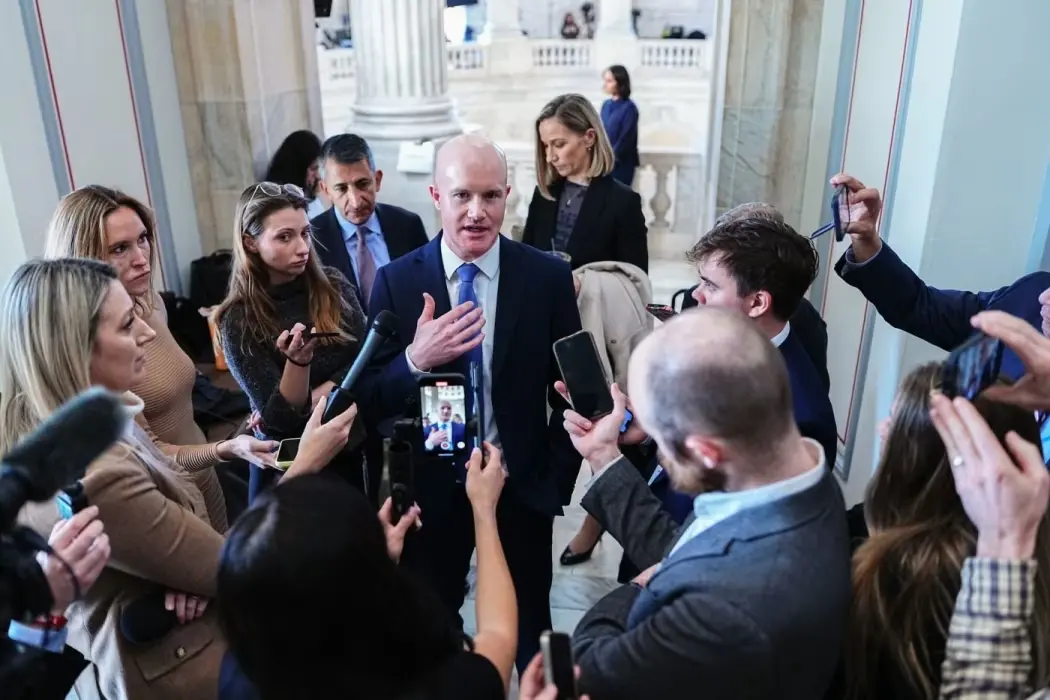
Patrick Witt, the Executive Director of the White House Digital Asset Advisory Committee, defended President Trump's cryptocurrency connections at the Financial Markets Quality conference held at Georgetown University on Wednesday, denying that his personal crypto interests led to the failure of the Clarity Act in the Senate last week. He stated that the Democrats have politicized the issue and questioned why the recently passed housing bill did not require strict government ethics review provisions. The negotiations for the Clarity Act have consistently failed to bypass ethical controversies, which target conflicts of interest in cryptocurrency held by senior government officials, with Trump being a primary target.Witt stated that Trump agreed to two unprecedented ethical provisions: in addition to ultimately being willing to accept rules mandating the divestment of crypto assets or placing them in a blind trust, the White House is also prepared to concede by allowing state attorneys general to sue him if the federal government fails to address ethical violations. He also mentioned that the accusation of Trump having a conflict of interest while controlling crypto assets and leading digital asset policy is "quite ironic," as several senators on the banking committee involved in the discussions hold and actively trade stocks of financial services companies they regulate.Witt's main responsibility is to push the Clarity Act into law, which faced setbacks in the Senate last week. He stated at the CoinDesk policy and regulatory event on Tuesday that the focus is not on the year-end lame duck session, but rather on the core work shifting towards federal regulatory agencies like the Securities and Exchange Commission. He also accused banking lobbyists of pushing to shelve the bill due to concerns that stablecoin rewards might compete with interest-bearing bank deposits, claiming that this opposition was initiated by large banks and spread to community banks.

Famous trader: Bitcoin has continuously digested interest rate hikes and the obstruction of the CLARITY Act, the market trend may have changed

Renowned trader Killa stated, "The 'Everything is Priced In' chart records the major catalytic events in each cycle of Bitcoin, as well as the price performance after these events occur." He believes that during bear markets, negative news typically drives BTC to continue falling, leading traders to gradually form the habit of "shorting on bad news"; however, when the high time frame trend reverses, the same news may only cause temporary panic, after which Bitcoin absorbs the selling pressure and continues to rise.Recently, the market has experienced the Federal Reserve's interest rate hikes, the voting expectations for the CLARITY Act, and the failure to advance the act. At one point, the market viewed these events as reasons for Bitcoin to decline further, but BTC only briefly fell below the range's low point, quickly rebounding and showing strong resilience. Even when narratives related to a "Third World War" intensified, Bitcoin began to respond relatively positively to panic factors in terms of price. He believes this performance is a significant distinction between bull and bear markets: in a bear market, bad news drives prices down, while in a bull market, bad news may prompt traders to capitulate, after which prices continue to rise.Killa noted that the important catalyst confirming the continuation of the last cycle was the approval of the spot Bitcoin ETF, while a similar catalyst for this cycle may be the CLARITY Act. Bitcoin's recent ability to digest multiple pieces of bad news is an important basis for his judgment that the trend has already changed.

first_img Michael Saylor: The best protection for digital assets is widespread adoption

Founder of Strategy Michael Saylor stated: The digital asset industry is better off with supportive rules from the SEC, CFTC, Treasury, and banking regulators than accepting the limitations in the final CLARITY compromise. The safest path is to create products that satisfy customers and deploy them widely, allowing people to have a stake in innovation. Ownership should be protected, honest disclosure required, and fraud punished, then let entrepreneurs compete and grow.Saylor mentioned that the September CLARITY compromise would have restricted covered providers to only paying customers for holding stablecoins while allowing qualified activity rewards, and directed the Treasury to limit certain rewards when a significant harmful deposit transfer to community banks was identified. The GENIUS Act has included restrictions on issuers paying interest and returns on stablecoins. The innovation sandbox of CLARITY would have limited participating companies to 25 employees, with each committee approving 20 projects per year. The SEC provided conditional relief for on-chain trading of certain tokenized stocks on September 17, and the CFTC chairman committed to using existing authority while the bill is stalled.He pointed out that useful products should be scaled by 2027 and 2028, transforming temporary relief into permanent rules. The goal is to have 50 million American voters using digital financial products that improve their lives. The best protection for digital innovation is the public that benefits from it.


Bernstein: The U.S. SEC and CFTC may accelerate the formulation of cryptocurrency regulations after being stalled by the CLARITY Act

According to Cointelegraph, Bernstein analysts stated that after the failure of the CLARITY Act to pass the Senate procedural vote, the U.S. Securities and Exchange Commission (SEC) and the Commodity Futures Trading Commission (CFTC) are expected to "actively and swiftly" advance the formulation of digital asset regulations to make up for the time spent on previous bill negotiations.Bernstein anticipates that the new regulations may cover token classifications for financing, protective measures for DeFi and self-custody protocol developers, exemptions for stock tokenization innovations, expedited approvals for perpetual contracts of real-world assets, and revisions to rules related to sports event contracts and their swap classifications. Relevant agencies may provide additional regulatory clarity for the industry through administrative rules.Analysts believe that the CLARITY Act could have reduced the risk of the regulatory framework being adjusted with changes in the political environment through legislation, but due to limited remaining legislative time and controversies over ethical provisions, the likelihood of the bill being voted on again is low.The SEC had previously proposed a new framework applicable to certain crypto asset investment contracts, intending to allow entities to issue tokens not exceeding $5 million within 4 years, or tokens not exceeding $75 million within 12 months, and set up safe harbor arrangements. SEC Chairman Paul Atkins had also stated that if Congress fails to pass the CLARITY Act, the agency has the ability to formulate digital asset rules on its own.
app_icon
ChainCatcher Building the Web3 world with innovations.