BTC $69,016.12 -6.35%
ETH $1,947.19 -5.11%
BNB $635.80 -6.18%
XRP $1.00 -3.80%
SOL $78.75 -5.37%
TRX $0.3116 -1.67%
DOGE $0.0638 -5.18%
ADA $0.1685 -2.64%
BCH $217.57 -5.34%
LINK $9.76 -3.65%
HYPE $71.23 -1.13%
AAVE $111.42 -6.30%
SUI $0.7772 -4.99%
XLM $0.1429 -2.38%
ZEC $934.85 -4.99%
AAPL $356.43 +0.10%
AMZN $268.00 +0.70%
GOOGL $300.10 +1.90%
MSFT $521.12 -0.11%
META $625.77 -0.38%
NVDA $164.00 +2.03%
TSLA $398.10 +2.86%
SNDK $927.24 -2.93%
INTC $60.73 +0.10%
SPCX $140.46 +0.75%
MU $794.00 +0.42%
AMD $574.09 +2.22%

eva

All
Article
Flash

first_img The United States sanctioned 8 Canadian currency exchange companies, accusing them of facilitating Iran's evasion of sanctions

The U.S. Department of the Treasury has imposed financial sanctions on eight Canadian currency service companies, stating that these companies have business dealings with sanctioned Iranian entities. The Treasury Department's statement indicated that the aforementioned companies facilitate the exchange of Iranian rials and other currencies and digital assets, enabling them to conduct international transactions. The related sanctions will isolate these companies from the U.S. dollar financial system.The U.S. Treasury stated that these businesses handle transactions for sanctioned Iranian digital asset exchanges and digital asset addresses associated with the Iranian Islamic Revolutionary Guard Corps. Treasury Secretary Scott Bessent stated that Canada cannot become a haven for illegal financial practitioners providing sanction evasion services to the Iranian regime and its proxies, and the Treasury will pursue and cut off financial channels for the Iranian regime globally. This action was coordinated with Canada's financial intelligence agency FINTRAC, as some sanctioned entities have attempted to evade scrutiny by changing their names and addresses.On the same day, the U.S. "Rewards for Justice" program offered a reward of up to $20 million and possible relocation arrangements for information regarding Iran's nuclear program, including its facilities, equipment, and personnel. The statement noted that Iran has not complied with the International Atomic Energy Agency's safeguards oversight, resulting in the agency losing "knowledge continuity" regarding Iran's production of enriched uranium and centrifuge components.

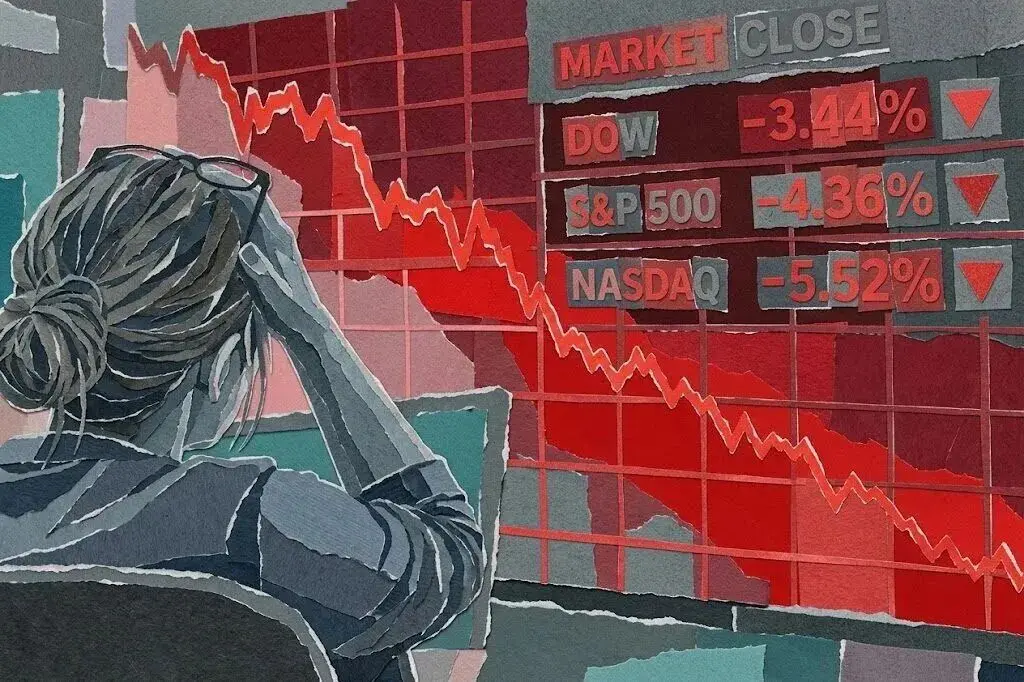
The seven sisters of the U.S. stock market evaporated about 1.04 trillion U.S. dollars in a single day, and the cloud giants experienced negative cash flow

After the U.S. midterm elections, concerns about tightening AI regulations and slowing data center construction have intensified, leading to a significant sell-off in U.S. tech stocks. On November 5, the "Seven Sisters" of U.S. stocks lost approximately $1.04 trillion in market value in a single day, with Nvidia dropping 9.26%, resulting in a loss of over $440 billion in market value, which is 2 to 4 times the decline of core clients like Microsoft, Google, and Amazon.The financial pressure on AI infrastructure investment is increasing. In the third quarter of this year, the combined operating cash flow of Microsoft, Google, Amazon, and Meta was no longer sufficient to cover fixed asset expenditures, with a funding gap of about $26.4 billion, whereas a year ago, the four companies still had a cash flow surplus of about $61.7 billion. Amazon's free cash flow turned from $14.8 billion in the past 12 months to a net outflow of $42.4 billion, while Meta's free cash flow turned negative for the first time in over a decade, and Google's long-term debt increased from about $20 billion to $125 billion.On Election Day, out of 41 local propositions related to data centers in 10 U.S. states, 40 of the voting results leaned towards restricting development, with 27 restrictive or oppositional propositions being passed. Research firm SemiAnalysis predicts that the impact of related policy changes on projects already underway by 2027 will be limited, but it may affect computing power expansion plans for 2028 and beyond. More than 90% of Nvidia's revenue comes from data center business; during the same period, Google Cloud's operating profit in the third quarter reached three times that of the same period last year, AWS's operating profit increased from $11.4 billion to $17.8 billion, and Microsoft Azure's revenue grew by 48%.

Analysis: The seven giants of the US stock market are trapped in a "the more you spend, the more you fall" paradox. This year, for every 1 dollar spent on AI, approximately 6.33 dollars in market value evaporates

The Macro Paper account published on platform X, stating that according to the data compiled by the company, the seven tech giants in the US stock market (Alphabet, Nvidia, Meta, Tesla, Amazon, Microsoft, Apple) have invested approximately 766 billion dollars this year, corresponding to a total market value evaporation of about 4.85 trillion dollars since the peak in 2026, which translates to approximately 6.33 dollars in market value evaporated for every 1 dollar invested.Breaking it down, Alphabet invested about 200 billion dollars, with a market value evaporation of approximately 1.62 trillion dollars; Nvidia invested about 7.4 billion dollars, with a market value evaporation of approximately 1.49 trillion dollars; Meta invested about 140 billion dollars, with a market value evaporation of approximately 501 billion dollars; Tesla invested about 20 billion dollars, with a market value evaporation of approximately 475 billion dollars; Amazon invested about 220 billion dollars, with a market value evaporation of approximately 378 billion dollars; Microsoft invested about 170 billion dollars, with a market value evaporation of approximately 197 billion dollars; Apple invested about 9 billion dollars, with a market value evaporation of approximately 194 billion dollars.Editor's note: The above investment criteria and market value drawdown starting point are as stated by the account, and independent third-party comparison criteria have not yet been disclosed.

After the release of Google's financial report, its market value evaporated by nearly 500 billion dollars, and analysts expect the stock price to maintain a range-bound fluctuation in the short term

According to CNBC, after the release of Alphabet's third-quarter financial report, the stock price fell more than 12% to $285, with a market value shrinking by nearly $500 billion. Despite Google Cloud's revenue growing 103% year-over-year, the market is still focused on earnings per share falling short of expectations and the negative free cash flow amid ongoing investments in AI infrastructure.Mike Khouw stated in a CNBC column that the fundamentals of Alphabet's core business remain intact, but a short-term rapid rebound faces two obstacles. First, multiple institutions have downgraded ratings, target prices, or future earnings forecasts. He pointed out that historically, stocks that have experienced concentrated downgrades tend to underperform the market or trade sideways in the following 30 days, and institutional rebalancing can also limit upward momentum. Second, the gap down after the earnings report further damaged the technical pattern.In terms of technical indicators, Alphabet's RSI has dropped to just over 20, and the MACD sell signal has strengthened. However, Khouw believes that with the stock price close to the 52-week low of $270.70, combined with an extremely oversold condition, further declines may be limited.In terms of trading strategy, Khouw suggested using a sell wide strangle options strategy to cope with the anticipated range-bound fluctuations. He believes that continued selling in the overall market poses the main downside risk, while unexpected positive news driving the stock price up rapidly could threaten the bullish call option selling side of the strategy.

first_img The AI agency evaluation platform Recall Foundation announced its liquidation and plans to destroy 358.6 million tokens

The board of the Recall Foundation, a decentralized AI agent evaluation platform, announced that it will orderly liquidate the Recall Foundation in the short term, a decision made independently of Recall Labs. RECALL was launched in October 2025.Data from RootData shows that Recall has raised approximately $42 million in total funding. The board believes that continuing to develop the protocol is commercially unfeasible, and the announcement states that this decision was not caused by a hacking incident or security event.The foundation intends to transfer all RECALL it holds or controls to a designated empty address for destruction, expected to be 358,562,442 tokens, accounting for approximately 35.86% of the total supply of 1 billion tokens. After the destruction, the expected total supply will be 641,437,558 tokens. Holders will not receive any distributions, redemptions, or monetary compensation. Staked RECALL is not included in the destruction scope, and holders must un-stake and withdraw it themselves. From the date of the announcement, new un-staking applications will no longer have a 30-day cooling-off period.As of October 30, the foundation holds approximately $3.7 million in assets, intended to pay creditors and vendors about $3.45 million, liquidation costs of about $200,000, and reserve about $50,000 for contingencies. The foundation plans to voluntarily liquidate under Cayman law. On that day, new competitions and staking rewards will cease, and by November 30, the official application will switch to read-only mode, with final liquidation and destruction of remaining tokens expected to be completed in the first quarter of 2027.
app_icon
ChainCatcher Building the Web3 world with innovations.