BTC $71,400.88 -4.04%
ETH $2,015.64 -2.92%
BNB $653.26 -4.72%
XRP $1.03 -2.33%
SOL $81.42 -4.09%
TRX $0.3154 -0.51%
DOGE $0.0658 -3.92%
ADA $0.1723 -2.69%
BCH $224.97 -2.81%
LINK $10.06 -3.55%
HYPE $71.36 -2.12%
AAVE $114.21 -7.09%
SUI $0.8017 -4.03%
XLM $0.1489 -0.25%
ZEC $953.13 -4.40%
AAPL $355.65 -0.04%
AMZN $267.77 +0.51%
GOOGL $298.74 +1.54%
MSFT $522.54 +0.32%
META $621.54 -1.89%
NVDA $164.65 -6.01%
TSLA $398.38 +2.09%
SNDK $937.36 -4.88%
INTC $61.50 -1.80%
SPCX $141.31 +0.46%
MU $797.45 -2.06%
AMD $582.54 +4.71%

agent

All
Article
Flash

The pass rate and cost of Alma by independent developer Yetone are better than Claude Code

The locally developed AI Agent Alma, led by independent developer Yetone, ranked third in the latest round of cross-evaluation initiated by the AI Agent infrastructure company Runta, both in task success rate and cost of success, outperforming tools like Claude Code and OpenCode. The current leaderboard snapshot shows that Alma has a task success rate of 72.7%, just behind Codex CLI at 77.9% and Pi at 72.8%, while Claude Code stands at 70.0%.Alma costs approximately $0.80 on average for each successfully completed task, compared to Claude Code's $0.94, making it about 16% cheaper. This FrontierHarness v1.1 comparison evaluates the performance of the same large model under different Agent execution frameworks, covering 21 sets of Harness configurations, 5 large models, and 62 tasks, with each task repeated 4 times, planning to run a total of 26,040 times, which is 72 times the scale of the previous version. All tools operate in a unified cloud environment, comparing task success rates, token costs, and execution speeds.Alma emphasizes local operation and long-term memory, capable of reading and modifying code, executing terminal commands, searching the web, and supporting Skills and MCP, while also allowing for switching underlying models. Recently, Alma integrated with Herdr, allowing programming Agents like Claude Code, Codex, and Pi to continue operating within Herdr, and enabling users to view execution processes, respond to questions, and approve operations in a centralized chat interface. Users can also remotely manage multiple Agents on their computers via iPhone. The evaluation is still ongoing, and rankings may change; the models being tested are limited to open-source models like GLM, DeepSeek, Kimi, and Muse, and do not cover closed-source models from the GPT and Claude series.

first_img Space and Time, supported by Microsoft, launched an enterprise platform that allows AI agents to verify private data

According to a report by Decrypt, the blockchain data project Space and Time, supported by Microsoft, announced the launch of the Space and Time Enterprise platform, which allows enterprises to use private data for AI tools without relinquishing the underlying records. The platform can prove that computations based on private data are correct, enabling AI applications, auditors, and other relevant parties to verify results without accessing the database itself.The first batch of partners includes on-chain asset management firm Maple Finance, Indonesian automotive manufacturer and distributor Indomobil, Oracle software consulting company Trenez, and The Data Foundation, a nonprofit organization focused on government data based in Washington, D.C.Nate Holiday, CEO of the original developer of Space and Time, MakeInfinite Labs, stated that enterprises want AI agents to utilize this information to execute workflows, but the agents do not need unrestricted access to the records behind every computation.He mentioned that granting unrestricted data access to AI tools would create new exposure channels. The company is collaborating with clients in construction, engineering, and manufacturing to enable agents, reporting tools, and compliance teams to work based on the same set of business records and verify the computations they rely on.The platform is based on Space and Time's patented technology, Proof of SQL, which is used to prove that database queries are computed correctly and is currently compatible with Google Cloud's BigQuery. Enterprises can run it on their own servers without needing to operate a blockchain, purchase dedicated hardware, or rely on external proof services.With GPU acceleration, supported queries on millions of rows of data can be completed in one second and generate proofs. This technology can only prove that computations are correctly executed on given records and cannot determine whether the records themselves are accurate. Space and Time completed a $20 million strategic financing round led by Microsoft's venture fund M12 in 2022, and Grayscale previously launched a trust product for the SXT token.

Perplexity launched AI colleagues Teammates, with an internal number reaching 20 times the number of employees

AI search company Perplexity officially launched Teammates, allowing AI Agents to be responsible for specific tasks long-term like employees. CEO Aravind Srinivas revealed that approximately 10,000 AI Teammates have been created internally in the last 30 days, which is 20 times the total number of human employees.Teammates are built on Perplexity Computer. After users assign roles, goals, and permissions to the AI, it can continuously track work progress, proactively identify issues, and call upon tools to address them. Multiple Teammates can also divide tasks among themselves and contact human colleagues via Slack. For example, a sales Agent can discover that a customer has not placed an order for a long time, automatically investigate the reasons, and prepare a follow-up plan; a development Agent can hand off the task of writing a fix code to another Agent after discovering a website bug. Each Agent has an independent working environment, retaining project memory and task history, allowing users to check progress, adjust direction, or take over operations at any time.Business Insider exposed Perplexity's internal Teammate tool in July this year, which was primarily used for software engineering tasks such as bug tracking and system monitoring. The product has now expanded to marketing, sales, customer service, and operations, adding long-term task management and cross-Agent collaboration. Teammates are currently available in research preview form to Max subscription users at $200 per month, initially supporting the web version, with native mobile and desktop versions to be launched later.
first_img VeChain CEO Sunny Lu: Blockchain is the perfect solution for AI agent trust

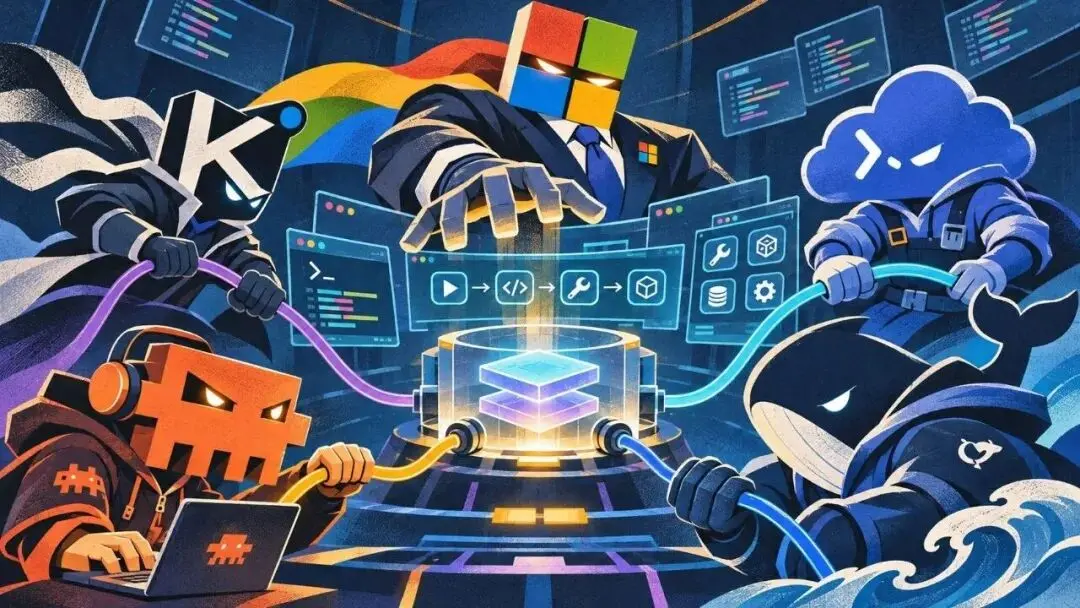
According to Cointelegraph, VeChain co-founder and CEO Sunny Lu recently stated in Cointelegraph's Chain Reaction program that autonomous AI agents operating around the clock require a "new accountability system" to establish public trust, and that "the perfect solution is blockchain."He made this statement while introducing the AI agent platform VeWorld.ai built on the VeChain blockchain. According to his vision, AI agents will have digital "passports" and operate within a "decentralized reputation system" that tracks the reputation of agents and their creators, while smart contracts can help settle transactions between agents or between agents and people. VeChain has previously advanced blockchain applications through supply chain tracking, including food traceability projects.Lu believes that AI agents can also help individuals convert their expertise into businesses or services, expanding software development opportunities to non-developer groups. He likened this opportunity to mobile app stores, which allow individual developers to distribute and monetize their creations, while agent-building tools can open this market to people beyond programming skills, including those with professional experience, local knowledge, or hobbies.He himself has undertaken several initiatives, including creating an educational agent for his daughter, an agent to support his mother's daily routine and rehabilitation, and a virtual employee to manage procurement, inventory, sales, and operations for a shop owned by an acquaintance in Milan.Meanwhile, other industry participants have pointed out the risks of relying on agent service providers. Animoca Brands Chairman Yat Siu stated in an October interview with Cointelegraph that while crypto traders can have AI agents work around the clock, he warned users that they might build trading strategies around services they cannot control.
app_icon
ChainCatcher Building the Web3 world with innovations.