BTC $62,713.13 -1.27%
ETH $1,870.35 -0.82%
BNB $604.15 -0.84%
XRP $1.00 -0.20%
SOL $75.31 -0.93%
TRX $0.3323 -0.48%
DOGE $0.0693 -0.88%
ADA $0.1790 -2.02%
BCH $203.11 -5.10%
LINK $8.82 +0.54%
HYPE $56.11 -2.40%
AAVE $85.70 -2.65%
SUI $0.6764 -1.84%
XLM $0.1597 -0.29%
ZEC $485.82 -0.65%
BTC $62,713.13 -1.27%
ETH $1,870.35 -0.82%
BNB $604.15 -0.84%
XRP $1.00 -0.20%
SOL $75.31 -0.93%
TRX $0.3323 -0.48%
DOGE $0.0693 -0.88%
ADA $0.1790 -2.02%
BCH $203.11 -5.10%
LINK $8.82 +0.54%
HYPE $56.11 -2.40%
AAVE $85.70 -2.65%
SUI $0.6764 -1.84%
XLM $0.1597 -0.29%
ZEC $485.82 -0.65%

shift

All
Article
Flash

hot_img SK Hynix: The competition in AI data centers is shifting from single chips to overall infrastructure architecture

SK Hynix stated in a recent article that the competition in AI is shifting from the performance of individual chips to the design and operation of the entire infrastructure architecture. The competitiveness of AI data centers no longer depends on individual components, but on whether the five key elements of computing, memory, storage, networking, and power cooling can be seamlessly integrated.The article points out that the continuous expansion of AI model scales has led to a surge in demand for computing power and data movement. Training requires repeatedly reading massive datasets, while inference relies on quickly retrieving user request information, both of which place higher demands on the system architecture of data centers. At the memory level, HBM, server DRAM, and others have formed a hierarchical system, each undertaking different bandwidth and capacity tasks. At the networking level, as large-scale training and inference rely on multi-server parallel processing, networking has become a key factor determining the scalability of data centers. System design is shifting from single-server to whole rack and cluster-level expansion.According to Omdia's forecast, the AI data center chip market will grow from $123 billion in 2024 to $207 billion in 2025, reaching $286 billion by 2030. SK Hynix also mentioned that Microsoft's Fairwater data center in Wisconsin is about the length of five football fields, indicating that infrastructure is being deployed on a larger scale. SK Hynix emphasizes that memory is becoming a key layer connecting computing and data.

Serenity: Still optimistic about the storage sector, market focus shifts back to the photonics field

Serenity posted that it remains bullish on the storage sector represented by Micron (MU) and Samsung, believing that the market often rotates between different supply bottlenecks. This week, stocks in the photonics sector, such as AXTI and LITE, have once again become the focus; compared to the decline in July, the main change is the stock price, followed by scattered narratives and business updates.He pointed out that the market was already aware during the July decline that COHR and LITE's laser products would be sold out for the next two years, and it had also learned about the demand imbalance from AAOI's last quarter earnings call. Aside from the changes in stock prices after liquidation, the fundamentals of the photonics sector have not deteriorated; the bottlenecks in optical transceivers and indium phosphide substrates remain unchanged and may even worsen.In terms of storage, Serenity stated that retail investors are showing signs of capitulation, but the same group had previously signed 16 SCAs with MU and had extremely bullish forecasts. He believes that the current operating profit to market value ratio of the storage business is "extremely unreasonable," and that next year's demand imbalance may be even more severe; the only thing that has changed for the same company is the valuation and narrative, while the market rotates between different sectors.

Berkshire's net stock purchases in Q2 were approximately $20 billion, ending a 14-quarter net selling period, shifting from waiting to action

Berkshire Hathaway today released its Q2 2026 financial report, with the most market attention focused on the cash reserves dropping to $36.551 billion in the second quarter, down from about $39.74 billion in the first quarter. This marks the end of Berkshire's 14 consecutive quarters of net selling, turning into a significant net buying for the first time since the fourth quarter of 2022.In the financial report, Berkshire's net stock purchases in the second quarter were nearly $20 billion, including about $10 billion in a private placement from Google's parent company Alphabet to support investments such as its AI data centers. Approximately $6.8 billion was spent to acquire homebuilder Taylor Morrison, which was a complete acquisition and not entirely a public market stock transaction. About $4.5 billion was used to repurchase its own shares. After deducting the above major items, there remains about $3 billion of "unexplained" net purchases of public market equities, with specific stocks to be disclosed in the 13F filing around August 14. Currently, Alphabet officially enters Berkshire's top five holdings, alongside American Express, Apple, Bank of America, and Coca-Cola, with the top five holdings accounting for about 66% of the stock portfolio.Buffett previously stated that the long net selling period was mainly due to high market valuations, making it difficult to find sufficiently attractive opportunities. This shift is seen as a clear signal of more aggressive capital allocation under Abel's leadership as CEO, with Berkshire moving from "patient waiting" to "starting to act."

hot_img "Fortune": The AI competition has shifted from "US-China confrontation" to "open source versus closed source."

Fortune magazine recently published a commentary article pointing out that with the rapid rise of China's open-source AI models, the competitive landscape of the global AI field is changing. The real contest has shifted from U.S.-China rivalry to the battle between open-source and closed-source models. The article cites data from the independent evaluation platform Artificial Analysis, stating that the intelligence index of DeepSeek V4 Flash is only 1 point lower than that of GPT-5.6 Luna. Even though OpenAI has reduced prices by 80%, the former's single-task cost is still 60% lower.The author notes that while U.S. export control policies aim to limit China's AI development, they have objectively stimulated innovation at the architectural level among Chinese companies, forcing them to shift towards open-source and low-cost routes. Chinese models attract global developers to participate in improvements by opening weights, while transferring inference costs to overseas cloud service providers, achieving a low-cost global layout. Regarding the viewpoint that open-source models "cannot be profitable," the article argues that their profit model is similar to that of open-source software: users pay for hosting services, and most companies are not inclined to self-deploy.The article also points out that recently, several figures in the U.S. tech community, including former White House AI official David Sacks, have begun to support open-source, and NVIDIA CEO Jensen Huang has also called for the industry to embrace open-source. The author urges both China and the U.S. to cooperate in the field of AI security, viewing open-source AI as a "global public good," rather than falling into a zero-sum competition that costs trillions of dollars.

hot_img BNEF: U.S. data centers may account for 20% of electricity consumption by 2035, Bitcoin mining companies are accelerating the shift to AI computing power

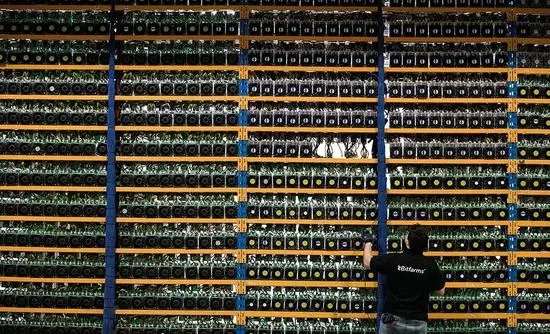
Bloomberg New Energy Finance (BNEF) latest forecast shows that by 2035, electricity consumption by data centers in the United States will account for about 20% of the nation's total electricity consumption, a significant increase from the current level of about 5.9%. The agency has raised its forecast for data center electricity demand in 2035 to 106 GW, which is 36% higher than the 78 GW predicted in April this year. Currently, the operating capacity of data centers in the U.S. is about 40 GW, accounting for approximately 3.5%-4% of the national electricity demand, while under BNEF's baseline scenario, this proportion is expected to reach 8.6% by 2035. The high-growth model from the Electric Power Research Institute (EPRI) indicates that if the combined effects of cryptocurrency mining and AI computing power are taken into account, the upper limit of this proportion also points to 20%.In response to the explosive growth in AI computing power demand, Bitcoin mining companies are actively transforming. Companies like Core Scientific and Riot Platforms have partnered with tech giants such as AWS and Google to convert their existing mining sites into AI data centers. Currently, Bitcoin mining companies have secured about 6 GW of electricity capacity, which is expected to expand to 12 GW by 2027, with some analysts estimating that about 20% of mining companies' computing power capacity will shift towards AI workloads by then. Data from the Electric Reliability Council of Texas (ERCOT) shows that data centers now account for about 90% of local large load applications, with many sites originally used for cryptocurrency mining being repurposed as AI computing facilities. This trend is also directly reflected in the capital markets, as Core Scientific has seen a significant rebound in its stock price after emerging from bankruptcy and partnering with AI cloud service provider CoreWeave.
app_icon
ChainCatcher Building the Web3 world with innovations.