Scan to download
BTC $58,235.74 -1.53%
ETH $1,562.39 -0.08%
BNB $544.41 -0.65%
XRP $1.03 -1.10%
SOL $73.06 -0.38%
TRX $0.3160 -1.88%
DOGE $0.0703 -2.55%
ADA $0.1437 -0.18%
BCH $198.39 +2.25%
LINK $7.16 -1.22%
HYPE $64.95 +1.31%
AAVE $85.27 -5.05%
SUI $0.6848 -0.30%
XLM $0.1790 +3.86%
ZEC $398.02 +3.12%
BTC $58,235.74 -1.53%
ETH $1,562.39 -0.08%
BNB $544.41 -0.65%
XRP $1.03 -1.10%
SOL $73.06 -0.38%
TRX $0.3160 -1.88%
DOGE $0.0703 -2.55%
ADA $0.1437 -0.18%
BCH $198.39 +2.25%
LINK $7.16 -1.22%
HYPE $64.95 +1.31%
AAVE $85.27 -5.05%
SUI $0.6848 -0.30%
XLM $0.1790 +3.86%
ZEC $398.02 +3.12%

miners

All
Article
Flash

Fidelity refutes the argument that halving weakens Bitcoin's security: miners' average daily income has increased from $26,300 to $40,200,000

Fidelity Digital Assets recently released a research report that positively addresses concerns about the long-term impact of Bitcoin halving on network security. The report's author, Fidelity research analyst Daniel Gray, pointed out that Bitcoin network security relies not only on block rewards but also on transaction fees, market incentives, and other economic forces that continuously motivate miners to maintain network security, making the cost of sustained attacks prohibitively high.On the data front, Gray noted that despite the ongoing reduction in block subsidies, the rise in Bitcoin prices has significantly offset this impact. The average daily income of miners has increased from about $26,300 during the first halving cycle to over $40,200 today. He wrote, "Despite the decrease in issuance, miner incentives and the resulting network security have historically strengthened alongside the rise in Bitcoin prices."Since the fourth halving in April 2024, the block subsidy for miners has decreased from 6.25 to 3.125 Bitcoins per block. However, the optimistic conclusions of the report starkly contrast with the current realities faced by publicly traded mining companies. Several industry analysts describe the current environment as one of the most challenging for mining on record, due to the simultaneous decline in block rewards, rising operational costs, and increased competition.In response, several mining companies have begun to transition to the AI and high-performance computing sectors, leveraging existing power infrastructure to meet AI computing demands. VanEck estimates that publicly listed mining companies may need to raise up to $50 billion in additional funds to fully transition to AI infrastructure, but the requirements for AI data centers regarding facility standards, cooling, power redundancy, and networking are far higher than those of traditional Bitcoin mining operations, making the transition challenges significant.

Data: Bitcoin miners' profit margins continue to be under pressure, with revenue falling below production costs

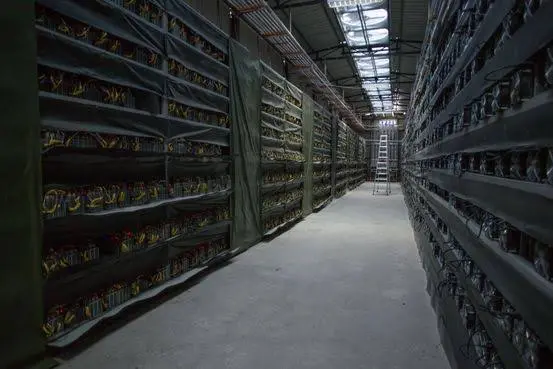
Bitcoin miner revenue has continued to decline over the past year, with the current 7-day moving average daily income at approximately $30 million, significantly lower than last summer's level of over $50 million. Among this, transaction fees have dropped to less than $250,000 per day, almost negligible compared to block subsidies.Meanwhile, the price of Bitcoin is around $62,500, below JPMorgan's estimated production cost of about $78,000. This state of being below production costs has persisted for five months, the longest duration in this cycle. Historically, production costs are often seen as a soft bottom area for Bitcoin prices. Currently, it is estimated that about 20% of miners are in a loss position at the current price, and the pressure is beginning to reflect at the network level.Over the past six months, the sensitivity of mining difficulty to Bitcoin prices has risen to 0.62, indicating that high-cost miners are increasingly inclined to turn off their mining machines based on price fluctuations rather than continue mining at a loss. In the second week of June, Bitcoin mining difficulty decreased by 10%, marking the second occurrence of a similar magnitude adjustment this year. A comparable adjustment also occurred in the previous quarter, with both instances happening during periods when prices remained below production costs, indicating that pressure on the miner side is deepening.

JPMorgan: Bitcoin mining is becoming increasingly sensitive to price fluctuations, with more miners approaching the breakeven point

According to CoinDesk, JPMorgan's latest report indicates that as more miners operate close to breakeven, the Bitcoin mining network is showing a higher sensitivity to price changes, with the response of hash rate and mining difficulty to price fluctuations significantly enhanced. The analysis shows that the "elasticity coefficient" of mining difficulty relative to Bitcoin price changes has risen to 0.62 over the past six months, indicating that the hash rate is responding more quickly to market changes.Analysts state that Bitcoin prices have been below production costs for five consecutive months, with approximately 20% of miners currently in a loss-making position. Under profit pressure, publicly listed mining companies have increased their Bitcoin selling scale, with sales exceeding 32,000 BTC in the first quarter alone, surpassing the total for the entire year of 2025. As some high-cost mining machines shut down, the network hash rate declines, and mining difficulty adjusts accordingly.JPMorgan expects that as long as Bitcoin remains below the production cost of about $78,000, the high sensitivity of mining to price fluctuations will continue to exist. At the same time, some mining companies are turning to artificial intelligence and high-performance computing businesses to seek more stable sources of income.
app_icon
ChainCatcher Building the Web3 world with innovations.