BTC $69,204.70 -6.10%
ETH $1,956.33 -4.65%
BNB $638.79 -5.80%
XRP $1.01 -3.33%
SOL $79.04 -4.92%
TRX $0.3118 -1.61%
DOGE $0.0641 -4.64%
ADA $0.1688 -2.58%
BCH $218.83 -4.73%
LINK $9.77 -3.26%
HYPE $71.64 -0.68%
AAVE $111.67 -6.29%
SUI $0.7814 -4.46%
XLM $0.1431 -2.33%
ZEC $932.15 -5.34%
AAPL $356.91 +0.23%
AMZN $268.55 +0.91%
GOOGL $300.79 +2.00%
MSFT $522.54 +0.17%
META $625.61 -0.64%
NVDA $164.04 +2.16%
TSLA $398.66 +3.00%
SNDK $928.88 -2.69%
INTC $60.96 +0.33%
SPCX $140.63 +0.83%
MU $796.78 +0.94%
AMD $575.86 +2.08%

democrat

All
Article
Flash

first_img The Democratic Party of the United States regains control of Congress, and NVIDIA's AI chip exports will be subject to scrutiny

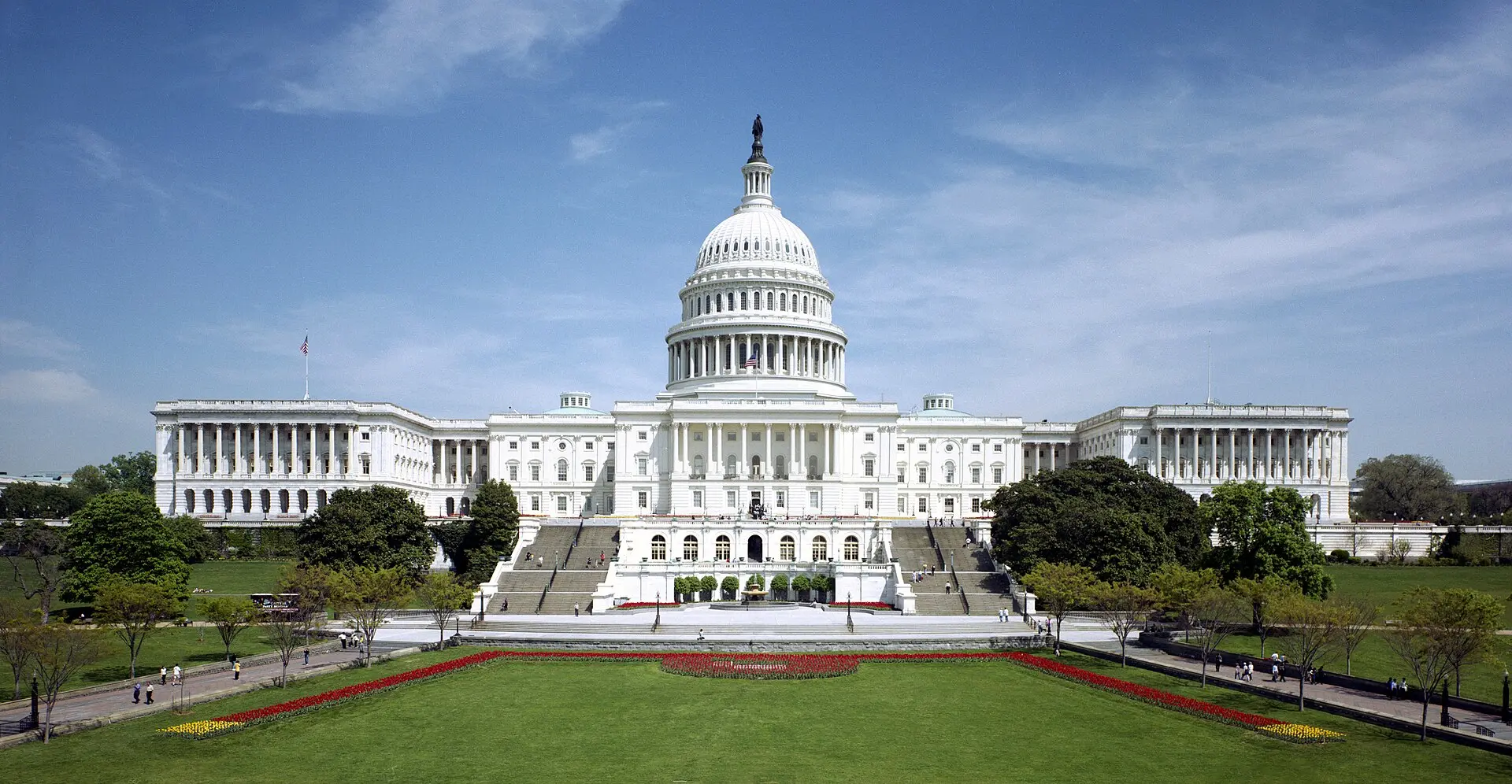
As the Democratic Party in the United States regains a majority in Congress, the new committee leaders are preparing to request Nvidia CEO Jensen Huang to explain whether the company has taken sufficient measures to prevent AI chips from flowing into China and other U.S. adversaries. The Democrats will utilize their authority in key committees to summon executives from Nvidia and other Silicon Valley companies to attend public hearings and request documentation to assist in industry investigations. After the new Congress is inaugurated on January 3, the Democrats will officially control both the House and the Senate.Currently, three Republican members of the House overseeing national security-related committees have requested Jensen Huang to provide a briefing on his interactions related to Megaspeed International in Singapore. Meanwhile, lawmakers are negotiating three bipartisan measures involving restrictions on semiconductor manufacturing equipment sales to China, codifying existing AI chip sales restrictions, and requiring verification of the location of AI processors. Among these, the "AI Oversight Act" aims to maintain current export controls for 18 months; the "Chip Security Act" requires the U.S. Department of Commerce's Bureau of Industry and Security to ensure that AI data center chips exported overseas have security mechanisms to verify whether they are being diverted to China and other concerning destinations.

Galaxy Research Director: Key cryptocurrency legislation is unlikely to make substantial progress after the Democratic Party's victory

Galaxy Research Director Alex Thorn stated that after the Democratic Party won both houses of the U.S. Congress, significant progress in key digital asset legislation is still expected to be difficult, and the leadership of congressional committees will also change. He mentioned that Elizabeth Warren may become the chair of the Senate Banking Committee, while Maxine Waters is expected to regain control of the House Financial Services Committee.Several Republican lawmakers who support the crypto industry were defeated, but the pro-crypto camp did not suffer a complete loss. According to Stand With Crypto, 19 pro-crypto senators and 226 pro-crypto representatives have been elected. Tracking by Molly White shows that in 12 highly competitive elections, the side supported by crypto and AI political action committees lost 9, but won all in the safer 40 elections.Reports indicate that House Democrats are discussing expanding Waters' previously proposed "Crypto Investor Consumer Rights Act" into a broader crypto market structure bill. Thorn reiterated that no substantial progress is expected in Congress on key digital asset legislation. In the absence of legislation, the SEC, CFTC, and banking regulators have clarified crypto rules within their existing statutory authority, and the Trump administration still has two years to continue advancing related work.

The Democratic Party plans to apply pressure on Trump through five lines, covering cryptocurrency legislation and AI regulation

According to Bloomberg, the Democratic Party in the United States will leverage the oversight powers of relevant committees in the House of Representatives and the Senate over the next two years to exert pressure on the Trump administration in five key areas, focusing on government investigations, fiscal budgets, Iran policy, artificial intelligence regulation, and cryptocurrency legislation. In terms of cryptocurrency, the Democrats' previous efforts to establish a regulatory framework for the crypto market have stalled, primarily due to a lack of consensus between senators and the White House on ethical standards related to political figures' crypto businesses.This provision aims to limit potential conflicts of interest arising from Trump's personal cryptocurrency business, making the legislative prospects for crypto market regulation similar to the CLARITY Act even more uncertain. In the House of Representatives, Maxine Waters is expected to serve as the chair of the Financial Services Committee, but her long-held position is challenged by Sean Casten; in the Senate, Elizabeth Warren will take on the role of chair of the Banking Committee, where she has long held a critical stance on cryptocurrency, and Sherrod Brown will also return to the Senate.Additionally, regarding AI regulation, the Democrats plan to intensify investigations into AI companies and their CEOs, focusing on data center construction, risks associated with advanced AI models, and the technology's impact on the job market. On Iran policy, the Democrats may use defense budgets, congressional investigations, and war powers resolutions to check the Trump administration.

The Democratic Party's sweeping victory in Congress raises concerns about AI regulation, leading to a sell-off in U.S. tech stocks

After the Democratic Party won the midterm elections, U.S. stocks surged significantly on Wednesday, but as investors continued to pull out of tech stocks for the second consecutive trading day, the Nasdaq Composite Index plummeted on Thursday. The tech-heavy Nasdaq fell by 3.3%, and the S&P 500 Index dropped by 1.9%. The Dow Jones Industrial Average decreased by 489 points, a decline of 0.9%. Although stocks like Chevron and Johnson & Johnson rose, it was not enough to offset the drag on the Dow from the tech stock sell-off. AI-related stocks, especially those in the chip industry and data centers, fell for the second day in a row.According to Gate market data, AMD (AMD.O) fell by 12%, Micron Technology (MU.O) dropped by 9%, SK Hynix (SKHY.O) decreased by 8.8%, and Nvidia (NVDA.O) fell by 5%. The Philadelphia Semiconductor Index plummeted by 8%, reaching a new low since April 20. The Nasdaq Composite Index has dropped more than 10% from its closing record high set on October 6.Investors are concerned that the Democratic Party controlling both houses of Congress and winning key gubernatorial elections may lead to more regulation of AI infrastructure development across the United States.Jordan Watson, portfolio manager at Tandem Investment Advisors, stated that the stock market surge and the trend of funds pulling out of AI stocks may only be a temporary phenomenon. However, as investors digest the election results and their potential policy impacts, the market may face more volatility.


app_icon
ChainCatcher Building the Web3 world with innovations.