The Democratic Party regaining control of the U.S. Congress has triggered a "huge shock" in the financial markets. What will happen to the dollar and U.S. Treasury bonds in the future?
 Core Viewpoint


 After the Democratic Party regained control of both the House and Senate, U.S. stocks rose for two trading days before falling, the U.S. dollar weakened, and the yield on 10-year U.S. Treasury bonds declined by more than 12 basis points over two days. International oil prices initially plummeted before rebounding. The market is re-evaluating the constraints on fiscal expansion, AI regulation, and geopolitical risks.
The Democratic Party of the United States won the midterm elections, triggering significant fluctuations in global financial markets.
According to Xinhua News Agency on November 4, several mainstream American media outlets predicted that the Democratic Party achieved a major victory in the midterm elections held on the 3rd, regaining control of both the Senate and the House of Representatives. American public opinion believes that this midterm election has caused a "dramatic change in the power structure of Washington," and that President Trump is now "in a passive predicament with greatly reduced power in the last two years of his presidency."
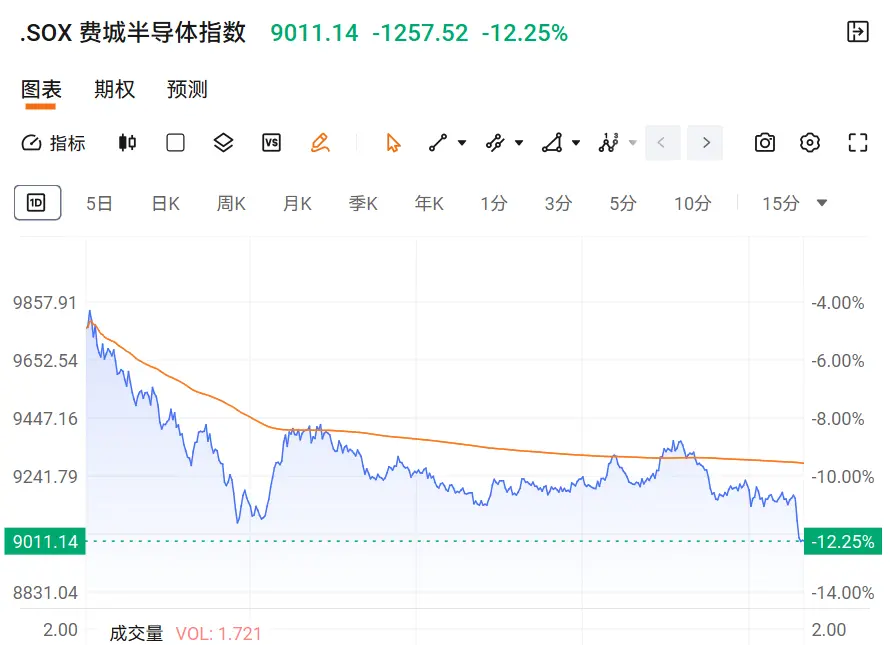
The election results triggered a "huge shock" in the U.S. capital markets. Over the two trading days of the 4th and 5th, the U.S. stock market first rose and then fell. By the close on the 4th, the Dow Jones, S&P 500, and Nasdaq had risen by 3.03%, 1.58%, and 1.44%, respectively. By the close on the 5th, U.S. stocks suffered a sharp decline, with the Dow Jones, S&P 500, and Nasdaq falling by 3.44%, 4.36%, and 5.52%, respectively. The technology and industrial sectors were the "hard-hit areas," dropping 7.30% and 4.12% on the 5th.
International oil prices initially fell sharply before rising. By the close on the 4th, the price of light crude oil futures for December delivery on the New York Mercantile Exchange fell by 8.29%, and the price of Brent crude oil futures for January delivery fell by 8.67%. By the close on the 5th, these oil futures prices had risen by 2.72% and 3.88%, respectively.
During this process, the U.S. dollar showed a downward trend, falling by 0.3% and 0.02% on the 4th and 5th, respectively. U.S. Treasury bonds rose, with the yield on the 10-year Treasury bond falling by 6.8 and 5.9 basis points on the 4th and 5th, respectively, to around 4.83%.
Why did the Democratic Party regaining control of Congress lead to such significant fluctuations in the capital markets?
Analysts believe that after the Democratic Party took control of Congress, the Trump administration's subsequent push for fiscal and tax policies may face more checks and balances. At the same time, the Democratic Party's stance on AI industry regulation and foreign policy may also influence the direction of the U.S. economy and policies.
From a longer-term perspective, how will these changes affect the U.S. dollar and the Treasury bond market? Will they change the Federal Reserve's future interest rate decisions?
Weaker Dollar, Stronger Treasury Bonds
After the Democratic Party won the midterm elections, the market began to adjust its expectations for U.S. economic growth, fiscal spending, and inflation prospects, leading to fluctuations in the dollar and Treasury bond markets, which serve as global currency and financial asset pricing anchors. The dollar index fell continuously on the 4th and 5th, reaching a low of 101.21, the lowest in a month. Treasury bonds generally rose (with corresponding yield declines), with the yield on the 10-year Treasury bond dropping to 4.814%, the lowest since September.
Regarding the performance of the dollar and Treasury bond markets, Bai Xue, Senior Vice President of the Research and Development Department at Dongfang Jincheng, stated that the previous expectations of large-scale tax cuts and infrastructure spending by the Trump administration were important factors supporting the strength of the dollar and the rise in Treasury bond yields. After the Democratic Party took control of Congress, the difficulty of the Trump administration pushing for a new round of tax cuts and expanded fiscal spending increased, alleviating market concerns about the further expansion of the U.S. fiscal deficit and Treasury bond issuance.
At the same time, the market is concerned that the Democratic Party's strengthening of AI industry regulation may affect investment in technology companies and data center construction, thereby dragging down corporate capital expenditure and economic growth. These changes have led the market to lower its expectations for U.S. economic growth and the Federal Reserve maintaining high interest rates, narrowing the interest rate spread between U.S. Treasury bonds and non-U.S. currencies, reducing the dollar's attractiveness, and causing Treasury bond yields to decline.
Hu Jie, a professor at Shanghai Jiao Tong University’s Shanghai Advanced Institute of Finance and a former senior economist at the Federal Reserve, told The Paper that the short-term weakness of the dollar is mainly due to the change in the political landscape increasing market uncertainty, leading some investors to temporarily withdraw from related assets and hold cash. The decline in Treasury bond yields is related to the market's adjustment of expectations for the expansion of U.S. fiscal spending. The checks and balances between the Democratic and Republican parties may increase the difficulty of passing large-scale fiscal spending bills, limiting the government's ability to further expand spending, thereby marginally alleviating the supply pressure of Treasury bond issuance.
Jim Reid, Global Head of Macro Research at Deutsche Bank, also believes that "the divided government usually makes fiscal stimulus measures harder to pass, which in turn raises U.S. Treasury bond prices. This somewhat alleviates concerns about the direction of fiscal policy." He also mentioned that investors expect the Federal Reserve to adopt a more dovish policy stance, with market expectations for a rate hike by the Federal Reserve in June 2027 declining, which has also pushed the dollar index lower.
AI Industry Regulation is Another Focus of the Market.
"The Democratic Party has previously been relatively cautious about the construction of large data centers. During the election process, the Democratic Party used related issues to criticize Trump’s policies. Therefore, after the Democratic Party gains more power in Congress, it may continue to take a relatively cautious attitude towards the development of the U.S. AI industry. If the Democratic Party imposes certain constraints on AI industry-related policies, the future demand for funds in this industry may weaken, thereby alleviating the competition for funds between it and the Treasury bond market," Hu Jie said.
Stephen Brown, North America Chief Economist at Capital Economics, stated that the likelihood of strengthening corporate taxes and AI industry regulation has increased after the Democratic Party took control of Congress. Previously, some Democratic candidates had expressed regulatory demands regarding data center construction and its energy consumption issues.
In addition, changes in AI industry investment may also affect U.S. inflation through energy costs. Yang Zirong, Deputy Director and Associate Researcher of the Global Macro Room at the Institute of World Economics and Politics of the Chinese Academy of Social Sciences, believes that if stricter regulation of the AI industry leads to a slowdown in data center construction and related capital expenditures, the cost pressure from increased electricity demand may also marginally ease, thereby reducing inflationary pressures. This change may affect the market's judgment on the Federal Reserve's subsequent interest rate path.
"However, the aforementioned factors are not sufficient to indicate that Treasury bond yields will form a trend of decline. Long-term Treasury bond yields are influenced not only by market expectations of the Federal Reserve's policy rates but also by factors such as term premiums. Even if the market lowers yields due to cooling expectations of fiscal expansion, if term premiums remain at a high level, long-term Treasury bond yields may still face upward pressure," Yang Zirong added.
Inflation Expectations and Oil Price Changes: Will the Federal Reserve's Policy Shift?
"The decline in fiscal expansion will suppress additional upward demand and reduce the momentum for demand-driven inflation; the easing of the situation in Iran has led to a decline in oil prices, directly alleviating input inflationary pressures from the energy side. The combination of these two factors will accelerate the pace at which inflation returns to target, reducing the necessity for the Federal Reserve to maintain high interest rates," Bai Xue stated.
After the midterm elections, international oil prices fell sharply. The market expects that after the Democratic Party takes control of Congress, the Trump administration's continued push for military action against Iran may face more political and fiscal constraints.
Dennis Kissler, Senior Vice President and Trading Director at BOK Financial, stated, "The Democratic Party controlling Congress may tighten U.S. military spending in the Middle East and further increase the likelihood of reaching a peace agreement sooner." He pointed out that the increase in Middle Eastern crude oil exports and Trump's statement that there are currently no plans to strike Iran have intensified downward pressure on oil prices.
Hu Jie also believes that if the Democratic Party's control of Congress constrains the Trump administration's related policies, thereby affecting U.S. military actions abroad and the energy market, it could theoretically have an indirect impact on inflation.
"However, this transmission chain is long, and it is difficult to directly reflect changes in the Federal Reserve's monetary policy in the short term. Moreover, even if related military conflicts end, oil prices and inflation will not immediately return to normal; a certain amount of transmission and adjustment time will still be needed," Hu Jie said.
Regarding the Federal Reserve's subsequent policies, he believes there is still a high probability of a rate hike in December this year. Whether to continue raising rates next year will depend on subsequent economic data. If the economic and inflation situation improves, there may be no need for further rate hikes next year, but rate cuts may not occur until at least mid-next year.
Yang Zirong also believes that the Federal Reserve's interest rate path in 2027 will be influenced by energy price trends. He stated that if oil prices only rise sharply in the short term and then fall back, and inflation expectations remain stable, the Federal Reserve will likely be able to begin slow rate cuts in 2027; however, if geopolitical conflicts lead to energy prices remaining high for an extended period and further transmit to core inflation and wage growth, the Federal Reserve may be forced to maintain restrictive interest rates for a longer time, and even the possibility of monetary policy fluctuating cannot be ruled out.
Daleep Singh, Chief Global Economist at PGIM, offered a different judgment. He believes that the Democratic Party's significant victory in this midterm election may instead create space for the Federal Reserve to tighten monetary policy further.
Singh believes that the election results have weakened Trump's influence over Congress, U.S. politics, and the Federal Reserve, giving the Federal Reserve greater freedom in implementing monetary tightening policies. He predicts that the Federal Reserve may raise rates four more times by the end of 2027, each by 25 basis points, raising the target range for the federal funds rate to 4.75% to 5.00%.
From the current market pricing, the election results have not significantly changed investors' judgments on the Federal Reserve's short-term policies. As of the time of writing, CME FedWatch data shows that the market still expects a greater than 70% probability of a 25 basis point rate hike by the Federal Reserve in December.
 Risk warning Risk warning