BTC $64,278.32 -1.58%
ETH $1,795.72 -1.40%
BNB $588.22 -1.21%
XRP $0.9432 -2.23%
SOL $70.79 -1.24%
TRX $0.3022 -1.72%
DOGE $0.0581 -0.72%
ADA $0.1512 -1.20%
BCH $204.88 -1.50%
LINK $9.07 -1.52%
HYPE $66.69 -1.56%
AAVE $108.64 +2.44%
SUI $0.7158 -1.18%
XLM $0.1369 -1.29%
ZEC $885.30 -2.48%
AAPL $358.25 +0.35%
AMZN $265.14 +0.58%
GOOGL $294.52 +0.58%
MSFT $527.23 +1.20%
META $636.40 -0.08%
NVDA $159.78 -0.67%
TSLA $385.06 -0.58%
SNDK $830.91 -2.72%
INTC $56.82 -1.93%
SPCX $139.72 +1.67%
MU $738.31 -2.54%
AMD $508.73 -2.70%

carbon

All
Article
Flash

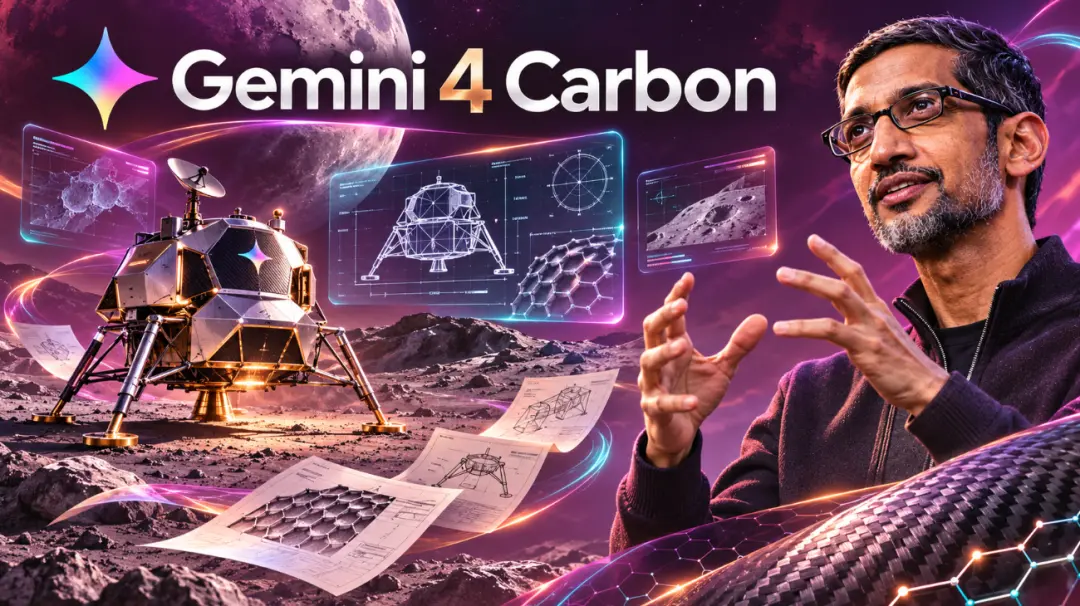
first_img Google opens Gemini 4 Carbon, API prices will double starting in December

On Tuesday, Google announced that its cutting-edge artificial intelligence model, Gemini 4 Carbon, is now open to paid developers and enterprise customers. Google stated that the model is capable of handling complex programming, cybersecurity, and scientific research tasks that involve multiple steps. Gemini 4 Carbon was released on October 28, having previously been available to select cybersecurity defense agencies through the Fairwind program. Following this opening, paid developers can use the model via the Gemini API in Google AI Studio, while enterprise customers can access it through Gemini for business. Google AI Ultra subscribers will also gradually gain access to the Gemini application, Google Search AI mode, and Antigravity.In early tests, OpenCode software engineer Kit Langton reported that the team submitted a list of requirements to Carbon before the end of the workday, requesting solutions for consistency issues between the application interface and the existing UI framework. After running overnight, Carbon built a Rust UI library from scratch, rewrote the OpenCode desktop application, and provided a runnable demo version. The Wiz team under Google stated that while using Carbon for cyber to scan two large software service providers, the model identified zero-day vulnerabilities within two hours and subsequently collaborated with the affected agencies to complete the fixes. Google did not disclose the names of these service providers or the details of the vulnerabilities. Researchers also combined Carbon with other models, using the AlphaProof Code intelligent agent framework to complete the formal verification of the security properties of the underlying code of the Signal encryption protocol within weeks.In terms of pricing, Google set the initial experience price for Carbon's API at $2 per million input tokens and $10 per million output tokens, the same as Gemini 4 Argon. This offer lasts until November 30, after which the price will double, adjusting to $4 per million input tokens and $20 per million output tokens, applicable to the publicly available Carbon model. Google stated that Carbon ranked first in three benchmark tests: CursorBench 4.0, Perplexity WANDR, and Zapier AutomationBench, with the cost of single-task performance being less than half that of the next best external models. Google also mentioned that the model intercepted 99% of attack paths in a simulated cyberattack test, and achieved a 0% success rate in another prompt injection test.

Lotus Technology CFO Dr. Daxue Wang: Cryptographic technology empowers smart mobility, promoting the credible circulation of RWA and carbon assets

At the "Crypto 2026: From Cryptocurrency to Smart Economy" themed forum held in Hong Kong, Dr. Daxue Wang, CFO of Lotus Technology Inc., delivered a keynote speech titled "Crypto Links to the Physical Industry, Smart Mobility Running on the Chain."Dr. Daxue Wang stated that smart mobility is the pioneering carrier of the smart economy. Lotus, a luxury electric vehicle brand with a 78-year history, has been listed on NASDAQ and is actively exploring the deep integration of crypto technology with the physical industry. He proposed three major integration directions:First, safeguarding data value by utilizing the immutable nature of blockchain and privacy computing, allowing users to have absolute control over their personal data, achieving credible data circulation and value flow. Second, releasing asset value by exploring efficient circulation and fair trading of assets such as vehicle sales, brand value, autonomous driving technology patents, and global sales networks through RWA, while promoting credible traceability of carbon assets in green mobility. Third, co-creating ecological value by recording data on driving, charging, and maintenance through on-chain smart nodes, allowing users to upgrade from "car owners" to "participants in the brand ecosystem" through on-chain rights confirmation.Dr. Daxue Wang pointed out that the current challenges include compliance implementation, technology adaptation, and ecological co-construction, but the opportunities lie in open cooperation, promoting smart mobility as a practical landing scenario of the smart economy. Lotus hopes to work hand in hand with the crypto ecosystem to realize the vision of "from buying a Lotus car to sharing the growth value of Lotus technology."
app_icon
ChainCatcher Building the Web3 world with innovations.