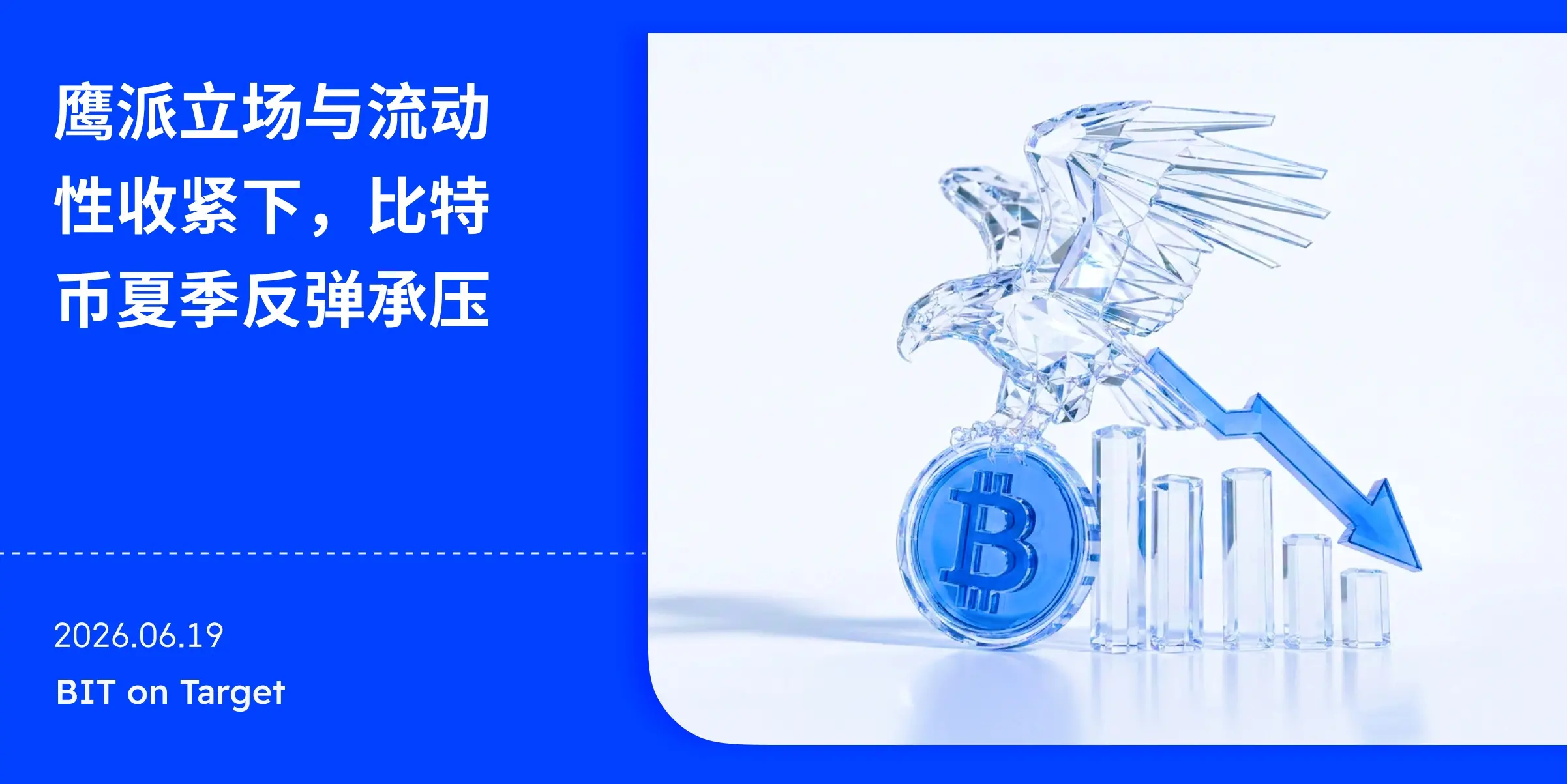
BIT Research: If it keeps up with the Nasdaq, Bitcoin should be close to $140,000
 From monetary expansion to inflation repricing, the real variable is shifting towards interest rate expectations.
The current market is in a macro adjustment phase dominated by inflation repricing. If Bitcoin can continue to follow the Nasdaq's trend, its current price should theoretically be close to $140,000. However, since October 2025, the divergence between the two has begun to widen significantly. The core reason behind this is the resurgence of inflation in the U.S., and the market's expectations for interest rate cuts have also begun to reverse.
Recent data shows that the U.S. CPI has risen from 2.4% to 3.8%, while the PPI has increased from 2.9% to 6.0%. Meanwhile, the interest rate market is gradually retracting some pricing for interest rate cuts in 2026. For Bitcoin, the liquidity easing expectations that previously supported the market are starting to weaken. At the same time, the escalation of the situation in Iran has pushed oil prices up by about 40% since late February 2026, and rising energy costs have further intensified market concerns about inflation.
From the current pricing perspective, the market still tends to view this round of inflation as a temporary pressure disturbance. However, as the interconnections between energy, interest rates, and risk appetite strengthen, the market is beginning to reassess the risk that the high interest rate environment may last longer. In this process, Bitcoin's performance has begun to significantly lag behind technology stocks that can benefit from nominal inflation.
Inflation Repricing: Why Bitcoin Struggles to Benefit from a High Inflation Environment
Most investors often equate "monetary expansion" with "inflation," but the two actually correspond to completely different market phases. In recent years, the significant driving force behind Bitcoin's rise has essentially come from loose liquidity and expectations of interest rate cuts, rather than inflation itself. In December 2022, the BIT model had already indicated that price pressures would significantly ease and suggested that central bank policies might subsequently shift to signal interest rate cuts. This also became an important starting point for the rise of technology stocks and Bitcoin from 2023 to 2025.
The problem is that when inflation truly begins to rise again, market logic changes. Even if actual interest rate hikes have not yet occurred, merely the expectation that "rates will remain high for longer" is enough to drive Bitcoin to be repriced. As a typical long-duration asset, Bitcoin is highly sensitive to interest rate paths; once expectations for interest rate cuts are withdrawn, its valuation can easily come under pressure.
At the same time, Bitcoin does not have the structural benefits that stocks can gain in a certain inflation environment. Stocks can benefit not only from rising nominal revenues but also, to some extent, reduce the real burden of debt. Bitcoin has neither debt that can be diluted by inflation nor cash flows that can expand with inflation, making it difficult to directly benefit from this round of inflation recovery. This also explains why there has been a significant divergence between the Nasdaq and Bitcoin recently.
From Energy Shock to Interest Rate Constraints: The Market Begins to Reassess the Liquidity Path
The real issue currently concerning the market is no longer just "whether inflation will rise," but whether high inflation will force the Federal Reserve to keep interest rates high for a longer period. The BIT model predicts that the U.S. CPI may even rise further to 6.0% in the future. If this scenario materializes, Bitcoin may experience periodic pullbacks around each CPI and PPI data release.
Meanwhile, although the crude oil futures curve indicates that oil prices will gradually decline in the future, it is currently difficult to return to the pre-war level of about $63 in the short term. The market has already priced in about a 15% long-term premium in oil prices, reflecting real supply bottlenecks. Starting from the current oil price of about $101, the market expects crude oil prices to fall to $89 by September 2026, to $80 by January 2027, and further to $73 by January 2028.
In addition to geopolitical and energy factors, the expansion of AI infrastructure may also be changing the inflation path that the market has previously been accustomed to. Data center construction, electricity demand, and infrastructure capital expenditures are continuously increasing energy pressures. This means that the time inflation remains above target levels may be longer than the market previously expected. In this environment, technology stocks can benefit from order growth and improved profit expectations, while Bitcoin is more likely to be suppressed by a high interest rate environment.
Overall, the core of this round of market changes does not lie in the destruction of Bitcoin's long-term logic, but in the market's reassessment of interest rates and liquidity paths after inflation rises again. In the short term, a high inflation environment may continue to suppress Bitcoin's performance and cause it to lag behind the Nasdaq temporarily. However, this does not mean the market is turning bearish; more accurately, it simply slows down Bitcoin's upward momentum. As the market begins to factor in liquidity easing expectations again in the future, Bitcoin may still regain support.
Some of the views above are from BIT on Target, contact us to obtain the complete report of BIT on Target.
Disclaimer: The market has risks, and investment requires caution. This article does not constitute investment advice. Trading in digital assets may carry significant risks and volatility. Investment decisions should be made after careful consideration of personal circumstances and consultation with financial professionals. BIT is not responsible for any investment decisions made based on the information provided in this content.
 Risk warning