Scan to download
BTC $58,749.41 -1.84%
ETH $1,561.18 -0.70%
BNB $545.04 -1.35%
XRP $1.03 -2.20%
SOL $72.40 -1.23%
TRX $0.3170 -1.38%
DOGE $0.0698 -4.37%
ADA $0.1423 -1.67%
BCH $196.92 -0.00%
LINK $7.17 -1.91%
HYPE $64.84 +1.99%
AAVE $87.36 -5.66%
SUI $0.6821 -1.21%
XLM $0.1743 +0.65%
ZEC $388.88 +1.35%
BTC $58,749.41 -1.84%
ETH $1,561.18 -0.70%
BNB $545.04 -1.35%
XRP $1.03 -2.20%
SOL $72.40 -1.23%
TRX $0.3170 -1.38%
DOGE $0.0698 -4.37%
ADA $0.1423 -1.67%
BCH $196.92 -0.00%
LINK $7.17 -1.91%
HYPE $64.84 +1.99%
AAVE $87.36 -5.66%
SUI $0.6821 -1.21%
XLM $0.1743 +0.65%
ZEC $388.88 +1.35%

model

All
Article
Flash

Coinbase: Has reduced AI spending by nearly 50% and is trying to default to adopting open weight models

Coinbase CEO Brian Armstrong published an article introducing the company's latest progress in AI cost optimization.Armstrong stated that as the usage of AI and Token consumption continues to grow, the key to controlling costs is not to restrict employee usage or frequently send budget reminders, but to optimize default model selection, task routing mechanisms, and caching strategies.He revealed that Coinbase is trying to use open-weight models such as GLM 5.2 and Kimi 2.7 as default options through an internal LLM gateway, while still allowing engineers to choose other models based on specific task requirements. Data shows that 91% of the company's employees have never reached the AI usage quota limit, so Coinbase has not chosen to tighten quotas but instead improved overall efficiency through lower-cost model solutions.In terms of model routing, Coinbase preprocesses prompts and, combined with cache hit rates and the pricing of different models, automatically assigns tasks to the most suitable model. Armstrong believes that complex tasks such as planning and reasoning may require support from cutting-edge models, but execution tasks do not necessarily need to invoke higher-cost models. In the future, the model selection process should be more automated by AI rather than relying on manual decisions.Additionally, he pointed out that cache hit rate is one of the important factors affecting AI costs. Coinbase has incorporated a cache-aware mechanism into the request process to improve the reuse rate of historical results. For example, in the case of LibreChat, after optimizing the caching solution, its cache hit rate has increased from 5% to 60%.Armstrong also stated that the company requires engineers to keep context as concise as possible, including starting new sessions when switching tasks, narrowing the context scope of files, and closing unused tools, to reduce unnecessary Token consumption.According to him, through these measures, Coinbase has successfully reduced AI spending by nearly 50%, while Token usage continues to grow.

OpenAI has launched the next generation GPT-5.6 series models, currently available only to trusted partners using Codex and the API

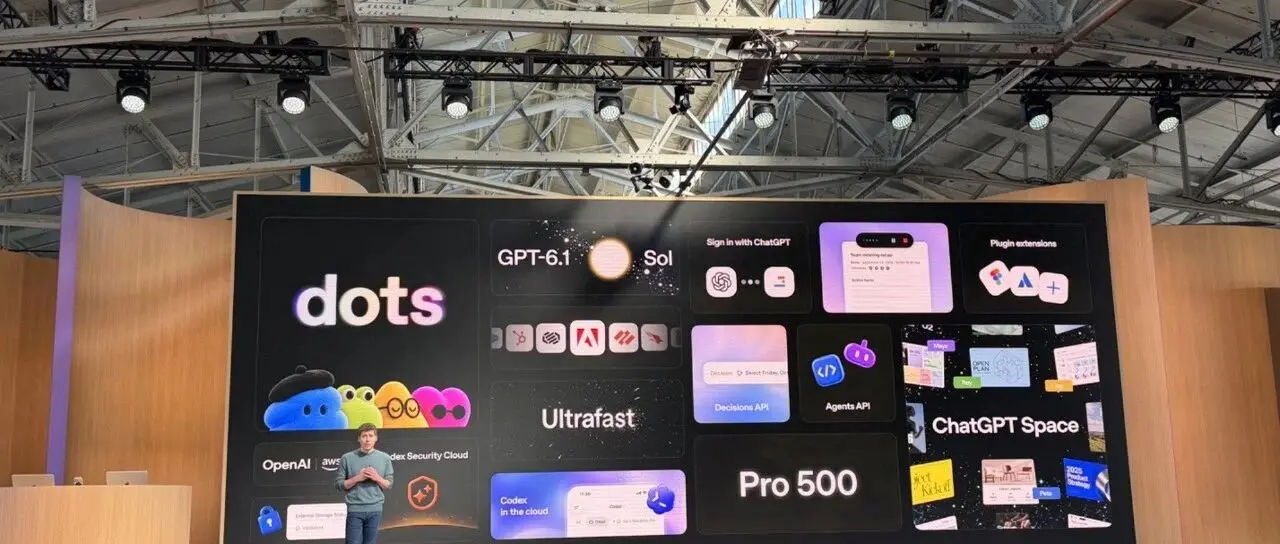
According to official news, OpenAI has officially launched the preview version of the next-generation GPT-5.6 series models, including the flagship model Sol, the balanced model Terra, and the fast low-cost model Luna. GPT-5.6 introduces a brand new maximum reasoning effort and features a super strong mode that accelerates complex tasks through sub-agents.The flagship model Sol introduces the Ultra mode, which combines maximum reasoning intensity with sub-agent collaboration. In the Terminal-Bench 2.1 command line workflow test, Sol achieved a score of 88.8%, which increased to 91.9% in Ultra mode, surpassing GPT-5.5's 83.4% and Claude Fable 5's 88.0%. The mid-range model Terra performs close to GPT-5.5 while being priced at half, and the lightest model Luna is designed specifically for everyday automation tasks. Sol is priced at $5 per million input tokens and $30 for output, and it supports reducing secondary call costs by utilizing prompt caching.In terms of security, the security assessment confirmed that Sol did not exceed the critical thresholds of the Preparedness Framework cybersecurity. OpenAI has invested over 700,000 A100 equivalent GPU hours in automated red team exercises, equipping the entire series of models with a defense stack that includes rejection mechanisms, real-time abuse classifiers, and account-level audits. Although the current limited release follows the U.S. government's security framework, OpenAI emphasizes that it does not want a government-led access mechanism to become the long-term default model, as it would limit defenders' access to cutting-edge tools.

Gate.AI full-chain large model management platform upgrade, enhancing unified large model access and enterprise governance capabilities

The trading platform Gate's full-link large model management platform Gate.AI has recently completed an upgrade, launching a one-stop large model routing service for enterprises and developers. The platform is now connected to over 200 mainstream large models worldwide, supporting the two major protocols of OpenAI and Anthropic. Enterprises can access different model resources through a single API, achieving unified access and management, thereby reducing development, operation, and migration costs.Combining intelligent routing and comprehensive enterprise governance, Gate.AI achieves optimal matching of heterogeneous models and high business availability through intelligent routing and an automatic fallback mechanism. In terms of governance and security, the platform has built a multi-level unified management system that includes organizational structure, role permission control, members, and API keys, reinforcing privacy protection with zero data retention (ZDR) and data processing agreements (DPA). Additionally, through refined cost governance measures such as shared quota pools, it helps enterprises achieve efficient, standardized, and transparent operation of AI resources.As an important part of Gate's Intelligent Web3 strategy, Gate.AI is continuously improving the construction of an open AI platform, further promoting the large-scale application of AI in practical business scenarios by connecting global model resources and enterprise-level governance systems. In the future, Gate will continue to deepen its efforts in model access, intelligent routing, enterprise governance, and application innovation, creating a full-link open AI ecosystem to provide long-term support for the intelligent upgrade of global enterprises.

Vitalik: Ethereum Foundation budget cut by 40%, will shift to a long-term donation fund model

Vitalik Buterin, co-founder of Ethereum, stated that the Ethereum Foundation (EF) has announced a budget cut of approximately 40% this year as part of its financial transformation plan.According to the funding management policy released last year, EF is gradually transitioning from an "expenditure-based organization" to an "endowment-based model," aiming to reduce the annual expenditure ratio from about 15% to approximately 5% after 2030. In this process, the foundation emphasizes that it will accept inevitable personnel and resource adjustments and acknowledges the loss of some capabilities and experience.In this round of restructuring, EF has reduced approximately 54 employees, accounting for about 20% of the overall team. Vitalik stated that many of these departing members may continue to participate in the Ethereum ecosystem in external forms in the future. Meanwhile, the foundation will shift its strategic focus to a more "lightweight" protocol governance and development path, including advancing the "Strawmap" long-term roadmap, covering core protocol upgrades such as consensus mechanisms, privacy technologies, account models, and state structures, and promoting Ethereum's evolution into its third phase.In terms of specific structural adjustments, EF will weaken the "multi-client redundancy priority" model and shift towards a development approach based more on specialized division of labor and AI-assisted formal verification; the privacy and scalability research team PSE will be restructured, transitioning from exploratory R&D to more focused engineering implementation; the scale of ecosystem activities such as Devcon will also gradually be reduced.In addition, EF will reduce investments in large cross-domain projects in the future, placing greater emphasis on protocol security and high-value improvements, while encouraging more innovative work to be completed externally. Although the path is more streamlined, Ethereum will continue to strengthen its core positioning as a highly censorship-resistant and long-term stable protocol.

OpenAI expands its cybersecurity program Daybreak, launching a dedicated defense model GPT-5.5-Cyber

OpenAI announced a comprehensive expansion of its cybersecurity program Daybreak, aimed at leveraging artificial intelligence to accelerate the discovery and automatic remediation of software vulnerabilities. The core of this expansion is the full version dedicated model GPT-5.5-Cyber launched for trusted defenders. It is reported that this model has set the highest score records in multiple cybersecurity benchmark tests, surpassing GPT-5.5's 81.8% and competitor Mythos 5's 83.8%, significantly improving the accuracy of vulnerability scanning and patch generation. At the same time, the synchronously updated Codex Security plugin has been deeply integrated into the developer workflow, supporting fully automated codebase scanning, threat modeling, and patch generation.In terms of ecosystem development, OpenAI has launched an exclusive partner program, allowing compliant security service providers to integrate GPT-5.5 with specific permissions into their commercial products; and has initiated the "Patch the Planet" program in collaboration with organizations like Trail of Bits to assist over 30 foundational open-source projects such as Python and Go in implementing vulnerability fixes. In addition, OpenAI revealed that it is currently engaged in deep cooperation with governments and institutions from multiple countries, including the United States, the United Kingdom, France, and Japan, to jointly enhance the cybersecurity capabilities of global critical infrastructure.

ByteDance releases Doubao 2.1 Pro large model, accelerating AI strategy towards the enterprise sector

According to the "Science and Technology Innovation Board Daily," at the 2026 Volcano Engine Force Conference, ByteDance officially released the latest flagship version 2.1Pro of the Doubao large model. Tan Dai, President of Volcano Engine, stated that the model has made breakthroughs in four dimensions: code delivery, long-range Agent tasks, multimodal understanding, and enterprise-level stable operation, possessing stronger engineering delivery capabilities and being capable of handling complex R&D tasks for enterprises. At the conference, ByteDance CEO Liang Rubo also emphasized that the company will focus on enhancing large model capabilities and firmly invest in MaaS (Model as a Service) business.The report pointed out that ByteDance's AI strategic focus is clearly shifting towards enterprise-level services. Currently, the daily token call volume of the Doubao large model has reached 180 trillion, an increase of over 1500 times since its release, and has grown more than 10 times in the past year. However, due to the bottleneck in monetization on the consumer side and high expenses (with daily computing costs reaching tens of millions and daily revenue below one million), ByteDance has accordingly adjusted its resource allocation. Meanwhile, the video generation model Seedance, primarily aimed at the B-end, has validated its commercialization potential, with current annual recurring revenue (ARR) reaching 2 billion dollars, effectively offsetting Doubao's computing costs. In addition, the new version of Seedance will also be the first in the industry to launch a 3D white membrane preview feature.
app_icon
ChainCatcher Building the Web3 world with innovations.