BTC $69,016.12 -6.35%
ETH $1,947.19 -5.11%
BNB $635.80 -6.18%
XRP $1.00 -3.80%
SOL $78.75 -5.37%
TRX $0.3116 -1.67%
DOGE $0.0638 -5.18%
ADA $0.1685 -2.64%
BCH $217.57 -5.34%
LINK $9.76 -3.65%
HYPE $71.23 -1.13%
AAVE $111.42 -6.30%
SUI $0.7772 -4.99%
XLM $0.1429 -2.38%
ZEC $934.85 -4.99%
AAPL $356.50 +0.12%
AMZN $268.00 +0.70%
GOOGL $300.20 +1.89%
MSFT $521.35 -0.06%
META $625.34 -0.47%
NVDA $163.95 +2.02%
TSLA $398.07 +2.85%
SNDK $927.89 -2.87%
INTC $60.79 +0.30%
SPCX $140.46 +0.80%
MU $794.22 +0.56%
AMD $574.86 +2.35%
BTC $69,016.12 -6.35%
ETH $1,947.19 -5.11%
BNB $635.80 -6.18%
XRP $1.00 -3.80%
SOL $78.75 -5.37%
TRX $0.3116 -1.67%
DOGE $0.0638 -5.18%
ADA $0.1685 -2.64%
BCH $217.57 -5.34%
LINK $9.76 -3.65%
HYPE $71.23 -1.13%
AAVE $111.42 -6.30%
SUI $0.7772 -4.99%
XLM $0.1429 -2.38%
ZEC $934.85 -4.99%
AAPL $356.50 +0.12%
AMZN $268.00 +0.70%
GOOGL $300.20 +1.89%
MSFT $521.35 -0.06%
META $625.34 -0.47%
NVDA $163.95 +2.02%
TSLA $398.07 +2.85%
SNDK $927.89 -2.87%
INTC $60.79 +0.30%
SPCX $140.46 +0.80%
MU $794.22 +0.56%
AMD $574.86 +2.35%

hot

All
Article
Flash

first_img CertiK suggests that exchanges set a USD limit for hot wallets

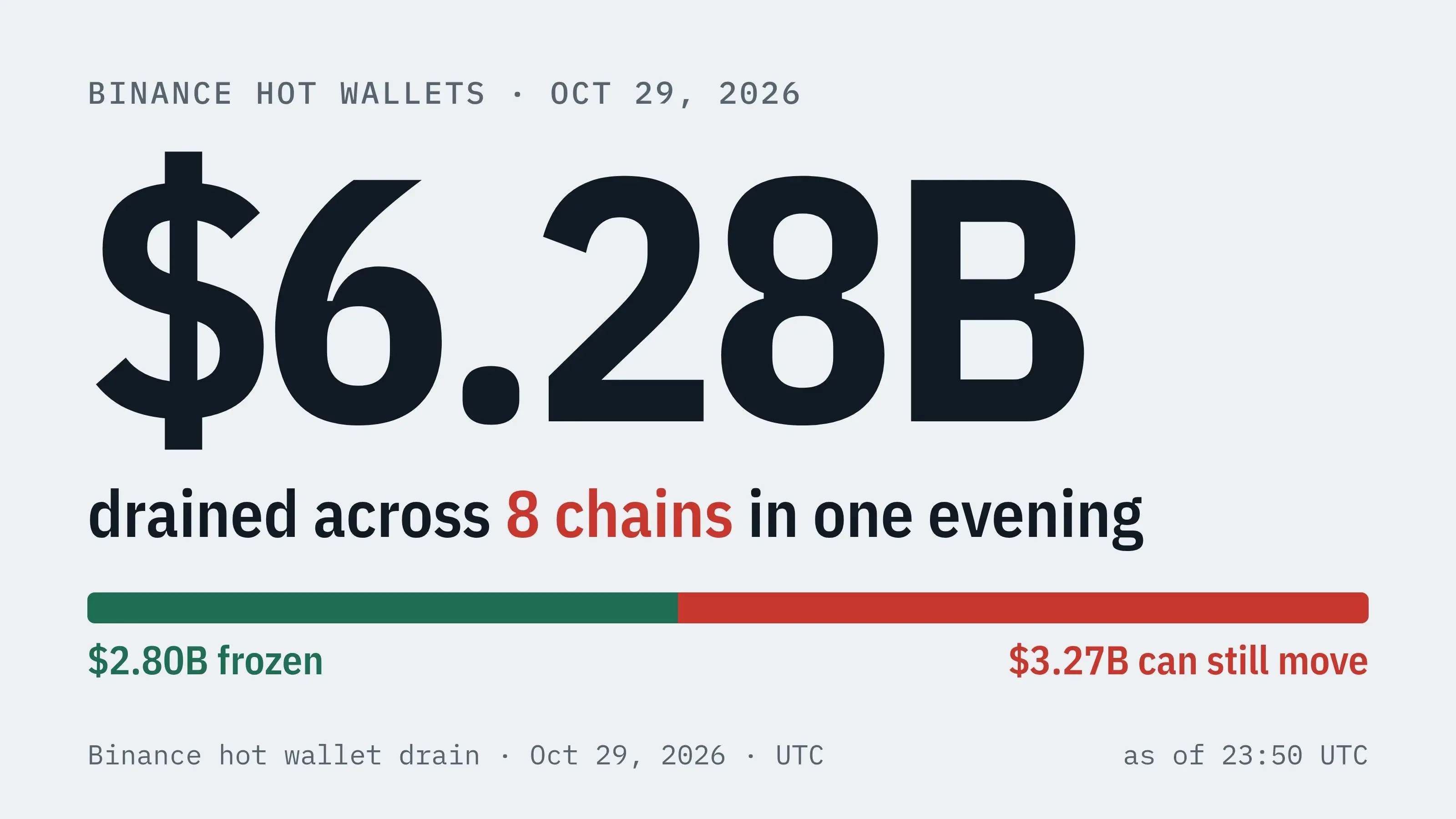
The cybersecurity company CertiK recommends that cryptocurrency exchanges set a hard dollar limit on hot wallet holdings, rather than relying solely on cold storage ratios to measure security. This recommendation comes at a time when several exchanges have recently disclosed their cold wallet holdings ratios to reassure customers, following a record hack of Binance's hot wallet. Gate reports that 88.26% of its total assets are stored in cold storage, while Coinbase states that over 99% of customer assets are kept offline.The CertiK research team told Cointelegraph that cold storage is an effective indicator of online risk exposure, but it is not an independent security rating. Currently, South Korea requires crypto service providers to store at least 80% of the value of customer crypto assets in cold storage, Singapore's guidelines require at least 90%, Japan's framework requires at least 95%, and the benchmark for licensed crypto trading platforms in Hong Kong is 98%. CertiK points out that higher levels of cold storage generally reduce online risk exposure, but at extremely high levels, the returns diminish, and a rigid storage ratio may slow down withdrawals, force hasty transfers, and concentrate risks in the key management system.CertiK suggests that exchanges set hot wallet limits for each asset and blockchain based on the most stringent of three restrictions: the percentage of customer liabilities, estimated withdrawal demand, and an absolute loss limit based on the exchange's financial resources and recovery capabilities. Additionally, Binance stated last week that it has replenished about 98% of the affected tokens after the hack and absorbed the losses itself, with the remaining tokens having lower liquidity and longer acquisition times. Elliptic reported that hackers linked to North Korea laundered money by issuing memecoins, transferring about $430,000 through six newly issued tokens on NEAR.

BTCPay Server: Vulnerability in the old version led to theft of funds from hot wallets, users are advised to migrate immediately

The open-source Bitcoin payment processing tool BTCPay Server has received multiple reports of unauthorized fund theft from its Bitcoin and Litecoin hot wallets on the platform. The project team released an investigation update confirming that the attack targeted servers running BTCPay Server version 2.4.1 or earlier. The attackers exploited a vulnerability that was fixed in version 2.4.2 on August 7, gaining administrative access to the servers through various methods and draining the hot wallet funds.BTCPay Server founder Nicolas Dorier confirmed that only servers running versions prior to 2.4.2, particularly version 2.4.1, were affected; users running the latest version 2.4.7 have not reported any credible losses. Some affected service providers, including LunaNode, have automatically shut down at-risk older instances. The official recommendation for users still using version 2.4.1 or earlier is to immediately transfer any remaining funds in old hot wallets to a new wallet created with a completely new mnemonic, take the old server offline while retaining relevant logs, and then install the latest version on a new virtual machine and connect the new wallet, ensuring not to restore the old server entirely to the new machine.Simply updating the software version is not enough to eliminate the risk, as attackers may have gained persistent access to the old server. Funds stored outside the server, such as those in hardware wallets, were not affected by this incident. The vulnerability is related to a flaw fixed in August of this year, when attackers had manipulated nodes by obtaining LND administrative credentials. As of now, this vulnerability has not been assigned a CVE number and is not listed in CISA's known exploited vulnerabilities catalog.
app_icon
ChainCatcher Building the Web3 world with innovations.