BTC $77,607.63 +1.36%
ETH $2,396.04 +1.07%
BNB $703.02 +2.92%
XRP $1.36 +3.30%
SOL $100.21 +1.93%
TRX $0.3273 +1.39%
DOGE $0.0829 +2.72%
ADA $0.2068 +6.90%
BCH $249.10 +2.16%
LINK $11.19 +1.66%
HYPE $81.68 +0.49%
AAVE $129.41 +2.16%
SUI $0.7621 +6.99%
XLM $0.1769 +2.61%
ZEC $830.24 +3.24%
BTC $77,607.63 +1.36%
ETH $2,396.04 +1.07%
BNB $703.02 +2.92%
XRP $1.36 +3.30%
SOL $100.21 +1.93%
TRX $0.3273 +1.39%
DOGE $0.0829 +2.72%
ADA $0.2068 +6.90%
BCH $249.10 +2.16%
LINK $11.19 +1.66%
HYPE $81.68 +0.49%
AAVE $129.41 +2.16%
SUI $0.7621 +6.99%
XLM $0.1769 +2.61%
ZEC $830.24 +3.24%

remittance

All
Article
Flash

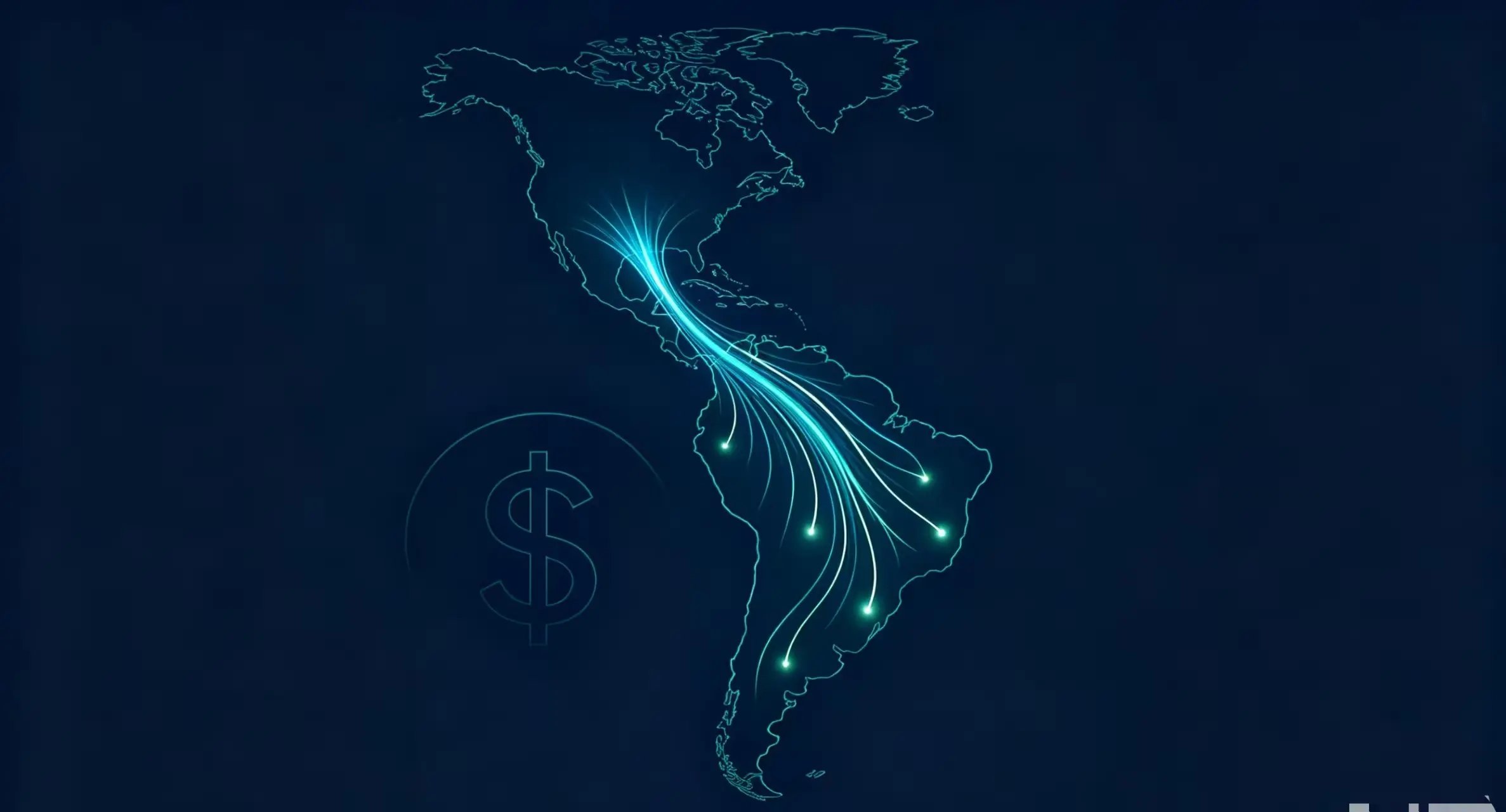
first_img Decentralised.co: Stablecoins cannot solve the remittance problem on their own

Decentralised.co reported that the cost of sending $200 across borders is currently 6.36%, down from 9.67% in 2009, with the United Nations aiming to reduce it to 3% by 2030. Remittances consist of three parts: collecting from the remitter, transferring value, and paying the recipient, with the intermediate stage previously being slower and now the cheapest part. Receiving and paying require licenses, bank accounts, compliance, and payment networks. The process from Dubai to Manila takes about six steps, with only one step using blockchain.Pre-funded agent accounts decentralize operating capital. Tokenized dollars can be concentrated in a single funding pool, settled on Sundays, and rebalanced within minutes. Traders hold inventory and bear exchange rate risks. Félix Pago raised $200 million to facilitate remittances from the U.S. to Latin America via WhatsApp, with a16z leading a $87 million equity round and General Catalyst providing a $113 million credit line. Nium is now funding customer payments in USDC. a16z Crypto led a $10 million investment in Better Money. Conduit raised $36 million for corridors from Europe to Nigeria and Kenya, while Palla raised $14.5 million for white-label payments to thirty banks.The article states that stablecoins can fix pipeline issues but cannot resolve isolated systems related to legal matters or toll collection.

first_img Italian Central Bank Study: Stablecoin Remittances Have No Systemic Cost Advantage, On-chain Components Only Account for a Small Portion

In a research report released by the Bank of Italy in July 2026, a "mystery shopper" empirical investigation was conducted for the first time, tracking 200 USDC transfers across ten corridors between Italy and Argentina, Brazil, South Africa, the UAE, and Japan. The results showed that the total cost of stablecoin remittances fluctuated greatly, with a minimum of only 0.3% and a maximum close to 9%. On-chain transfers accounted for an average of only 0.4%, with the bulk of costs concentrated in fiat withdrawal and deposit stages—traditional intermediary fees such as exchange buy-sell spreads, credit card fees, and withdrawal fees were the decisive factors. Compared to traditional channels like Wise, stablecoins have a cost advantage in some corridors like Brazil to Italy, but the costs are higher in corridors like UAE to Italy, showing a high degree of "corridor specificity."In terms of speed, blockchain transfers themselves take only a few minutes, but end-to-end efficiency entirely depends on the quality of the traditional payment infrastructure in the destination country. Countries with instant payment systems, such as Brazil (PIX), Italy (TIPS), and Argentina (Transferencias 3.0), can keep the entire process under 20 minutes; whereas countries like South Africa, which rely on traditional bank transfers, see the arrival time extended to 1 to 2 business days. The report pointed out that the efficiency of stablecoin remittances is jointly determined by their own infrastructure and the surrounding traditional payment infrastructure, with both being complementary rather than substitutive. The report also analyzed the impact of global regulatory fragmentation: the EU's MiCA and the US's GENIUS Act represent mature compliance frameworks; Japan's strict "safety first" access, while lowering nominal costs, complicates processes leading users to offshore platforms; countries like India and Turkey are in a transitional regulatory phase; while countries like Egypt and Saudi Arabia, with prohibitive measures, have failed to suppress demand, instead pushing transactions into gray channels.

first_img The modern card completes the verification of cross-border remittances of stablecoins between Hyundai Motor's overseas entities in just 7 minutes

Hyundai Card announced on the 9th that it has completed a proof of concept (PoC) for cross-border remittances based on stablecoins with Hyundai Motor America (HMA) and Hyundai Motor Mexico (HMM). In the first PoC, the U.S. entity converted $20,000 into USDT and then remitted it to the Mexican entity, which converted it back to dollars. The entire process, including international remittance and verification, averaged only 7 minutes, significantly shorter than the 3 to 4 hours typically required for traditional bank cross-border remittances. Tether and Avalanche participated in this verification.The second phase of the PoC will be launched at the end of this month, targeting Hyundai Motor's European entity, to conduct actual remittances in local currency instead of dollars, verifying the cost-saving effects of currency exchange. Circle and Visa will participate as partners. Hyundai Card emphasized that this verification has comprehensively considered regulatory requirements such as accounting, taxation, legal, and internal controls, going beyond mere technical testing to reach the level of actual business deployment. In the future, there are plans to expand the application of stablecoins to inter-entity settlements and fund transfers within Hyundai Motor Group's global network.

South Korea plans to allow exchanges and fintech companies to participate in the overseas remittance system for virtual assets

According to South Korean media SBS Biz, South Korea is considering allowing various parties, including exchanges and fintech companies, to participate in the upcoming virtual asset overseas remittance business system. This system is expected to be implemented in December this year. Relevant individuals revealed that the government has recently begun drafting the implementation details of the partial amendment to the Foreign Exchange Transaction Act and is reviewing the registration requirements for virtual asset transfer businesses.The core content of the amendment is to include cross-border virtual asset transfers within the regulatory framework of the Foreign Exchange Transaction Act, defining it as "virtual asset transfer business." Companies intending to engage in virtual asset transfer business must register with the Office of the Minister of Economy and Finance of South Korea and report relevant information through the foreign exchange computer network of the Bank of Korea when cross-border transfer transactions occur. Previously, cross-border virtual asset transactions had been outside the foreign exchange regulatory framework, raising concerns that these transactions could be used for illegal foreign exchange trading or money laundering activities. This system improvement aims to incorporate virtual asset transfer transactions into the management and regulatory system.

KB Financial Group completes technology verification for Korean won stablecoin payments and cross-border remittances

KB Financial Group announced that it has completed the technical proof of concept for the Korean won stablecoin in scenarios such as payments, settlements, and international remittances. This verification was jointly completed by KB Financial Group, electronic payment company KG Inicis, public chain Kaia, and digital asset solution company OpenAsset, covering the entire financial service process including the issuance of the Korean won stablecoin, offline payments, merchant settlements, and cross-border remittances.According to reports, the solution migrates the internal settlement system to a blockchain architecture while maintaining users' original financial service habits. Among them, actual payment scenarios have been tested through the offline self-service terminals of the chain coffee brand Hollys, allowing users to make payments via QR codes without the need to install a digital wallet; the system automatically executes on-chain smart contracts during the settlement phase. In addition, in the cross-border remittance test, the system first exchanges the Korean won stablecoin for US dollar stablecoins through Kaia's on-chain liquidity, and then the local partner in Vietnam completes the fiat currency crediting. The entire remittance process takes only about 3 minutes, with fees reduced by approximately 87% compared to traditional SWIFT remittance models.
app_icon
ChainCatcher Building the Web3 world with innovations.