BTC $71,489.91 -4.15%
ETH $2,015.59 -2.99%
BNB $655.75 -4.46%
XRP $1.03 -2.48%
SOL $81.43 -4.02%
TRX $0.3153 -0.65%
DOGE $0.0659 -3.79%
ADA $0.1726 -2.64%
BCH $225.64 -2.52%
LINK $10.06 -3.25%
HYPE $71.76 -1.78%
AAVE $114.11 -7.12%
SUI $0.8028 -4.21%
XLM $0.1495 -0.23%
ZEC $953.77 -4.06%
AAPL $355.10 -0.11%
AMZN $267.72 +0.62%
GOOGL $299.27 +1.97%
MSFT $523.23 +0.52%
META $624.79 -0.90%
NVDA $166.67 -4.41%
TSLA $398.01 +1.82%
SNDK $939.56 -4.36%
INTC $61.33 -2.00%
SPCX $140.16 -0.17%
MU $802.11 -1.43%
AMD $585.12 +5.80%

hlp

All
Article
Flash

XPL flash crash investigation: 16 associated wallets withdrew margin in advance, leading Hyperliquid HLP to take over XPL long positions and incur a loss of $556,000

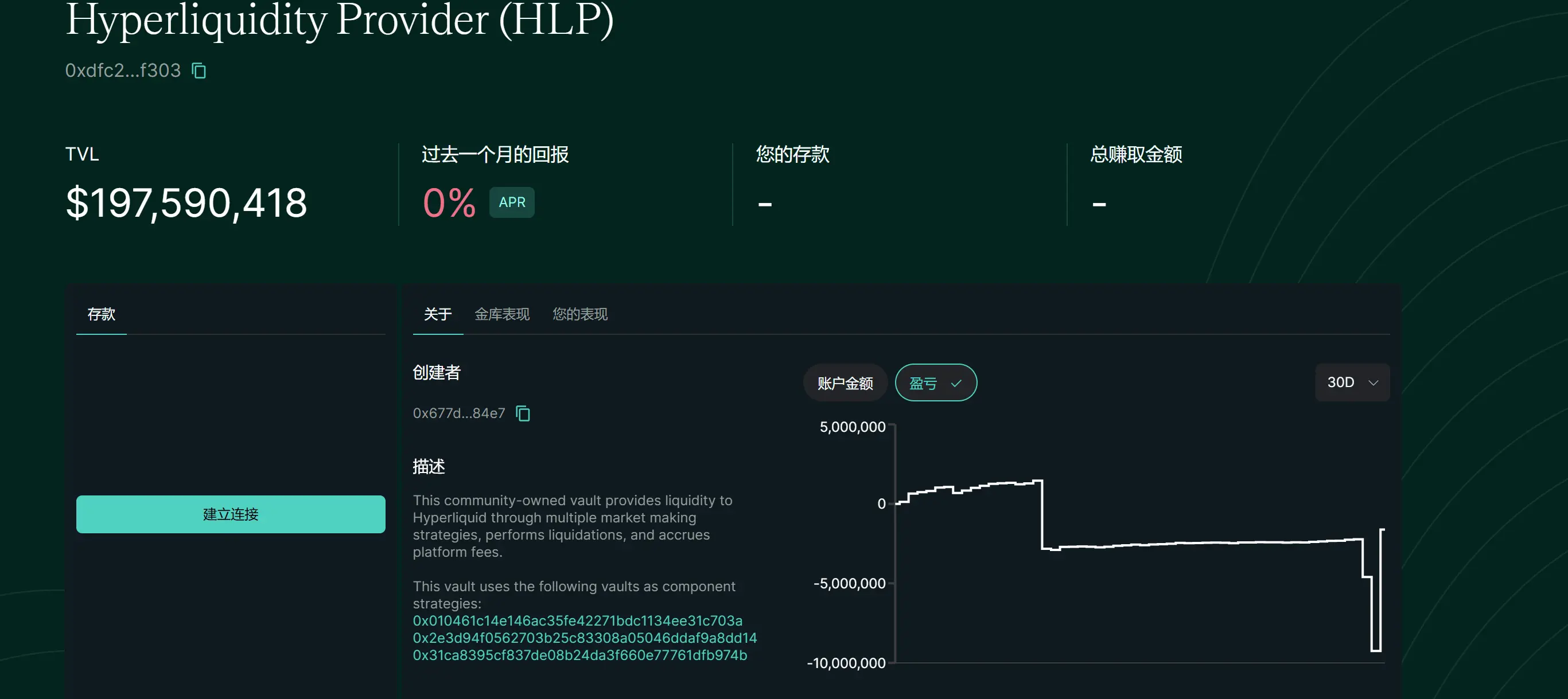
The liquidity service provider Quote Markets team member filo published a review of the XPL flash crash event on Hyperliquid. During the flash crash of XPL on Hyperliquid, 16 wallets associated with funds and trading activities withdrew approximately $2,038,600 in margin before the price plummeted, leading to HLP taking over a large number of XPL long positions.HLP ultimately took over about 160 million XPL and completed the sale within approximately 75 minutes, incurring a loss of about $555,787, equivalent to 55.6% of the clearing vault's own funds. Investigations showed that 14 of the 16 wallets had connections in terms of funding sources or trading activities, with 12 wallets withdrawing funds in advance, contributing to 90.7% of the positions taken over by HLP. However, the investigation did not find direct evidence that these wallets caused the XPL crash, nor could it confirm whether they hedged on other trading platforms.It is worth noting that these 16 wallets did not profit from this event on Hyperliquid, collectively incurring a loss of about $711,000. Additionally, XPL had already dropped about 6% before the first liquidation occurred on Hyperliquid, so the liquidation was not the starting point of this crash, and the initial active selling volume of Binance perpetual contracts was also significantly larger.

Hyperliquid co-founder responds to concerns about agreement security: Leveraging system and HLP liquidation mechanism have been updated

ChainCatcher message, Hyperliquid co-founder @chameleon_jeff responded on X to concerns that "the Hyperliquid protocol may suffer significant losses due to market manipulation":Hyperliquid's margin design strictly ensures the platform's solvency through mathematical mechanisms, with HLP's losses always limited to its own treasury, and the protocol's operation never relying on HLP------this feature existed prior to the JELLYJELLY incident. The newly added protective mechanisms after the incident only optimize HLP's loss resistance in backup liquidation, and the underlying architecture of the protocol has not changed. In the recent JELLYJELLY incident, an attacker attempted to manipulate HLP (liquidity provider pool) by establishing a massive long and short position on themselves. Although the unliquidated contract limit at that time allowed for the establishment of a position worth 4 million USDC, the logical flaw was that HLP used its entire fund balance as collateral for this liquidation. It should be clarified that the platform itself does not face solvency risks, but HLP did face excessive risk exposure due to market manipulation.Currently, HLP's liquidation component treasury has set a collateral limit, restricting potential losses through the backup liquidation mechanism. Hyperliquid still maintains its original operating mechanism, processing under-collateralized positions in the following order: 1) market liquidation 2) backup liquidation 3) automatic deleveraging (ADL). The current backup liquidation of HLP has added protective mechanisms by setting loss limits, making the cost of manipulating the mark price far exceed the limited gains that can be obtained from HLP.
app_icon
ChainCatcher Building the Web3 world with innovations.