BTC $62,951.83 -0.73%
ETH $1,880.02 +0.08%
BNB $606.03 -0.17%
XRP $1.00 +0.38%
SOL $75.59 -0.08%
TRX $0.3318 -0.77%
DOGE $0.0698 +0.36%
ADA $0.1797 -1.46%
BCH $201.47 -3.06%
LINK $8.86 +1.52%
HYPE $55.68 -3.97%
AAVE $86.32 -0.94%
SUI $0.6768 -1.16%
XLM $0.1601 +0.61%
ZEC $487.36 -0.18%
BTC $62,951.83 -0.73%
ETH $1,880.02 +0.08%
BNB $606.03 -0.17%
XRP $1.00 +0.38%
SOL $75.59 -0.08%
TRX $0.3318 -0.77%
DOGE $0.0698 +0.36%
ADA $0.1797 -1.46%
BCH $201.47 -3.06%
LINK $8.86 +1.52%
HYPE $55.68 -3.97%
AAVE $86.32 -0.94%
SUI $0.6768 -1.16%
XLM $0.1601 +0.61%
ZEC $487.36 -0.18%

cloud

All
Article
Flash

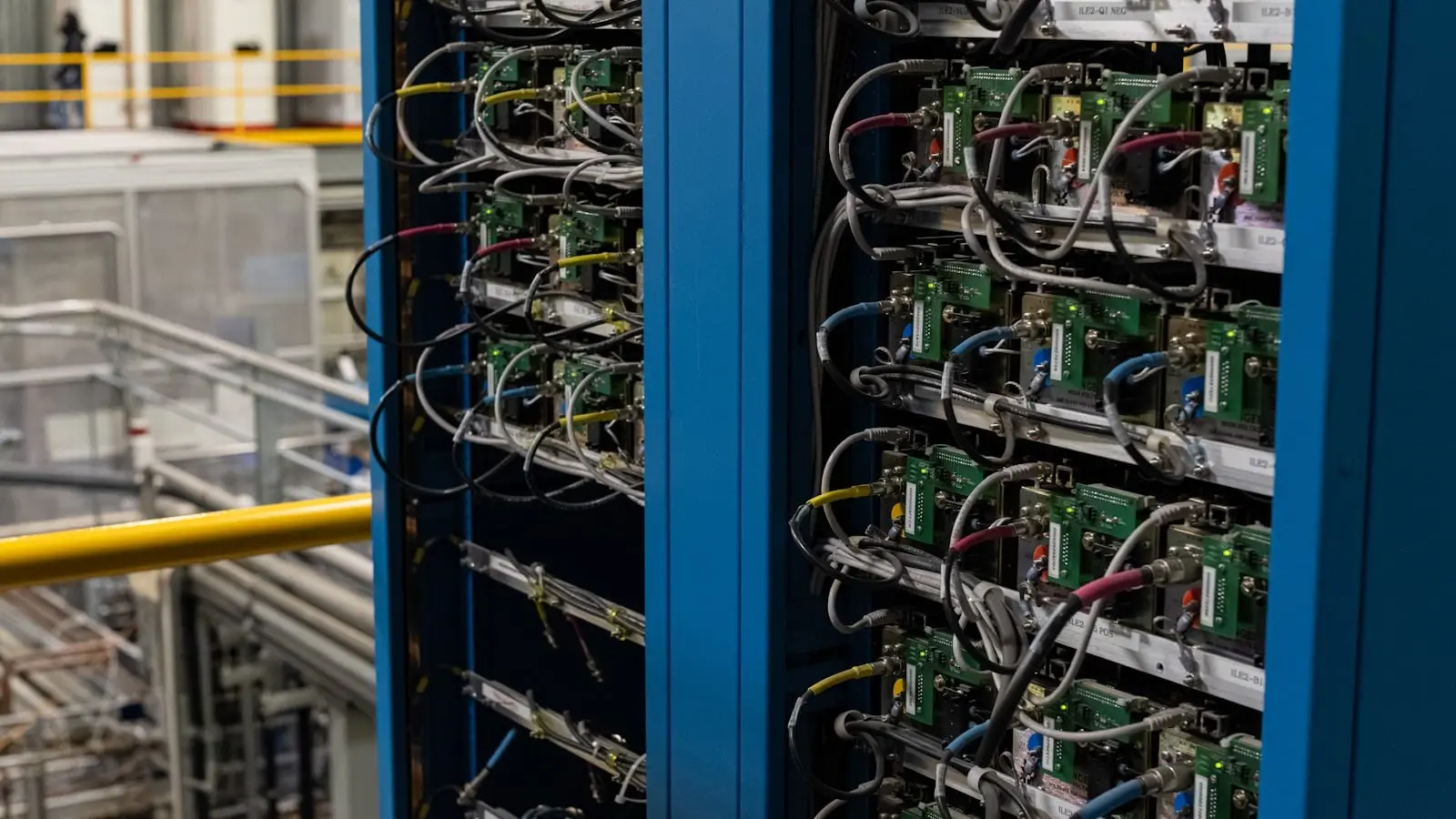
hot_img Counterpoint: If the United States bans imports of Chinese optical modules, it will backfire on domestic cloud vendors rather than just Chinese suppliers

According to Counterpoint Research analysis, if the proposed import ban on Chinese optical modules by the Federal Communications Commission (FCC) in the United States is implemented, it will primarily impact American cloud providers rather than Chinese suppliers. InnoLight leads the global data center optical module revenue with approximately 27% market share, while Coherent ranks second with about 17%. Chinese manufacturers collectively account for about two-thirds of the global unit supply and approximately 60% of the optical communication module revenue.The analysis points out that Western suppliers like Coherent and Lumentum lack sufficient cleanroom capacity, automated packaging infrastructure, and yield scale in the short term, making it impossible to fill the capacity gap left by Chinese manufacturers within 12-24 months. This could lead to delays in AI cluster deployments by several quarters and increase material costs for cloud providers. At the same time, Chinese module manufacturers rely on high-end 800G/1.6T module revenue from North American hyperscale customers for over 90%, but have achieved partial capacity relocation by establishing factories in Thailand.Counterpoint emphasizes that the optical module supply chain is a highly interdependent system. Chinese manufacturers heavily procure DSP chips from Broadcom and Marvell, as well as lasers and optical chips from Lumentum, Coherent, and Mitsubishi Electric. A forced separation would disrupt the entire ecosystem.

Cardone Capital increased its holdings by 22.3 million USD in BTC, and Ruihe Digital Cloud Mining obtained 32 bitcoins

According to BBX data, yesterday global listed companies, large asset management institutions, and treasury protocols disclosed the latest real dynamics in the purchase and reserve allocation of crypto assets, with the core information as follows:Cardone Capital increased its holdings by 350 bitcoins: Grant Cardone, CEO of the real estate investment company Cardone Capital, announced that Cardone Capital has recently increased its holdings by 350 bitcoins (worth approximately $22.3 million) in the secondary market, further expanding the proportion of digital asset allocation in its real estate asset management system.Ethereum treasury protocol ETH Strategy increased its holdings by 2,520 ETH: The Ethereum treasury protocol ETH Strategy announced that it has again increased its holdings by 2,520 ETH. After this increase, its total Ethereum holdings have significantly risen from the previous amount to 6,920 ETH.OranjeBTC steadily increased its holdings by 30 bitcoins: Brazilian listed company OranjeBTC (B3: $OBTC3) disclosed the latest treasury data, stating that the company has again purchased 30 bitcoins. After this accumulation, its total bitcoin holdings have steadily risen to 3,948 BTC.Ruihe Smart (03680.HK) obtained 32.73 BTC through cloud mining: Hong Kong listed company Ruihe Smart (03680.HK) announced that the company successfully obtained 32.73 bitcoins as rewards through its cloud mining business on August 2 (worth approximately $2.71 million), continuously acquiring native crypto assets through its main business liquidation.

hot_img Analyst: OpenAI and Anthropic may account for over 70% of the AI revenue of the three major cloud vendors, highlighting the concentrated risk in data center investments

According to technology analyst Ed Zitron, citing estimates from institutions such as Barclays, UBS, and Wells Fargo, Microsoft, Google, and Amazon, the three major cloud providers, may see over 70% of their AI revenue coming from OpenAI and Anthropic. Specifically, Barclays analyst Ross Sandler estimates that about 73% of Amazon AWS's AI revenue in 2026 will come from these two companies; UBS analyst Stephen Ju estimates that approximately 28% of Google Cloud's revenue in 2026 and over 48% in 2027 will come from them; Wells Fargo estimates that about 23% of Microsoft Azure's revenue in FY2026 and about 35% in FY2027 will come from these two AI labs.The analysis indicates that AWS's AI revenue in 2026, excluding OpenAI/Anthropic, is expected to be only about 8.5 billion dollars, while Amazon's capital expenditure for that year is expected to reach 220 billion dollars. Google's Vertex AI platform revenue in 2026 is expected to be about 28.3 billion dollars, but during the same period, the computing power expenditure for OpenAI and Anthropic is expected to exceed 35.6 billion dollars. Microsoft's AI revenue in FY2026 is about 34.5 billion dollars, with capital expenditure during the same period of about 115.9 billion dollars. This analysis has raised market concerns about the overbuilding of AI data centers and the sustainability of demand, questioning whether the three major cloud providers should disclose customer revenue concentration risks more transparently. Currently, Microsoft, Google, and Amazon have not publicly responded to this.

Cloudflare launches AI proxy wallet, supporting autonomous payment API for agents

According to official news, Cloudflare announced the launch of Cloudflare Wallets, providing payment and identity infrastructure for AI Agents.Cloudflare stated that currently, when AI Agents attempt new APIs, they typically need to go through registration, login, payment, and API key generation processes designed for humans. This lack of stable identity and native payment capabilities makes it difficult for agents to autonomously explore and compare different services, limiting the development of agent commerce. The newly launched wallet system aims to address this issue, allowing AI Agents to more conveniently purchase APIs, content, and other digital services.Cloudflare Wallets will support two modes: Account Wallets and Virtual Wallets. Among them, Account Wallets are aimed at individual and business users, allowing them to recharge, manage funds, and allocate budgets for AI Agents; Virtual Wallets are specifically designed for AI Agents, operating through API keys and allowing users to set spending limits, whitelists, and single transaction caps as security rules, enabling agents to autonomously call APIs and purchase services within a controlled range.In addition, Cloudflare Wallets will support stablecoin storage, micropayments based on the x402 protocol, and will integrate with Cloudflare's previously launched Monetization Gateway, providing automated trading capabilities for websites and applications aimed at AI Agents.Cloudflare stated that the future internet will gradually form a new "agent economy" driven by AI Agents, where wallets, payments, and identity verification will become key infrastructure. Through the cloudflare.pay identity identifier, AI Agents can obtain a readable identity name, helping merchants identify their associated accounts and organizations while enhancing transaction transparency.Cloudflare claims it will continue to improve the agent commerce ecosystem, providing developers and businesses with the foundational tools to support AI Agents in autonomously purchasing, selling, and interacting, promoting the transition of the internet from a human-oriented service model to an agent-oriented automated market.
app_icon
ChainCatcher Building the Web3 world with innovations.