Tron Industry Weekly Report: Technology stocks sold off, cryptocurrency ETF funds flowed out, detailed explanation of scalable Layer 1 DAC for the quantum era

 The total financing of 1 million USD, led by Unicorn Crypto Ventures—building a long-term secure foundation for the quantum era with a three-layer sharding architecture, protected transaction flows, and a dual-asset economic model for a scalable EVM Layer 1 DAC.
# I. Outlook
1. Summary of Macroeconomic Aspects and Future Predictions
Macroeconomic and U.S. stock market review (November 2, 2026 - November 8, 2026):
This week, the global macro market continued to grapple with the resilience of the U.S. economy, persistent inflation, and expectations regarding the Federal Reserve's monetary policy, putting overall pressure on U.S. stocks, with the technology sector being the main area of adjustment. As of November 6, the S&P 500 index fell 2.7% for the week, the Nasdaq index dropped 3.4%, and the Dow Jones index decreased by 0.9%. After the U.S. midterm elections, the market briefly rebounded, but subsequently, AI technology stocks and the semiconductor sector faced concentrated sell-offs, reflecting ongoing market concerns about the massive capital expenditures in artificial intelligence, profit realization capabilities, and potential regulatory risks. Meanwhile, the U.S. job market remained resilient, and inflationary pressures have not significantly eased, reinforcing market expectations for the Federal Reserve to maintain a tight monetary policy. Overall, U.S. stocks are gradually shifting from the valuation expansion phase driven by the previous AI investment boom to a repricing of corporate earnings, capital expenditure returns, and interest rate environments, with valuation pressures particularly pronounced in technology growth stocks, leading to a decline in market risk appetite.
Future macroeconomic and U.S. stock market predictions (November 9, 2026 - November 15, 2026):
Next week, the market's focus will shift to U.S. October CPI, PPI inflation data, and expectations for the Federal Reserve's December interest rate decision, with U.S. stocks expected to maintain high volatility and structural differentiation. If inflation data exceeds expectations, it may further strengthen expectations for tight monetary policy, pushing U.S. Treasury yields and the dollar stronger, which would continue to suppress the Nasdaq and high-valuation technology stocks; conversely, if inflation cools, it may alleviate market tightening concerns and drive a temporary rebound in the technology sector and risk assets. Considering the significant adjustments in semiconductor and AI-related stocks this week, there is a short-term technical repair demand, but concerns about AI investment returns, capital expenditures of tech giants, and regulatory policies have not been eliminated, and the sustainability of the rebound still needs to be observed. Overall, it is expected that U.S. stocks will mainly undergo a volatile consolidation next week, with the technology sector possibly experiencing an oversold rebound, but before uncertainties regarding inflation and interest rates dissipate, the market still faces risks of further valuation adjustments.
2. Market Changes and Warnings in the Cryptocurrency Industry
Cryptocurrency market changes (November 2, 2026 - November 8, 2026):
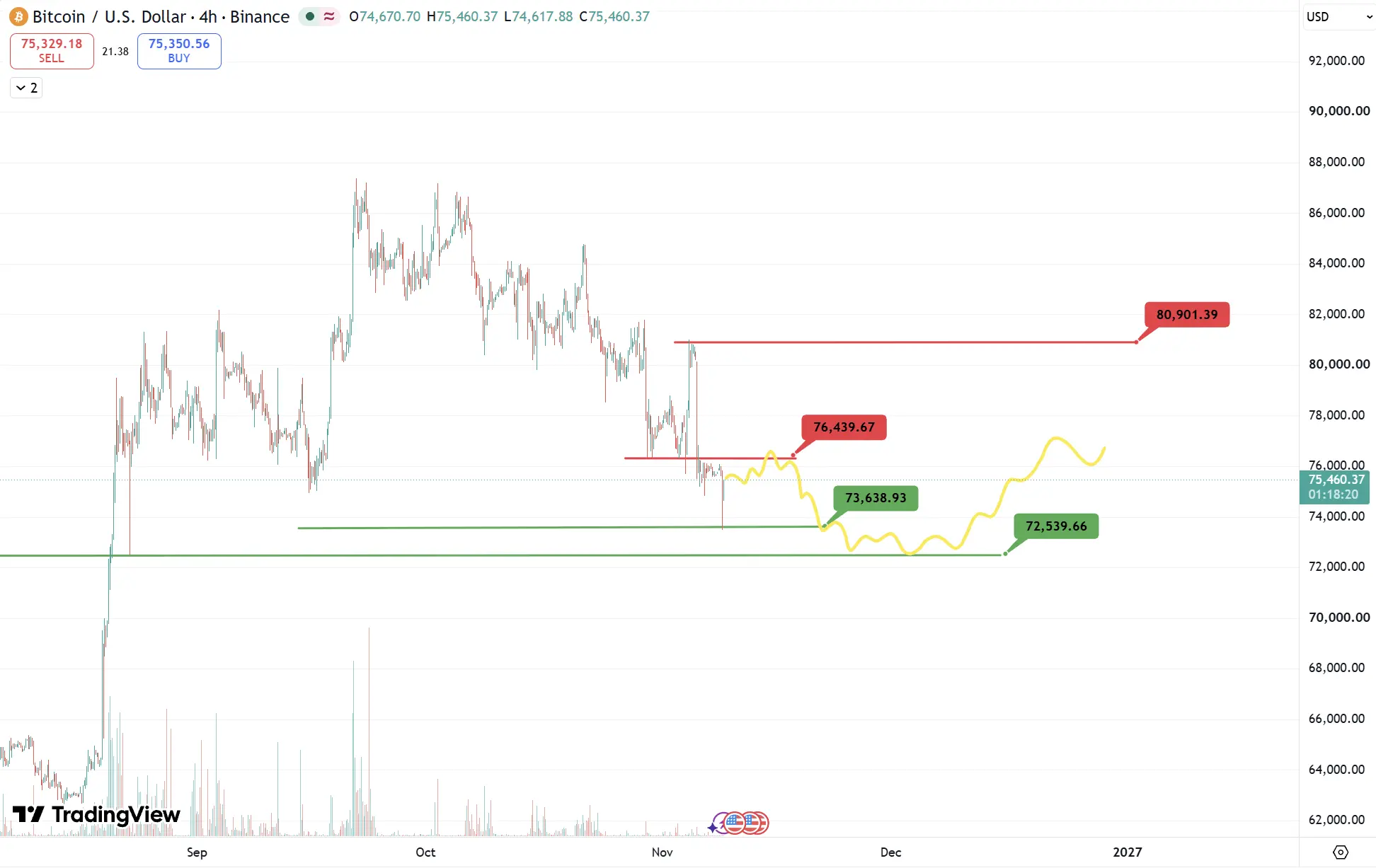
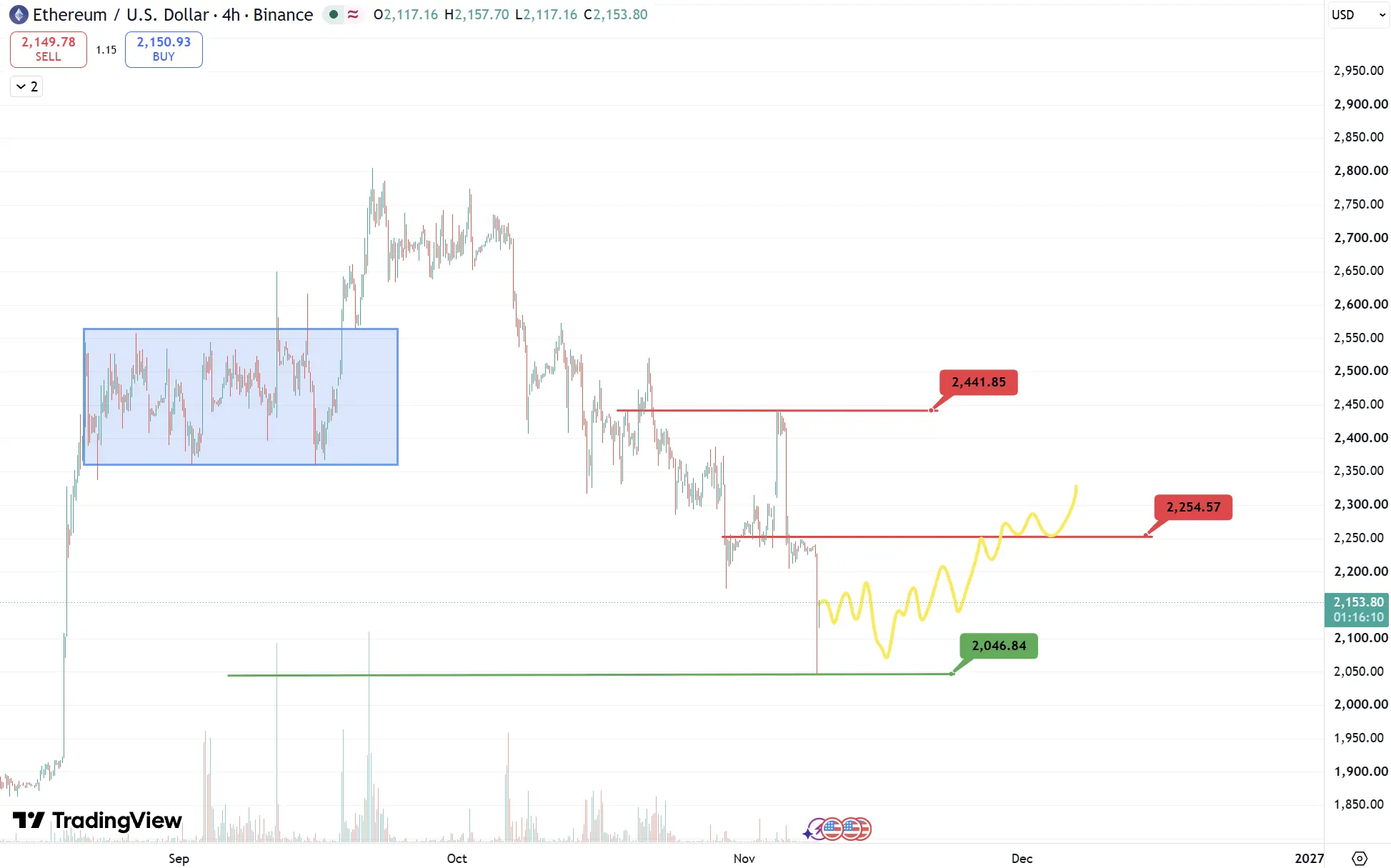
This week, the cryptocurrency market overall showed a pattern of rising and then falling, with a downward trend, influenced by the results of the U.S. midterm elections, rising inflation and interest rate hike expectations, sell-offs in tech stocks, and continued outflows of institutional funds, leading to a significant decline in market risk appetite. As of November 8, the total market capitalization of cryptocurrencies worldwide was approximately $2.56 trillion, down about 2.6% over the past seven days; Bitcoin briefly surpassed $80,000 on November 4, then quickly fell back to around $75,000, with a weekly decline of about 2.7%; Ethereum dropped to around $2,230, with a weekly decline of about 1.6%; SOL and XRP fell about 7.0% and 7.2%, respectively, with altcoins under overall pressure. On the funding side, U.S. spot cryptocurrency ETFs continued to face redemptions, and the outflow of institutional funds further weakened market liquidity. Meanwhile, the significant adjustment in tech stocks triggered cross-market risk transmission, with over $1 billion in leveraged liquidations occurring in the cryptocurrency derivatives market around November 5, escalating market panic. Overall, this week's market was primarily driven by expectations of tightening macro liquidity, outflows of institutional funds, and high leverage unwinding, with funds further concentrating on mainstream assets, exacerbating the differentiation of altcoins, and the market has not formed a clear trend reversal signal.
Future market predictions (November 9, 2026 - November 15, 2026):
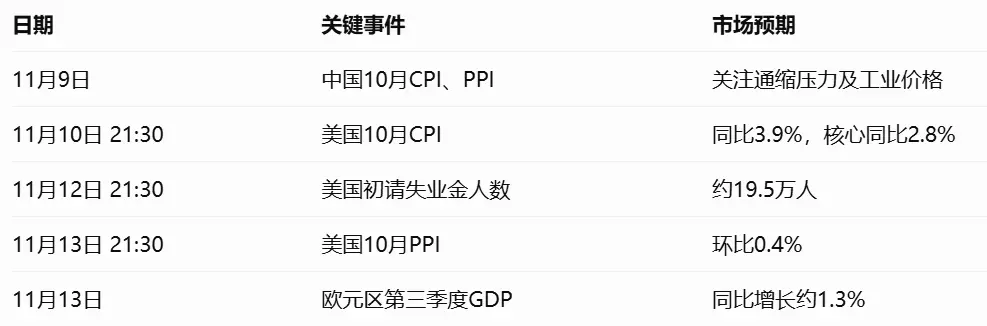
Next week, the cryptocurrency market is expected to maintain a weak and volatile pattern, with short-term trends mainly dependent on U.S. inflation data, changes in Federal Reserve policy expectations, and the flow of funds into spot ETFs. Key attention will be on the U.S. October CPI data released on November 10 and the PPI data on November 13. If inflation continues to exceed expectations, the market may further raise the probability of Federal Reserve interest rate hikes, pushing the dollar and U.S. Treasury yields stronger, thereby suppressing the performance of risk assets such as Bitcoin and Ethereum; conversely, if inflation is below expectations, coupled with a slowdown in ETF fund outflows, it may drive a technical rebound in the market. On the technical side, Bitcoin's short-term focus is on the support area of $74,000 - $75,000; if it effectively breaks below, it may further decline; on the upside, attention is on the resistance range of $77,000 - $80,000, and only by regaining stability and with continuous fund inflow can market sentiment be expected to improve significantly. Ethereum and mainstream altcoins are expected to continue to fluctuate with Bitcoin, while RWA, stablecoins, on-chain derivatives, and privacy sectors may continue to present structural opportunities, but the overall sustainability of fund rotation still needs to be observed. In summary, next week the market is more likely to be in a high-volatility adjustment phase driven by macro data, with a need to be vigilant about the risks of inflation exceeding expectations, continued net outflows from ETFs, and secondary declines triggered by leveraged liquidations.
3. Industry and Sector Hotspots
From November 2 to November 8, 2026, the primary market financing hotspots in the cryptocurrency industry were mainly concentrated in RWA asset tokenization, institutional-level trading infrastructure, stablecoin payments, and prediction markets. According to the financing statistics disclosed this week, there were 13 investment transactions from November 1 to 7, of which 6 disclosed financing amounts, totaling approximately $43.5 million. Key projects include the physical uranium asset tokenization trading platform Uranium Digital, which completed $16.5 million in Series A financing led by Blockchain Capital; institutional-level liquidity and trading service provider LO:TECH completed $12 million in Series A financing; stablecoin payment platform Takenos received an additional $7 million in seed round financing; tokenized asset collateral financing platform Lombard Systems completed $4 million in financing; and live prediction market CRSHMARKET completed $3.5 million in seed round financing.
# II. Market Hotspot Sectors and Potential Projects of the Week
1. Overview of Potential Projects
1.1. Analysis of the current total financing of $1 million, led by Unicorn Crypto Ventures—building a long-term secure foundation for the quantum era with a three-layer sharding architecture, protected transaction flow, and dual-asset economic model targeting scalable EVM Layer 1 DAC.
Introduction
DAC is an EVM-compatible sharded Layer 1 public chain aimed at smart contracts, asset tokenization, decentralized applications, and enterprise-level digital workflows. The project's core differentiation lies not only in performance but in combining sharded execution, multi-layer coordination, protected transaction propagation, dual-asset economic structure, and security direction aimed at the quantum era into a unified architecture.
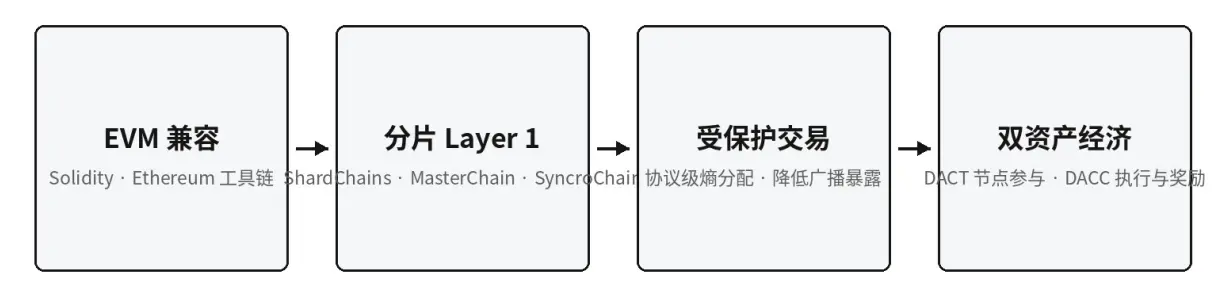
DAC aims to address three types of issues: first, the scalability and coordination pressure of a single-layer execution model as transaction volume and application complexity increase; second, the information exposure brought by the public Mempool during the transaction broadcasting phase; and third, the potential structural challenges that the current blockchain's long-term reliance on public-key cryptography and traditional mining models may face with the development of quantum computing. The project employs DACT and DACC as dual assets at the economic level: DACT is used for node role activation and network participation; DACC serves as the chain-native operational currency for transaction fees, smart contract execution, and node rewards. By splitting functions, DAC attempts to have "network access rights" and "on-chain execution demands" carried by different assets.
Brief Description of the Protocol Mechanism
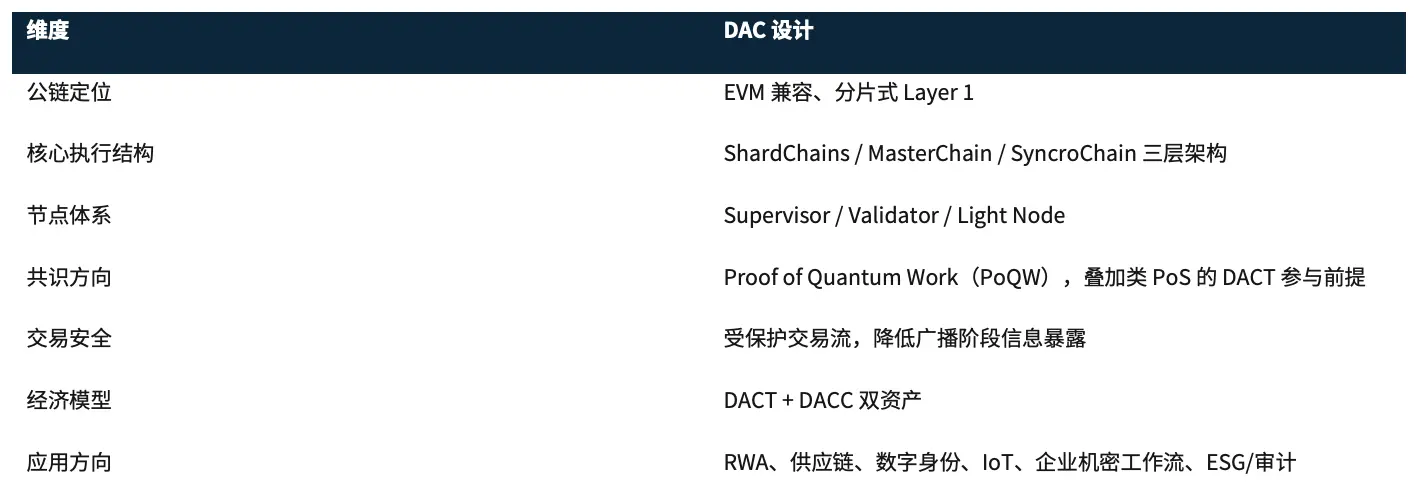
DAC's mission is to provide a secure, scalable, and forward-looking blockchain infrastructure that supports decentralized applications, asset tokenization ecosystems, and enterprise-level digital processes within a single Layer 1 environment. The white paper emphasizes three principles: operational clarity, infrastructure readiness, and long-term resilience. Project goals include promoting real business adoption, enhancing scalability through layering and sharding, improving confidentiality during the transaction broadcasting phase, maintaining open participation, and preparing for long-term security against changes in quantum computing.
Technical Architecture: The Core Entity of DAC
The technical core of DAC is a layered, sharded, and clearly defined role-based Layer 1 architecture. Developers still use Solidity and mature Ethereum toolchains, so application migration and development experience remain EVM-compatible; however, in terms of underlying execution, coordination, finality, and transaction propagation, DAC adopts designs different from traditional single-layer chains.
- Three-layer network structure: ShardChains, MasterChain, and SyncroChain
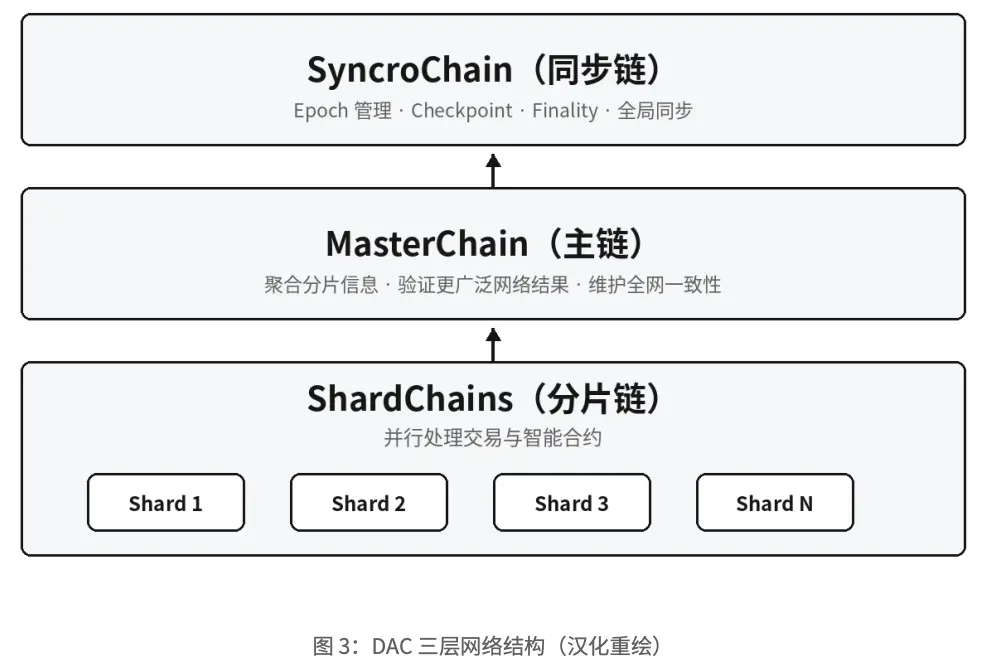
ShardChains are responsible for transaction execution and smart contract processing. The network distributes activity loads through multiple parallel execution environments, allowing throughput capacity not to be concentrated on a single execution point. Essentially, it expands "execution" horizontally across multiple Shards, providing a capacity foundation for higher transaction volumes and more complex application logic. The MasterChain sits above the sharded execution, taking on aggregation and coordination responsibilities. It collects information from each shard layer, verifies a broader range of network results, and maintains overall system consistency. In other words, ShardChains solve parallel processing, while the MasterChain is responsible for reorganizing parallel results into a unified network state.
The SyncroChain is the highest coordination layer, responsible for Epoch management, Checkpoints, and Finality. It maintains global network integrity and drives the structured synchronization relied upon by the multi-layer architecture. The three-layer relationship forms a clear responsibility chain of "execution - aggregation - finality."
- Node Roles and Responsibility Boundaries
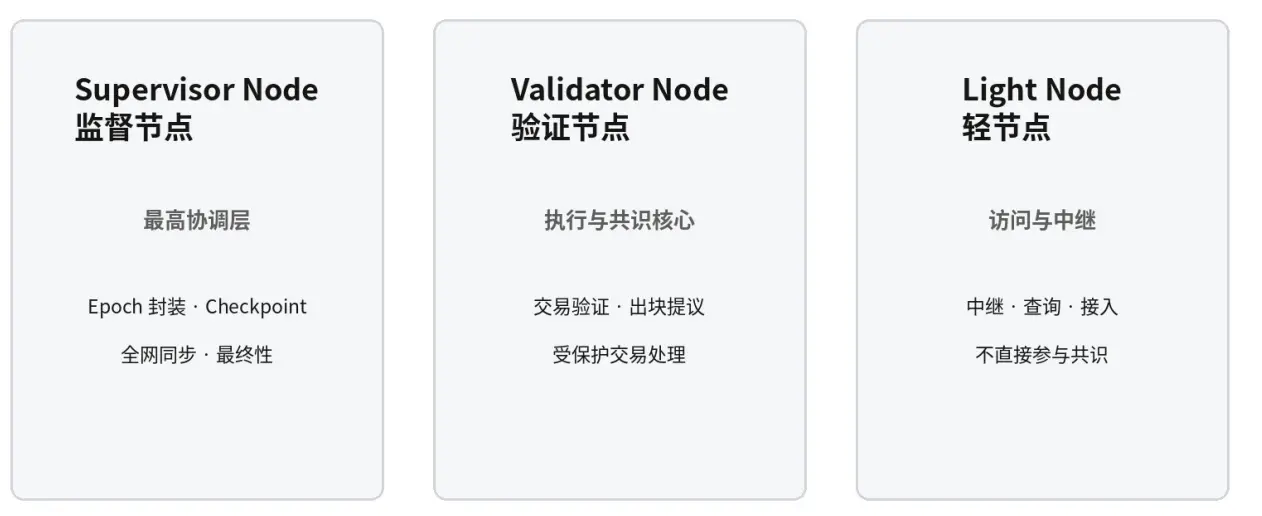
Supervisor Nodes are located at the highest coordination layer of the protocol, participating in Epoch sealing, Checkpoints, and global synchronization, serving as key roles for finality and structural integrity. Running a Supervisor Node requires a high commitment of DACT to match the network responsibilities it undertakes.
Validator Nodes are responsible for transaction validation, block proposals, and network execution, also being key participants in the protected transaction flow. Validators gain eligibility through DACT staking and dedicated node software. Light Nodes provide relaying, access, and query functions, not directly participating in consensus but helping to lower access resource thresholds and enhance network accessibility.
- Multi-layer Consensus and Proof of Quantum Work (PoQW)
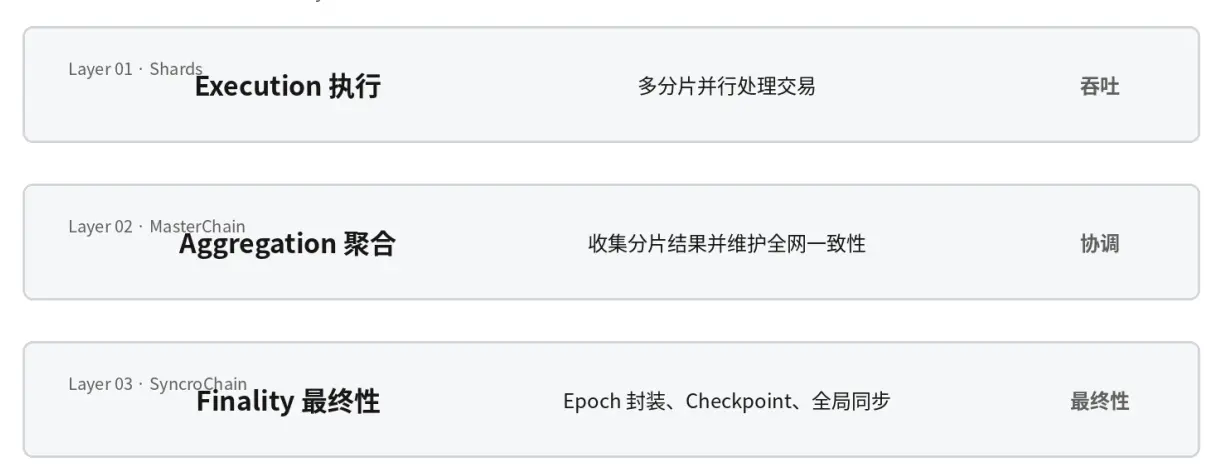
The consensus architecture of DAC separates three functions: shard layer execution, MasterChain aggregation, and SyncroChain final confirmation. This allows for decentralized execution of load without sacrificing overall network consistency, and establishes a structured relationship between throughput, verification, and global coordination.
In the block production layer, the white paper states that DAC adopts Proof of Quantum Work (PoQW) and incorporates certain features of the Proof-of-Stake protocol. The commitment of DACT is the technical prerequisite for the activation and operation of Validator Nodes and Supervisor Nodes, thus forming one of the foundations for the network's consensus capability. The white paper emphasizes that this model transcends traditional hash-based competitive consensus and aligns with the direction in which quantum computing may reshape blockchain security.
- Protected Transaction Flow: Incorporating Privacy into Protocol Design During the Broadcasting Phase
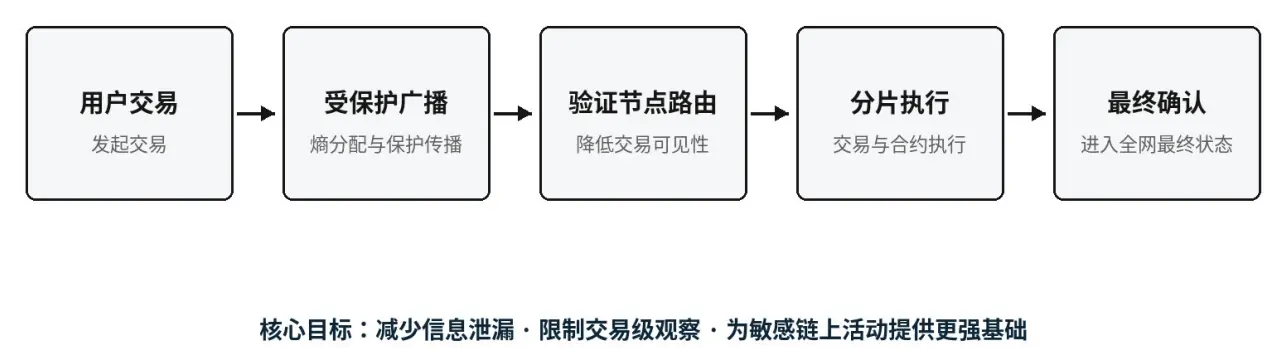
Traditional public blockchains expose transaction details during the transaction broadcasting and Mempool propagation phases. DAC views this phase as a structural security weakness and proposes a transaction flow based on protocol-level entropy assignment and protected broadcasting to reduce information visibility during the propagation process.
According to the white paper, the goal of this mechanism is to reduce information leakage, limit transaction-level observation, and provide a stronger foundation for on-chain activities that include sensitive operational data, transaction timing, or internal workflow logic, while maintaining EVM environment compatibility. Specific entropy generation, propagation routing, verification methods, and attack models are also included in the Yellow Paper, so this research report does not make additional inferences about unpublished mechanisms.
- Quantum-Ready Security: Security Roadmap for the Quantum Era
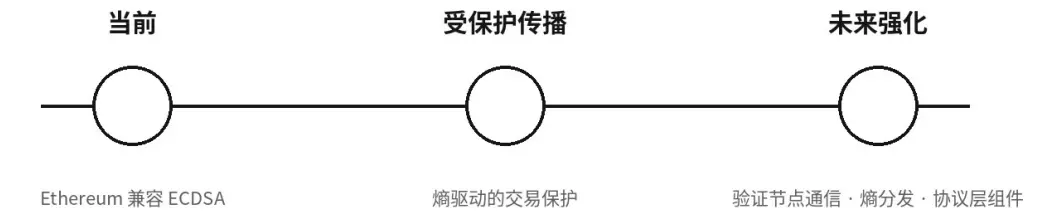
DAC views quantum computing as a long-term structural challenge to blockchain infrastructure, focusing on public key cryptography, transaction broadcasting visibility, and the pressures that traditional mining model assumptions may face. Current user transactions still maintain Ethereum-compatible ECDSA signatures to ensure continuity with existing wallets, development tools, and application standards.
Therefore, the precise meaning of "Quantum-Ready" in this white paper is closer to preparing for quantum-era risks through protocol architecture, protected propagation, and subsequent hardening routes, rather than claiming that the current user signature system has fully migrated to post-quantum cryptography. The white paper further plans to strengthen communication between validation nodes, entropy distribution, and other protocol layer components.
- Mainnet and Testnet: Progressive Deployment Model
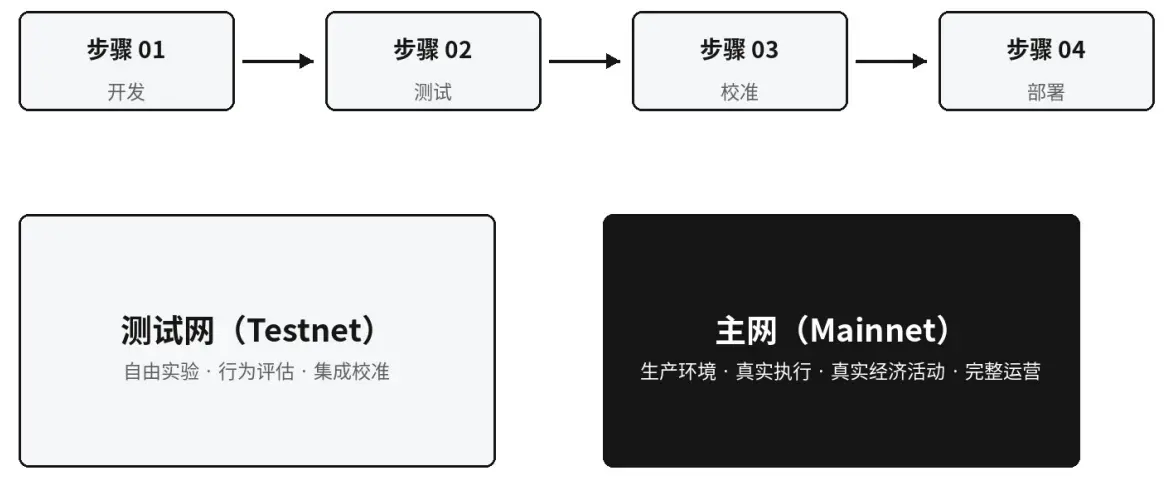
DAC provides both Testnet and Mainnet. The testnet is used for developers, partners, and node operators to conduct application testing, behavior assessment, and execution parameter calibration; the mainnet is used for real production execution, DACC/DACT economic activities, and complete protocol operations. This phased approach aims to reduce integration friction from experimentation to real use.
- Smart Contracts and Asset Tokenization
DAC offers a Smart Contract Library, encouraging the use of verified and reusable smart contract components to reduce application redundancy and improve code reliability and operational consistency. Smart contracts are deployed through dedicated on-chain transactions, with DACC as the native execution resource.
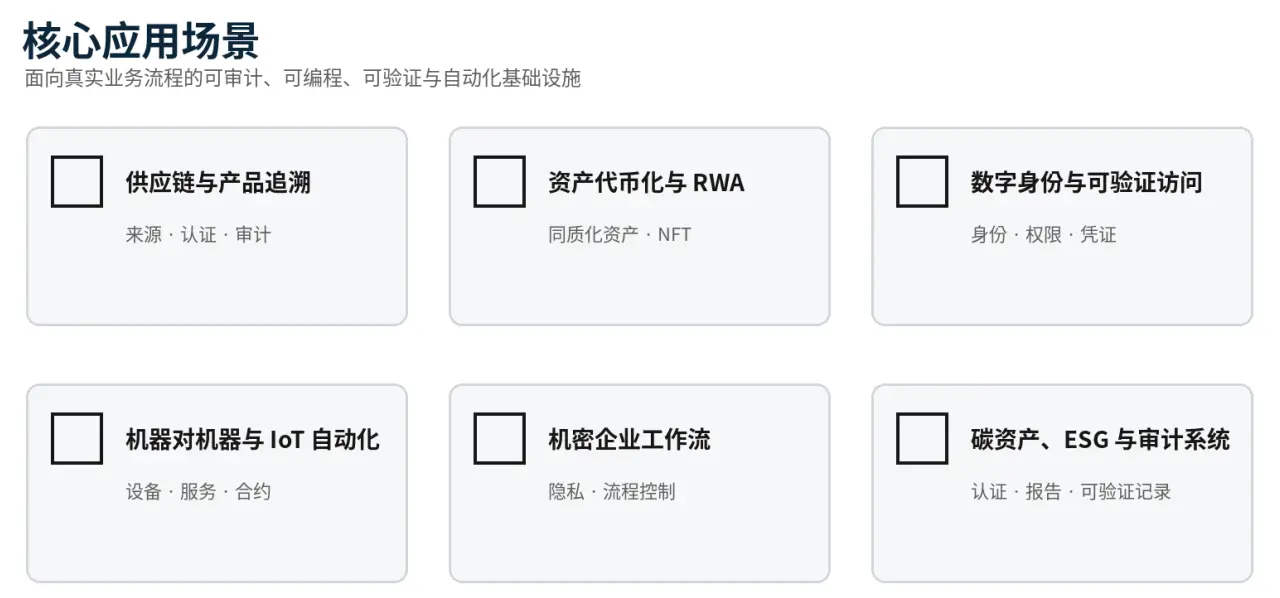
Due to full compatibility with Ethereum standards and Solidity, DAC can issue fungible and non-fungible assets using existing smart contract frameworks. The tokenization directions listed in the white paper include financial instruments, structures related to real estate, digital certificates, access models, and industry-specific asset representations.
- Digital Identity, Signatures, and Data Security
DAC builds identity and address models for different participants, including individuals, enterprises, IoT devices, and automated services. User transactions retain Ethereum-compatible ECDSA signatures, emphasizing continuity with existing wallets and toolchains; the protocol layer enhances transaction processing security through node structure, execution models, and protected broadcasting logic.
Data security in DAC is defined as a protocol-level principle: a multi-layer architecture disperses responsibility, with the Validator structure and execution model jointly supporting scalability and stronger processing control, aiming to ensure that critical actions can be verified, executions can be structured, and results can be audited.
Dual Asset Economic Model
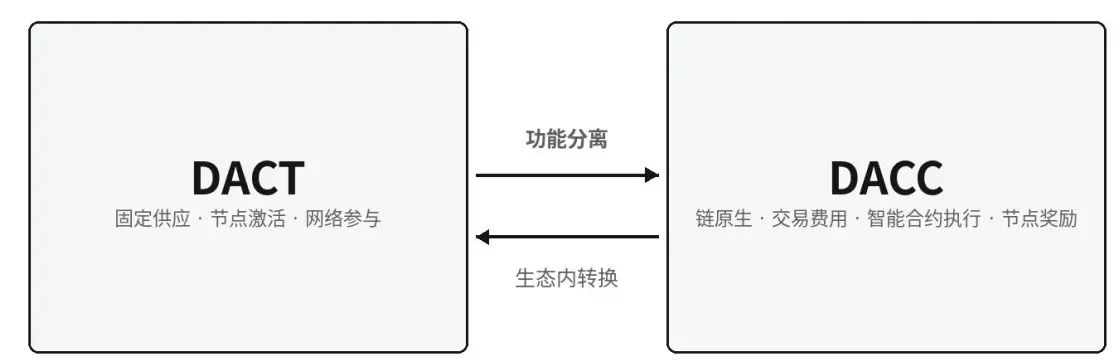
DACT is the utility token of the DAC ecosystem, with a fixed supply of 1 billion tokens, and its sole function is to grant holders the attributes of DAC blockchain nodes, namely activating Validator Nodes and Supervisor Nodes. DACT is issued on Ethereum and does not represent any claims, rights to income, asset rights, governance rights, or voting rights against DAC Labs Sagl.
DACC is the native operational currency of the DAC blockchain, used for transaction fees, smart contract execution, and rewards for active contributing nodes. Its issuance is tied to network activity rather than a fixed expansion independent of usage. The core logic of the dual asset structure is to separate network participation and node access (DACT) from transaction execution and infrastructure rewards (DACC).
- DACC Minting and Node Rewards
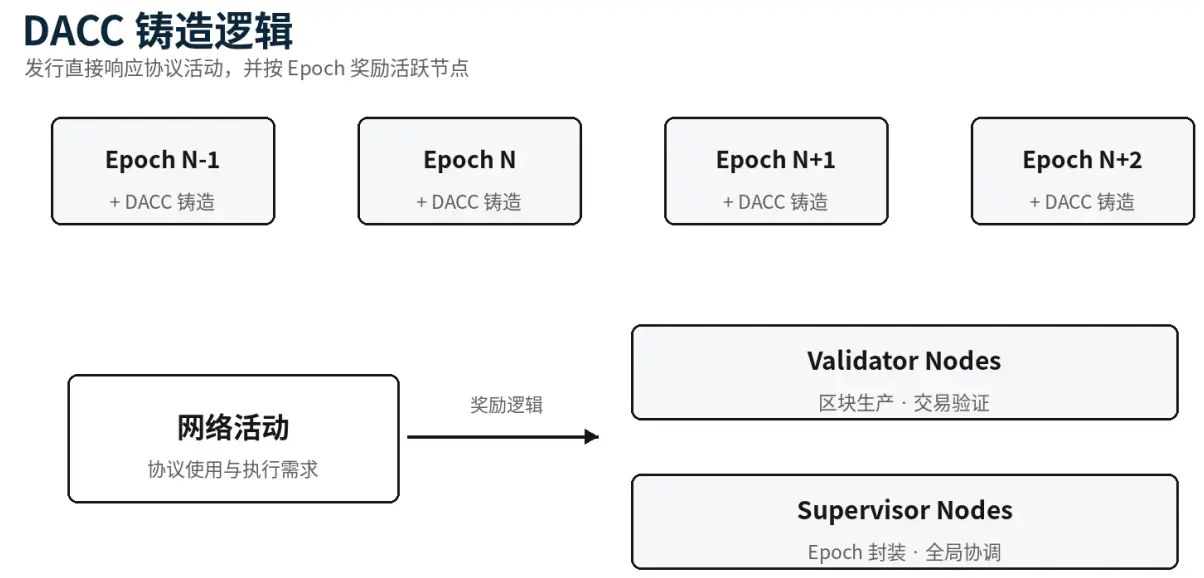
DACC is directly generated in response to protocol activity through network minting logic. Each Epoch's newly generated DACC will be allocated to Validator Nodes and Supervisor Nodes participating in network operation and consensus, with the reward level reflecting the degree of node participation and responsibility. The white paper states that the quantity of DACC generated is determined by blockchain smart contracts at the protocol layer, and neither DAC Labs Sagl nor DACT holders can directly influence the reward generation quantity.
- DACT / DACC Conversion and Balancing Mechanism
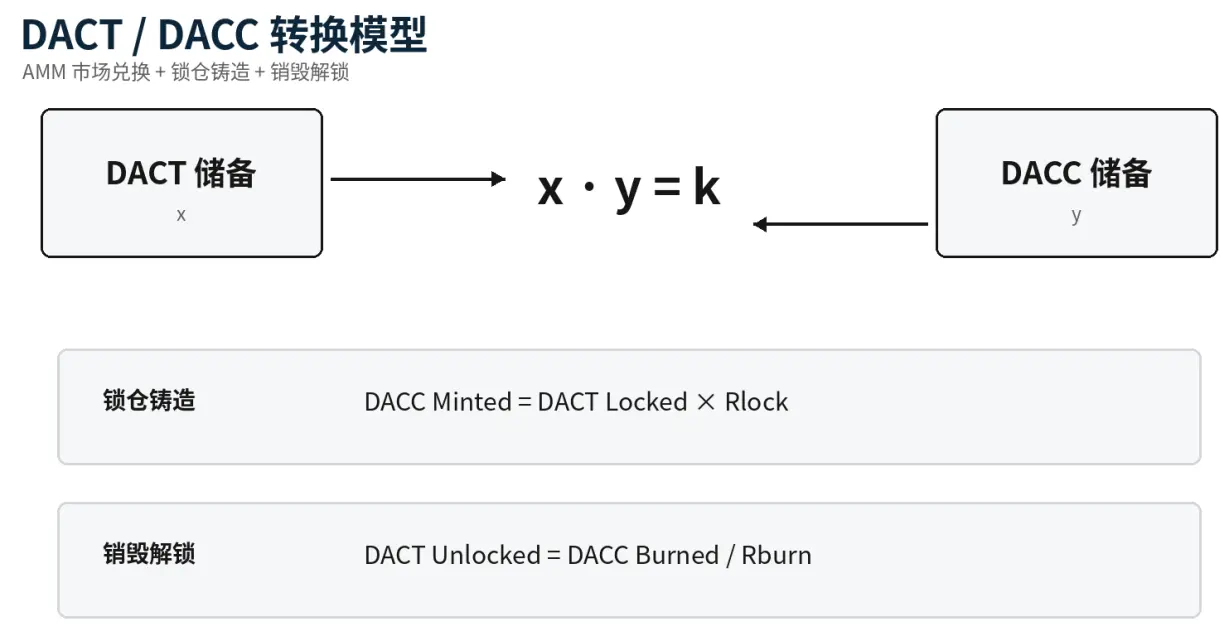
DAC supports decentralized market exchanges based on AMM, using a constant product model x · y = k, where x is the DACT reserve, y is the DACC reserve, and k is the liquidity pool constant. DAC Labs Sagl does not maintain or guarantee any exchange rates, prices, or values, nor does it provide stability or price support mechanisms; the prices of the two assets are determined by the market.
In addition to market exchanges, the protocol also designs a locking and destruction balancing mechanism: when locking DACT, DACC can be minted according to the Rlock coefficient determined by network conditions; conversely, DACT can be unlocked by destroying DACC according to the Rburn parameter. Rburn will be dynamically adjusted based on liquidity, reserves, and overall network balance.
Tron Commentary
The core advantage of DAC lies in integrating EVM compatibility, the three-layer shard architecture of ShardChain---MasterChain---SyncroChain, the protected transaction broadcasting mechanism, the PoQW consensus direction aimed at the quantum era, and the dual asset economic model of DACT and DACC within the same Layer 1, which lowers the migration threshold for Ethereum applications while balancing parallel scalability, transaction propagation privacy, node incentives, and long-term security, making it suitable for scenarios such as RWA, enterprise processes, digital identity, and the Internet of Things.
However, its shortcomings are also evident: the key implementations of PoQW, entropy distribution, and protected transaction flow are mainly left to the Yellow Paper for explanation, and the white paper lacks verifiable performance metrics, security audits, and real operational data. The three-layer network and dual asset conversion mechanism increase the understanding costs for the protocol and users, while the dynamic minting, destruction, and exchange parameters of DACC may still pose liquidity and economic stability risks. Therefore, while DAC's technical vision is forward-looking, its actual advantages still need to be proven through mainnet launch, stress testing, ecological applications, and long-term security validation.
II. Industry Data Analysis
1. Overall Market Performance
1.1. Spot BTC vs ETH Price Trends
BTC
ETH
III. Macroeconomic Data Review and Key Data Release Nodes for Next Week
Macroeconomic Data Review (November 2, 2026 - November 8, 2026)
This week, U.S. economic data overall shows characteristics of manufacturing expansion, slowing growth in the service sector, resilient employment, and persistent inflationary pressures. The October ISM Manufacturing PMI rose to 55.5, higher than the previous value of 54.5 and the expected 54.6; the ISM Services PMI fell to 54.5, lower than the previous value of 54.9. In October, ADP added 86,000 jobs, exceeding the market expectation of 69,000; September factory orders increased by 1.8% month-on-month, indicating an improvement in corporate demand. Meanwhile, the manufacturing price index remains high at 75.2, reflecting that cost pressures have not dissipated. Overall, the U.S. economy has not shown obvious signs of recession, but persistent inflation still constrains the Federal Reserve's room for easing, and the market remains cautious about the subsequent interest rate cut path.
In October, non-farm employment increased by 165,000, and the unemployment rate fell from 4.2% to 4.1%, further strengthening the judgment of the resilience of the U.S. economy. Market expectations for the Federal Reserve's interest rate hike in December have risen, becoming an important source of pressure on risk assets.
Key macro data releases next week (November 9 - November 13)
IV. Regulatory Policies
1. United States: Simultaneous Advancement of Cryptocurrency Asset Rules Consultation and Anti-Money Laundering Supervision
Important Progress (November 3 to 4): The U.S. Securities and Exchange Commission (SEC) revised rules regarding securities transfer agents, tokenized securities registration, and distributed ledger record-keeping, with the deadline for public comments on November 3. Meanwhile, the Financial Crimes Enforcement Network (FinCEN) concluded its comment period on special anti-money laundering measures related to the A7 network associated with Russia on November 4, proposing to restrict regulated financial institutions from processing fund transfers involving related sub-agents.
Regarding stablecoins, the Office of the Comptroller of the Currency (OCC) continues to advance the implementation of the GENIUS Act, with its regulatory rules for stablecoin issuers having been formally announced earlier, set to take effect on January 18, 2027, covering issuer qualifications, reserve management, liquidity, and risk control. No reliable evidence was found this week indicating the completion of legislation for the CLARITY Act.
Policy Impact: The U.S. is simultaneously improving regulations on tokenized securities, stablecoin issuance, and anti-money laundering rules for cryptocurrency funds, but it is necessary to distinguish between formally published rules and proposals still in the consultation phase.
2. Hong Kong: Expanding the Coverage of Virtual Asset Licenses and Promoting Cryptocurrency Tax Reporting System
Important Progress (November 2 to 4): The Hong Kong Financial Services and the Treasury Bureau announced plans to submit a virtual asset service regulation bill to the Legislative Council by the end of 2026, incorporating services such as virtual asset trading, custody, investment consulting, and management into a more comprehensive licensing regulatory system.
On November 4, the Hong Kong Legislative Council resumed deliberation on the tax ordinance draft related to the Cryptocurrency Asset Reporting Framework (CARF) and the revision of common reporting standards, aimed at strengthening the collection and cross-border exchange of tax information on cryptocurrency asset transactions.
Policy Impact: Hong Kong is gradually expanding its regulatory model from a trading platform-centric approach to a complete business chain that includes custody, consulting, asset management, and tax information disclosure, which is conducive to standardizing institutional participation but will increase licensing and compliance costs for related service providers. This regulatory expansion still requires the completion of corresponding legislative procedures.
3. South Korea: Major Trading Platform Security Incidents Prompt Regulatory Upgrades
Important Progress (November 2): Following security incidents at major cryptocurrency trading platforms, the Financial Services Commission (FSC) of South Korea convened the Financial Supervisory Service, financial security agencies, and major trading platforms for emergency coordination, requiring enhanced risk management for hot wallets, increased the proportion of cold wallet asset storage, strengthened monitoring of abnormal trading and fund flows around the clock, and timely reporting of abnormal access behaviors.
Regulatory authorities also emphasized improving the security reserves and cybersecurity standards of trading platforms, pushing cryptocurrency service providers to align with the security management requirements of traditional financial institutions.
Policy Impact: South Korea's regulatory focus is further shifting towards asset protection, cybersecurity, and risk preparedness mechanisms for trading platforms. In the future, trading platforms may face higher requirements for asset isolation, security audits, and operational resilience.
4. United Kingdom: Adjusting the Timeline for Cryptocurrency Tax Reporting
Important Progress (November 2): The HM Revenue and Customs (HMRC) updated the implementation guidelines for the Cryptocurrency Asset Reporting Framework (CARF), confirming that due to the online reporting system not being able to open as originally planned on January 1, 2027, the previously announced system opening date and the January 31 registration deadline for the first year have been canceled, but the first reporting deadline remains on May 31, 2027. Relevant cryptocurrency service providers are still required to fulfill their obligations for collecting and reporting user transaction data.
Policy Impact: The UK's cryptocurrency tax transparency policy continues to advance, with some delays in the construction of the reporting platform, but the obligations for data collection and tax compliance for businesses have not been canceled.
5. Brazil: Officially Implementing Trading Restrictions on Unlicensed Cryptocurrency Service Providers
Important Progress (November 6): According to Resolution No. 589 of the Central Bank of Brazil, starting from November 6, financial institutions, payment institutions, and other authorized entities regulated by the Central Bank of Brazil are generally prohibited from conducting or assisting in transactions with virtual asset service providers that have not been authorized by the Central Bank of Brazil, except for clearly permitted exceptions.
Policy Impact: Brazil's cryptocurrency regulation has entered a substantive enforcement phase, and cooperation between banks and payment channels with cryptocurrency service providers will increasingly rely on formal authorization qualifications. Unlicensed trading platforms and related service providers may face restricted fiat currency inflow and outflow channels and market access pressures.
6. Russia: Promoting the Construction of a Regulated Cryptocurrency Trading Market
Important Progress (November 2): The Moscow Exchange announced plans to open digital currency trading to qualified financial market participants starting December 1, 2026, initially adopting a pilot approach, intending to support assets such as Bitcoin, Ethereum, and USDT, with relevant participating institutions gradually connecting to the trading system.
Policy Impact: Russia is exploring the incorporation of some cryptocurrency asset trading into traditional financial market infrastructure and regulatory frameworks, but this plan does not equate to a full opening for public free trading, nor does it mean that related businesses have officially launched this week.
7. Kenya: Existing Virtual Asset Service Providers Enter Key Licensing Compliance Phase
Important Progress (November 4): According to the Kenya Virtual Asset Service Providers Act of 2025, previously operating virtual asset service providers have reached a transitional compliance milestone, and relevant institutions must meet licensing and regulatory requirements according to applicable standards, with regulatory responsibilities involving the Central Bank of Kenya (CBK) and the Capital Markets Authority (CMA).
Policy Impact: Kenya is pushing the cryptocurrency industry from a relatively loose operating environment towards formal licensing regulation, and trading platforms, custody, and other virtual asset service providers need to focus on regulatory implementation details, licensing applications, and anti-money laundering requirements. However, it cannot be assumed that all unlicensed institutions have been eliminated by enforcement solely based on the transitional period deadline.
 Risk warning Risk warning

Popular articles