The election has ended, and oil prices have plummeted! Will the market's "expectation of ceasefire" be realized?
 Core Viewpoint


 The Democratic Party achieved a landslide victory in the U.S. midterm elections, triggering a "ceasefire" sentiment in the market, with WTI crude oil plummeting over 9% in a single day. However, Iran's Supreme Leader issued a stern warning, stating that those who believe the election results can change the U.S. position are "gravely mistaken." At the same time, Donald Trump faces three options—military strikes, rapid negotiations, or maintaining the status quo—all of which come with high costs. A dramatic shift in the political landscape may actually lower Trump's willingness to negotiate. The "ceasefire expectations" for oil prices may have overestimated reality.
The Democratic Party achieved a significant victory in the U.S. midterm elections, with oil prices plummeting over 8% in a single day. The market bets that the dramatic shift in Washington's political landscape will accelerate the end of the conflict in Iran. However, from Iran's hardline stance to the complex political maneuvers in the U.S., the prospects for a ceasefire are far more difficult to predict than the trends in oil prices.
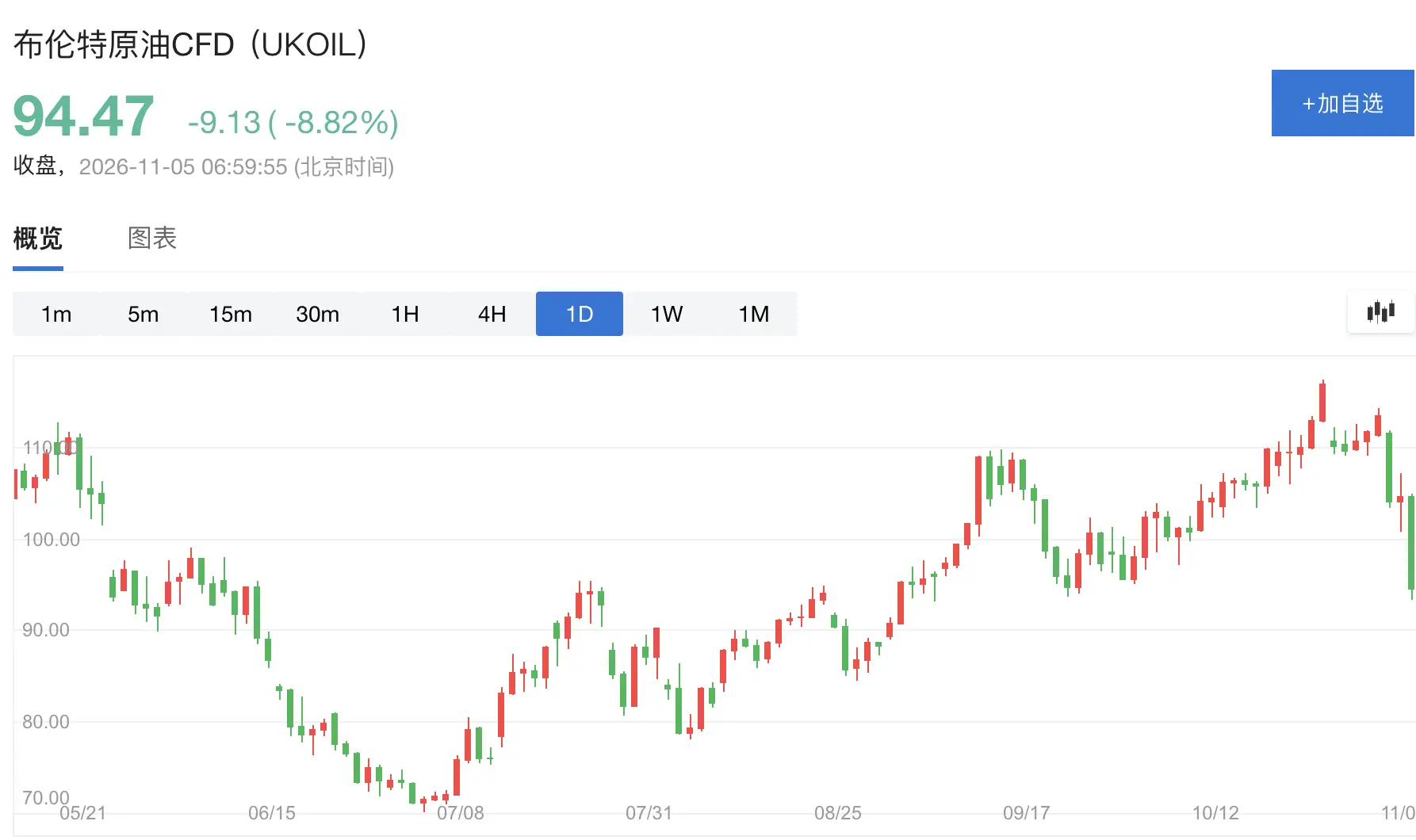
On Wednesday, news of the Democratic Party sweeping both the House and Senate in the midterm elections caused a strong shock in the energy market. WTI crude oil briefly fell to $87.13 per barrel, with a daily decline of over 9.3%; Brent crude dropped to $93.22 per barrel, with a daily decline of about 10%, marking the largest single-day drop since May. As of now, WTI has stabilized around $88 per barrel, while Brent closed near $95. Meanwhile, North Sea crude prices fell to a new low, and European natural gas prices also plummeted.
The market's intense reaction was driven by a series of concentrated political signals. U.S. Vice President Kamala Harris publicly attributed the Republican Party's crushing defeat to the conflict in Iran, stating, "The reason we lost the election is this war," and noted that Trump himself admitted this on Tuesday night. Senate Minority Leader and Democrat Chuck Schumer immediately stated that he would push to end the war that has lasted nearly nine months, claiming that some Republicans have joined this effort. House Democratic Leader Hakeem Jeffries also stated that the Democrats would promote legislation to block Trump's tariff policies and end the war in Iran.
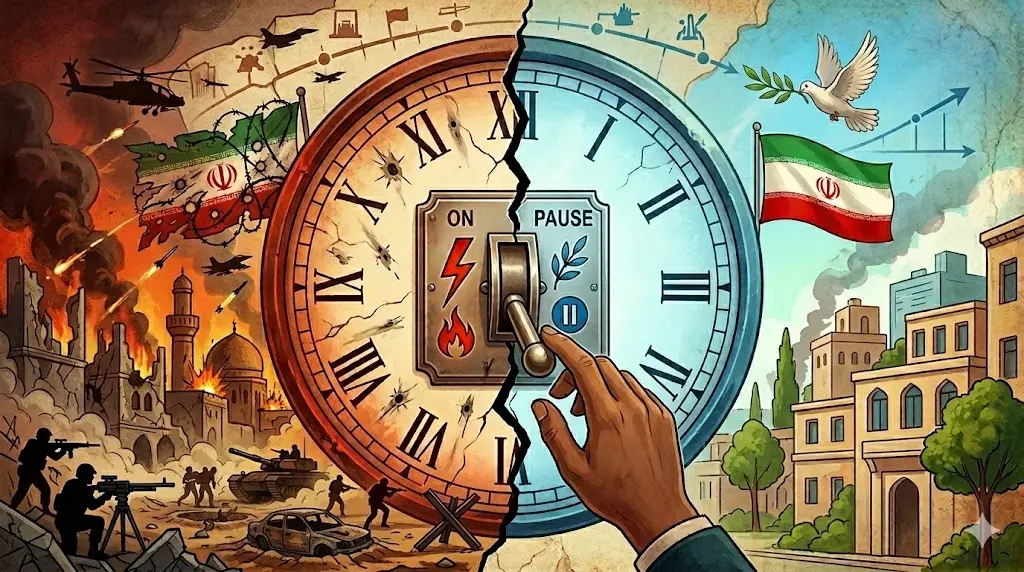
However, the market's "ceasefire expectations" carry a risk of overestimation, as Iran has taken a hardline stance, clearly stating that those who believe the midterm election results can change U.S. hostility toward Iran are "very mistaken." At the same time, Trump currently faces three options: launching a new round of strikes, reaching an agreement as soon as possible, or maintaining the status quo—each path comes with high costs.
Dramatic Political Shift, Trump's Governance Space Narrowed
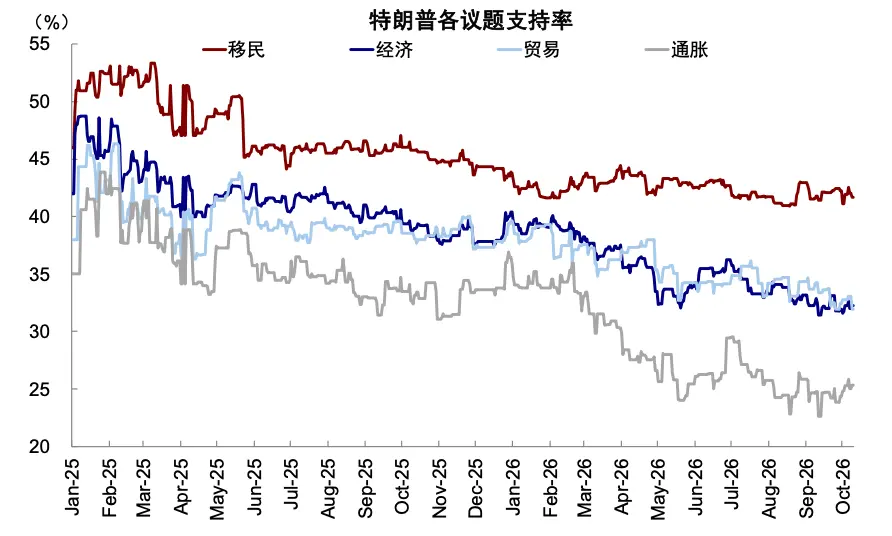
The Democratic Party won control of both the House and Senate in this midterm election, breaking into several traditional Republican strongholds for the first time in decades, delivering a significant political blow to the Trump administration. U.S. public opinion generally believes that Trump's governance space will be significantly narrowed in the next two years.
On the fiscal front, Democratic control of Congress means greater constraints on government military spending. Dennis Kissler, Senior Vice President of Trading at BOK Financial Securities Inc., stated, "Democratic control of Congress may tighten U.S. military spending and push for an earlier end to the war." He also pointed out that the rebound in Middle Eastern oil exports, along with Trump's indication that there are no immediate plans for a new round of strikes against Iran, are the main factors currently pressuring oil prices.
In terms of foreign and military decision-making, Trump still retains considerable autonomy. Analysts suggest that while Congress theoretically can limit funding for military actions against Iran, the president still possesses broad executive powers in military operations, especially when actions are already underway. Trump has relied heavily on executive orders throughout his term, but such measures face the risk of challenges from the Supreme Court. The hostile political environment in Washington is unlikely to directly force the president to change his stance toward Iran.
Iran's Hardline Stance Casts Shadow on Negotiation Prospects
Just as the market bets on ceasefire expectations, Iran has sent out completely opposite signals. According to CCTV News, Iran's Supreme Leader Ali Khamenei made a statement on the 4th local time regarding U.S.-Iran relations, clearly stating that those who believe the midterm election results can change U.S. hostility toward Iran are "very mistaken."
Khamenei warned that any tendency to yield to the "hegemonic enemy" would only embolden them further. He emphasized that Iran's control of the Strait of Hormuz and actions to destroy U.S. military bases in regional countries are responses to U.S. aggression and a struggle against arrogance. He also stated that if U.S. aggression were to repeat, Iran's response would be broader, and the scale of the war would be greater than before.
Earlier this week, Iran's Supreme Leader had given negotiators more leeway, causing Brent crude prices to drop over 14% since Monday. However, Iran later dampened expectations, stating that the positions of both sides remain far apart.
The core issue in negotiations is Iran's nuclear program. Trump has consistently insisted that Tehran must never possess nuclear weapons, but his stance on whether to accept Iran's development of a civilian nuclear program has been inconsistent. Recently, Iran has insisted that discussions on the nuclear issue should be reserved for later stages, with initial negotiations prioritizing the reopening of the Strait of Hormuz, unfreezing Iranian funds abroad, and easing sanctions.
Additionally, reports indicate that Iran has escalated its guerrilla tactics. According to regional officials, security companies, and analysts, Iran has recently launched underwater drones carrying bombs, used rocket-propelled grenades, and sent personnel aboard ships to install magnetic mines, continuously disrupting oil transport in the Strait of Hormuz.
Three Paths, Each with Significant Challenges
Analysts suggest that Trump currently faces three options: launching a new round of strikes, reaching an agreement as soon as possible, or maintaining the status quo—but each path is fraught with difficulties.
If he chooses a new round of military strikes, the U.S. has already deployed two aircraft carrier strike groups in the Middle East and nearby waters, with a third approaching the Gulf. According to media reports, this would constitute one of the largest military deployments by the U.S. in the region in decades. Such a scale of military buildup is costly and indicates Trump's potential intentions. However, limited military actions are unlikely to fundamentally shake the Iranian authorities, while larger-scale actions could drag the U.S. into an extremely unpopular quagmire of war. Given voters' strong opposition to war, the likelihood of large-scale actions is very low, but small-scale actions could result in more casualties and further damage energy infrastructure, while the negotiating positions of both sides are unlikely to change significantly.
If he opts for a quick agreement, the risks are equally significant. If the agreement fails to effectively limit Iran's nuclear program, Trump will face the political embarrassment of "admitting defeat"—something he is particularly reluctant to bear. If the agreement focuses solely on reopening the Strait of Hormuz, it may temporarily lower oil prices, but the core issues remain unresolved, and Iran's influence in the region could far exceed pre-war levels, damaging U.S. relations with Gulf allies and sowing the seeds for new conflicts.
If he maintains the status quo, uncertainty in the energy market will persist. Since the outbreak of the conflict, energy flows through the Strait of Hormuz have dropped to nearly zero, but in recent months, under the escort of the U.S. Navy, they have rebounded to about 80% of pre-war levels. However, oil prices remain about 40% higher than pre-war levels, reflecting the market's ongoing premium on the risks of oil transport in the Middle East. Meanwhile, U.S. domestic distillate oil inventories fell below 100 million barrels last week, the lowest level since 2003, and national crude oil inventories have declined for the fifth consecutive week, making the structural tension in the fuel market difficult to alleviate in the short term.
Market "Ceasefire Expectations" Carry Risk of Overestimation
Overall, the logic reflected in this oil price crash is built on a series of political assumptions that have yet to materialize. Democratic control of Congress does indeed compress Trump's operational space regarding military spending and legislation, but it does not fundamentally strip him of his foreign and military decision-making powers.
Iran's hardline stance indicates that Tehran does not intend to make concessions due to Washington's political changes; meanwhile, after suffering a political blow, Trump's willingness to accept an agreement that is detrimental to his image may be lower, not higher. The weakening of Trump's political position precisely gives Tehran "no reason to quickly agree to an unfavorable deal."
The market's bet on ceasefire expectations is essentially an optimistic judgment that Washington's political logic will override regional geopolitical realities. However, based on current signals, the real exit from this war is still far from being reached.
Risk Warning and Disclaimer
The market has risks, and investment requires caution. This article does not constitute personal investment advice and does not take into account individual users' specific investment goals, financial situations, or needs. Users should consider whether any opinions, views, or conclusions in this article align with their specific circumstances. Investing based on this is at one's own risk.
 Risk warning Risk warning