Daily Observation of Cryptocurrency Policy: Thailand SEC Advances Derivatives Regulation Revision, Plans to Officially Include Digital Assets as Underlying Assets

 Released on November 4, 2026. After improving the regulatory framework for digital asset spot trading, Thailand's regulatory authorities are accelerating their move into the deep waters of crypto derivatives. The Securities and Exchange Commission (SEC) of Thailand has officially solicited public opinions on the draft amendment to the rules for licensing derivative businesses, aiming to legally support the inclusion of "digital assets" as legitimate underlying assets under the Derivatives Act. This amendment significantly lowers the licensing entry barriers for local crypto business operators, marking Thailand's commitment to building a diversified digital asset risk management ecosystem and establishing the mainstream investment status of cryptocurrencies.
Core Revision: Breaking Down Licensing Barriers, Allowing Crypto Institutions to Directly Apply for Derivatives Business
Under the traditional financial regulatory framework, spot and derivatives businesses are often subject to strict physical and entity separation. To adapt to the high liquidity and around-the-clock characteristics of digital assets, the Thai SEC's release of 8 draft announcements notably includes the relaxation of licensing standards for derivatives businesses. The draft clearly states that existing digital asset business operators wishing to expand into crypto derivatives business no longer need to spend huge amounts of time and money to establish independent corporate entities, but can directly apply for derivatives business licenses under the existing entities. This regulatory easing will significantly reduce the operational costs for compliant institutions and encourage local licensed exchanges to transform into comprehensive crypto brokerage platforms.
Strengthening Infrastructure: Tightening Financial Supervision of Exchanges and Clearing Houses
While granting the industry greater operational freedom, the regulatory authorities have also upgraded the requirements for preventing systemic risks. Considering the inherent leverage and potential clearing risk associated with derivatives trading, the draft specifically revises the financial statement and capital adequacy standards for derivatives exchanges and clearing houses. The Thai SEC aims to strengthen macro-prudential regulation of the underlying infrastructure for derivatives business through more stringent financial audits and liquidity requirements, ensuring that even in extreme one-sided market conditions, the local clearing network can withstand black swan impacts and safeguard the margin safety of retail and institutional investors.
Policy Vision: Enriching Hedging Tools, Establishing Mainstream Investment Asset Status
The deep strategic consideration of incorporating digital assets into the Derivatives Act is to attract more traditional institutional funds seeking to avoid volatility. The Thai SEC officially stated that the core intention of this revision is to promote digital assets as a mature "investment asset class" to gain broader recognition in the traditional financial sector. For a long time, the lack of compliant tools for short selling and hedging, such as futures and options, has been the biggest pain point hindering large institutional capital allocation to crypto assets. By providing a rich array of portfolio risk management tools in a regulated environment, Thailand can not only retain local high-net-worth liquidity but also attract regional family offices and hedge funds from Southeast Asia.
Preliminary Consensus Lays the Foundation, Compliant Derivatives Market on the Horizon
Considering the regulatory trends in the Asia-Pacific region at the beginning of November, Thailand has demonstrated high legislative efficiency in embracing Web3 financial innovation. In fact, the Thai SEC had conducted preliminary opinion consultations on relevant basic principles from April to May this year, receiving clear agreement from most stakeholders, which laid a solid public opinion foundation for the introduction of specific operational rules. The opinion collection for this round of detailed rules will continue until November 28. Once the bill is officially implemented, Thailand will become the core hub in Southeast Asia to open up a "two-way channel for crypto spot and compliant derivatives."
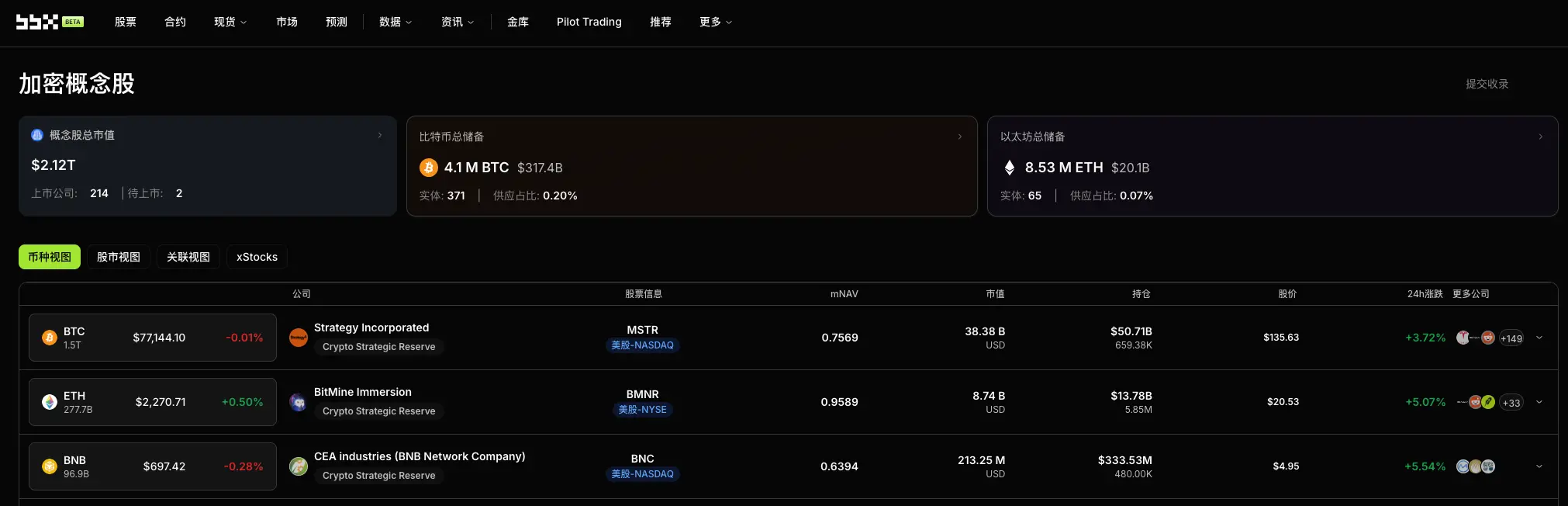
Source: https://bbx.com/ Crypto Concept Stock Information Database, compiled based on yesterday's announcements from global listed companies and SEC/TSE disclosure documents.
 Risk warning Risk warning