Tron Industry Weekly Report: Regulatory & Interest Rate Hikes Fail to Undermine BTC Bullish Sentiment, Detailed Analysis of PayFi High-Performance Payment Infrastructure Axon Finance

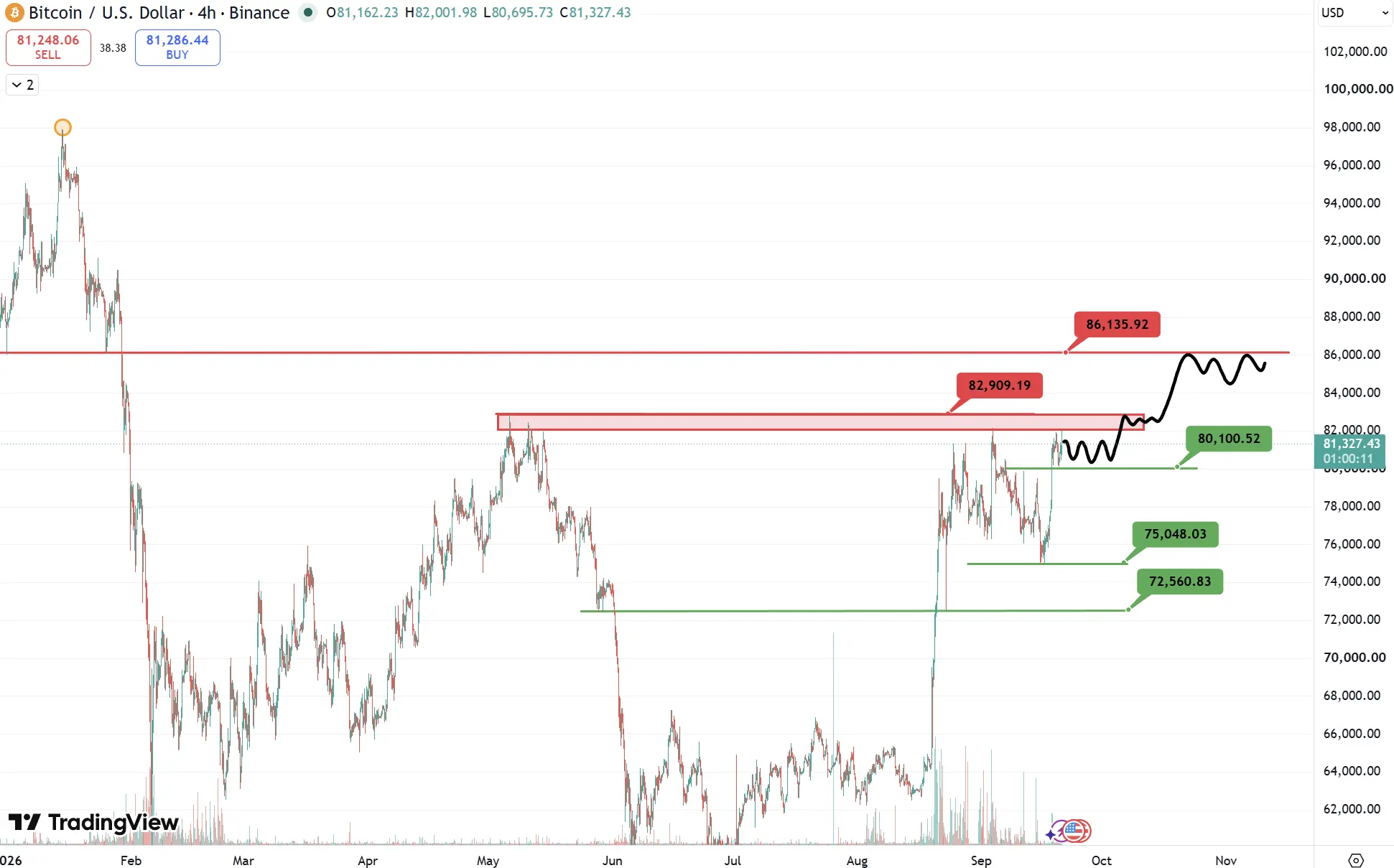
 Although the market in this period is facing dual pressures from the Federal Reserve's interest rate hikes and the stalled U.S. cryptocurrency legislation, BTC has not continuously fallen below key support levels. Instead, it quickly rebounded under the push of short liquidations, indicating that the market's short-term resilience remains strong. However, whether this round of increase can transform into a new trend depends crucially on whether BTC can stabilize between $82,000 and $84,000 relying on real new capital rather than continuing to depend on short covering.
I. Outlook
1. Macroeconomic Summary and Future Predictions
This week's macro summary (September 14, 2026 - September 20, 2026)
This week, the core of global macro trading has undergone a significant change—markets have shifted from discussing "when to cut interest rates" to digesting inflation stickiness, energy price pressures, and the Federal Reserve's renewed interest rate hikes. On September 16, the Federal Reserve unanimously voted to raise the federal funds target range by 25 basis points to 3.75% - 4.00%, marking an important turning point in this policy cycle; more critically, the September Summary of Economic Projections (SEP) shows that the Federal Reserve has raised its median forecast for 2026 PCE inflation to 3.7% and core PCE to 3.4%, while the median forecast for the policy rate at the end of 2026 reaches 4.1%, indicating a heightened vigilance towards inflation risks compared to mid-year. At the same time, there are no clear signs of a recession in the U.S. economy that would force the Federal Reserve to shift towards easing: August retail sales were stronger than market expectations, and the number of initial unemployment claims on September 17 was only 196,000, but the real estate market is starting to feel pressure, with new housing starts in August dropping to about 1.27 million units; industrial output reported on September 18 was flat month-over-month, with manufacturing output down 0.3%. Therefore, the most important macro conclusion this week is not "economic recession," but rather that the U.S. economy remains resilient + inflation is elevated + the Federal Reserve is tightening again, which has become the core of market pricing. This means financial conditions are tightening again, putting valuation pressure on overvalued U.S. stocks, long-duration assets, and global risk assets; on the first trading day after the Federal Reserve's rate hike, the effective federal funds rate also rose from 3.63% to 3.88%.
Future week predictions (September 21, 2026 - September 27, 2026)
Next week is more like a "policy expectation repricing week after the rate hike," rather than just a data week, as the U.S. will not release new CPI or PCE data. What is truly important is for the market to assess whether the September rate hike is a one-time inflation insurance measure or the beginning of a new round of continuous tightening. From September 21 to 25, several Federal Reserve officials, including Goolsbee, Williams, Jefferson, Barr, and Hammack, will be speaking intensively, and the market will focus on their statements regarding further rate hikes, energy price transmission, and inflation persistence; on the data front, new home sales for August will be released on September 24, and durable goods orders and the final Michigan consumer survey for August will be released on September 25, which will further validate whether high interest rates are beginning to suppress demand. My baseline judgment is that the macro environment will continue to maintain a pattern of "high interest rate expectations difficult to dissipate quickly, long-end U.S. Treasury yields easy to rise but hard to fall, and elevated volatility in risk assets": if Federal Reserve officials continue to reinforce their anti-inflation stance while durable goods orders and consumer-related indicators remain robust, the market will further raise expectations for subsequent rate hikes, putting pressure on U.S. stocks, especially overvalued tech assets; conversely, if economic data shows significant weakness and Fed officials emphasize the need to observe policy effects after the September rate hike, U.S. Treasury yields and the dollar may only then experience a temporary pullback. Therefore, what needs to be most vigilant next week is not a single economic data point, but rather the feedback loop of "the economy continues to outperform expectations → the Federal Reserve needs higher rates for longer → financial conditions tighten further."
2. Cryptocurrency Industry Market Changes and Warnings
This week's cryptocurrency market review (September 14, 2026 - September 20, 2026)
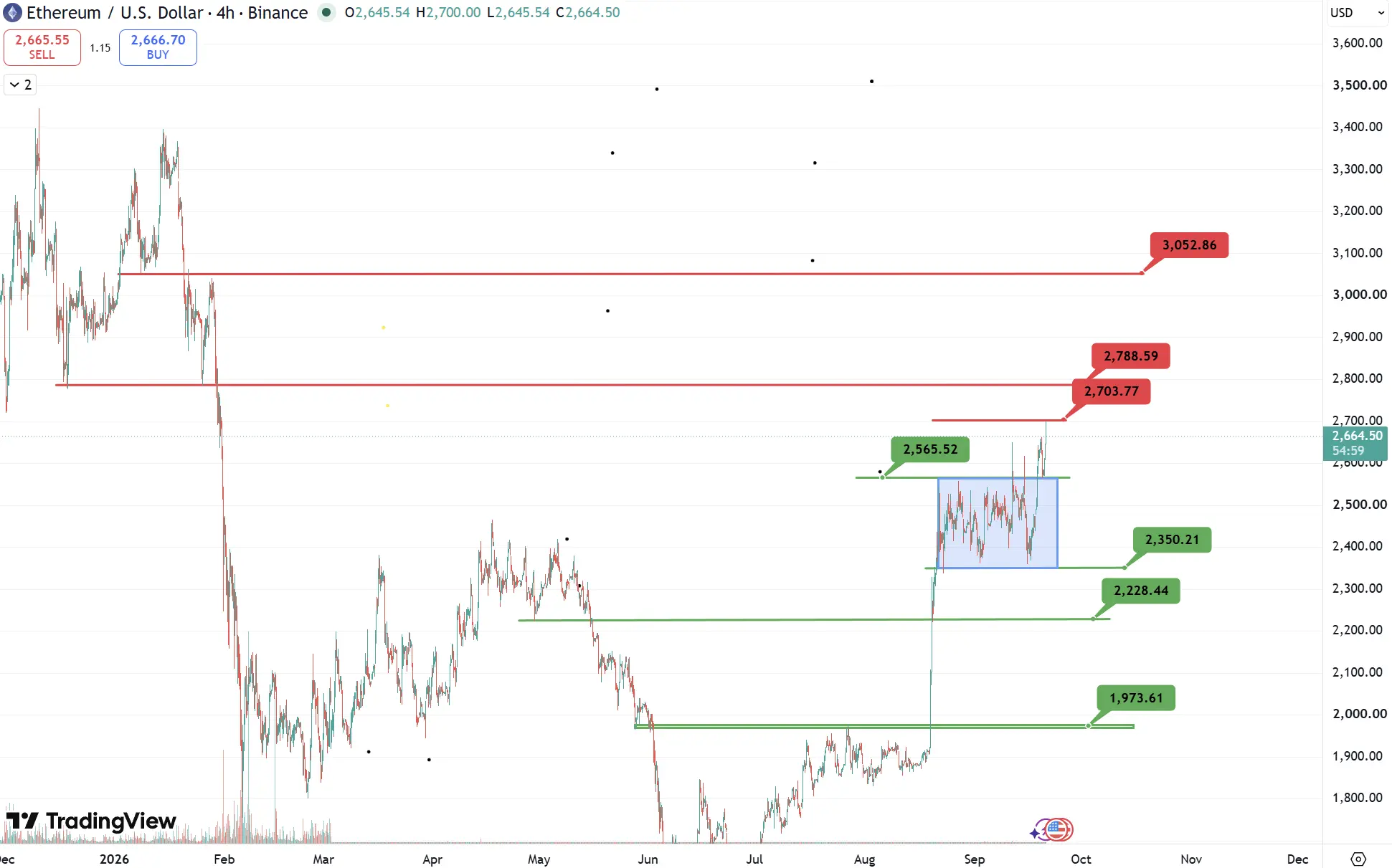
This week, the cryptocurrency market exhibited a very typical structure of "policy and rate hike shock leading to a decline → concentrated risk release → short covering driving a rapid rebound." On September 14, Bitcoin (BTC) primarily traded between approximately $76,400 and $78,700. Subsequently, the U.S. Senate failed to advance the CLARITY Act, leading to a rapid cooling of regulatory expectations; on September 15, BTC dropped to around $75,600, with Ethereum (ETH) experiencing a decline of about 4.6% that day, hitting a low of approximately $2,360. On September 16, the Federal Reserve further raised rates by 25 basis points to 3.75% - 4.00%, and BTC briefly dipped to around $74,955 - $75,000, but did not form a sustained break, indicating that the two major negatives of regulatory failure and rate hikes had been sufficiently released in a short time. The real turning point occurred on September 17-18: BTC quickly rebounded from around $75,000, breaking above $81,000 on September 18, and as of September 20, it remained in the range of approximately $81,300 - $81,900; ETH also rebounded from its low of about $2,360 on September 15 to around $2,637 on September 19. This round of increase cannot simply be understood as a sudden improvement in the macro environment; the more important driving force comes from "exhaustion of selling pressure after negative news + short squeeze": around September 18, there was a large-scale short liquidation across the market, further creating passive buying pressure.
Future week warning (September 21, 2026 - September 27, 2026)
Next week, the most important focus is not on whether BTC can rise rapidly again, but rather on whether this rebound can truly transform from a "short covering rally" into a "sustained influx of new capital." BTC will first focus on the resistance zone of $82,000 - $84,000, where around $82,000 has previously formed significant resistance multiple times; if it can effectively break through and stabilize in this range, it means the market has largely digested the impacts of rate hikes and regulatory shocks, providing a basis for further continuation of the rebound structure. Conversely, if BTC fails again to break through $82,000, especially if it falls below $80,000/$78,000 again, this round of increase is more likely to be proven primarily driven by short covering, at which point vigilance should be raised regarding the support at $75,000 - $76,000; and once $75,000 is clearly breached, the next risk area to watch could be around $69,000 - $72,000. For ETH, the focus will be on whether $2,600 can transform from a resistance level into effective support and whether it can continue to break through this week's high of around $2,650. Therefore, the key verification signal for the upcoming week is: can BTC maintain above $80,000 without large-scale short liquidations helping it, and rely on spot and ETF new capital to break through $82,000 - $84,000; if not, caution should be taken for a potential second pullback after this week's rapid rise.
3. Industry and Sector Hotspots
From September 14, 2026 to September 20, 2026, the primary market financing in the cryptocurrency industry remained active. According to public statistics, about 33 financing events were disclosed this week, with 14 in infrastructure and 6 in DeFi, clearly becoming the two most concentrated directions for capital, while stablecoin payments, Real World Assets (RWA), and institutional-level data services continue to attract capital attention. Representative financings include Kaiko receiving strategic investment led by S&P Global, bringing its Series B total financing to $110 million, with funds primarily used for on-chain capital market data infrastructure; stablecoin infrastructure Fin.com completed a $20 million seed round, dtcpay completed a $15 million Series A, and DeFi/RWA project Tare completed a $13.25 million seed round; additionally, usd.ai secured $40 million in debt financing. Overall, this week, capital did not concentrate on chasing a single hot narrative but further tilted towards stablecoin payments, RWA, DeFi, and institutional-focused cryptocurrency financial infrastructure, with notable participation from traditional financial institutions.
II. Market Hotspot Sectors and Potential Projects of the Week
1. Overview of Potential Projects
1.1. Detailed explanation of a total financing of $2 million, co-invested by Infinite Alliance and UZ Capital—creating a high-performance payment financial infrastructure dedicated to PayFi, Axon Finance
Introduction
AXON Finance is a Layer 1 public chain specifically designed for Payment Finance (PayFi). The project focuses on high throughput, sub-second transaction confirmation, and low-cost, predictable transaction fees, integrating core functionalities such as stablecoin settlement capabilities, Account Abstraction, Fee Sponsorship, and Pluggable Compliance Gateway.
Additionally, AXON Finance supports instant settlement of stablecoins, AI Agent automatic payments, on-chain money markets, and cross-border B2B payment settlements. The project also proposes a chain-native controlled payment execution mechanism, supporting the setting of payment limits, time windows, whitelisting mechanisms, and revocability for automated payments, enhancing payment automation efficiency while ensuring fund security and compliance management.
Brief Description of the Protocol Mechanism
- Five-Layer Architecture
The complete journey of a payment from top to bottom
AXON's underlying architecture consists of five layers. The best way to understand this five-layer architecture is to observe the entire process of a payment from initiation to completion: the payment request first enters the Gateway Layer, then completes transaction ordering in the Sequencing Layer, settles funds in the Settlement Layer, and finally writes to the Layer 1 chain state (L1 State), with the entire process continuously supported by the lowest layer of on-chain native capabilities.
Panorama Architecture
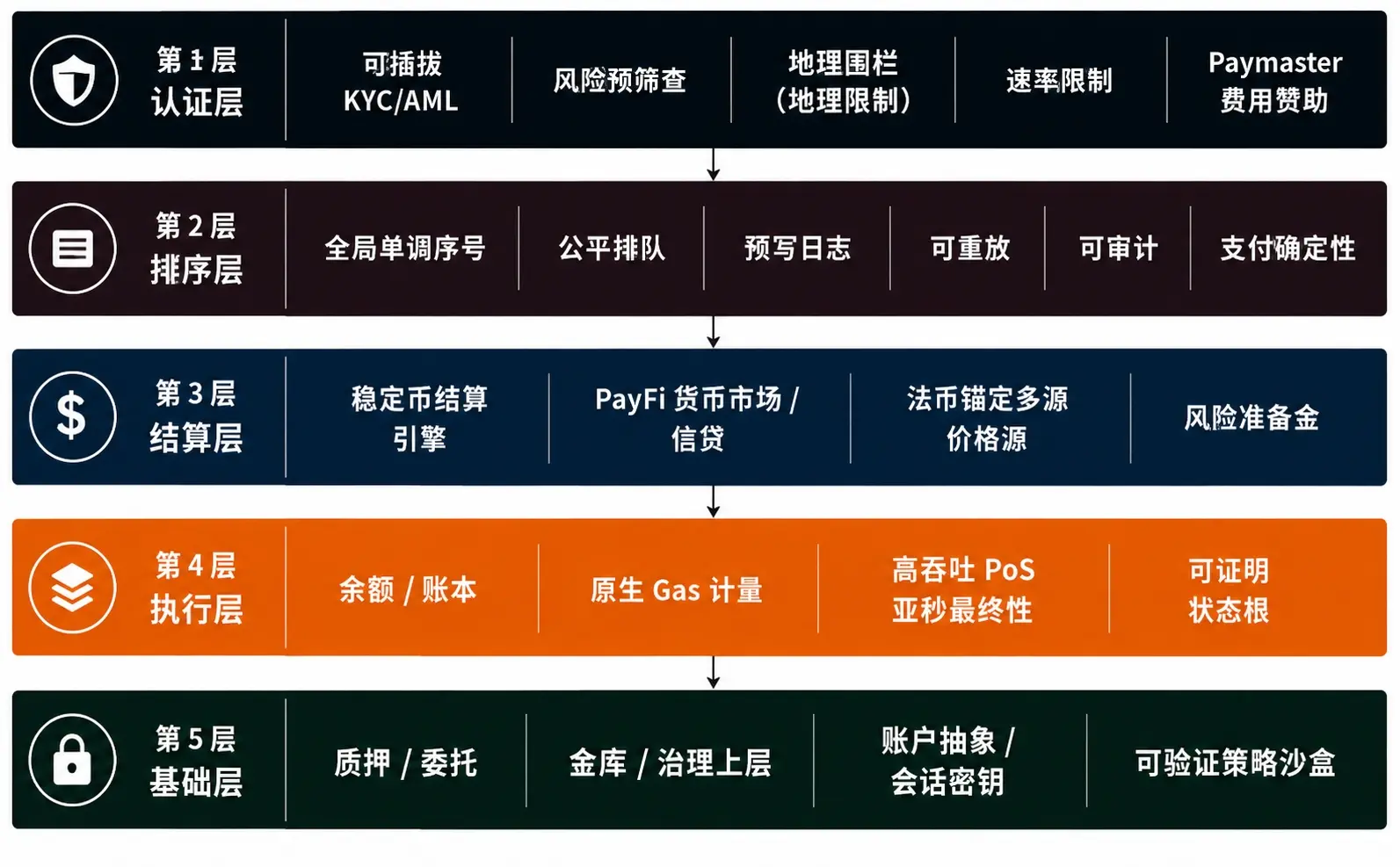
Responsibilities, Layer by Layer
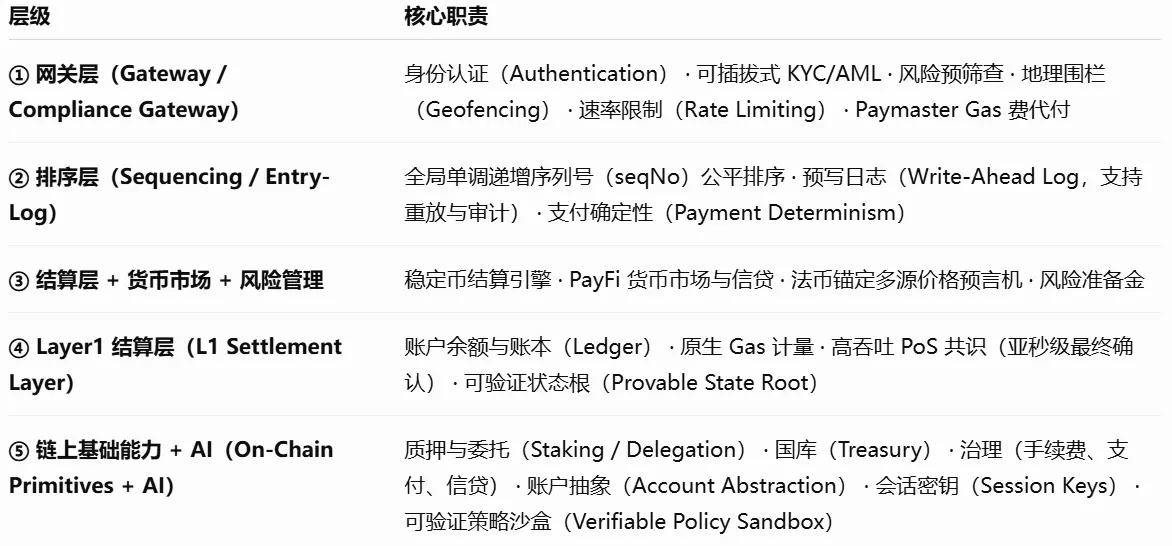
Core Functions of Each Layer
① Gateway / Compliance Gateway
The Gateway Layer is the first entry point for payments into the AXON network, responsible for identity authentication, compliance review, risk control, rate limiting, and Paymaster Gas fee sponsorship. AXON integrates compliance capabilities into the underlying infrastructure rather than as an additional module at the application layer, achieving unified risk management and compliance control starting from the payment entry point (see 3.6 for details).
② Sequencing / Entry-Log
The Sequencing Layer is the core of the entire payment determinism. The system assigns a globally unique and monotonically increasing sequence number (seqNo) to each transaction, sorts them according to a fair queue, and writes the transactions into a write-ahead log that supports complete replay and auditing. This mechanism forms the technical foundation for AXON to achieve traceable, recoverable, and auditable transactions, ensuring that any anomalies can be accurately located and recovered (see 3.4 for details).
3. Settlement Layer + Money Market + Risk Management
This layer is the core business engine of AXON PayFi, integrating key components such as a stablecoin settlement engine, on-chain money market and credit system, fiat-pegged multi-source price oracles, and risk reserves, providing a unified financial infrastructure for payments, lending, and fund management (see Section 4 and 3.5).
4. Layer1 Settlement Layer (L1 Settlement Layer)
The Layer1 Settlement Layer (also the core part of the architecture diagram) is responsible for the basic operational capabilities of the entire public chain, including ledger management, native Gas measurement, high-throughput PoS consensus mechanism (supporting sub-second finality), and verifiable state root generation, providing a high-performance, secure, and verifiable underlying execution environment for the entire network (see 3.3).
5. On-Chain Primitives + AI
This layer provides the underlying capabilities for the entire AXON network, including core functions such as staking and delegation, treasury management, and on-chain governance. At the same time, it also provides native AI capabilities, including account abstraction, session keys, and verifiable policy sandbox, offering underlying support for AI agents to automatically execute payments, manage strategies, and ensure security controls (see 3.7 and Section 5).
2. Payment Lifecycle (A Payment's Journey Through Time)
Transforming the above five-layer architecture from a vertical structure to a horizontal timeline yields a complete lifecycle of a stablecoin payment from initiation to completion.
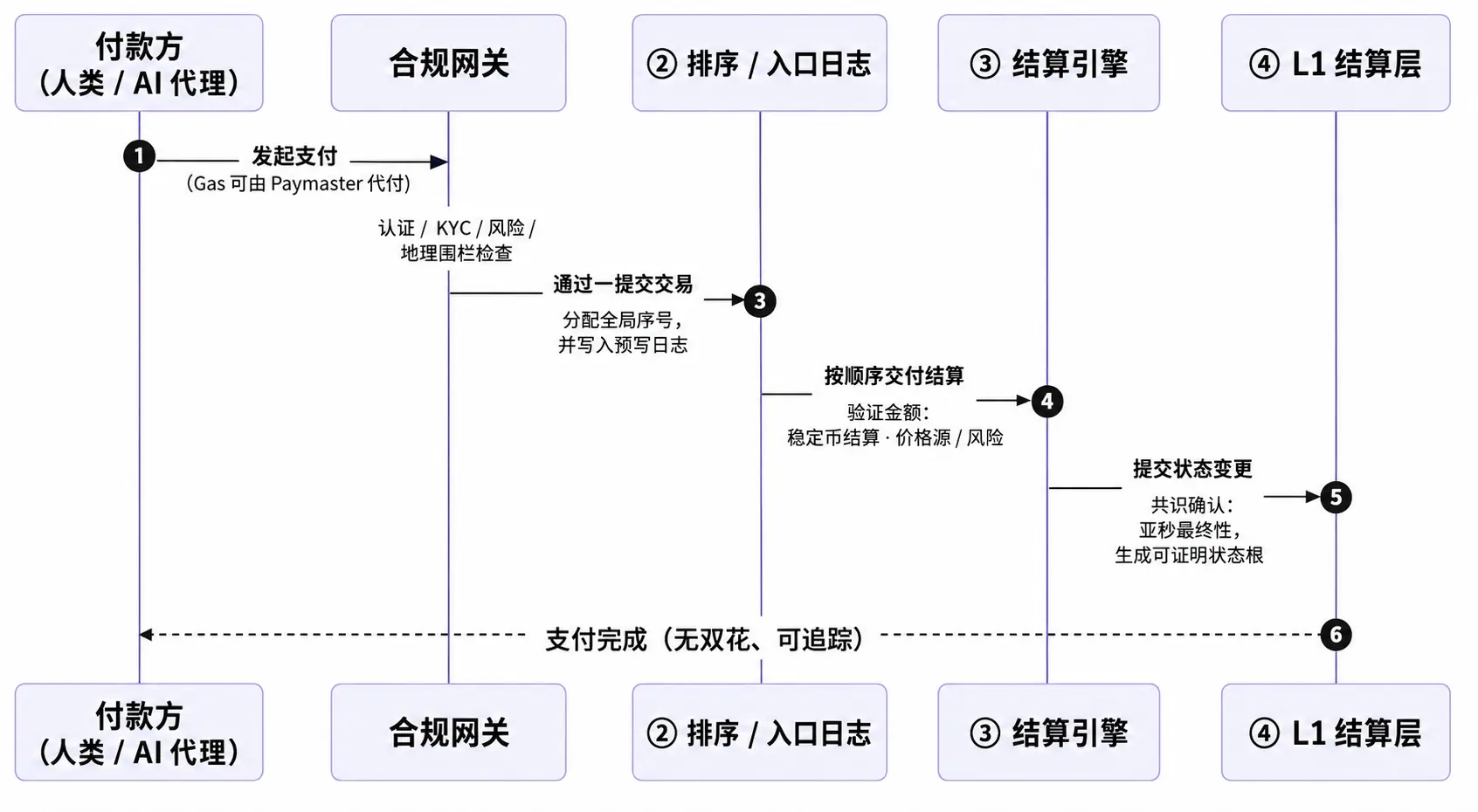
This timeline fully reflects AXON's core design philosophy: every step in the payment process is explicitly modeled, explicitly ordered, and explicitly recorded. There is no ambiguous state of "probably succeeded" throughout the process—every step, from payment entering the gateway to final on-chain settlement, possesses verifiable, auditable, and recoverable characteristics. This embodies AXON's core meaning of "building determinism into the foundation."
3. Consensus Mechanism, Sub-Second Finality & Performance Targets
Deterministic Finality / BFT Finality
A typical representative is the Byzantine Fault Tolerant (BFT) consensus mechanism. Once a transaction receives confirmation from a quorum of validating nodes, it immediately obtains irreversible finality and cannot be replaced or rolled back due to the emergence of a longer chain.
Its main characteristics include:
- No need to wait for multiple block confirmations; once confirmed, the transaction achieves finality.
- Finality time can reach sub-second levels.
- For payment scenarios, this truly aligns with the semantics of "funds have been confirmed."
AXON's Choice: Deterministic Finality
AXON adopts deterministic finality as the underlying consensus mechanism because payment systems cannot be built on probabilities. Only transactions that can obtain irrevocable, verifiable, and non-reversible finality in a very short time can meet the requirements of PayFi for real-time, determinism, and fund security.
4. Three Guardrails for Payment Determinism
To ensure payment determinism, AXON has built three core protection mechanisms.
- Deterministic Settlement
Based on the BFT deterministic finality introduced in Section 3.3, once a transaction receives network confirmation, it becomes irreversible, with no probabilistic risk of being rolled back due to a longer chain.
- Double-Spend Prevention
AXON guarantees at the foundational level that the same funds will never be paid twice.
The system assigns a globally unique sequence number (seqNo) to each payment at the sorting layer, and all transactions are executed and settled strictly in sequence according to the seqNo, eliminating the double-spend problem caused by concurrent transactions.
- Rollback Protection
In the event of an anomaly in the system, AXON will not enter an unrecoverable inconsistent state but can rely on a write-ahead log (WAL) to accurately recover to the correct state.
In other words, even in the event of a failure, the system can clearly determine "what the correct state should be" and complete recovery based on that, avoiding confusion in fund status.
The Sequencing Layer: The Heart of Determinism
The core capability of payment determinism is concentrated in the sequencing layer, which undertakes two seemingly simple yet crucial responsibilities.
Global Monotonic seqNo Fair Queuing
Every transaction entering the system receives a globally unique and monotonically increasing sequence number (seqNo).
This means:
- All transactions in the system have a unique and determined execution order.
- There is no ambiguity about "which transaction happened first."
- It also significantly compresses the space for MEV (Maximum Extractable Value) manipulation based on transaction ordering.
Write-Ahead Log (WAL)
Before a transaction is actually executed, the system first writes the planned execution content of the transaction into a write-ahead log that only supports appending and is tamper-evident.
This log supports full replay.
As long as the same WAL exists, any node can re-execute all transactions and restore a completely consistent system state.
The write-ahead log is a mature technology long validated in the traditional database field, and it is the key mechanism that allows databases to ensure they can recover to a consistent state even after sudden power outages.
AXON introduces this design into the payment system: as long as the WAL exists, it can always rebuild the correct payment state. This is also an important technical foundation for AXON to achieve "always traceable, always recoverable."
A Payment as a State Machine
Under the combined effect of the above three security mechanisms, a payment operates according to a strict state machine, where each state change has a clear meaning and can be verified.
A typical lifecycle is as follows:
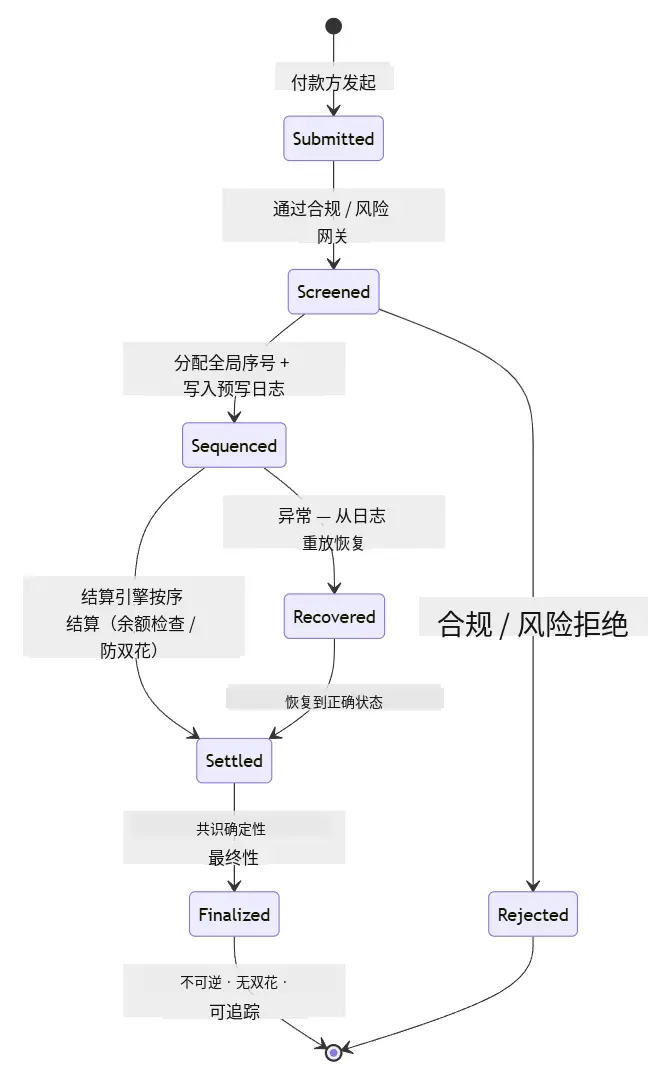
If an anomaly occurs during the execution of the payment, the system will recover the transaction to the correct state based on the write-ahead log (WAL) and continue execution.
AXON's key design philosophy is that there is no "fuzzy state" in the payment process.
A payment is either:
- Explicitly rejected at the gateway layer;
or:
- Completed its entire lifecycle strictly along the deterministic path of Submitted → Screened → Sequenced → Settled → Finalized.
Even if an anomaly occurs during transaction execution, it can rely on WAL replay to recover to the correct state and continue subsequent processes, avoiding situations where "funds do not know which step they are at" or "payment status cannot be confirmed." This is the core value of AXON's payment determinism design.
Three Lines of Defense
To ensure the reliability of stablecoin prices, AXON has designed three safety lines around price oracles and stablecoin anchoring mechanisms.
- Multi-source Validation
AXON's fiat-pegged price does not rely on a single data source but cross-validates through multiple independent price feeds.
This mechanism effectively avoids:
- Attacks on a single oracle;
- Failures of a single data source;
- Misjudgment of prices in the entire system due to anomalies in a single data point.
- Deviation Circuit Breaker
When there is an abnormal deviation between multiple price sources, or when a price clearly exceeds a reasonable range, the system will not continue with clearing or settlement.
Instead, AXON will immediately trigger a circuit breaker mechanism, pausing related clearing and settlement operations rather than executing transactions based on erroneous prices.
- De-Peg Protection
When the stablecoin itself shows signs of de-pegging, the system will automatically activate a dedicated protection mechanism.
This mechanism aims to prevent large-scale chain liquidations during periods of abnormal stablecoin prices, reducing market panic and systemic risk, and maintaining the overall stability of the payment system.
The Price-Feed Circuit-Breaker Decision Flow
Abstracting the above logic into a decision flow reveals that AXON adopts a very conservative risk control strategy:
Better to pause than to miscount.
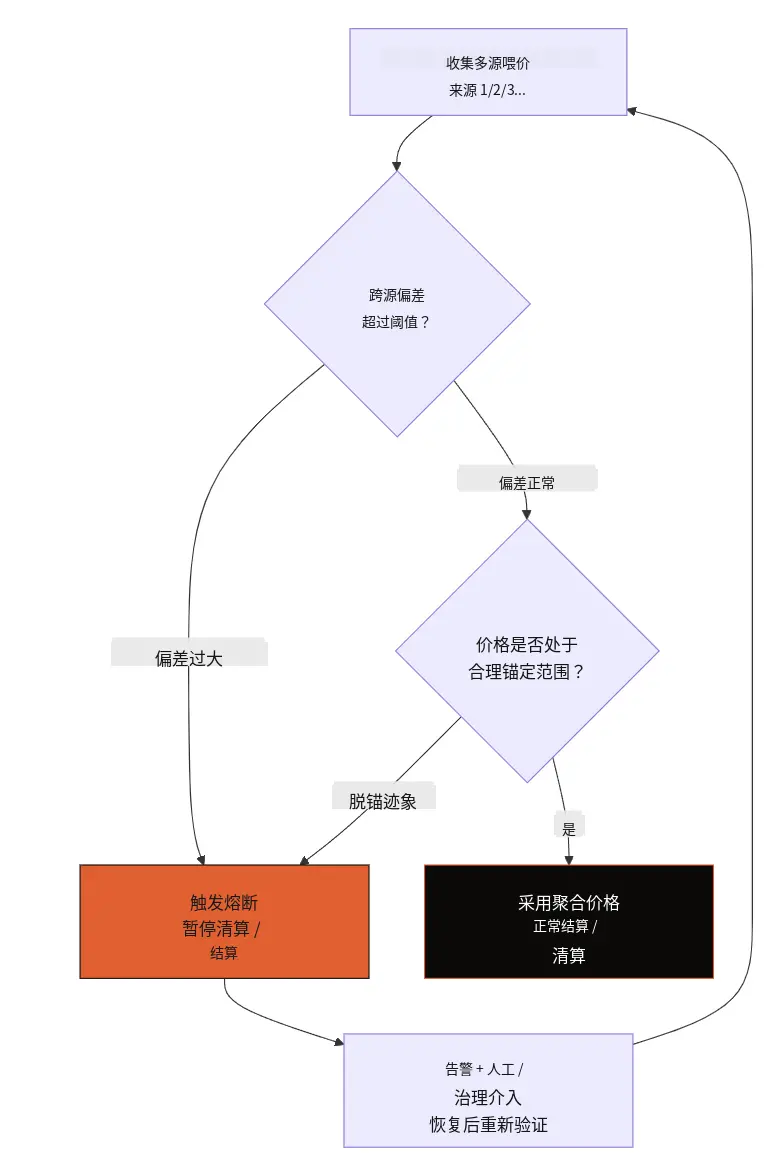
The entire process reflects the core philosophy consistent with payment determinism design: when the system faces uncertainty, correctness should be prioritized over continuous operation.
Compared to the business impact caused by a short-term pause in settlement, the loss of trust caused by an error in clearing that should not have occurred is much more severe. Therefore, for payment infrastructure, robustness always takes precedence over aggressiveness.
- Stablecoin Strategy: Multi-Asset, Extensible
AXON's stablecoin system follows several core principles.
Multi-Asset Support
AXON does not rely on a single stablecoin but supports the integration of various mainstream, compliant stablecoins, reducing the system's dependence on a single issuing entity and enhancing the overall stability and risk resistance of the payment network.
Priority Support for Fiat-Anchored Stablecoins
AXON initially focuses on supporting fiat-anchored stablecoins, especially USD stablecoins.
This is because USD stablecoins are currently the most widely used stable assets in global cross-border payments, international settlements, and on-chain financial activities, better meeting the actual needs in PayFi scenarios.
Pluggable Price Oracles
AXON's price oracles adopt a pluggable architecture design, supporting flexible expansion of new data sources.
As the ecosystem develops, the system can continuously integrate more independent, high-quality price sources, further enhancing the reliability of price data and resistance to attacks.
- Pluggable Compliance Gateway
"Pluggable" is the core concept of AXON's compliance system design.
Compliance does not have a fixed set of rules applicable to all scenarios; different countries and regions, industries, and asset types correspond to entirely different regulatory requirements. For example, cross-border remittance businesses in Singapore and merchant acquiring businesses in Latin America require different compliance strategies in terms of KYC identity verification, AML anti-money laundering, sanctions list screening, and geofencing.
Therefore, AXON designs its compliance capabilities as pluggable modules, allowing for flexible configuration based on different business needs rather than being fixed into a single rule system.
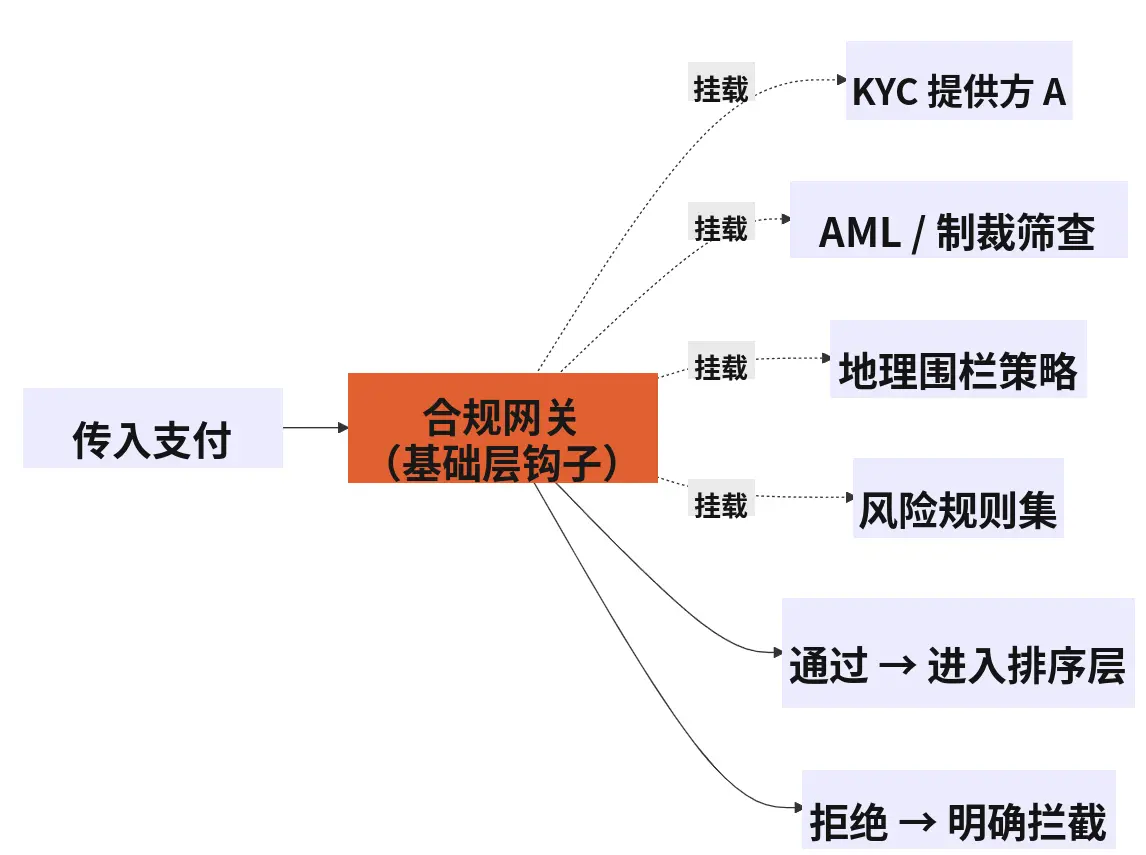
Pluggable Compliance Architecture
AXON's pluggable compliance system has the following characteristics:
Compliance capabilities are integrated into the underlying protocol in the form of on-chain hooks, allowing third-party compliance service providers to dynamically access the corresponding modules as needed.
Different business scenarios can configure different combinations of compliance strategies, flexibly selecting functions such as KYC, AML, sanctions screening, and geofencing based on different countries, industries, and asset types.
All compliance decisions are made at a unified entry point, and the entire process is auditable and traceable, while the application layer cannot bypass the underlying compliance mechanisms, ensuring that compliance requirements are strictly enforced from an architectural perspective.
Phased Rollout Strategy for Crypto-Friendly Jurisdictions
AXON's compliance strategy follows a gradual, phased development route.
Phase One: Focus on Stablecoin Payment Compliance
In the initial phase, the focus is on compliance standards for stablecoin payments, integrating:
KYC (Identity Verification)
AML (Anti-Money Laundering)
Geofencing
Compliance strategies for crypto-friendly jurisdictions
This phase primarily serves stablecoin payment and settlement scenarios where regulatory requirements are relatively clear.
Phase Two: Gradually Expand to Traditional Finance (TradFi)
As the ecosystem develops, AXON will further expand into traditional financial assets.
Due to the higher regulatory requirements faced by traditional financial assets, this phase will adopt a stricter compliance system to meet the regulatory standards of different jurisdictions and financial institutions.
Phase Three: Continuous Evolution of Compliance Capabilities
With the pluggable architecture, AXON can continuously integrate new compliance modules as the business expands.
When the network enters new countries, regions, or business scenarios, it only needs to dynamically mount the corresponding compliance capabilities without modifying the underlying protocol architecture, thus achieving continuous expansion and rapid adaptation of the compliance system.
- Paymaster: Letting Users Transact Without Holding Gas
The last barrier in the payment experience is the gas fee. On traditional general-purpose public chains, users must hold the native gas token of the chain to pay transaction fees, even if they are only using their stablecoins for payments. This not only raises the entry barrier for new users but also adds unnecessary complexity for AI agents.
The Paymaster is designed to solve this problem. It allows third parties (such as application platforms, merchants, or the protocol itself) to pay the gas fees for transactions, enabling users or AI agents to complete payment transactions without holding the native gas token of the chain.
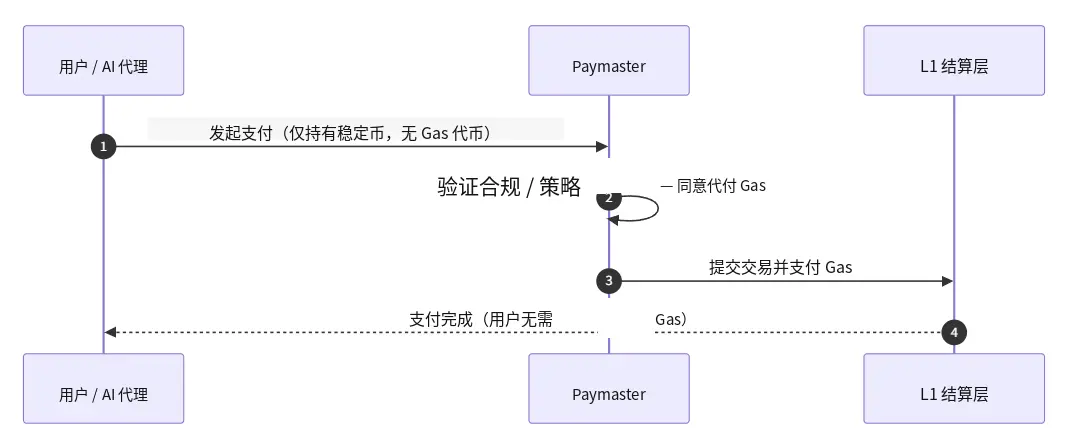
This mechanism completely eliminates the entry barrier caused by gas during the payment process.
Experience Upgrade Brought by Paymaster
Paymaster makes the on-chain payment experience closer to traditional Web2 payment models.
Users only need to focus on "how much stablecoin was paid" without needing to understand or hold a native token called gas.
For the AI agent economy, this capability is even more important. An AI agent that charges per call should not have to continuously manage another gas token's balance. With Paymaster, AI agents can focus on the payment task itself without taking on additional gas management work, further enhancing the efficiency and usability of automated payments.
How the Three Primitives Work Together
AXON's three native capabilities work together to build its AI-Native underlying infrastructure.
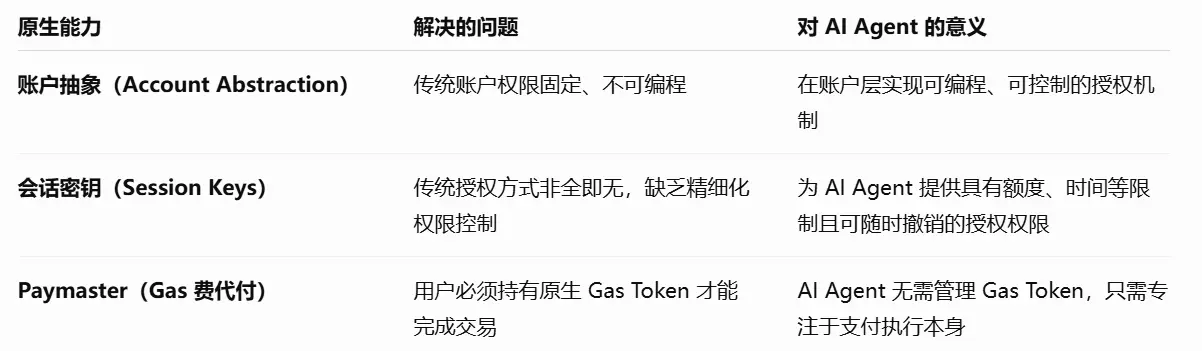
Tron Commentary
AXON's advantage lies in its positioning as a Layer 1 public chain specifically designed for payment finance (PayFi), building a complete underlying infrastructure around stablecoin payments, integrating core capabilities such as high throughput, sub-second finality (BFT), deterministic settlement, multi-source price oracles, pluggable compliance, account abstraction, session keys, and Paymaster gas payment, supporting AI agent payments, cross-border B2B settlements, and on-chain currency markets, providing a secure and scalable infrastructure for institutional-level payments and automated finance.
The disadvantage is that the project covers multiple modules such as payments, compliance, AI, stablecoins, and currency markets, resulting in a complex overall architecture with high ecological construction and development barriers; at the same time, its value realization is highly dependent on the scale of stablecoin payments, merchant and institutional adoption rates, and the continuous openness of regulatory policies in various jurisdictions, facing uncertainties in ecological cold starts and commercialization in the short term.
Industry Data Analysis
1. Overall Market Performance
1.1. Spot BTC vs ETH Price Trends
BTC
ETH
Macroeconomic Data Review and Key Data Release Points for Next Week
1. Macroeconomic Data Review for This Week (September 14 - September 20)
The most important event was the FOMC on September 16: the Federal Reserve raised interest rates by 25 basis points, increasing the federal funds target range from 3.50% - 3.75% to 3.75% - 4.00%. The reasons given by the Federal Reserve were very clear: economic activity continues to expand at a robust pace, domestic spending remains resilient, but inflation is still high, thus further tightening of policy is needed to bring inflation back to 2% in a timely manner. Meanwhile, the latest dot plot/SEP has clearly turned hawkish: the median federal funds rate for the end of 2026 was raised from the June forecast of 3.8% to 4.1%, and for 2027 from 3.6% to 4.1%; the 2026 PCE inflation forecast was raised from 3.6% to 3.7%, and core PCE from 3.3% to 3.4%. This means that the market is facing not just "one interest rate hike," but that high rates may be maintained for a longer period than previously expected.
Economic data shows a very typical combination of "strong consumption, stable employment, ongoing inflation pressure, but weak manufacturing and real estate." In August, U.S. retail sales increased significantly by 1.2% month-on-month, higher than the market expectation of about 0.8%. Excluding volatile items such as automobiles, gasoline, and building materials, the control group sales increased by 1.4% month-on-month, indicating that consumer demand remains quite resilient. The August import prices released on September 16 rose by 0.7% month-on-month and 7.0% year-on-year, while export prices rose by 0.6% month-on-month and 8.6% year-on-year, with non-fuel import prices rising by 0.8%, showing that external price pressures remain significant. In terms of employment, the number of initial jobless claims for the week ending September 12 fell to 196,000, a decrease of 10,000 from the previous value of 206,000, with the four-week average dropping to 203,250, indicating no significant deterioration in the labor market.
The real estate and industrial sectors are relatively weak. In August, new housing starts were annualized at 1.275 million units, a month-on-month decrease of 2.6% and a year-on-year decrease of 1.2%; building permits were annualized at 1.394 million units, a month-on-month decrease of 2.7%, but still a year-on-year increase of 3.5%. It is worth noting that single-family housing starts increased by 7.6% month-on-month, so the real estate data is not entirely deteriorating, but the overall volume is still suppressed by high financing costs. In August, industrial output was flat at 0.0%, manufacturing output decreased by 0.3%, and the capacity utilization rate remained at 76.3%, which is 3.1 percentage points lower than the long-term average level from 1972 to 2025, indicating that the industrial sector is clearly not as strong as the consumer side.
II. Key Data Release Points for Next Week (September 21 - September 27)
The observation logic for next week is very clear: the market is essentially validating the rationale behind the Federal Reserve's interest rate hike on September 16. If the PMI remains strong, initial jobless claims continue to stay low, durable goods orders are strong, and consumer inflation expectations remain high, it will reinforce the combination of "the U.S. economy can withstand higher interest rates + the Federal Reserve needs to maintain restrictive policies," which usually means upward pressure on U.S. Treasury yields and the dollar, continuing to suppress the valuation environment for risk assets. Conversely, if the PMI, durable goods orders, and employment data all show a significant simultaneous weakening, the market would have more reason to re-trade the notion that "this round of interest rate hikes will not last long."
Considering that the latest dot plot from September 16 has already raised the median policy rate for the end of 2026 to 4.1%, the core focus for the market next week is not to look for immediate signals of rate cuts, but to assess whether the Federal Reserve needs to tighten further and how long high rates will need to be maintained.
IV. Regulatory Policies
United States
On September 15, the U.S. Senate failed to advance the CLARITY Act. This bill aims to establish a more unified regulatory framework for the digital asset market, but it did not receive the necessary support in a procedural vote, with a tally of 49 to 50. The controversy focused on conflicts of interest and ethical constraints for government officials regarding crypto assets. The bill's blockage means that the U.S. will still find it difficult to establish a complete regulatory structure for the crypto market through Congress in the short term. The White House subsequently stated it would rely more on regulatory agencies like the SEC and CFTC to continue advancing rules within their existing authority.
On September 17, the U.S. SEC launched the "Innovation Exemption," focusing on supporting the trading of tokenized securities. The SEC officially announced the exemption arrangement to facilitate the trading of Tokenized NMS Stocks and simultaneously solicited market opinions. This represents one of the most significant regulatory advancements for digital assets in the U.S. this week, as regulators are attempting to provide a more flexible compliance pathway for tokenized traditional securities.
United Kingdom
On September 16, the FCA published the final version of the crypto asset regulatory boundary guidelines PS26/18. The guidelines clarify which crypto asset activities will require FCA authorization, covering qualified stablecoin issuance, operation of crypto asset trading platforms, trade matching, custody, and crypto asset staking arrangements. The new crypto regulatory framework in the UK is set to take effect on October 25, 2027, with the transitional authorization application window for relevant businesses opening on September 30, 2026. This means that the UK's crypto regulation has moved from rule-making to the practical application and preparation phase for businesses.
Australia
This week, ASIC issued a final reminder to digital asset businesses regarding the licensing transition period. Digital asset businesses operating under the existing industry "No-action Position" must apply for or change their Australian Financial Services License (AFS Licence) by September 30, 2026; starting October 1, businesses that do not meet the conditions but continue to engage in licensed activities may violate financial services laws and face civil or criminal penalties. This regulatory action marks the formal transition of Australia's digital asset industry from a grace period to a mandatory licensing phase.
 Risk warning

Popular articles