Tom Lee: ETH should be above $5000, easily breaking $10,000 within 1-2 years
 Core Viewpoint

 After buying 5%, it is highly likely that they will not stop, provided that institutions start to hold ETH as a long-term asset.
Compiled by: Deep Tide TechFlow
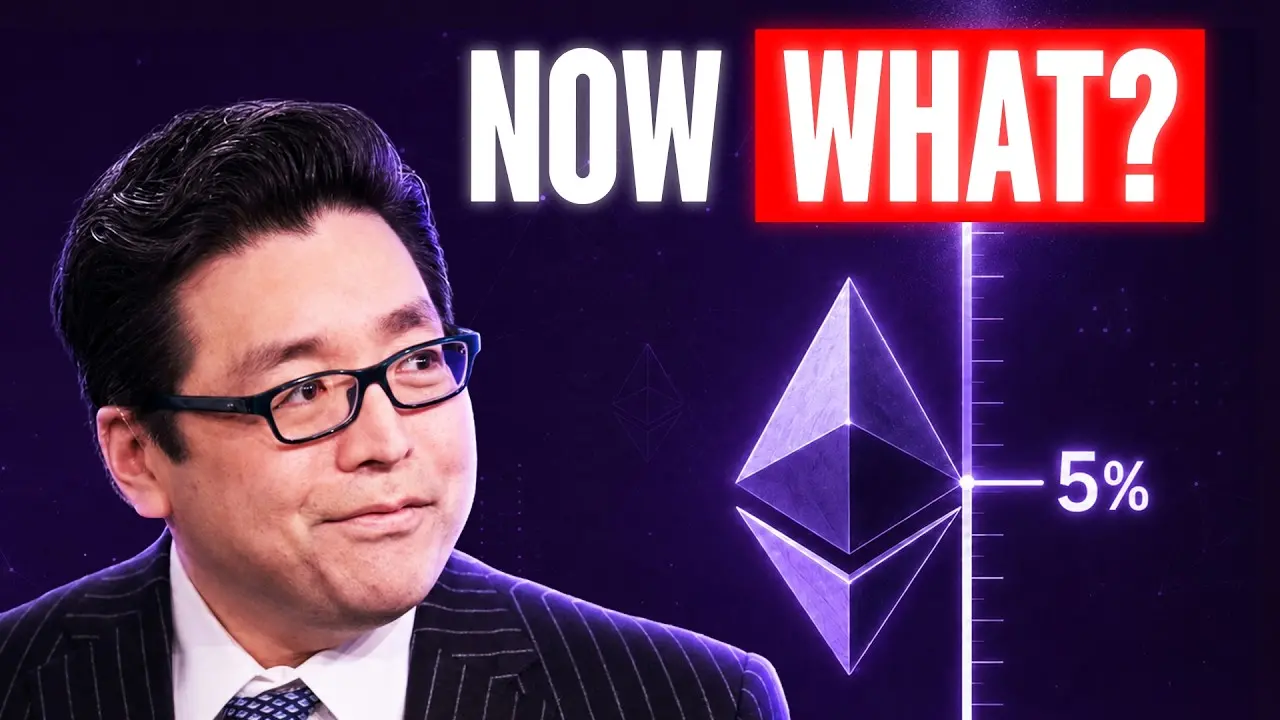
Guests: Tom Lee (Chairman of BitMine Immersion Technologies, Co-founder and Head of Research at Fundstrat Global Advisors, CIO of Fundstrat Capital)
Host: David Hoffman (Bankless)
Podcast Source: Bankless
Original Video Title: BitMine Is About to Own 5% of ETH | Tom Lee
Broadcast Date: August 24, 2026
Conflict of Interest Statement: Tom Lee serves as Chairman of BitMine Immersion Technologies (NYSE: BMNR), the world's largest institutional holder of Ethereum, which held approximately 5.8476 million ETH as of August 23, accounting for about 4.8% of the company's total supply. Lee is also a personal investor in BitMine, and his managed Fundstrat Capital operates the GRNY ETF, with Fundstrat's core business model based on paid research subscriptions. Lee's personal wealth is highly correlated with the price of ETH, the stock price of BMNR, and the performance of GRNY. All views expressed in this episode regarding Ethereum and the crypto market align with his significant financial interests. Readers are advised to take these relationships into account in their judgments.
Summary of Key Points
- BitMine increased its ETH holdings from 0 to approximately 5.82 million in 14 months, representing nearly 4.9% of the total supply, just about 3% away from the 5% target.
- All funding was completed through equity financing, with no debt and no convertible bonds; Lee referred to this as "keeping the capital structure clean."
- They have been buying ETH every week for over 60 consecutive weeks, and in the last 5 weeks, they shifted to a "ETH purchase + stock buyback" strategy, dynamically adjusting based on capital return rates.
- After reaching 5%, it is highly likely they will not stop, provided institutions begin to treat ETH as a long-term asset; the real assessment will need to be made in 2027.
- BitMine does not rely on selling ETH to cover expenses, with annual staking yields of about $300 million, sufficient to cover the $30 to $35 million annual dividends of the 9.5% preferred stock (BMNP).
- Lee compares ETH to "stocks/land," emphasizing its core property as a store of value rather than a cash flow asset like bonds.
- He provided a price target: in the next bull market cycle, ETH should exceed $5,000; if combined with Wall Street tokenization and AI demand, it could "easily" break $10,000 within 1 to 2 years.
Highlights of Insights
- "ETH is a self-yielding asset. BitMine has no need to sell any ETH due to financial pressure." Tom Lee, discussing whether BitMine will sell ETH.
- "If you treat the stock market as a cash flow machine, the S&P 500 has increased about 10 times over the past 15 years, with dividends contributing only 30%, while the remaining 9.7 times is unrelated to cash flow. The stock market is essentially a store of value." Tom Lee, discussing whether ETH is a store of value or a cash flow asset.
- Lee compares BMNP to a three-year ETH parity call option: the company pays a 9.5% dividend annually in exchange for the right to lock in more ETH at the current price; if one were to buy a comparable call option in the market, the option premium could be close to 100%. Tom Lee, explaining why they issued 9.5% perpetual preferred stock.
- "The more AI develops, the more important crypto becomes. Crypto is the downstream story of AI." Tom Lee, discussing the relationship between AI and crypto.
Main Text
I. Reaching Nearly 5% in 14 Months: What Did BitMine Do Right?
On June 30, 2025, BitMine announced its transformation into an Ethereum treasury company, aiming to acquire 5% of the ETH supply. At that time, the two hosts of Bankless privately thought, "5% is simply unattainable." Fourteen months later, BitMine's holdings have reached approximately 5.82 million ETH, which is nearly 4.9% based on a total supply of 120.7 million. Host David Hoffman stated at the beginning of the show that this is one of the few cases in the digital asset treasury (DAT) space where they "not only avoided the graveyard but exceeded expectations."
Tom Lee attributes the success to three points.
First, the communication of information has always been simple and consistent. He told investors that the capital structure should remain clean: all financing was done through equity, with no debt and no convertible bonds. Second, positioning the purchase of ETH as "helping the Ethereum ecosystem," the 5% target should carry weight but not become an overly centralized force. Third, respecting investors' intelligence by not pushing the stock price up weekly with stories, but emphasizing that this is a multi-year time frame. Lee quoted Michael Saylor: companies like this should be viewed over a four-year dimension, not weekly fluctuations.
More importantly, BitMine has completed nearly every financing above the net asset value (NAV, or the value of holdings per share), with the per-share ETH holding increasing more than tenfold from the initial trading level of about $450. This means that the ETH exposure per share for early shareholders has been significantly amplified, which is also the core reason why the stock price can remain above $450.
II. Buying Continuously for Over 60 Weeks: Where Does the Money Come From?
More astonishing than the scale of holdings is the discipline in purchasing. Since its transformation, BitMine has been buying ETH weekly for over 60 consecutive weeks. During the same period, Strategy (MSTR) has repeatedly paused its Bitcoin purchases and even sold Bitcoin. Lee explained that their ability to continue buying is key to "doing the thing with the highest capital return rate each week."
In the last five weeks, BitMine's cash usage has shifted to a "ETH purchase + stock buyback" combination. Lee stated that when ETH might experience a significant market movement before the end of the year, the company will become more tactical: continuing to accumulate ETH while also buying back stock, as buybacks can concentrate the ETH content per share.
The sources of funds mainly come from three areas.
- Issuing common stock above net asset value (NAV): This is the primary source of cash, but used with restraint.
- Buying ETH at a discount: Lee revealed that most ETH acquired over the past 14 months was not purchased at spot prices but obtained through structured arrangements at a discount, which adds value for shareholders.
- Perpetual preferred stock BMNP: Issued in June, with a 9.5% dividend, oversubscribed more than five times, issued at $80, and around $91 at the time of the broadcast. Lee likened it to "buying a three-year ETH parity call option at a 9.5% annual interest," while the market price for comparable options could be close to 100%.
Staking yields are also compounding. BitMine currently has staked over 5 million ETH through the Maven self-operated staking platform and partners. Based on an annual staking yield of about 2.6% to 2.7%, approximately 120,000 new ETH are added each year. Lee calculated that they are about 200,000 ETH away from the 5% target, but with staking, they can "automatically produce" about 120,000 each year, so they only need to purchase an additional 80,000 to meet the target.
III. What Happens After 5%: Three Possibilities, But Selling ETH Is Not a Top Option
The most pressing question in the market: once BitMine acquires 5%, will this largest ETH purchasing machine stop?
Lee provided two directions. First, 5% is not necessarily a hard cap. If companies begin to treat ETH as a long-term asset, it would be "completely reasonable" for BitMine to continue buying above 5%, but this question will need to be reassessed in 2027. Second, even if they only stop at 5%, staking rewards will still allow holdings to grow naturally; at that point, BitMine may choose to sell the rewards to control the total proportion, but will not sell coins due to financial pressure.
He reiterated that BitMine has no need to sell ETH. With annual staking yields of about $300 million, and the annual dividend burden of the 9.5% preferred stock being about $30 to $35 million, the coverage multiple is very high. The company does not even convert these staking rewards into dollars or stablecoins. Rather than selling coins, Lee prefers to "find ways to monetize ETH assets," such as putting the approximately 800,000 ETH currently unstaked into scenarios beneficial to the ecosystem.
This also leads to BitMine's second transformation: from a purely ETH purchasing treasury company to an Ethereum ecosystem company. The Maven staking platform, in addition to managing BitMine's own ETH, has secured over $2 billion in external client assets. Lee refers to this as a "real cash flow business" incubated internally by BitMine.
IV. Funding EF Spin-off Entities: The Ecological Role BitMine Wants to Play
The Ethereum Foundation (EF) has been contracting its operations over the past year, delegating some work to three new entities: the non-profit EthLabs, the for-profit EthSystems, and EthInstitutional. BitMine is the main funder for the seed rounds of these three entities.
Lee explained that Ethereum has grown too large to be managed by a single organization, just as the semiconductor industry does not rely solely on one industry association. BitMine, as permanent capital (with no maturing debt and no redemption pressure), can provide a runway of three years or longer, allowing these spin-off entities to focus on execution without worrying about financing every month. This is both a public goods investment and a business consideration: BitMine hopes Ethereum can capture as many future opportunities brought by tokenization and AI as possible.
V. What Kind of Asset Is ETH?
David Hoffman asked Lee during the show: Is ETH a cash flow asset or a store of value? Lee chose the latter but framed it differently.
He believes that simply categorizing the "stock market" as a cash flow asset is incorrect. Taking the S&P 500 from 2009 to now as an example, total returns have increased about tenfold, with dividends contributing only 30%, while the remaining 9.7 times comes from capital appreciation. Investors buy stocks, essentially believing that companies can allocate capital better than they can; truly pure cash flow assets are bonds. ETH is more like the stock market and also like land: land can generate cash flow through rental, but long-term appreciation is its core attribute that transcends cycles.
He also responded to the skepticism that "institutions will use Ethereum for tokenization but do not need to hold large amounts of ETH." Lee believes this viewpoint is a common narrative in bear markets, and once ETH prices enter a new upward trend, this narrative will quickly disappear. He also drew a parallel with the dollar: the dollar itself cannot be exchanged for gold from the government, yet it remains the global unit of trade. Attempting to explain asset prices using a single economic model often leads to absurd conclusions.
VI. Lessons from Saylor and the "Call Option" Logic of BMNP
BitMine is often compared to Michael Saylor's Strategy. Lee's observation is that Strategy has been quite successful as a common stock story, but Saylor's later strategy became complex, incorporating digital credit, volatility monetization, and other leveraged structures. Lee believes these innovations require a longer time dimension to evaluate, stating, "It may take until 2032 to see clearly."
BitMine has chosen a different path for capitalization: locking in dollar costs with 9.5% perpetual preferred stock while retaining upside potential for common stock. Lee calculated that if ETH rises to $5,000 or $10,000, staking yields will far exceed preferred stock dividends, providing significant leverage for common shareholders. He also hinted that if BitMine decides to buy significantly more than 5% of ETH, it may expand the BMNP scale; otherwise, the current issuance of preferred stock is already sufficient.
VII. Cycles, AI, and ETH Price Targets
Lee believes the crypto market has bottomed out. He stated that from a time dimension, it is about 95% complete, and from a price dimension, about 90% complete. "Unless you are a genius, buying here is likely cheaper than waiting for the bottom to be confirmed."
He also agreed with David's assertion that "AI is siphoning off all funds from crypto," but added a key judgment: crypto is the downstream story of AI. The more mature AI becomes, the greater the demand for machine-to-machine trading, on-chain settlement, and tokenized assets, which will actually enhance the importance of crypto. This year's AI market has made it difficult for other assets to gain attention, but this pattern is changing.
As for price targets, Lee provided specific numbers:
- Just because we are entering a new crypto bull market cycle, ETH should exceed $5,000.
- If we add Wall Street tokenization and AI-driven demand, ETH could "easily" exceed $10,000 within 1 to 2 years.
He also made a rough estimate of shareholder returns: if ETH flips Bitcoin, the corresponding ETH price would be about $15,000, and BitMine's stock price could potentially increase tenfold from current levels, reaching about $180.
VIII. Conclusion
BitMine has proven in 14 months that the Ethereum treasury strategy can be scaled without debt. For ordinary investors, the value of this episode lies not in "how BitMine does it," but in the framework Lee provides for assessing ETH: whether it is a store of value, whether staking yields can cover capital costs, and whether institutional demand for holding coins will genuinely emerge in 2027.
It is also important to remember that Lee is one of the most obvious stakeholders in this game. His company holds nearly 5% of ETH, and he is deeply tied to its success or failure. The path he describes for a $10,000 ETH sounds enticing, but whether that path can be realized still depends on macro cycles, regulatory progress, and whether Ethereum can truly convert the narratives of tokenization and AI into on-chain demand.

 Risk warning