






Dialogue Lead Bank Jackie: American Bank Re-embraces Crypto
 Core Viewpoint

 Excellent crypto companies are not those that are "best at circumventing regulations," but those that are "best at evolving in collaboration with regulations."
Original Title: Bank of America Re-embraces Crypto: A Conversation with Lead Bank Jackie
Original Author: Payment 201
When most American banks were shutting their doors to crypto companies during "Operation Chokepoint 2.0," Jackie Reses did the opposite—she acquired a community bank in Missouri and transformed it into a financial institution that embraces small businesses and the digital asset industry.
Join this candid conversation to hear how this CNBC "Changemaker" transitioned from leading Square Capital to now heading one of the most forward-looking banks in America. Jackie has also worked at Yahoo and Square and served as an advisor to the San Francisco Fed, giving her a uniquely insightful perspective. In this Currency LIVE fireside chat, we will explore:
• Why Lead Bank chose to provide banking services to crypto companies when others were withdrawing
• The GENIUS Act and recent regulatory changes that are reshaping banking strategies
• What new opportunities stablecoins will bring to traditional banks in a world post-GENIUS Act
• How to build trust between traditional banking regulators and crypto innovators
Whether you are looking to understand the role of the crypto industry in the future banking system or are a Crypto Native exploring pathways within the banking system, this conversation will provide valuable insights—from someone who has successfully connected the traditional financial world with the crypto realm.
Takeaways:
Jackie Reses has a clear perspective on "Operation Chokepoint 2.0": she believes the narrative of "massive de-banking of crypto companies in the U.S." has been oversimplified. Large, established crypto companies have always maintained banking relationships; the real issues lie with rapidly expanding companies that lack mature compliance systems and some that ideologically reject regulation. Essentially, this is the growing pain of the crypto industry transitioning from "wild growth" to "financialization."
She believes the biggest growth in the crypto industry over the past few years has not been technological but rather an "understanding of banking and regulatory logic." Many early crypto entrepreneurs thought, "Why should we follow traditional financial rules?" However, following the incidents with Silvergate Bank and Signature Bank, the industry began to realize that to gain support from the mainstream financial system, they must establish serious compliance capabilities.
She repeatedly emphasizes that excellent crypto companies are not those that "best evade regulation" but those that "best evolve in collaboration with regulation." Truly scalable platforms proactively demonstrate to banks and regulators that they understand risks, have the capability to manage risks, and are willing to operate long-term, rather than treating "anti-regulation" as a cultural badge.
One significant differentiation of Lead Bank is that it genuinely approaches banking services from a "product understanding" perspective. Jackie mentions that traditional banks often have account managers who understand products, but the risk, compliance, and finance teams do not, leading to customers needing to repeatedly explain their business. In the crypto space, if banks cannot explain customer products, it means they cannot explain the risks to the FDIC or the Federal Reserve.
She directly defines "understanding customer products" as a form of risk management capability. In her view, the ultimate responsibility of banks is not merely to open accounts but to understand cash flows, product logic, potential risks, and to accurately translate these risks to regulators. Thus, "understanding the business" itself is a core barrier for banks.
Jackie expresses strong dissatisfaction with the operational efficiency of traditional banks. She cites an example from her time at Square, where banks would often chase her at the end of the month asking, "How many loans did you issue?" "How many payments did you process?" Her response was, "That data should be yours." This reflects the issue of traditional banking systems relying heavily on manual processes and fragmented data.
She believes one of the most important capabilities for future banks is "systemized compliance." This means that AML, anomaly detection, and risk identification should not rely solely on manual reviews but should be deeply embedded in automated systems, data science models, and real-time monitoring systems. Only then can banks truly serve the 24/7 stablecoin and global payment networks.
She mentions that one of the biggest frictions between the crypto industry and traditional banking systems is that "banks cannot accept the low tolerance for error in payment systems." The internet industry can accept "Oops, we'll fix the bug tomorrow," but the banking system does not allow for "Oops, I lost your money." Therefore, crypto companies must ultimately adapt to the financial industry's extremely high demands for precision.
She emphasizes the value of "proactively communicating with regulators." She believes the most dangerous approach is not innovation but rather banks not knowing what you are doing, regulators not knowing what you are doing, and only discovering problems after incidents occur. Therefore, she actively walks into Washington D.C. to tell regulators, "This is the new model we are researching." "There may be risks here." "This is our solution approach." She believes this transparency can build long-term trust.
She notes that there are still many "core issues that have not been fully resolved" in the stablecoin industry, including how to settle cross-border funds in real-time, how to manage 24/7 liquidity, how to custody stablecoin reserves, how bankruptcy laws apply, and how to coordinate AML with international capital flows. She believes the real challenge for the industry is no longer "issuing coins" but lies at the level of financial infrastructure.
She has a very high evaluation of the GENIUS Act, but the reason is not "to encourage stablecoin issuance," but rather "to establish certainty." In her view, financial institutions fear not strict regulation but rather unclear rules. The GENIUS Act clearly defines the issuers of stablecoins, reserve requirements, disclosure requirements, AML obligations, and the legal attributes of stablecoins for the first time, which means large institutions can finally enter the market officially.
She believes the first wave of large-scale adoption of stablecoins will not come from ordinary consumers but from treasury and cross-border payment scenarios. Especially for multinational corporations, emerging market banks, global capital allocation, and cross-border clearing, as these scenarios already have significant friction today.
She specifically mentions that emerging market banks are rapidly increasing their interest in stablecoins. Many banks have long struggled to obtain dollar liquidity and quality correspondent banking relationships, and stablecoins may become a new path to "bypass traditional correspondent banking friction." This is highly related to the global trend of fragmented dollar liquidity.
She believes that the future will not see "all banks issuing stablecoins" but will undergo a very long evolutionary process. Initially, crypto-native companies will build the infrastructure; then innovative banks like Lead Bank will participate; and only later will traditional banks' core systems gradually integrate.
Her vision for "banks in 2030" is essentially "the internet of financial infrastructure": real-time settlement of funds, free flow of funds between banks, users having multiple banking relationships simultaneously, the gradual integration of deposits, payments, and investments, and cross-border transfers being as simple as sending a message. She believes that many banking systems in the U.S. today are over 50 years old, and the biggest change in the next decade will not just be stablecoins themselves but the modernization of the entire financial infrastructure.
Chris Harms:
Welcome to Currency Live, I am your host Chris Harms, co-founder and Chief Business Officer of BVNK.
At BVNK, we believe the next generation of financial services will be built on stablecoins. Currency Live focuses on the people and projects driving this change.
Today, I am very pleased to invite Jackie Reses, co-founder, chair, and CEO of Lead Bank, as well as a CNBC "Changemaker" award winner and co-author of "Self-Made Boss."
Jackie's career spans executive positions at Square and Yahoo. In 2022, she acquired a small community bank in Missouri and transformed it into what is now Lead Bank.
Lead Bank currently provides fintech infrastructure services and actively supports the crypto industry. At the same time, Lead is also one of BVNK's important banking partners.
Welcome to the show, Jackie. How have you been lately?
Jackie Reses:
I’m good, really nothing to complain about.
Chris Harms:
Great, it’s nice to see you again. It’s been a while.
Jackie Reses:
Yeah. It would be even better if we were meeting in person right now. But I don’t even know where you are.
Chris Harms:
I’m in Woodside, California, and it’s been quite comfortable here.
Jackie Reses:
Nice.
Chris Harms:
I’ve been at Lake Tahoe for a few days, taking a little break by the lake, so I’m feeling pretty good.
Jackie Reses:
That doesn’t look like a vacation, but I get what you mean.
Chris Harms:
Exactly. I’m very happy to have you here today. Usually, we start with a few quickfire questions to warm up. The only rule is to keep your answers as brief as possible. You can just say yes/no or one sentence. This is your chance to give a "hot take" without needing to explain. Are you ready?
Jackie Reses:
Okay, let’s go. Can I say something controversial?
Chris Harms:
The more controversial and spicy, the better.
Jackie Reses:
Alright.
Chris Harms:
Is banking infrastructure more complex or simpler than most people think?
Jackie Reses:
A thousand times more complex.
Chris Harms:
Is the philosophy of "move fast and break things" compatible with operating an FDIC-insured bank?
Jackie Reses:
Disaster. Absolutely a disaster. It’s completely contrary to what should be done.
Chris Harms:
True or false: There is indeed widespread "debanking" of legitimate crypto companies in the U.S.
Jackie Reses:
There’s no "bullshit" option, but my answer is: bullshit.
Chris Harms:
We will definitely talk about this later.
Jackie Reses:
I hope so.
Chris Harms:
Do you think by 2035, the average American will hold stablecoins in their digital wallets?
Jackie Reses:
Yes.
Chris Harms:
True or false: Most bank executives still cannot distinguish between Bitcoin and stablecoins.
Jackie Reses:
Absolutely true.
Chris Harms:
Are stablecoins a threat or an opportunity for traditional banks?
Jackie Reses:
Both, depending on how they respond.
Chris Harms:
Last question, feel free to elaborate.
If you had a magic wand and could instantly change one banking regulation, what would it be?
Jackie Reses:
CRA, the Community Reinvestment Act. It’s completely illogical in a world where digital banking has existed for fifteen years.
Chris Harms:
That would be great if it could be changed.
Jackie Reses:
I really wish so.
Chris Harms:
Thank you very much. Now I feel everyone is fully engaged.
I know there’s a topic you definitely want to continue discussing, but let’s switch gears for a moment. We’ve observed that throughout your career, one thing has remained constant—you have always been a staunch supporter of "small businesses." Can you talk about how this philosophy was formed? How did you get to where you are today?
Jackie Reses:
Actually, I think the question you just mentioned—whether banks can survive in the future—is a very important one.
Because banks are indeed needed for communities to thrive. I don’t believe communities can truly develop without banks.
I grew up behind the pharmacy counter. My mom ran a chain of pharmacies, and my dad ran a medical device company. I watched them work tirelessly seven days a week, even on holidays. They were truly the pillars of the community. When someone needed help, they would call my mom for prescription medications; if someone needed liquid oxygen delivery, they would contact my dad. I think working with my parents as a child taught me a lot of things subtly. For example, customer service. Watching how they responded to customers, how they dealt with difficult people, how they spoke. You learn about products.
In my parents' generation, they might go to a candy trade show, see some novel candy, and think about selling it at the pharmacy counter. But I started observing as a child: what resonates? How do customers react? What can truly convert?
Lastly, there’s the "owner mentality." While the first two points already form the operational principles of Lead Bank, as an owner, I care deeply about this. I also want employees to think like owners.
When you own a business, you might personally organize greeting cards or run to a customer’s home. You genuinely go beyond your responsibilities to help others. And that is at the core of how we operate today.
Even if our clients are the most complex and sophisticated institutions in the world, we want to truly "show up" in front of them. If we make mistakes, we take responsibility. We are good people. We want clients to feel that behind these decisions are real people, not a cold, unfeeling system. Even if many of our products are tech-driven, they can still easily reach us.
So I hope the company is one where customers can find us, communicate with real people, make rational decisions together, and help them grow.
The book "Self-Made Boss" is actually not directly related to this podcast. I wrote it because I was very concerned about small businesses after the pandemic. And that’s also why I care so much about the banking industry. During the pandemic, we suddenly realized how important communities are. We want communities to thrive. We hope there are small shops that sell food for kids, cafes, and entertainment venues in the neighborhood. And those small business owners are actually very smart; they just lack the tools to operate. So I really hope communities can thrive. During the pandemic, watching barbershops and cinemas struggle deeply moved me. I love my community. Woodside is a very cool and interesting little town, and I hope it continues to thrive.
Chris Harms:
That’s wonderful.
And you can really feel those operational principles at Lead. BVNK has indeed experienced your excellent customer service, and I hope this collaboration can continue for a long time.
Jackie Reses:
I hope so too.
We are actually quite an innovative company.
Customer first.
Think like an owner. And the biggest challenges we often face come from when we make mistakes. But we find ways to fix problems and be a responsible corporate citizen. I believe what truly defines a company is how it treats customers in critical moments. I genuinely believe we are building outstanding technology for our customers. And we always design products around customer needs. So I hope so. If we haven’t achieved that, you can definitely come to me with complaints. I receive many complaints every day, but I also receive a lot of thanks.
Chris Harms:
Great. We mentioned that "spicy take" at the beginning.
I want to start with the relationship between Lead and the crypto industry. Just recently, the term "Operation Chokepoint 2.0" was very popular.
It is widely believed that U.S. regulators have conducted extensive "debanking" of the crypto industry. But I know you have a clear perspective on this. What do you think? How has Lead "gone against the tide" in providing banking services to crypto?
Jackie Reses:
I’ll set aside the SEC from the last administration because I think that was an extreme anomaly.
I will only talk about the connection between the banking system and the Federal Reserve.
I believe "Operation Chokepoint 2.0" is more of a metaphor. It reflects the early development state of the crypto industry and the initial philosophies of many crypto companies. As the industry grows and scales, I believe there is indeed incompatibility with the traditional banking system. So that phase was essentially a process of industry scaling and learning evolution.
I remember many times dining with congressional members. Many people in the crypto industry spoke like libertarian think tanks: "Why do we have to follow the law?" As someone who has worked in a highly regulated industry for a long time, I simply could not understand. I would sit there thinking, "If you’re running a business in the U.S. and treating 'not following the law' as a strategy, that’s definitely wrong."
Later, with the issues arising from Silvergate Bank and Signature Bank, the industry rapidly matured.
People began to realize:
You must connect with existing financial infrastructure.
At that time, we saw three types of crypto companies.
The first type is very excellent large companies.
For example, those publicly traded companies. They have always had large banking relationships and continued to exist even during the so-called "debanking" period. They may not have obtained all the relationships they wanted, but they definitely had U.S. bank accounts. They were not completely shut out by mainstream banks.
The second type is rapidly expanding companies.
They are growing fiercely and launching products aggressively, thus making many mistakes. These companies need to evolve alongside the banking system. Because they are expanding their products and policies while operating in a highly regulated industry. And the banking industry has extremely high precision requirements for "fund processing." There is no room for error. There is no "Oh sorry, I lost your money, I’ll find it tomorrow." So many expanding companies later had to re-establish banking relationships. Because some banks lack experience, lack technical capabilities, and do not understand these companies. Thus, you see these companies constantly switching banks.
Is this "massive de-banking"? I don’t think so. I see it as "growing pains" under a specific phase. Banks lack experience; regulatory requirements control reputational risk; banks also need to maintain their own stability; and the development state of these rapidly expanding companies was immature. The two sides were incompatible.
The third type of company still exists today.
They philosophically oppose banking laws. I don’t know how such companies operate in the U.S. But this type of company is becoming increasingly rare. Because most of the truly growing crypto companies have realized that the best crypto companies are those that can establish strong compliance systems.
And this compliance must truly fit their business models. They need partners like Lead to help them grow, rather than banks that completely do not understand their products. So I believe what has really happened in the past few years is much more complex than "the government massively de-banking crypto." It must be unpacked to be truly understood.
Chris Harms:
I think you’re absolutely right. As a crypto company, if you want to truly scale your business, you must establish "connective tissue" with the fiat system. Otherwise, this technology cannot scale. This resonates deeply.
Jackie Reses:
Even today, we still see some companies unwilling to invest the effort to truly become excellent enterprises.
And those that can truly scale often understand: they must prove to customers that their capabilities are strong enough and their compliance capabilities are robust enough. So they will proactively embrace these things. Of course, they will combine technology with sound judgment, rather than evade. I believe this is the key dividing line in today’s industry. Companies like yours are typical representatives.
Chris Harms:
I completely agree.
You have been building a "tech-first" bank over the years, and you previously worked at Square. I remember you once said, "You are building a bank that you wished you had when you were at Square."
Can you talk about what pain points you experienced back then at Square? And how today you are solving these issues for fintech and crypto companies through a "tech-first" approach?
Jackie Reses:
There are a few points.
First, our colleagues truly understand the products they are serving.
This is something we often did not feel at Square. Maybe your general counsel or account manager understands what you are doing. But when you get into the compliance team, enterprise risk team, and finance team, you have to explain your business over and over again.
This worried me a lot. On one hand, I would doubt whether banks truly understood the risks behind these products. On the other hand, banks themselves have to be accountable to regulators.
So I would worry: how are they explaining our products to regulators? Especially when many of the products we were working on were at the forefront of the industry. I wanted to collaborate with the smartest people. From top to bottom, I wanted our team to be able to explain customer products.
Second, we want to truly integrate technology into banking products.
We want technology to serve customers and help them reduce risks. Not just relying on traditional human compliance. We want anomaly detection systems. We want data science systems. This way, many routine operations do not need to be done manually. Instead, they can run continuously throughout the lifecycle of the banking relationship.
So we built many automation tools:
Compliance automation;
Account opening automation;
System automation.
These tools make customer relationships more consistent. At the same time, they allow banks to handle regulatory requirements without constantly bothering customers.
It really used to drive me crazy. For example, at the end of the month, banking partners would ask, "How many loans did you issue this month?" "How many payments did you process this month?" I would think, "Isn’t that data yours? Why are you asking me?" It makes no sense. And every time there was an audit or regulatory inspection, it would take up several weeks of my time. I always felt that this should be the bank’s own process capability. So we addressed all these issues at Lead from the very beginning.
Another point. I don’t want to explain the same thing a thousand times.
This really drives me crazy. I want the team to be stable. You can probably hear from my voice that I still have emotions when I talk about this now. I want excellent systems. I want smart people. I want them to communicate effectively with regulators. I want to know who represents me in discussions with the FDIC, the Federal Reserve, and the OCC. And that person must deeply understand my business. Otherwise, I don’t want to work with that bank.
Chris Harms:
I completely agree. We’ve experienced similar situations ourselves.
When you are pushing new products at the forefront of banking, it can be very painful if the person across from you does not understand the product. More critically, that person is also your "representative" in front of regulators. Therefore, having truly smart people who understand the product in that position is absolutely a core differentiation.
Jackie Reses:
I believe one thing we have done right in the crypto industry is that we truly understand these products. And we have built a complete system around these products.
Over the past few years, we have also continuously communicated with regulators from top to bottom. So if someone wants to launch a new product, we can explain it. We can help regulators understand these extremely complex things. And we do it in a way that "moves forward with regulation." This avoids sudden surprises in the future.
It also helps partners truly understand what we are doing and what risks we are taking. Even if we present these risks in a very proactive manner. Because we want regulators to know: "These are the trade-offs." "This is the risk I’m most concerned about."
For example, in the crypto industry, many times it’s about liquidity issues. Companies like yours are moving massive amounts of funds every day. And they operate 24/7/365.
So I proactively tell regulators: "This is the issue we are currently concerned about." "This is the capability we are building." "It’s not fully online yet." "But this is our design thinking and why we believe it is reasonable."
When you bring regulators in this way, you are actually helping companies like yours. Because you are at the forefront of the industry. At the same time, this also gives your clients confidence: the banking partners you work with are not sources of risk.
And regulators also know that we will be honest about those "oh shoot" moments. For example: "Oh my, we might need to pay attention to this issue." This open attitude makes the partnership healthier and smarter. I am not afraid to walk into Washington D.C. and say: "I think there might be a problem worth worrying about." "I want to tell you how we plan to design it." "At the same time, I want to hear your thoughts."
I often engage with regulators on these topics:
Cross-border capital flows;
Stablecoin settlement times;
How funds flow across countries;
And issues regarding bankruptcy laws under the GENIUS Act.
These are all very tricky, not yet fully defined issues.
If we truly understand these issues and can solve them together with you, then you will believe: even if there are still some things to explore, at least we know what we are doing. And we can move forward together in an open manner and explain clearly to regulators. This way, everyone will feel more at ease.
Chris Harms:
I completely agree. I think this is actually a great transition.
We happen to be discussing stablecoins and the GENIUS Act. From our perspective, during the advancement of the GENIUS Act, especially after the market anticipated its passage, the entire regulatory environment in the U.S. has begun to shift from "headwinds" to "tailwinds." So it is indeed a very exciting time for the U.S. stablecoin industry.
I know you have spent a lot of time recently in Washington D.C. studying these issues and participating in many core discussions. Can you share your views on the GENIUS Act? What does it mean for the U.S. stablecoin industry?
Jackie Reses:
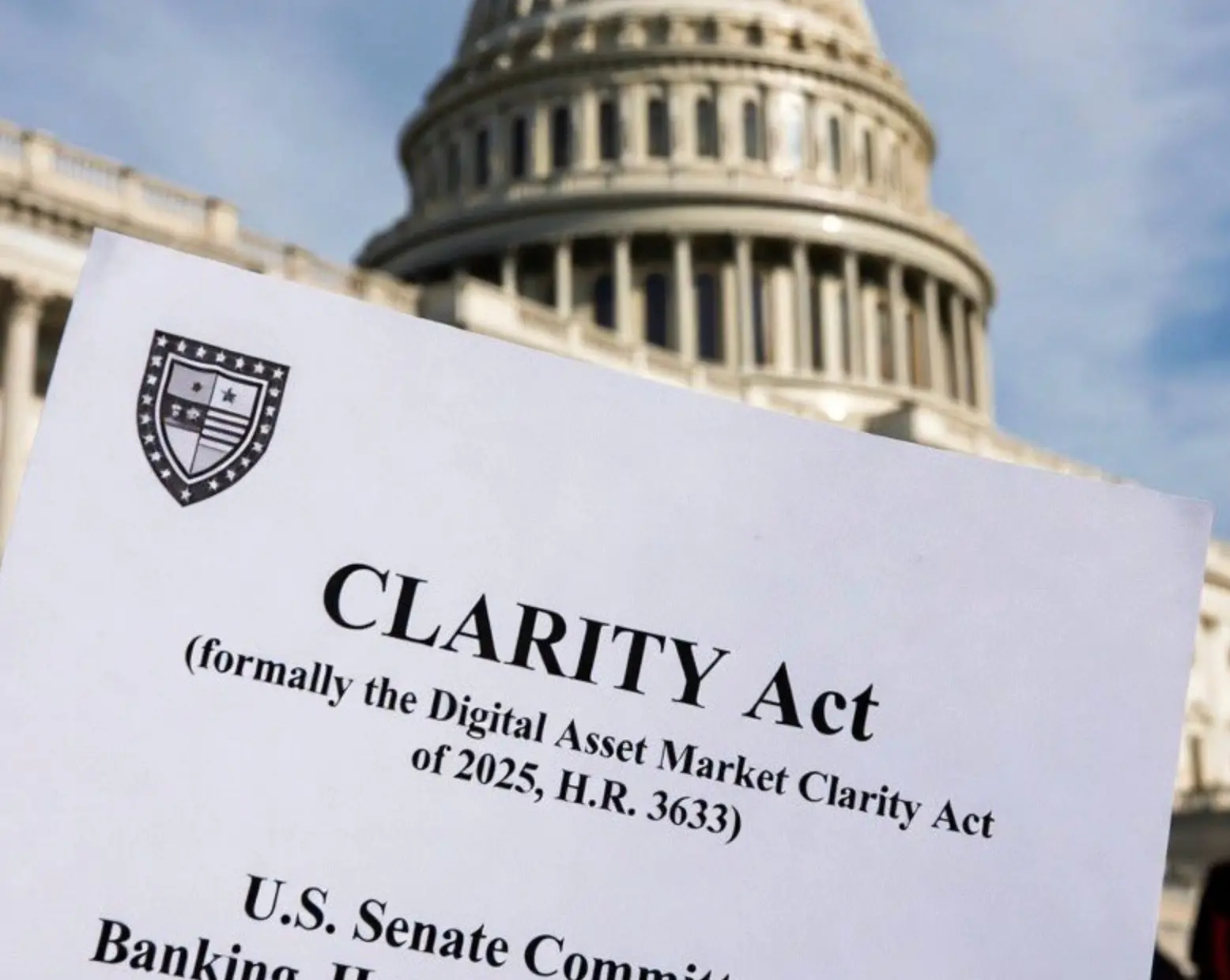
I have actually been communicating behind the scenes with lawmakers. And I feel that in the banking voices pushing this bill, I might be one of the few who are truly involved. The same goes for the Clarity Act.
But I don’t always stand from the perspective of a "pure crypto industry advocate." Because, as we mentioned earlier, I am actually very concerned about the long-term stability of the U.S. banking and financial system. And that goal does not always align with the crypto industry thinking of "we want everything right now."
So I do worry about some things. For example, what will happen to community banks in the future? Especially regarding capital flows. I do not believe community banks will immediately start issuing their own stablecoins. I think this will be a ten-year evolutionary process.
Initially, it will be companies like yours launching products. Then slowly penetrating into the banking system. Banks like ours will take the lead in building stablecoin infrastructure with you. But I do not believe all banks will participate. The industry needs a learning and evolution process. It should start with the companies most familiar with this field.
After that, perhaps companies like FIS or Fiserv, which provide infrastructure for banks, will start helping banks build wallet systems. But I don’t think these things should be fully rolled out immediately. We are still a long way from "every bank wanting to issue stablecoins."
However, I do believe that companies like yours will be at the forefront; banks like ours will also deeply participate in building the stablecoin payment system. At the same time, we are also studying how stablecoin reserves should be managed. We are already collaborating with some companies on stablecoin reserve products.
But even so, there are still many tricky issues. For example, how to handle the liquidity time difference between large banks and small banks. These issues will gradually evolve over the next three to five years.
However, I believe the greatest value of the GENIUS Act is that it finally clarifies the rules. Who are the legitimate issuers; what are the reserve asset disclosure requirements; what is the regulatory structure; how is AML executed; how does bankruptcy law apply. These rules will finally encourage companies to use stablecoins as underlying payment rails. Because at least the legal framework is now in place.
Chris Harms:
I think you are absolutely correct.
First, establish the rules. First, clarify the "rules of the road." Then the first adopters will emerge. They will first prove what products can be built on this infrastructure. At the same time, they will accumulate the first round of real experience. Because any new legislation that comes out, the first batch of practical experiences is extremely important.
Only then will the market gradually form a clearer development path. As you said, there may be some infrastructure providers that begin to serve second-tier banks, allowing more banks to participate. Then everyone can continue to innovate on these rails and infrastructures. This is indeed very exciting.
We have already seen this change in our business pipeline. Not only domestic U.S. banks but also many emerging market banks. These banks have previously struggled to obtain correspondent banking systems or dollar liquidity. Now they are starting to seriously study stablecoins. Because they will think:
"Can stablecoins solve my current problems?"
"If I want to do this, at least the U.S. already has a clear regulatory framework."
"So for overseas banks like us, it also serves as a regulatory precedent."
Jackie Reses:
And I feel that stablecoins have truly begun to enter the boardroom's vision. Boards are now discussing, "Should we do something related to stablecoins?" Of course, in most cases, the answer may still be "no." Whether for banks or ordinary businesses.
But many companies suddenly realize: "Wait, this infrastructure is actually quite interesting." "Because I happen to have a cross-border capital flow issue." "And stablecoins might solve it."
At least, it will start from a specific use case. Rather than previously viewing stablecoins as a huge and frightening concept that no one knew how to implement.
Now everyone can finally focus. For example:
"Cross-border capital flow is my core issue."
"Then I might first use stablecoins to solve this scenario."
"And now the law has clarified."
"So I am willing to start researching it, at least as a treasury/payment tool."
I think this is the biggest change in the past six months. Companies are now studying stablecoins around a specific use case. Then gradually expanding the application scope in the future. But I do not believe there will be a situation of "complete chaos."
Nor will it suddenly become: "Everyone has stablecoins in their wallets." Just like your earlier quickfire question. For example, a regular pharmacy in New Jersey. Today, stablecoins mean nothing to them. But if I am a multinational corporation with a special capital flow need, I might really need stablecoins. Because today’s traditional processes are just too painful.
Chris Harms:
I completely agree. We are running out of time.
This conversation has been truly wonderful. But finally, I want to ask you a closing question.
You once said that you hope Lead Bank will become the "primitive of the banking industry," while possessing the speed and agility of a tech company. What does your vision of the "bank of the future in 2030" look like?
Jackie Reses:
Most of the banking infrastructure in the U.S. today is actually over fifty years old. So I believe that from the consumer perspective, the future bank experience will be much better. For example: settlement speeds will be faster; various complex transactions will become easier; transfers between banks will be smoother.
I believe people will have more banking relationships in the future. They will flexibly move funds to pursue yield. Funds will flow more freely between different accounts. Wire transfers will also be smoother. So the consumer experience will undergo a significant change.
On the backend, the efficiency of settlements and inter-institutional collaboration will also be completely different from today. Because the financial infrastructure we are using now is just too old. Even today, "where to save money"; "where to transfer money"; "where to invest"; these systems are still fragmented. In the future, I believe these things will merge. Whether from an infrastructure perspective or a consumer experience perspective. So I am actually very looking forward to that future.
Chris Harms:
That’s fantastic.
Jackie, thank you very much for coming to the show today.
Jackie Reses:
Thank you. It’s great to see you. Take care. Goodbye.

 Risk warning