BTC $62,586.42 -1.84%
ETH $1,865.76 -1.33%
BNB $603.51 -1.13%
XRP $1.00 -0.51%
SOL $75.19 -1.45%
TRX $0.3322 -0.64%
DOGE $0.0693 -1.15%
ADA $0.1791 -2.95%
BCH $202.05 -5.32%
LINK $8.82 +0.06%
HYPE $55.78 -3.59%
AAVE $85.52 -2.62%
SUI $0.6758 -2.19%
XLM $0.1596 -0.63%
ZEC $482.11 -1.66%
BTC $62,586.42 -1.84%
ETH $1,865.76 -1.33%
BNB $603.51 -1.13%
XRP $1.00 -0.51%
SOL $75.19 -1.45%
TRX $0.3322 -0.64%
DOGE $0.0693 -1.15%
ADA $0.1791 -2.95%
BCH $202.05 -5.32%
LINK $8.82 +0.06%
HYPE $55.78 -3.59%
AAVE $85.52 -2.62%
SUI $0.6758 -2.19%
XLM $0.1596 -0.63%
ZEC $482.11 -1.66%

lawyer

All
Article
Flash

hot_img OpenAI publicly responds to Apple's lawsuit: describes it as "careless, aggressive, and personal," stating that Apple mistakenly sent a lawyer's letter and confused the recipient

OpenAI issued a public statement on August 3 in response to the lawsuit filed by Apple. OpenAI described Apple's lawsuit as "careless, aggressive, and personal," and pointed out several factual inaccuracies: an external lawyer from Apple mistakenly sent an email intended for someone else to OpenAI's legal head, falsely claiming that the two parties had spoken over the phone; Apple later admitted it was due to "confusing two Asian surnames." OpenAI also revealed that after contacting Apple in February, Apple stated it was "working to resolve any issues," but then did not communicate for 5 months until filing the lawsuit.Regarding the allegations against former Apple employee Chang Liu for taking confidential information, OpenAI presented iMessage records from after his departure showing that Apple colleagues had proactively contacted him to request assistance in locating documents, and acknowledged that this was a common issue caused by Apple's "poor management of exit access." Another named executive, Tang Tan, had worked at Apple for over 24 years, and OpenAI stated that he had consistently required his team "not to use any confidential information from other companies." OpenAI indicated that it had proactively offered to cooperate in resolving the matter, but Apple chose to file a lawsuit, claiming that its request for a preliminary injunction was "based on false information and completely unnecessary." Previously, Apple sued OpenAI in July, accusing it of poaching Apple employees and using confidential information to develop AI products.
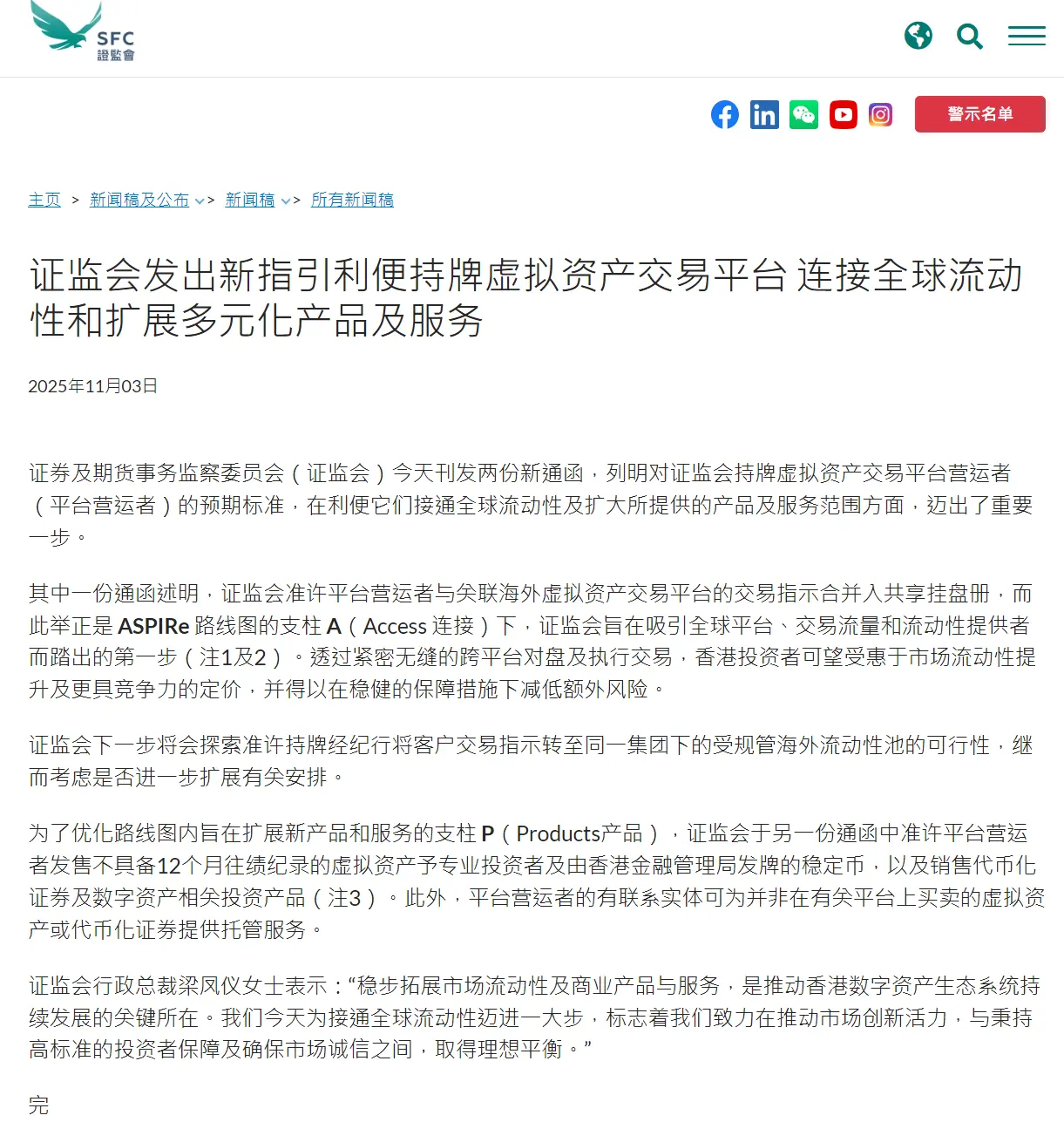
Lawyer's Interpretation of Regulatory Policy 1128: Focusing on Regulating Illegal Currency Exchange Using Stablecoins

The People's Bank of China held a coordination meeting on combating virtual currency trading speculation (hereinafter referred to as the 1128 meeting) in conjunction with more than ten departments, emphasizing the need to continue adhering to the relevant provisions of the 2021 "Notice on Further Preventing and Dealing with Risks of Virtual Currency Trading Speculation" (hereinafter referred to as the 9.24 notice). It was stated that a prohibitive policy should be adopted for the operational business of virtual currencies in mainland China, with a particular focus on combating money laundering and illegal capital outflow using virtual currencies.In response to this policy, lawyer Xiao Za interpreted that, overall, the 1128 meeting is a reiteration of old themes, and what really needs to be regulated is the illegal foreign exchange transactions using stablecoins, which severely disrupt financial order. This issue is a real problem that regulatory agencies must face. It is well known that China has a relatively strict foreign exchange control system, where generally, each person can exchange no more than 50,000 US dollars per year. Now, with the gradual expansion of the stablecoin market, the continuous growth of application scenarios, and the significant increase in the number of cryptocurrency merchants, many capital outflow demands have been addressed by stablecoins such as USDT and USDC.Moreover, there are instances where stablecoins can facilitate money laundering or concealment of criminal proceeds for upstream crimes. Furthermore, in judicial practice, there have been bold foreign trade merchants who used USDT and USDC to circumvent United Nations sanctions, assisting sanctioned countries in foreign trade. From a judicial perspective, in the past year or two, China's judicial authorities have gradually increased their regulatory efforts against cryptocurrency merchants, with many being convicted and punished for illegal business operations, aiding and abetting crimes, money laundering, and concealing criminal proceeds. In addition, lawyer Xiao Za believes that the 1128 meeting will not affect Hong Kong's open policy towards virtual assets. Hong Kong and mainland China have gradually formed a basic pattern of openness and restriction regarding virtual assets, with a clear regulatory attitude: it is not that financial innovation is not allowed, but it must occur in the designated areas.
app_icon
ChainCatcher Building the Web3 world with innovations.