BTC $75,933.89 -0.65%
ETH $2,233.98 -1.40%
BNB $696.37 +0.53%
XRP $1.20 -3.90%
SOL $90.57 +0.40%
TRX $0.3187 +0.64%
DOGE $0.0731 +1.38%
ADA $0.1878 +2.43%
BCH $267.58 -3.69%
LINK $10.94 +1.24%
HYPE $78.68 -0.69%
AAVE $132.63 +4.73%
SUI $0.8738 +2.01%
XLM $0.1563 +1.48%
ZEC $1,364.25 +8.66%
AAPL $344.82 -0.31%
AMZN $263.77 +0.45%
GOOGL $287.60 +0.88%
MSFT $536.77 -1.01%
META $622.53 +2.36%
NVDA $188.76 +1.10%
TSLA $361.58 +4.60%
SNDK $843.22 -2.70%
INTC $55.83 +0.61%
SPCX $131.66 +5.45%
MU $697.87 -0.03%
AMD $445.31 +5.81%
U.S. Midterm Election Updates

U.S. Midterm Election Updates

A total of 23 articles Last updated on 11.05

Special topic introduction

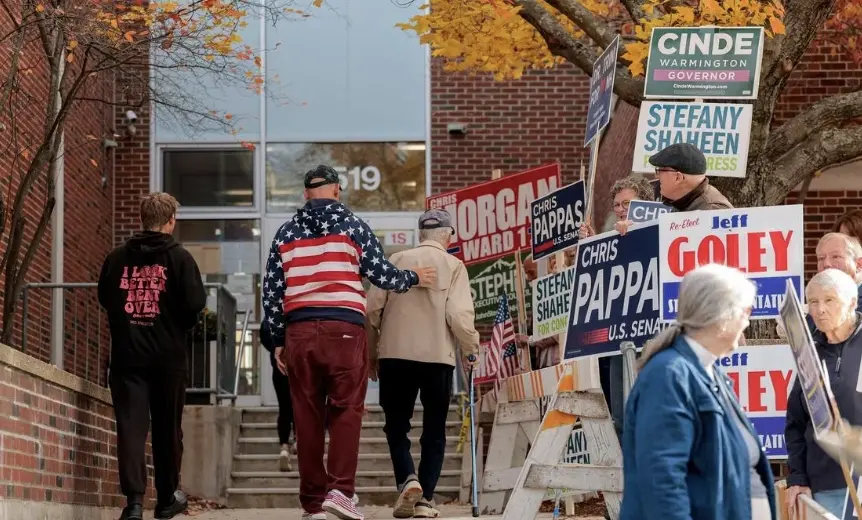
Dynamic Reporting and Tracking of the U.S. Midterm Elections

Analysis: After the midterm elections, the Federal Reserve's focus will shift to controlling inflation; if the conflict in Iran ends, there will be no need for another interest rate hike

Some observers of the Federal Reserve believe that Trump's strong opposition from voters in the midterm elections may alleviate the political pressure faced by Federal Reserve Chair Waller, allowing him to reduce political interference and focus on controlling inflation. Voters have listed the cost of living as one of their top concerns, fundamentally changing the political landscape surrounding the Federal Reserve.Since Trump's re-election in 2024, he has been exerting pressure on the Federal Reserve and its interest rate decisions, repeatedly calling for rate cuts, supporting an unprecedented criminal investigation into the renovation of the Federal Reserve's office building, and attempting to remove a sitting Federal Reserve governor. Against this backdrop, Trump chose Waller to lead the Federal Reserve in May of this year, after Waller had unusually shifted to support rate cuts. This has raised concerns among Democrats, who fear that the new chair may have agreed to adjust monetary policy according to the president's wishes.Claudia Sahm, Chief Economist at New Century Advisors, stated that in fact, if the election results prompt Trump to end the conflict with Iran and abandon further tariff increases, the Federal Reserve may not need to raise interest rates again at all.

After the U.S. midterm elections, anti-data center forces are on the rise, putting pressure on Asian AI chip stocks

According to Wall Street News, the Democratic Party achieved a significant victory in the U.S. midterm elections, with several candidates who clearly opposed the expansion of data centers elected as governors, raising concerns in the market about a slowdown in AI infrastructure investment in the U.S. Asian chip stocks were under pressure on Wednesday, with companies like Samsung Electronics and SK Hynix facing risks that demand for server DRAM and high bandwidth memory (HBM) could be affected.The opposition to data centers mainly focuses on issues such as noise, water consumption, energy consumption, and increased electricity bills for residents. The market is concerned that local governments may tighten project approvals under the pretext of power supply, environmental protection, and AI safety, leading to delays in the construction of new data centers. However, analysts believe that regulation may not directly lead to a shrinkage in investment scale, and tech companies may also turn to building their own power and supporting infrastructure.For South Korean companies, the election results have varying impacts. The Democratic Party's control of Congress may counterbalance the Trump administration's efforts to cut subsidies from the CHIPS and Science Act, benefiting companies like Samsung that invest in the U.S.; the clean energy tax credit policy is also expected to be restored, potentially benefiting solar companies like Hanwha Solutions. Meanwhile, significant easing of automotive tariffs is unlikely, while the Korea-U.S. shipbuilding cooperation framework is expected to continue.

Related articles

app_icon
ChainCatcher Building the Web3 world with innovations.