Bypassing the Foundation and the Government: Musk's $10.5 Billion Stock Gift Behind the "Disintermediation" Distribution Experiment
 Core Viewpoint

 At the peak of anxiety over job replacement by AI, the world's richest person is testing a brand new distribution mechanism.
Author: Gu Yu, ChainCatcher
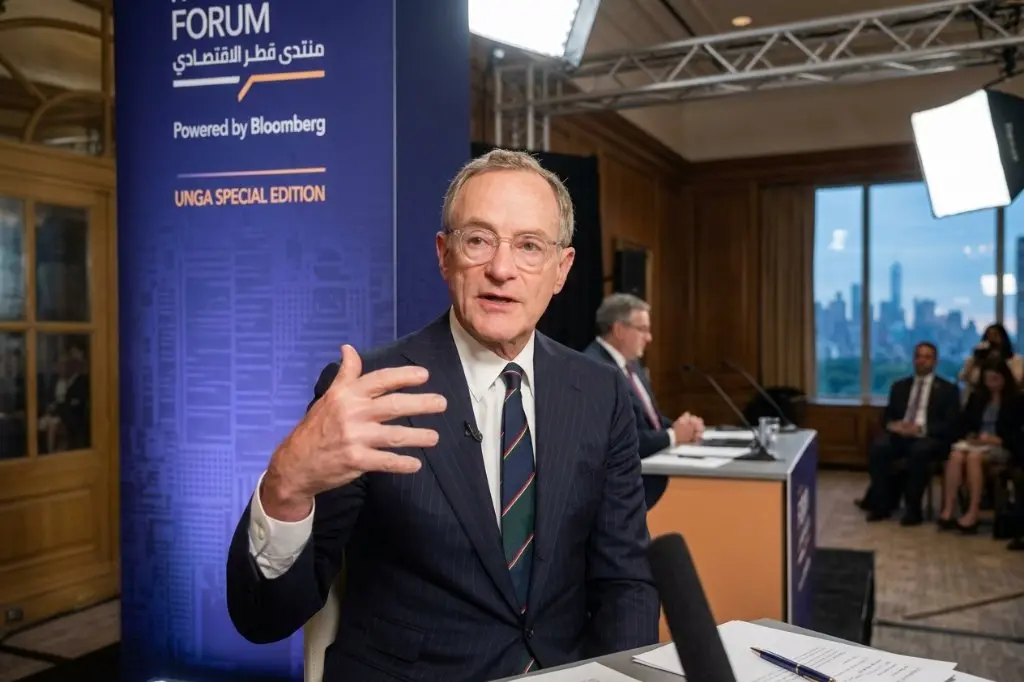
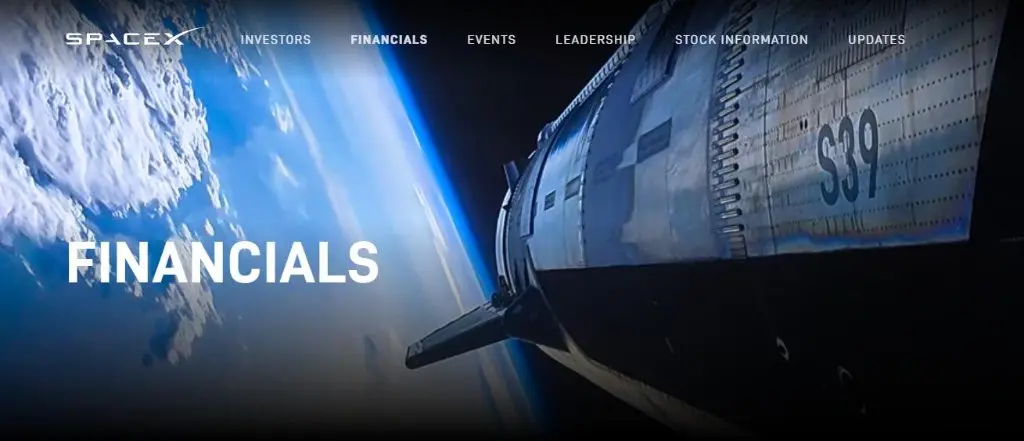
On October 19, Elon Musk wrote on X: "Next year, I will give 1 share of my SpaceX stock to every child in America." That afternoon, he added, "Yes, giving stocks that represent future economic rights directly to the public is the right way."
According to CNBC's estimates, there are about 73 million children under 18 in the United States. Based on SpaceX's closing price of $147.96 that day, the total value would be approximately $10.5 billion to $11 billion—if realized, it would be the largest personal equity gift in history.
But what is worth noting is not just the amount, but the method: bypassing foundations, bypassing legislation, and bypassing the current tax and custody systems to deliver equity directly from the founder to the end beneficiaries. At a time when anxiety about AI replacing jobs is at its peak, the world's richest person is testing a brand new distribution mechanism.
I. A Seven-Hour Gap: The Route Dispute with Anthropic
On October 18, the IPO-bound Anthropic announced the establishment of a "public interest fund": an initial injection of 5% equity, valued at approximately $48 billion based on the most recent valuation; thereafter, for every 50% increase in valuation, the board can add up to 2%, with public equity reaching a maximum of 20%. This is a typical Silicon Valley trust governance path—establishing a professional foundation to decide the direction of wealth.
Musk directly replied to the post: "I suggest giving shares directly to the public." Seven hours later, he announced he would do the same. One believes in the intermediary allocation of professional institutions, while the other aims to eliminate all intermediaries. Tech commentator Brivael Le Pogam referred to the former as "Redistribution 1.0"—taxation plus bureaucratic systems eroding the actual value of welfare; Musk is attempting "Capital Direct Distribution 2.0," where capital creators hand over the means of production directly to recipients.
The timing is also worth pondering. The energy consumption of AI data centers and the pressure of automation on jobs are casting a shadow of social anxiety over the tech industry; while "one share per person" is a narrative format Musk excels at—simple, shareable, redirecting attention from "AI taking jobs" back to "everyone sharing the future."
More critically, the pipeline for this gift has already been established. The "Trump Account" initiated by the U.S. Treasury on July 4 automatically registered over 60 million children by October 1, with the total number of accounts nearing 70 million; newborns from 2025 to 2028 will automatically receive $1,000 in startup funds. The Dell couple has pledged to donate $6.25 billion, giving approximately 25 million children aged 10 and under $250 each.
In other words, the infrastructure, political endorsement, and precedents for "universal shareholderization" are already in place; Musk's tweet just provided the loudest starting gun for it.
II. The Three Divisions of $10.5 Billion
The first division concerns control. According to regulatory documents cited by CNBC, Musk directly holds about 4.8 billion shares of SpaceX stock, totaling about 6.4 billion shares when including unvested equity incentives and options, corresponding to about 48.4% of beneficial ownership and over 82% of absolute super voting rights. By giving away 73 million shares, which is about 1.5% of his direct holdings and 0.5% of the company's market value—he relinquishes a small piece of economic rights while his power remains untouched.
The second division concerns time. Due to the lock-up period after the IPO, most of the shares he holds cannot be sold or traded until June 2027; meanwhile, the timeline for the stock gift plan points to "next year." He did not specify which part of the stock would be used, how to resolve conflicts with the lock-up period, or how the gifting would be handled.
The third division concerns each child. At $146, it is less than 60% of the amount pledged by the Dells, yet the number of recipients is nearly three times that, totaling about 1.7 times that donation; compared to the $1,000 given to newborns by the government, it is only one-seventh. It is a long-term certificate deeply tied to a single company—there is no cash flow, it cannot alleviate any immediate living pressures, and all fluctuations are borne by the holders.
There is also a technical detail: if ultimately realized through the "Trump Account," directly donating stocks can help the donor avoid capital gains tax—the temporary rules from the Treasury starting September 30 allow accounts to receive individual stocks, usually requiring a five-year holding period, while regulators warn that "increased portfolio concentration can bring additional risks." The charitable structure and tax structure overlap here, making it hard to say which is the primary motivation.
III. The UK Has Done It Once: 6 Million Accounts, 760,000 Unclaimed
"The state gives each child an account, which they can use when they reach adulthood"—this has been fully tested in the UK.
Launched in 2005, the Children's Trust Fund (CTF) covered all children born from September 2002 to January 2011: the government deposited £250 when opening the account (or £500 for low-income families), another £250 at age 7, and the account was unlocked at age 18, with tax-free earnings. Accounts not opened by parents were opened by the tax department. Ultimately, about 6 to 6.3 million accounts were created.
In September of this year, the UK government announced that nearly 3 million young people had withdrawn money from their accounts. However, the reminder from the Financial Conduct Authority citing tax department data is even more noteworthy: about 760,000 expired accounts remain unclaimed, with dormant funds of approximately £1.52 billion, averaging about £2,000 per account, with over 60% having been idle for more than a year. The addresses of accounts opened by the tax department back then have long since become invalid, providers have merged and renamed, and young people may not even know they are shareholders.
This is the classic failure mode of universal children's accounts: money is not the difficulty, the pipeline is—identity, notification, custody, and claiming. The Trump Account has almost replicated the same design: automatic registration plus parental claiming, with only about 5.6 million households having actively applied, less than one-tenth of eligible children; currently, the injected $4.5 billion spread across nearly 70 million accounts averages about $64 per child.
IV. The Commitment Rate: An Unfavorable Performance Record for Musk
In 2012, Musk signed the "Giving Pledge," committing to donate half of his personal wealth. The subsequent public records show: he committed substantial funding when co-founding OpenAI but withdrew after investing about $38 million due to control disputes; in 2021, he claimed he would donate $6 billion if the United Nations World Food Program provided a transparent plan, but the donation never materialized after the plan was released; tax filing documents show that the Musk Foundation has failed to meet the federal tax law's 5% minimum public distribution standard for several years, with over half of its funds flowing to related entities—this foundation holds assets exceeding $14 billion as of the end of 2025. The Economist's assessment is: extremely opaque and stingy.
In contrast, his political donation performance rate is much better: since July 2026, he has donated over $276 million to Republican-related groups, and in September, he donated $158 million to the "Senate Leadership Fund" through a Texas-affiliated political action committee. For channels that can immediately realize political influence, his payment record is much better.
Criticism at the institutional level is more direct: why not directly tax Musk? Basic education, healthcare, and social assistance should be built on stable, transparent, and democratically authorized taxation and transfer payments, rather than relying on a very small number of billionaires making discretionary donations based on personal preferences. This also explains why the "baby bonds" and Musk's plan are superficially similar but fundamentally different: the version designed by Darrick Hamilton and William Darity distributes based on family wealth gradients, allowing the children of the poorest families to receive $50,000, potentially halving the wealth gap between Black and White Americans within a generation; while universal accounts bundled with tax cuts and spending reductions may instead solidify existing disparities.
The boundaries of beneficiaries are politically sensitive. Conservative leaders on the X platform have already questioned: "Does 'every American child' refer to all children residing in the U.S., or only U.S. citizens?" As of now, this initiative has no legal documents, custody rules, tax arrangements, or timelines, and inquiries sent by CNBC to SpaceX and Musk's family office have gone unanswered.
V. UBI Has Been Tried Twice: Once with Money, Once with Currency
Musk's language is the one most familiar to the crypto industry: eliminate intermediaries, distribute directly, and hand over economic rights to ordinary people. The idea of "unconditionally distributing things to everyone" has been tested on a large scale twice in recent years.
The first distribution was money. From November 2020 to October 2023, Sam Altman invested $14 million, and OpenAI contributed $10 million, conducting a three-year unconditional cash experiment with 3,000 low-income individuals in Texas and Illinois: 1,000 people received $1,000 per month, while 2,000 served as a control group receiving $50 per month. The results were more restrained than expected—those receiving money worked about 1.3 hours less per week, had a 2 percentage point lower probability of employment, and the extra money mainly went to rent, food, and transportation. Researchers initially hoped that the buffer would lead to better jobs, but the quality of employment showed no improvement.
The second distribution was currency. World (formerly Worldcoin), co-founded by Altman, brought the same logic on-chain: using the iris scanning device Orb to confirm "this is a real and unique person," and then distributing WLD to verifiers. By 2026, it had verified about 18 million people in 160 countries, with about 16 million having received WLD. It filled the gap that UBI lacked—the root cause of those 760,000 unclaimed accounts in the UK is identity, notification, and custody, and what proof of identity aims to do is turn the last mile of distribution into a verifiable pipeline.
But both experiments provide the same warning: what is distributed, the beneficiaries bear. Cash is bland but predictable; tokens tie the distribution effect to market pricing—WLD dropped from a historical high of $11.74 in March 2024 to about $0.60 in June 2026, a decline of about 95%. This is the same risk concentration as Musk tying the benefits of 73 million children to a single stock of SpaceX, just one is betting on the company, and the other on the market.
The difference lies in the threshold. Musk's gift does not require beneficiaries to give up anything, while World’s distribution requires you to give up your iris—a biometric feature that cannot be reset like a password. This is also why it was ruled illegal in Kenya and forced to delete data, banned in Spain, and required to delete 1.2 million iris records in Thailand: when distribution carries a quid pro quo, "whether consent is voluntary" becomes the first area of regulatory scrutiny.
Conclusion
For 73 million children, what matters is not whether the stock was valued at $146 or $148 on the day of the announcement, but whether they can truly access it when they turn 18, and what it will be worth then. If realized through the "Trump Account," the most direct beneficiaries are actually newborns born from 2025 to 2028: the government has already deposited $1,000 for each eligible newborn, and Musk's share will be the first private donation asset in the account.
The true invention of this experiment is not the action of "distributing stocks," but rather handing over the question of "how to distribute technological dividends" from legislative bodies and foundations to individual owners of technological capital to answer.
 Risk warning
Popular articles