Is a new "killer application" for AI emerging? How popular is Meta Muse?
 Core Viewpoint

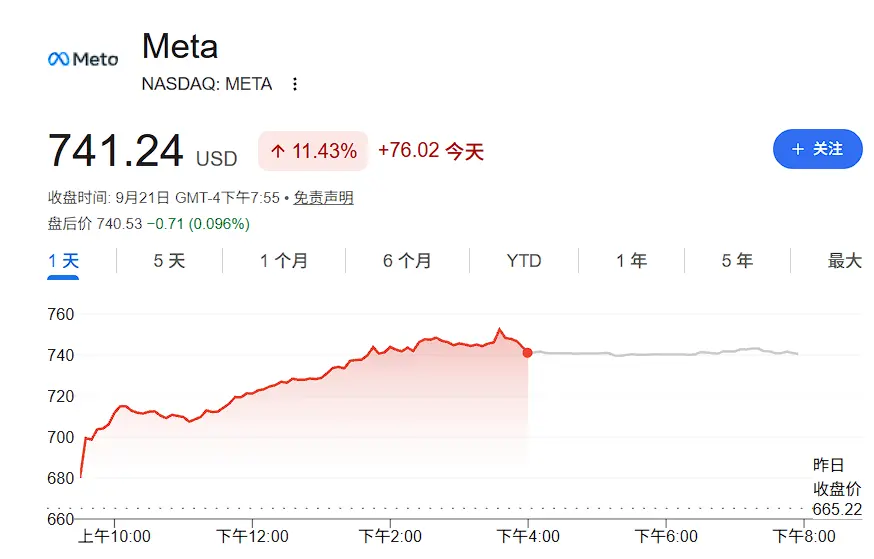
 Muse was launched for 12 days and has surpassed 2.8 million downloads, with 640,000 daily active users, completely exceeding ChatGPT's data during the same period. It has topped the iOS charts in the United States, leading to a single-day surge of 11% in Meta's stock price. Muse targets ordinary users as an AI agent entry point, supporting cross-network task execution, with a minimum subscription monetization of $20/month. Relying on Facebook/Instagram's hundreds of millions of users for traffic, Shopify has announced a partnership, but Amazon has directly blocked it.
Author: Dong Jing
Meta's AI personal assistant application Muse has been online for less than two weeks and has already surpassed ChatGPT's performance in key metrics such as downloads and daily active users, sparking strong market expectations about whether AI agents can truly reach the masses.
Muse recorded 730,000 downloads within just five days of launch, and its total downloads surpassed 2.8 million within 12 days, reaching the top of the U.S. iOS free app chart last Friday, surpassing ChatGPT, Anthropic's Claude, and SpaceX AI's Grok. Boosted by this, Meta's stock price surged over 11% on Monday, prompting Wells Fargo to raise its target price to $796.
Market analysts believe that Muse's explosive growth signifies that AI agent applications are rapidly penetrating from developers and tech enthusiasts to ordinary consumers. According to CNBC, Bernstein analyst Stacy Rasgon stated, "So far, most agent application scenarios have not been truly aimed at the general public. Now that agent applications like Meta Muse are emerging, they may be gaining the potential for wider adoption."
Download Data: Comprehensive Surpassing of ChatGPT's Performance
According to technology media TechCrunch, market intelligence firm Apptopia's data shows that in the comparable markets of the U.S. and Canada, Muse's iOS downloads in the first 12 days reached 1.8 million, higher than ChatGPT's 1.3 million during the same period.
Another analytics firm, Sensor Tower, reported that Muse recorded 730,000 downloads within about five days of launch, and as of Monday, its total downloads had exceeded 2.5 million, with approximately 1.5 million and 1.1 million downloads from iOS and Android platforms, respectively.
In comparison, Claude and Grok had downloads of 400,000 and 200,000, respectively, within the same 13-day window. ChatGPT recorded 3.1 million downloads in the same time frame, still leading Muse, but it should be noted that the platform release strategies of the two applications differ—ChatGPT was launched globally on iOS only, while Muse is currently released on both iOS and Android platforms in the U.S. and Canada.
Daily Active User Data is Also Impressive. Apptopia's data shows that Muse's daily active users on mobile in the U.S. have reached 642,000, far exceeding ChatGPT's 231,000 during the same period; even when comparing only the iOS platform, Muse's daily active users surpass ChatGPT with 359,000 to 231,000.
Product Positioning: AI Agent Entry Point for Ordinary Users
Meta positions Muse as an AI personal assistant tool aimed at ordinary consumers, with core functions including executing tasks across networks, such as filling out electronic forms and organizing email inboxes, designed to enable users to manage and schedule powerful digital assistants. The application is powered by Meta's Muse Spark series AI models and is a significant move by CEO Mark Zuckerberg into the AI agent market.
In terms of business model, Muse offers a free basic version, along with subscription plans of $20 and $100 per month, opening up a monetization path for Meta that differs from its core online advertising business.
Meta has a significant platform advantage in user acquisition. According to Apptopia data, over 95% of Muse users are also Facebook users, and 63% are Instagram users. Muse also supports integration with WhatsApp; previously, Meta used a similar cross-platform user acquisition strategy to grow Threads to a scale of 500 million users, and Muse is expected to replicate this path.
Ecological Competition: Amazon Blocks, Shopify Partners
Muse's rapid expansion has caused noticeable ecological friction in the e-commerce sector. Amazon announced it would block Muse's access to its shopping site due to privacy and security risks. Amazon stated that Meta did not inform them in advance that Muse would access its platform and pointed out that the agent bypassed the built-in personalization features of the Amazon shopping experience and allegedly captured and stored user credentials and scraped account data.
"We believe that third-party applications representing customers in purchases at other merchants should operate transparently and respect service providers' decisions about whether to participate," an Amazon spokesperson stated.
In contrast, Shopify chose to partner with Meta. Shopify CEO Tobias Lütke announced on Monday that Shopify will collaborate with Muse to allow it to implement agent checkout functionality within its platform store, providing important endorsement for Muse's implementation in e-commerce scenarios.
Risks and Concerns: Can the Momentum Be Sustained?
Despite Muse's strong start, there are doubts in the market about whether it can maintain its momentum. Previously, OpenAI's Sora and Meta's own Vibes AI video tool both generated download surges at launch but failed to sustain their status as phenomenon products.
At the same time, Muse's rise also faces broader industry pressures. Concerns about AI safety and cybersecurity risks have recently continued to trouble the tech industry, and Meta itself has just agreed to pay approximately $17 billion to settle allegations from multiple state attorneys general regarding potential harm caused by Facebook and Instagram to children and adolescents.
Muse's heavy reliance on user personal data has also raised concerns. Stacy Rasgon noted, "They (users) care about security, but I'm not sure how much they care about privacy." This issue could become a potential hidden danger for Muse's long-term development.
 Risk warning