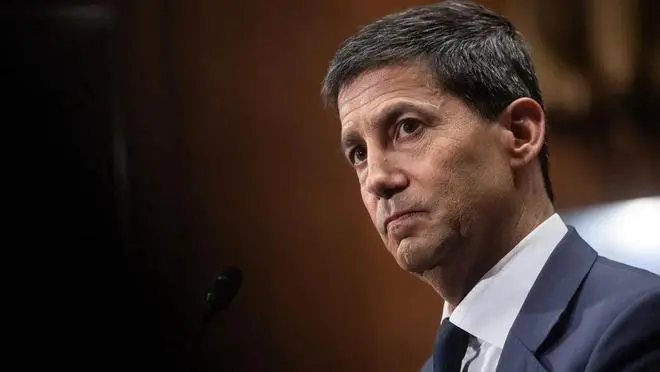
Bitget Dialogue Trader Steve: From US stocks to on-chain, moving towards "unity of knowledge and action" in the 7×24 hour market

 As trading extends from traditional finance to on-chain markets, traders' choices are also changing.
When trading extends from traditional finance to on-chain markets, traders' choices are also changing. For Steve, the transition from A-shares and U.S. stocks to on-chain assets is not just a change in trading targets, but also a process of re-seeking market opportunities.
Today, we invite Bitget VIP trader Steve. He mainly engages in news-driven short-term trading; after a significant loss, he also began to contemplate another issue in trading: what exactly separates knowledge from action.

01 From U.S. Stocks to On-Chain, He Begins to Seek New Trading Opportunities
Steve's trading experience has undergone several shifts.
Initially, he traded A-shares. Around 2020, he began to engage with U.S. stocks, primarily trading through IBKR.
By June of this year, as the environment for mainland users participating in traditional markets like Hong Kong stocks changed, he began to rethink how to participate in the market in a more direct way. At the same time, on-chain markets came into his view.
For Steve, one obvious change brought by on-chain trading is that stock trading opportunities are no longer limited by fixed market hours. The on-chain market operates 24/7, and when an event occurs outside of traditional market trading hours, the market does not wait until the next day to react. For someone like Steve, who is accustomed to finding direction from information and events, this means that after information appears, he can directly observe market reactions and judge whether to participate.
Now, trading has become his main job. He spends about ten hours a day monitoring the market and has gradually established his own fixed sources of information, including overseas information channels and small groups of friends.
"I mainly engage in news-driven short-term trading," Steve summarized his trading style.
02 A Storage Market Event Made Him See the Value of Direction Judgment
For Steve, not every piece of information is worth trading.
After information appears, the first thing he needs to judge is: will this matter affect the market, and can this impact form a relatively clear direction? Only when the information itself has sufficient trading value and the market begins to show a reaction consistent with expectations does he truly enter a trade.
The storage market event in June this year was a relatively typical opportunity.
Storage is also one of the directions he has focused on this year. After relevant information and market changes appeared, he began to track this direction and combined market reactions to judge whether the market was developing as he expected. After confirming the direction, he chose to participate in trading through contracts, usually controlling leverage around 3-5 times.
This is what Steve refers to as "news-driven," but the news itself is not the answer to trading; the real decision point lies in the "direction" brought by the news.
Reflecting on his trading performance, he summarized his profit sources with a very straightforward statement:
|-------------------------------| | "Most of the time, it's still about combining news-driven insights to judge market direction." |
03 "I Know the Right Answer, But It's Not Easy to Execute"
If the storage market event allowed Steve to see his ability to judge direction, then a significant loss in July this year made him re-evaluate himself.
That trade occurred on another exchange. After the position incurred losses, he did not exit in time but held on until he could no longer bear it and had to choose to cut losses.
Looking back, he clearly knows what he should have done: when the trend no longer aligns with expectations, he should exit. But when faced with actual losses, the psychological distance between knowing the rules and executing them becomes a difficult barrier to cross. This is actually a common phenomenon in trading known as "loss aversion," where people often find it harder to accept losses that have already occurred.
Steve has a very direct summary of this contradiction:
|---------------------------------------------------------| | "The easiest mistake to make is to stubbornly hold on when the trend no longer aligns with expectations. The simplest principle is not to hold on, but it's psychologically very difficult to truly do so." |
After this experience, Steve began to re-examine his profits and losses.
He found that most of his profits came from direction judgment, while losses often stemmed from his own irrationality, especially from holding positions. In other words, what truly affects trading results is not just "how accurate one's judgment is," but also whether one can accept the outcome when the market proves them wrong and act according to the rules they already know.
"I know the right answer, but it's not easy to execute."
This may be closer to his current understanding of trading than any set of trading skills.
04 When Trading Becomes Daily Routine, He Starts to Care About Those "Small Details"
As trading became a daily routine, Steve's requirements for the platform became increasingly specific.
Steve prefers contract trading, and one important influencing factor is liquidity. After information appears, he needs to quickly complete his judgment; once the judgment is established, he needs to turn it into a real trade. In practical use, he believes that Bitget performs well in terms of liquidity, which allows him to complete trades more smoothly.
For short-term traders like Steve, information itself is also part of trading. The weekly industry updates, market information, and strategy content provided by VIP can offer him additional references for judging market direction.
In addition, he focuses on seemingly small issues that can directly affect the trading experience. For example, he hopes to see Open Interest (OI) directly on the mobile platform; he hopes the platform can update asset name changes more quickly, etc.
Steve's feedback is also very direct: he recognizes the existing trading experience but will still look for areas that can be improved based on practical use.
05 Turning "Knowing" into "Doing"
After several trading experiences, Steve's understanding of trading has begun to shift from judging the market to understanding himself.
The psychology of "loss aversion" can genuinely affect a trader's decisions. Knowing that the trend has changed, knowing that one should cut losses, but still being led by emotions when faced with losses is a real challenge.
For Steve, the next step may not be to find a more complex trading method, but to continuously practice detaching himself from current profits and losses, viewing each judgment from a more rational perspective.
++This article is based on an interview with trader Steve. The views expressed in the article represent the interviewee's personal opinions and do not constitute any investment advice. Contract trading is highly risky and may result in a total loss of principal. Please make decisions cautiously based on your own risk tolerance.++
 Risk warning



Popular articles