Strive Executive: Rethinking the Bitcoin Price Flywheel
 Core Viewpoint

 The decline in Bitcoin's volatility does not signify the end of the logic for rising prices, but rather shapes it into a higher quality collateral; when capital competes with dollar credit for a fixed supply, prices may break through old trajectories and accelerate again.
Author: Joe Burnett, Vice President of Bitcoin Strategy at Strive
Compiled by: Jiahua, ChainCatcher
In the last quarter, when Bitcoin fell over 50% from its peak, I suggested that the bear market is not a systemic flaw, but rather a part of Bitcoin's early adoption process. Earlier this year, I explained why Bitcoin might reach $11 million by 2036. I still believe this scenario is possible, but what is more worth questioning is: what path will Bitcoin take to get there?
Bitcoin has experienced hundredfold increases in its early cycles, while the returns in recent cycles have clearly narrowed. If this trend continues, Bitcoin will eventually resemble a mature asset more and more, and its returns will gradually normalize.
The power law model summarizes this change well. (Referring to the long-term power function relationship between Bitcoin price and time that remains relatively stable) As the asset size expands, its returns gradually decline. For over a decade, Bitcoin has been operating along a highly stable long-term trajectory.
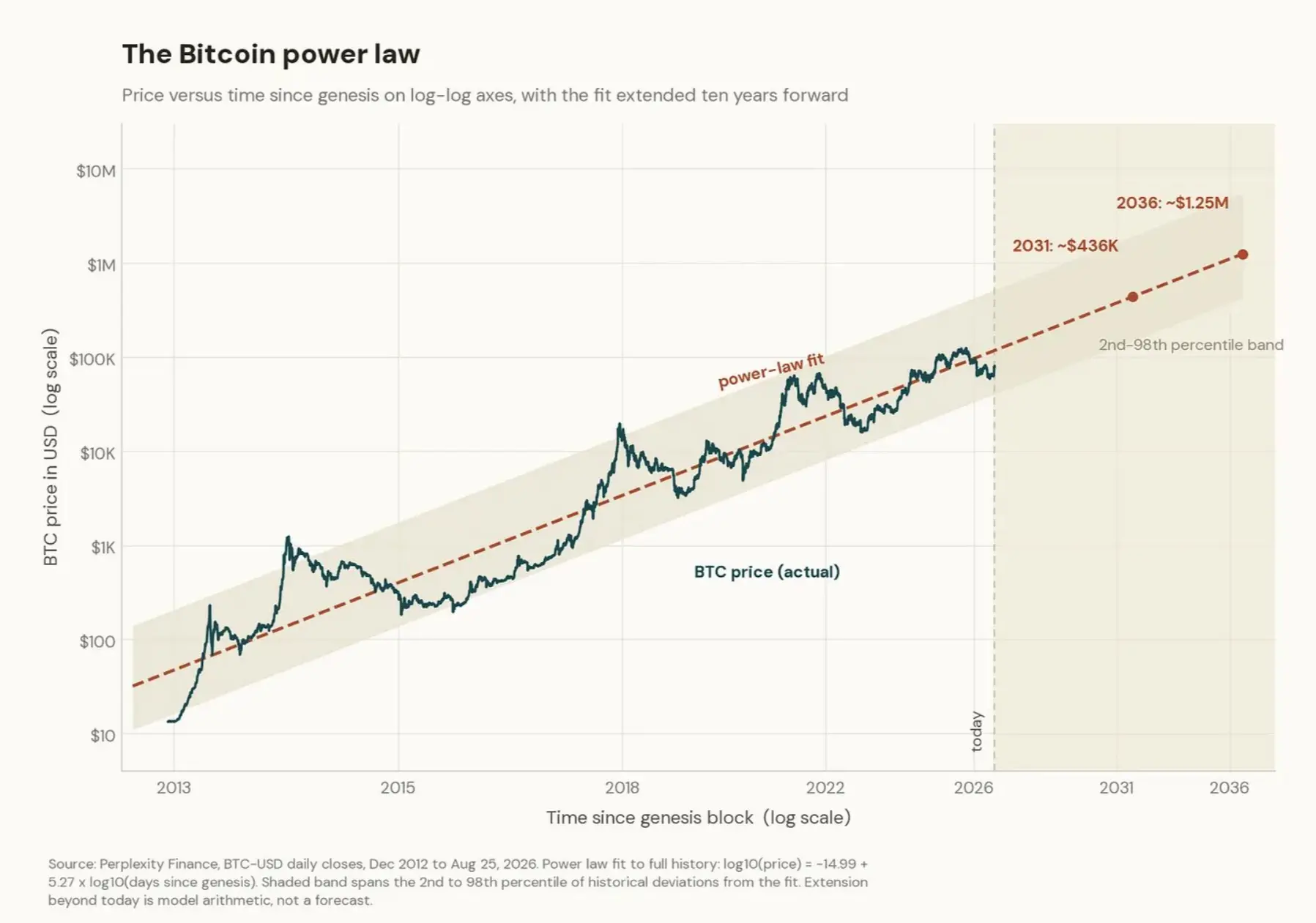
I recognize the explanatory power of the power law framework and believe that Bitcoin may still roughly follow this trajectory in the coming years. However, I am no longer convinced that the power law is sufficient to describe Bitcoin's ultimate outcome.
As Bitcoin matures, returns are declining, and volatility is also decreasing. The decrease in volatility will not only change the scale of funds that Bitcoin can absorb but also expand its uses within the financial system.
Lower volatility will improve Bitcoin's risk-adjusted returns and make it easier to finance using Bitcoin as collateral. When Bitcoin becomes high-quality collateral in the global financial system, the scale of dollar credit secured by it may expand significantly.
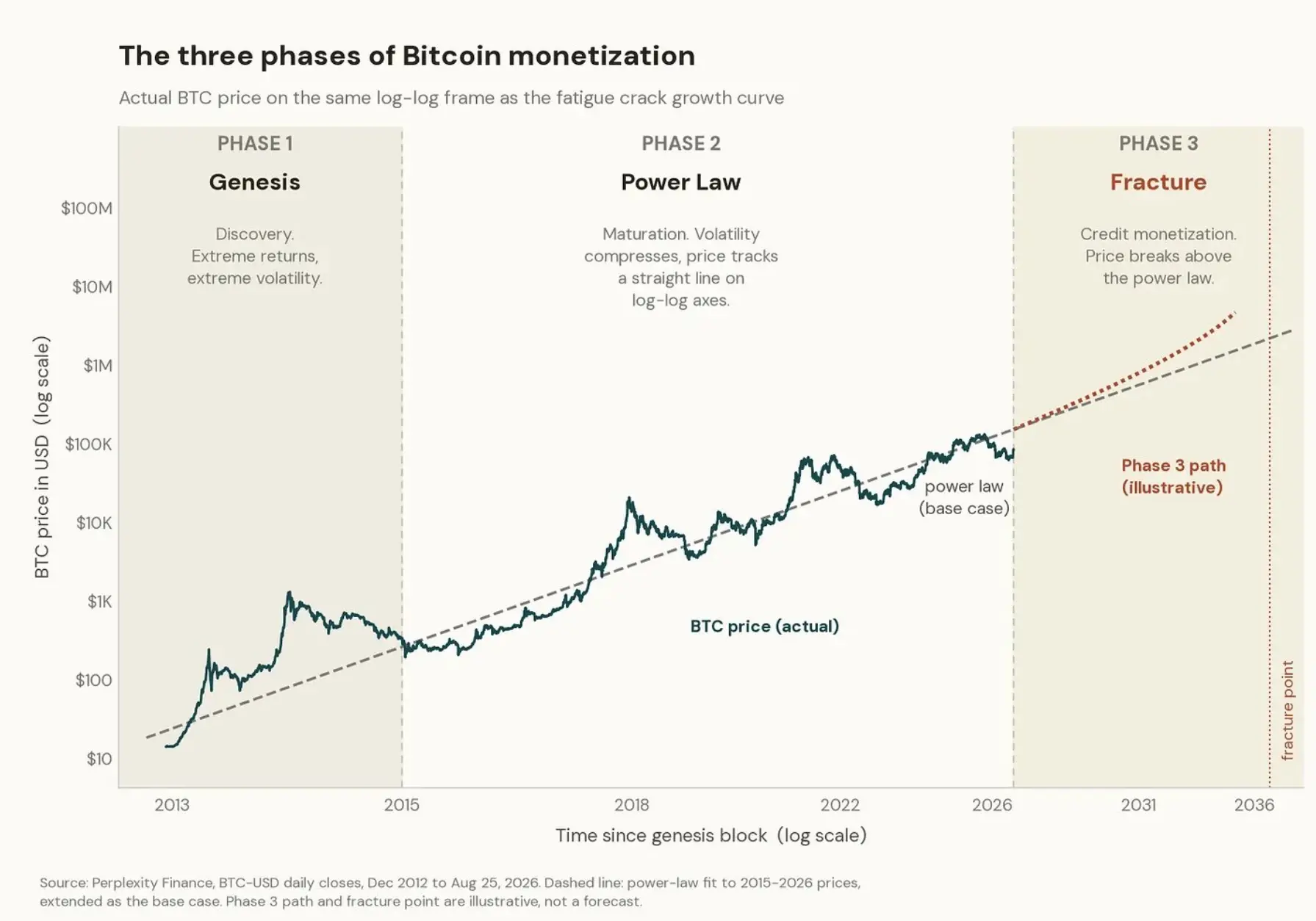
Diminishing returns lower volatility, and declining volatility attracts more funds, expanding the scale of financing that Bitcoin can support. Ultimately, these forces may drive Bitcoin's price to accelerate again, breaking through the power law trajectory.
Diminishing Returns May Just Be the Prelude to the Next Stage
There is an interesting analogy in materials science.
Engineers studying metal fatigue observe how cracks propagate under repeated stress. Aircraft wings bend slightly with each flight, and bridge decks are repeatedly compressed and unloaded as vehicles pass over. Each instance of stress causes minimal damage, but these damages accumulate over time, eventually forming increasingly larger cracks. Engineers typically divide the crack propagation curve into three regions.
The first region is the crack formation phase, where propagation is irregular and difficult to model.
Upon entering the second region, crack propagation begins to follow a pattern, known in engineering as the Paris law interval (the Paris law describes the power law relationship between the rate of fatigue crack propagation and stress intensity). At this point, crack propagation appears as a straight line on a double logarithmic graph.
In the third region, the crack reaches a critical point and propagates rapidly; the power law that could describe the intermediate phase is no longer applicable, and the material ultimately fractures.
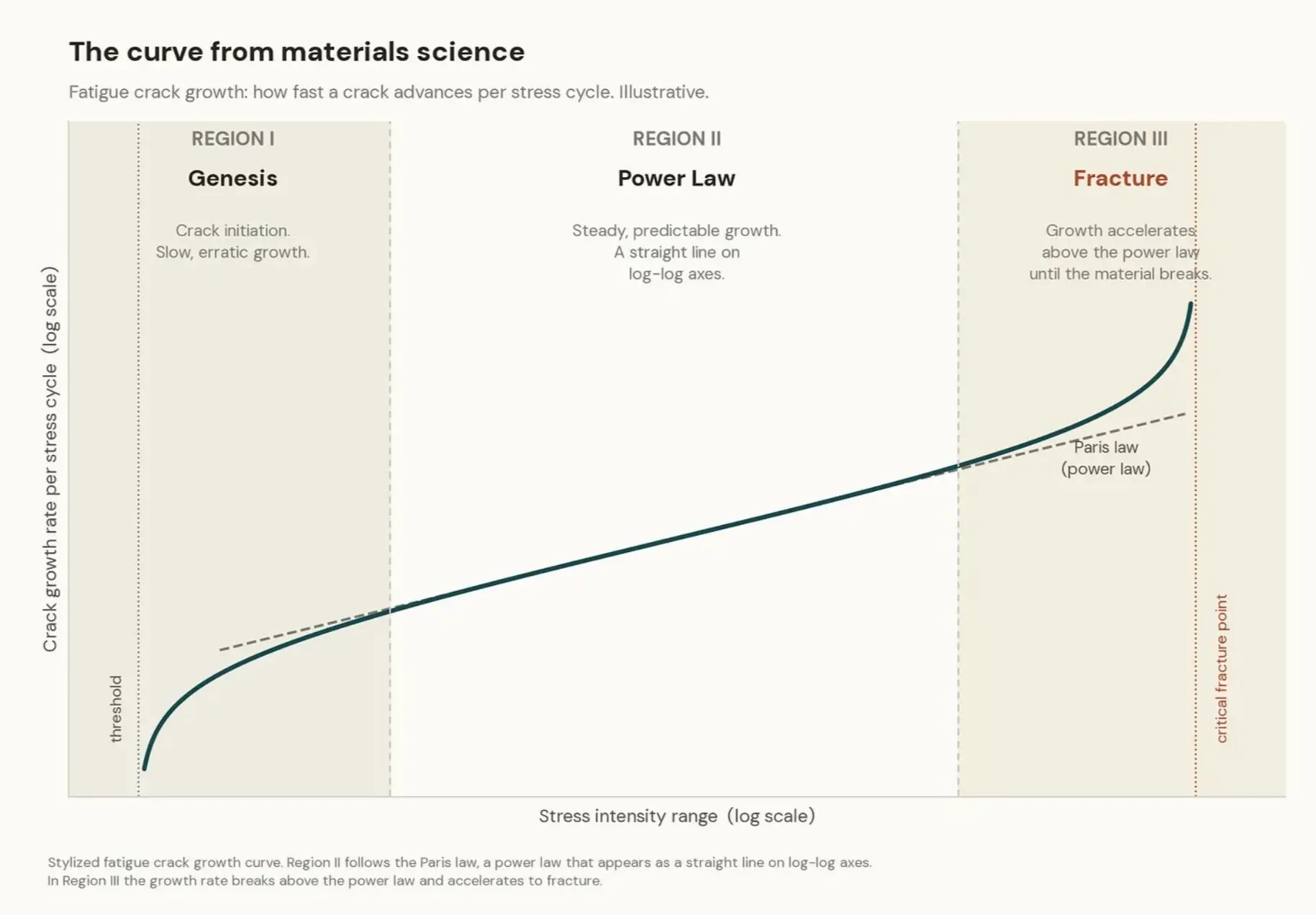
I believe that Bitcoin's monetization process follows a similar trajectory. In this analogy, the material continuously under pressure is the dollar credit system.
The first stage is discovery. Returns and volatility are extremely high, making it difficult for large funds to allocate Bitcoin and challenging to obtain financing using it as collateral.
The second stage is maturity. Returns and volatility narrow simultaneously, improving Bitcoin's risk-adjusted returns, allowing investors to expand their allocation, and it gradually becomes a more attractive collateral.
The third stage is monetization driven by the financial system. Proprietary funds and credit-driven buying begin to enter the Bitcoin market on a large scale, initiating a self-reinforcing cycle, accelerating price increases, and breaking through the power law trajectory.
Most people see the second stage and assume that diminishing returns will continue indefinitely. However, in my view, the second stage is precisely creating conditions for the third stage. As Bitcoin matures, with declining volatility, improved risk-adjusted returns, and enhanced collateral quality, existing funds find it easier to allocate Bitcoin, and using credit to finance purchases becomes more feasible.
Declining Volatility is Reshaping Bitcoin's Asset Attributes
Bitcoin's volatility has significantly decreased.
In March 2014, Bitcoin's one-year volatility once approached 147%; as of the time of this writing, data from Perplexity Finance shows that this figure has dropped to about 44%. Fidelity recently pointed out that Bitcoin's current volatility is below 98.5% of its historical trading days.
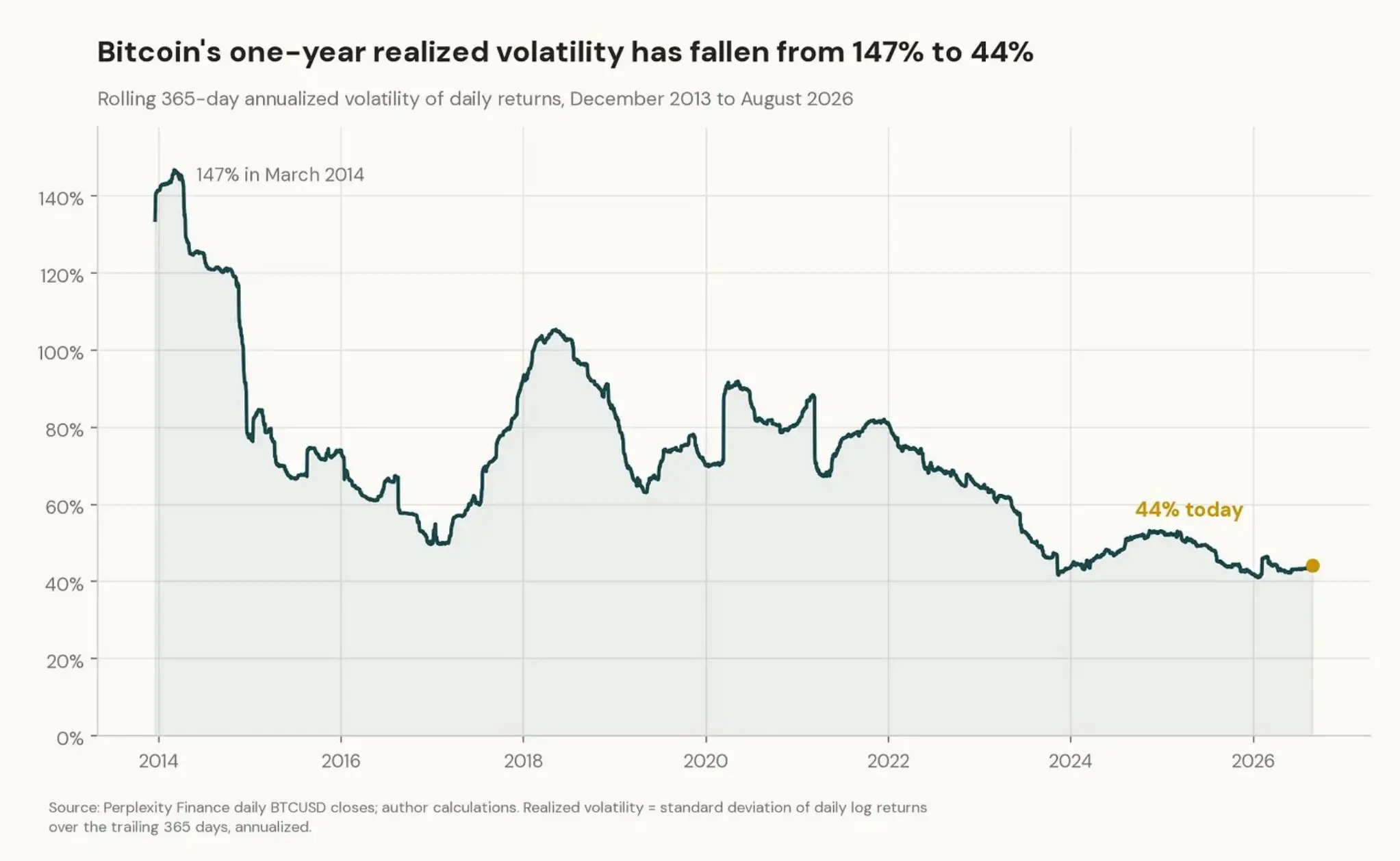
While long-term returns remain prominent, Bitcoin's volatility continues to decline, and the Sharpe ratio is rising accordingly. This means that Bitcoin does not need to rely on new credit; it can attract more funds simply through improved risk-return characteristics. Similar signs were observed from 2016 to early 2017: volatility significantly narrowed, while strong performance began to attract more funds.
Volatility also acts like an "invisible tax" on position size. For investors with fixed risk budgets, if Bitcoin's volatility is halved, they can theoretically double their position size without increasing their portfolio's risk contribution. Therefore, even without creating any new credit, the decline in volatility itself will expand the space for existing funds to allocate Bitcoin.
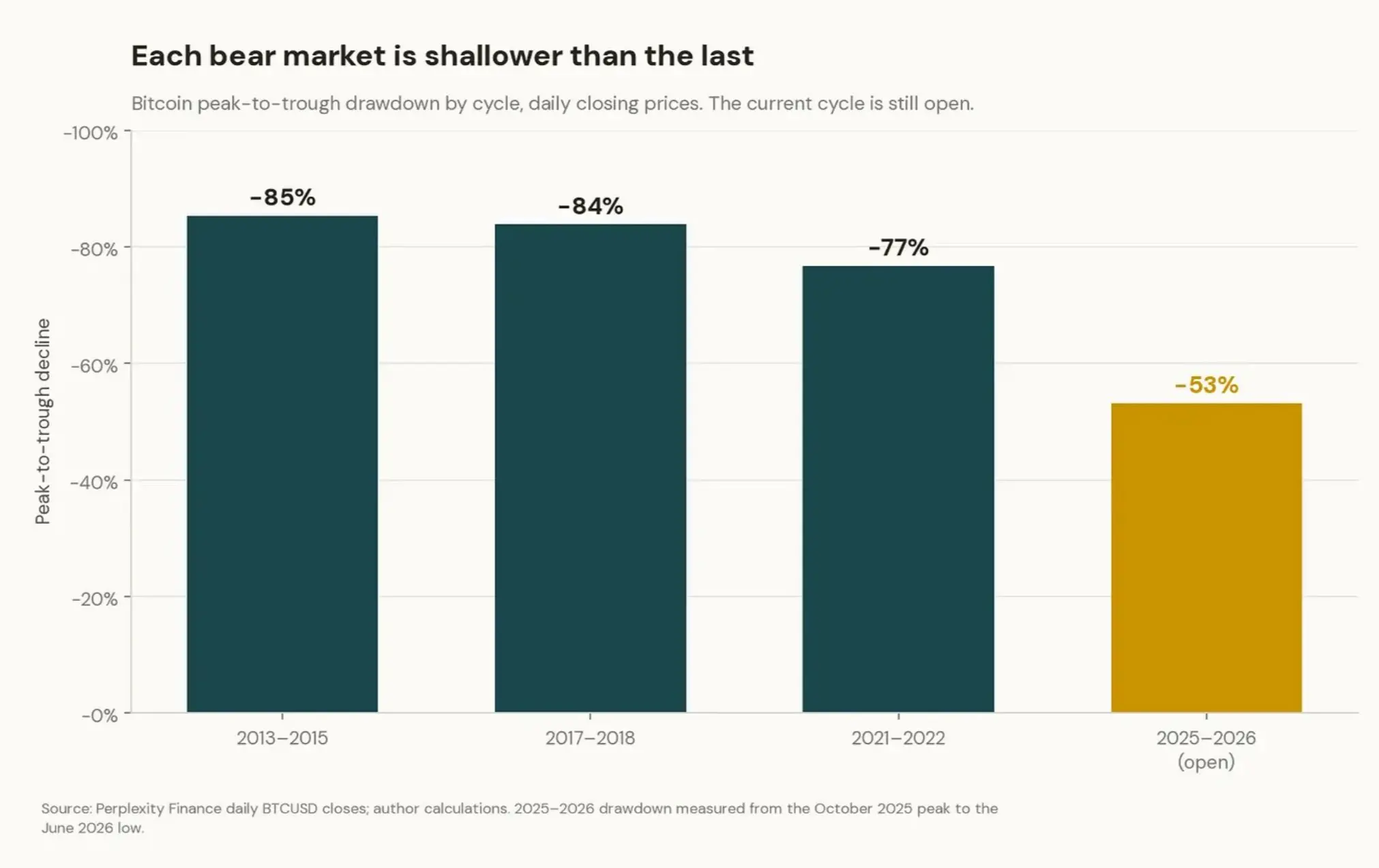
The maximum drawdowns in previous cycles also illustrate the same issue. The maximum drawdowns in Bitcoin's last three major bear markets were approximately 85%, 84%, and 77%. In this cycle, Bitcoin fell from about $125,000 in October 2025 to about $58,500 in June 2026, a drawdown of about 53%.
NYDIG also provided a similar conclusion near the June low: this drawdown was 52.7%, while from 2021 to 2022 it was 77.6%, and earlier cycles ranged from 84% to 94%. Each cycle's decline is narrowing, and the bottoms are rising. NYDIG views this long-term decline in volatility as one of the most distinctive characteristics of the current stage.
For Bitcoin holders, this change may be disappointing: bull market gains are smaller, bear market declines are smaller, and overall returns are decreasing.
But from the lender's perspective, the same trend is highly attractive because Bitcoin is becoming higher quality collateral.
The Lower the Volatility, the Greater the Credit Scale Bitcoin Can Support
From the lender's perspective, the most important question is: how much of a decline can Bitcoin withstand before the collateral value approaches the loan balance?
Assuming someone holds Bitcoin worth $100,000 and borrows $20,000 against it, the initial loan-to-value (LTV) ratio is 20%; when the LTV rises to 80%, the lender will liquidate the collateral.
The smaller the worst potential drawdown for Bitcoin, the higher the loan amount that can be safely issued against the same collateral. If the expected worst drawdown decreases from 80% to 50%, the safe loan amount will increase to 2.5 times the original.
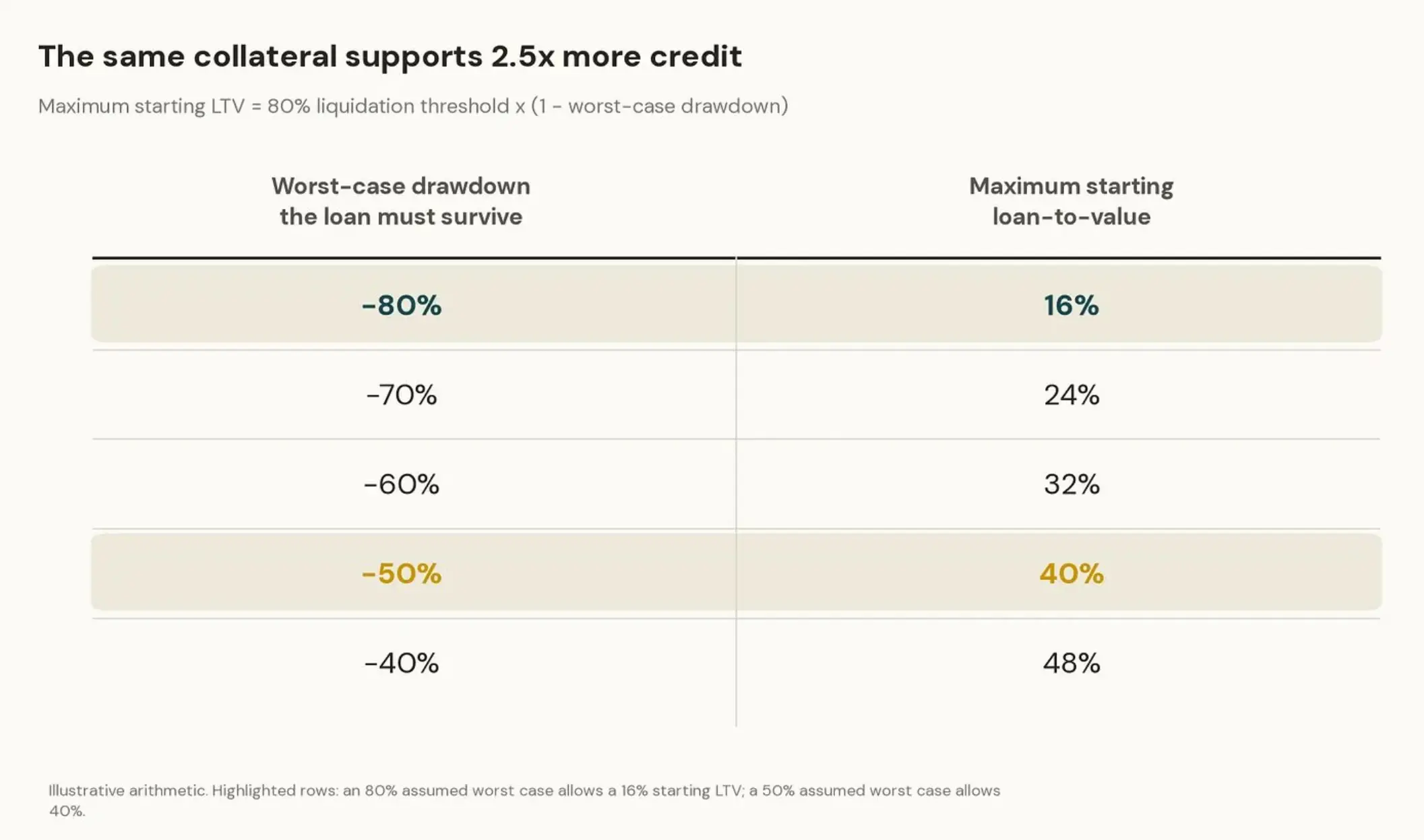
The same logic applies to borrowers. Financing structures used by companies like Strategy and Strive can expand Bitcoin exposure without taking on short-term forced liquidation risks; the shallower the drawdown, the stronger the resilience of these structures. Thus, lower volatility can support larger financing scales while reducing credit risk.
Price increases will further amplify this effect. If Bitcoin's price doubles while the corresponding dollar debt remains unchanged, the LTV will be halved. The same amount of Bitcoin can thus support more borrowing and provide funds for subsequent buying.
Even if Bitcoin gradually matures and annual returns no longer reach 100%, this financing logic may still hold, and the expandable credit scale may still be quite substantial.
Assuming Bitcoin's expected annual return drops to 30%, while the financing cost of Bitcoin-related preferred shares is about 13%, there remains an expected return spread of about 17 percentage points.
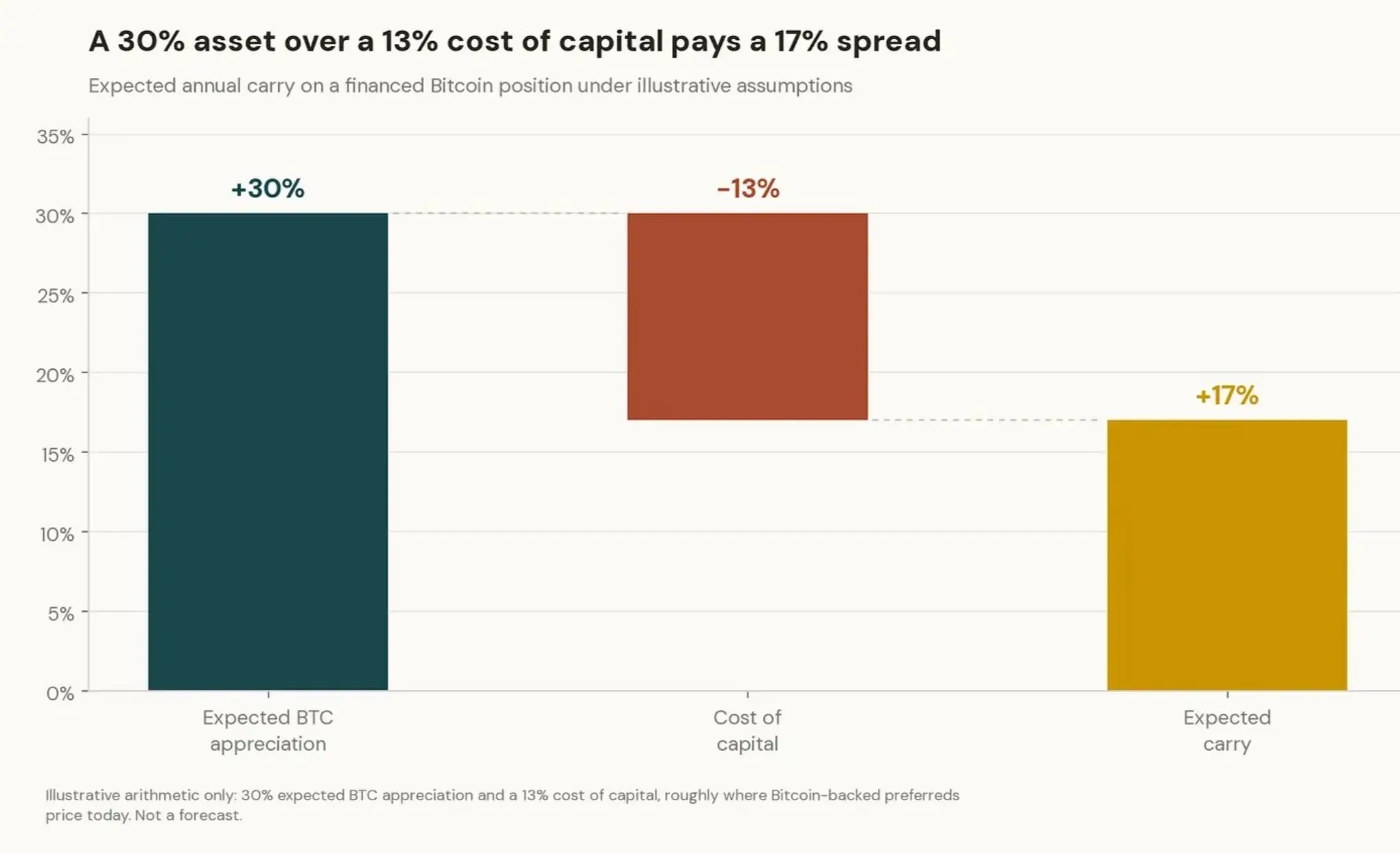
As the extreme drawdowns of collateral continue to narrow, such a return spread is still sufficient to support large-scale financing. As the market's assessment of collateral risk decreases, cheaper financing channels may gradually open up, including bank credit, investment-grade bonds, and Bitcoin mortgage securitization.
This mechanism has already begun to manifest in the public market. Strategy released a schematic credit model that derives the credit spread of its preferred shares based on hypothetical Bitcoin volatility.
Under unchanged assumptions, when Bitcoin's volatility is 60%, the model gives a STRC credit spread of 360 basis points (1 basis point equals 0.01 percentage points), falling into the non-investment-grade range; when volatility drops to near the current realized level of 40%, the spread quickly narrows to 56 basis points, entering the investment-grade range; when volatility further drops to 30%, the spread is only 6 basis points. Meanwhile, the probability that the collateral cannot cover the debt in the model also drops from about 26% to less than 0.5%.
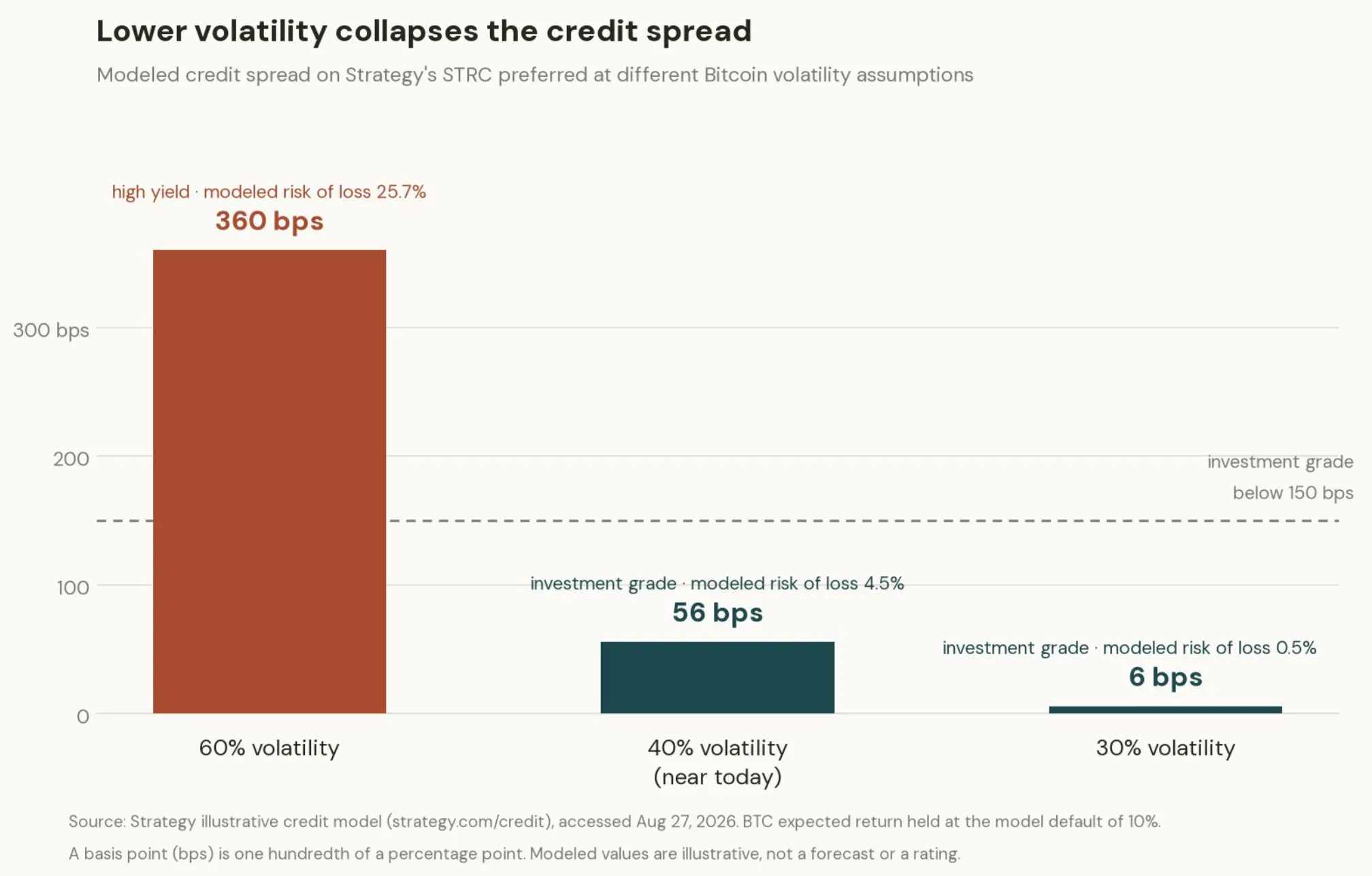
The decline in volatility makes the same type of instrument present lower credit risk; the lower the credit risk, the more funds the financial system is typically willing to provide.
The starting point is a simultaneous decline in returns and volatility, but the result may be a resurgence in returns.
The Capital and Credit Flywheel, Driving Prices to Accelerate Again
When these factors combine, they create a self-reinforcing cycle.
Bitcoin continues to grow and mature, leading to a decline in volatility; risk-adjusted returns improve, allowing investors to allocate more funds; the quality of collateral improves, making financing cheaper and more abundant. Existing funds and buying supported by new dollar credit begin to compete for the total cap of 21 million Bitcoins, driving prices up. Price increases further raise the value of collateral, releasing more financing space, thus perpetuating the cycle.
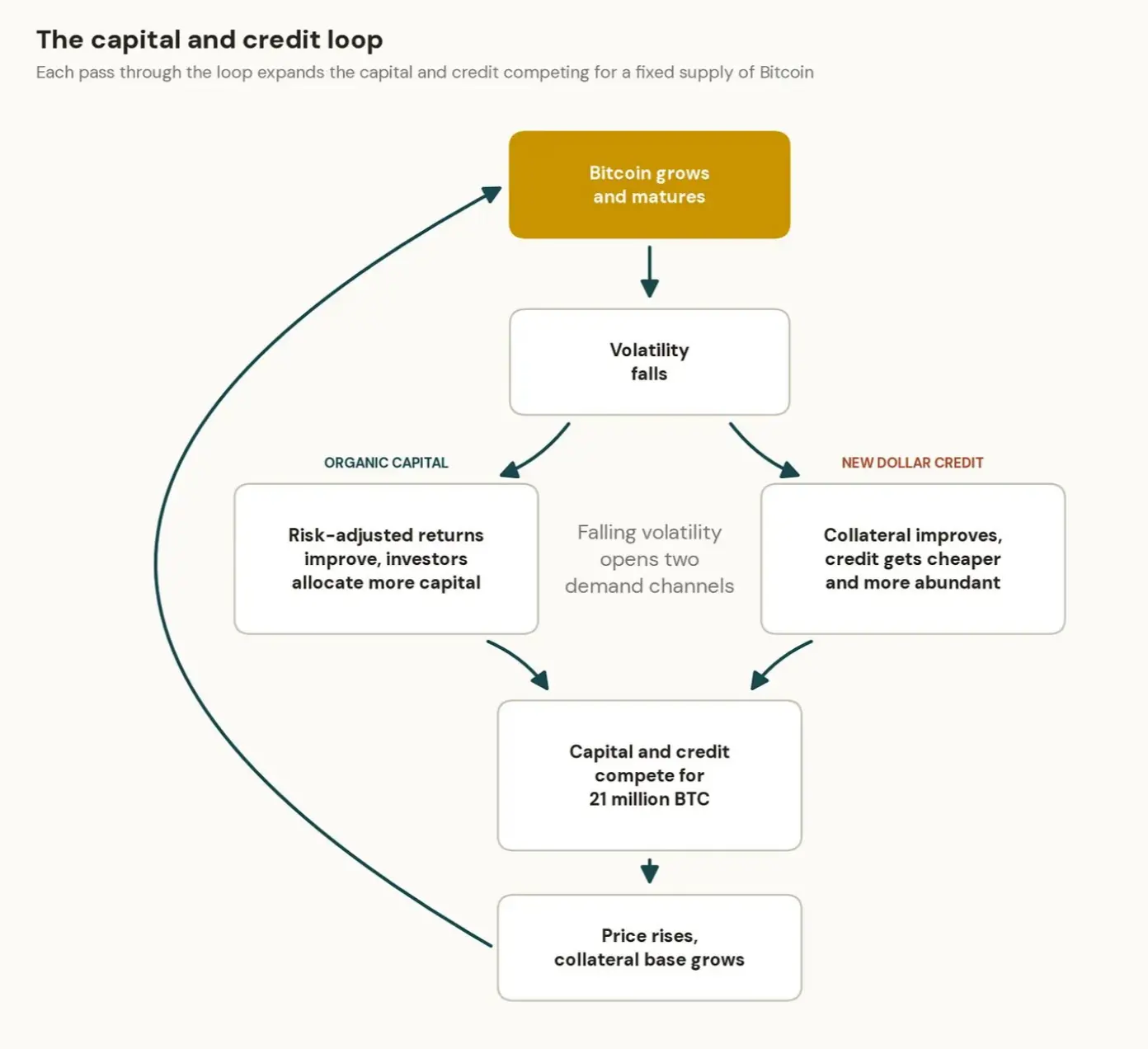
From the perspective of credit expansion, this cycle resembles speculative attacks in macro finance (borrowing relatively weaker currencies to buy assets that are harder to dilute, thus forming a self-reinforcing trading mechanism).
Credit expansion can come from multiple paths. Banks can issue Bitcoin-backed loans, and as explained by the Bank of England in "Money Creation in the Modern Economy," commercial banks create deposit money simultaneously when issuing loans. Companies can also issue convertible bonds and perpetual preferred shares, using the proceeds to purchase Bitcoin. Both paths expand dollar-denominated credit while taking more Bitcoin out of circulation.
The Moment of Breaking the Power Law
So, what will be the endpoint of this process?
The adoption of new technologies typically follows an S-curve: initially slow, then rapidly widespread, and finally approaching saturation. Many people believe that Bitcoin's price will also follow the same curve and gradually flatten. However, this overlooks the fact that the dollar side of BTC/USD is not static: the dollar funds and credit available for purchasing Bitcoin or financing it will continue to expand.
The number of Bitcoins is fixed, but the dollar funds and credit available for purchasing Bitcoin have no fixed upper limit. The lower the volatility, the more existing funds can be reasonably allocated to Bitcoin; the higher the quality of collateral, the stronger the financial system's ability to expand dollar credit against it.
Even if Bitcoin's adoption rate ultimately approaches saturation, the scale of funds willing to hold Bitcoin directly or buy Bitcoin through financing may continue to expand. The dollar-denominated price of Bitcoin may also accelerate again, breaking through the power law trajectory that previously described the second stage.
This is the third region in the metal fatigue curve. Cracks will not forever propagate at the rate described by the Paris law, but will accelerate upon reaching a critical point, ultimately causing fracture. The decline in volatility first broadens the space for capital allocation and credit expansion; when these forces begin to compete for the fixed supply of Bitcoin, returns and upward volatility may rise in tandem.
In this analogy, the material under continuous pressure is the dollar credit system; the so-called "fracture" is the moment when Bitcoin's dollar price breaks through the power law.
 Risk warning