








Q2 Wall Street Institutions' Crypto Holdings: Most Institutions Increase Positions Against the Trend, ETH Exposure Outperforms BTC Across the Board
 Core Viewpoint

 In the second quarter, ETF fund flows and institutional behavior became decoupled, and the institutionalization of crypto assets deepened; at the same time, the divergence among institutions regarding crypto-related stock targets also grew larger.
Author: Zhou, ChainCatcher
August 14 is the statutory deadline for institutional investors to submit Q2 13F forms as required by the SEC in the United States. After the concentrated disclosure of documents, Wall Street's crypto holdings are once again laid bare.
This quarter, the actions of institutions and the price trends of cryptocurrencies show a clear contrast. Bitcoin's price fell by about 14.2%, while the reported crypto holdings by institutions actually increased.
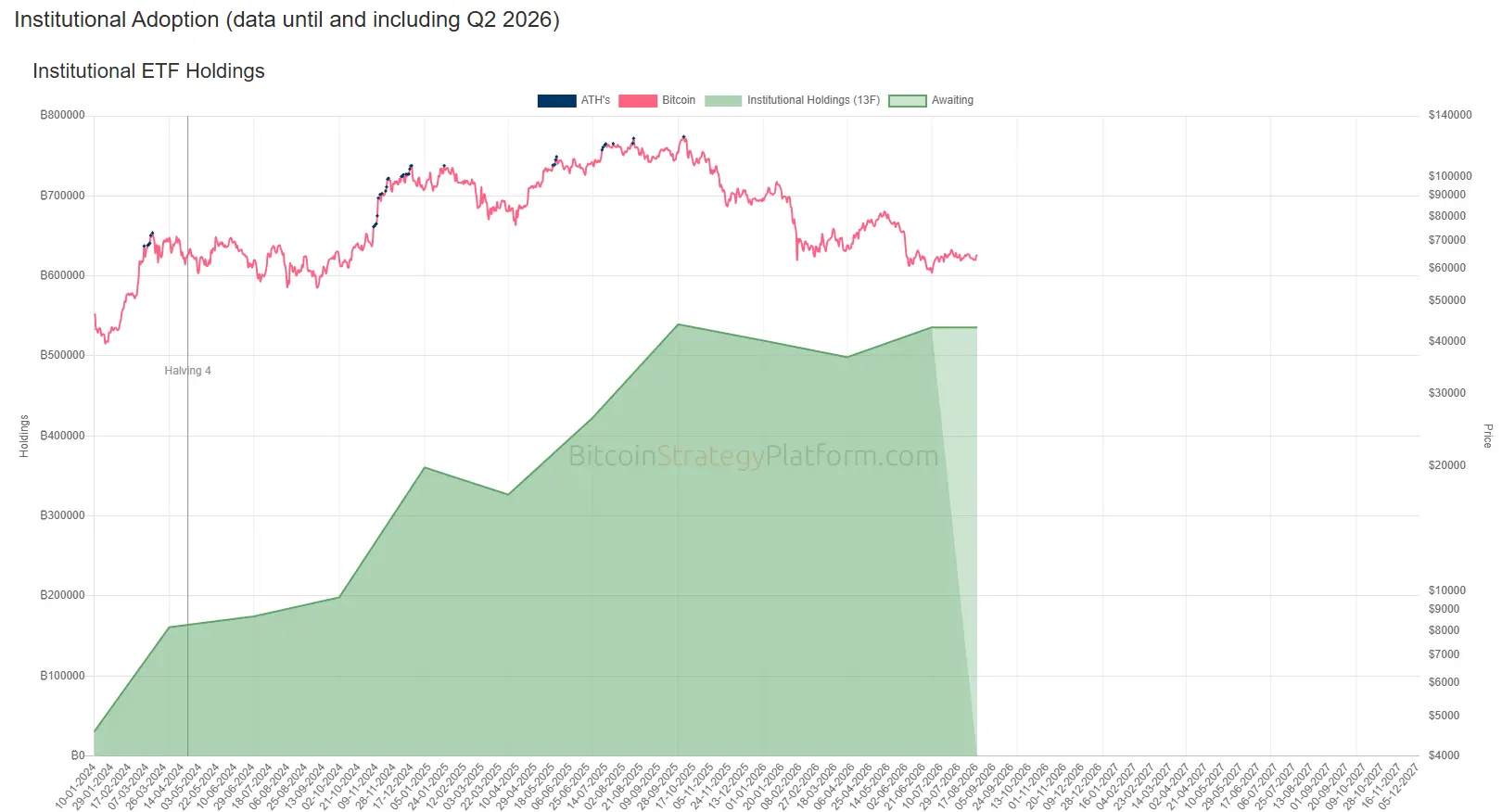
According to Bitcoin Strategy's calculations of the 13F data, institutional Bitcoin holdings rose from approximately 498,000 to about 536,000, a quarter-on-quarter increase of 7.5%. During the same period, total ETF holdings decreased from about 1,297,000 to approximately 1,211,000.
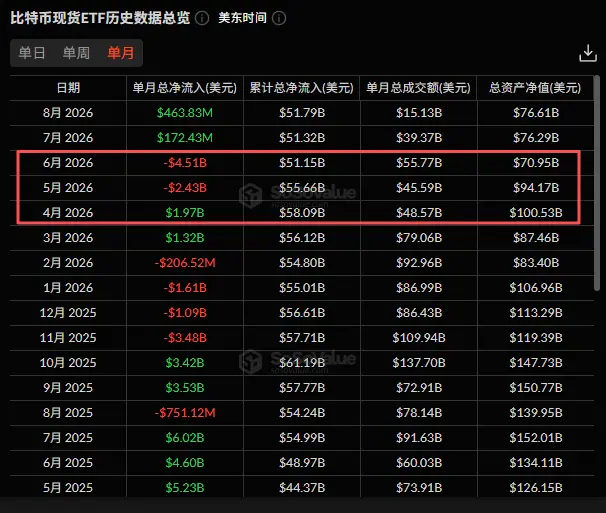
According to SoSoValue data, the U.S. spot Bitcoin ETF experienced continuous net redemptions in Q2, with net outflows of approximately $2.4 billion and $4.5 billion in May and June, respectively, with June marking the worst single-month record since its launch. The Ethereum ETF also saw cumulative net outflows of about $700 million during the same period.
At the same time, holdings are concentrating among the top players. The number of institutions reporting Bitcoin holdings decreased from about 2,000 to approximately 1,900. According to Bloomberg data, as of August 13, the institutional holders of the IBIT product reached about 1,500, with net assets of approximately $47.35 billion.
Ethereum Growth at Banks Outpaces Bitcoin
Previously, ChainCatcher noted in the Q1 holdings review that institutional interest in Ethereum allocation was increasing, with Jane Street, Wells Fargo, and JPMorgan adding Ethereum ETFs during the outflow phase. In Q2, this trend was confirmed on the banking side.
According to DWF Labs' calculations, based on the corresponding crypto asset quantities, Morgan Stanley's BTC exposure grew by 3.7% quarter-on-quarter, while ETH exposure grew by 18.6%. JPMorgan's BTC exposure increased by 12.2%, and ETH exposure surged by 67.3%. Both banks' ETH growth rates were significantly higher than that of BTC.
On an individual level, the figures are even more striking. Morgan Stanley's ETHA increased by approximately 202% to 4.6 million shares, JPMorgan's ETHA increased by about 338% to nearly 1.17 million shares, and Bank of America's ETHA skyrocketed from about 67,500 shares to approximately 1.98 million shares, roughly 29 times the previous amount.
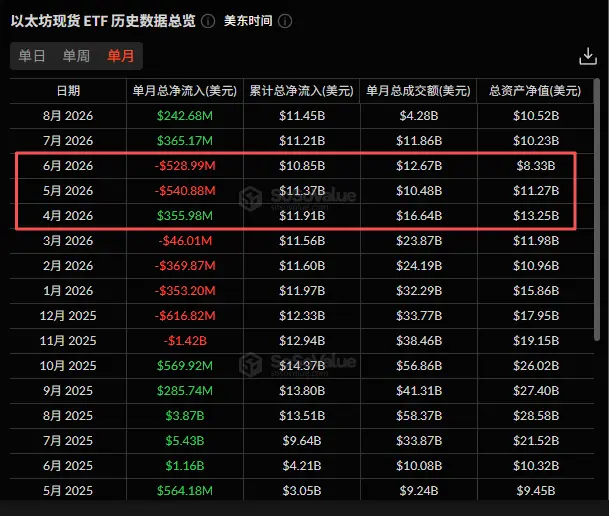
However, in reality, the overall spot Ethereum ETF experienced net outflows in Q2. SoSoValue data shows that there was still a net inflow of about $356 million in April, but net outflows of approximately $541 million and $529 million occurred in May and June, respectively, totaling about $714 million in net outflows for Q2.
Jane Street Bought Back In, Hedge Funds Shift Positions to Options
Last quarter, Jane Street cut its IBIT holdings by about 71%, leading the market to speculate that it was bearish on Bitcoin. This quarter, it reversed course and added back approximately 24.9 million shares of IBIT, a quarter-on-quarter increase of about 324%, making it one of the largest buyers of the season. Currently, its spot Bitcoin ETF exposure is about $990 million, with approximately $828 million in IBIT.
As an authorized participant and market maker, its end-of-quarter inventory is related to subscriptions, redemptions, and hedging; a significant increase in spot holdings does not equate to directional bets.
It is worth noting that the 13F only reports long positions at the end of the quarter; if options were included, the profiles of several institutions would also reverse.
Global macro hedge fund Brevan Howard cut its spot IBIT from 24.3 million shares to 7.21 million shares in Q2, a reduction of about 70.4%. However, it simultaneously held call options corresponding to about 7.23 million shares of IBIT and put options for 5.27 million shares.
Graham Capital reduced its spot IBIT from about 926,000 shares to 259,000 shares during the same period, a decrease of about 72%, yet it held put options corresponding to about 1.74 million shares of IBIT, with a reported value of approximately $57.94 million. Multi-strategy giant Millennium reduced its spot IBIT from about 19.29 million shares to 9.69 million shares, a reduction of about 49.8%.
UBS's directly held IBIT only increased by about 12% to 407,890 shares, but its call options corresponding to its holdings surged from 80,000 shares to approximately 1.95 million shares, a quarterly increase of over 24 times, while its put options decreased by about 53%.
In contrast, Paul Tudor Jones's fund Tudor took a more conflicted approach, increasing its spot IBIT by nearly 20% to 688,500 shares, ending nearly a year of reductions, while cutting its call options linked to IBIT by about 85%, from 998,000 shares to approximately 148,000 shares.
Institutions Diverge on Crypto Stocks
In the previous article, we mentioned that crypto-related stocks are becoming an unavoidable allocation option for institutions. Among them, Strategy is the most representative.
In Q2, Strategy tore open the myth of "never selling coins": at the end of May, it sold 32 Bitcoin to pay dividends on preferred shares for the first time, and on June 29, the board authorized a framework for liquidating up to $1.25 billion in Bitcoin.
The 13F cut-off was on June 30, but a more significant sell-off occurred after the quarter, as the narrative around BTC proxies changed.
Documents show that Bank of America reduced its holdings in Strategy from about 3.97 million shares to approximately 1.18 million shares, cutting about 70%. Renaissance Technologies reversed course and bought 422,900 shares, increasing its total holdings to 2.55 million shares, worth about $242.3 million. BlackRock also increased its MSTR holdings to about 19.39 million shares, worth approximately $1.69 billion. However, as the largest index issuer in the market, BlackRock's increase may be more about passive allocation following index changes.
Renaissance Technologies newly purchased 422,881 shares of Strategy, bringing its total holdings to 2.55 million shares, valued at $242.3 million, an increase of 20%. The Royal Bank of Canada increased its holdings by 46,000 shares of Strategy, currently holding about 385,000 shares, with a total value of approximately $37.2 million, an increase of 13.5% compared to before.
Additionally, Circle is one of the few related targets that are jointly favored. Morgan Stanley significantly increased its holdings from about 1.46 million shares to approximately 8.32 million shares, while ARK also slightly increased its holdings by about 1% to 4.56 million shares. For Coinbase, the two actions were completely opposite; Morgan Stanley reduced its holdings by about 550,000 shares, while ARK increased its holdings by about 5.8% to 2.51 million shares, while also cutting Robinhood by about 12.8%.
It is worth mentioning that ARK's Circle weight decreased from about 3.34% in Q1 to 1.85%, but the number of shares actually increased slightly; the decline in weight was mainly due to the dilution from the new position in SpaceX, which enlarged the portfolio.
Furthermore, Morgan Stanley significantly increased its Circle holdings in Q2, but at the beginning of August, it cut the target price for CRCL from $106 to $38, believing that the contraction of USDC's scale exposed the sensitivity of Circle's reserve income, indicating that the income structure would shift towards lower-margin trading income.
New Money Enters, Old Money Stays Put
In Q2, Banco Santander in Spain disclosed its Bitcoin and Ethereum ETF holdings for the first time, although the positions are minimal compared to its over $10 billion U.S. equity portfolio. UBS's crypto exposure has also been gradually increasing, and this quarter it added approximately $1.5 million in holdings in the mining company American Bitcoin.
Morgan Stanley also established new positions in Grayscale's Solana Staking ETF and Fidelity's Solana Fund, with market values of approximately $4.25 million and $2.26 million, respectively; JPMorgan also established a new Bitwise Solana Staking ETF and repurchased XRP, which it had previously sold off in Q1, through small positions in Bitwise and Grayscale's XRP funds.
Additionally, the investment advisory firm Edelman Financial Engines disclosed a position of about $34 million in spot Bitcoin ETFs, primarily allocated to BlackRock's iShares Bitcoin Trust (IBIT) and Grayscale-related products. Although this position remains small within its overall investment portfolio, it has surpassed its holdings in Amazon of about $25 million.
Abu Dhabi's Mubadala and the Abu Dhabi Investment Authority maintained approximately 14.72 million shares and 8.22 million shares of IBIT, respectively, totaling about $764 million, pausing the previous quarters' accumulation pace in Q2.
Harvard UniversityEndowment Fund holds approximately 3.0446 million shares of IBIT, worth about $101.4 million, unchanged from the end of Q1, ending two consecutive quarters of reductions. Its holdings in gold products, iShares Gold Trust and SPDR Gold Trust, total approximately $171.2 million, already surpassing Bitcoin.
Signals of Institutional Crypto Allocation Changes
Looking at the institutional actions this quarter as a whole, several directional signals are taking shape.
First, ETF fund flows are decoupling from institutional behavior, deepening the institutionalization of crypto assets.
Second, the divergence among institutions regarding crypto-related stock targets is growing, especially after Strategy began selling coins.
Additionally, Ethereum has become a clear buy for institutions, with fund flows in Q3 also shifting accordingly.
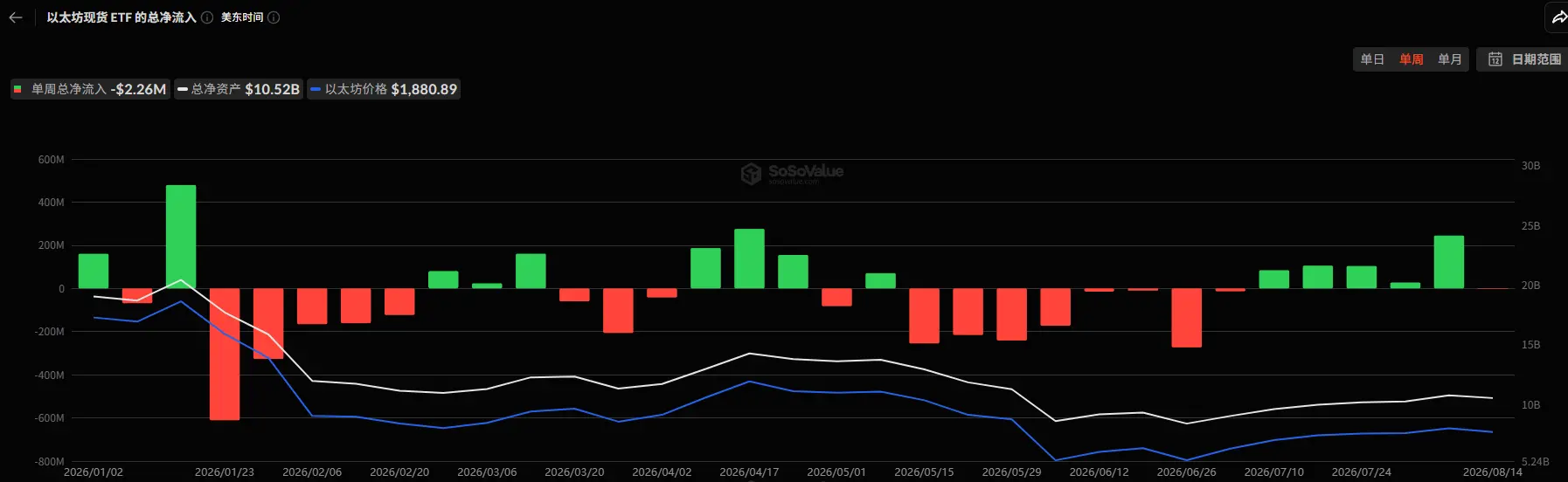
According to SoSoValue data, the Ethereum ETF saw net inflows of about $365 million in July and approximately $243 million so far in August, totaling over $600 million in two months; the ETH price has risen from about $1,570 at the end of June to around $1,900 currently, an increase of about 20%.
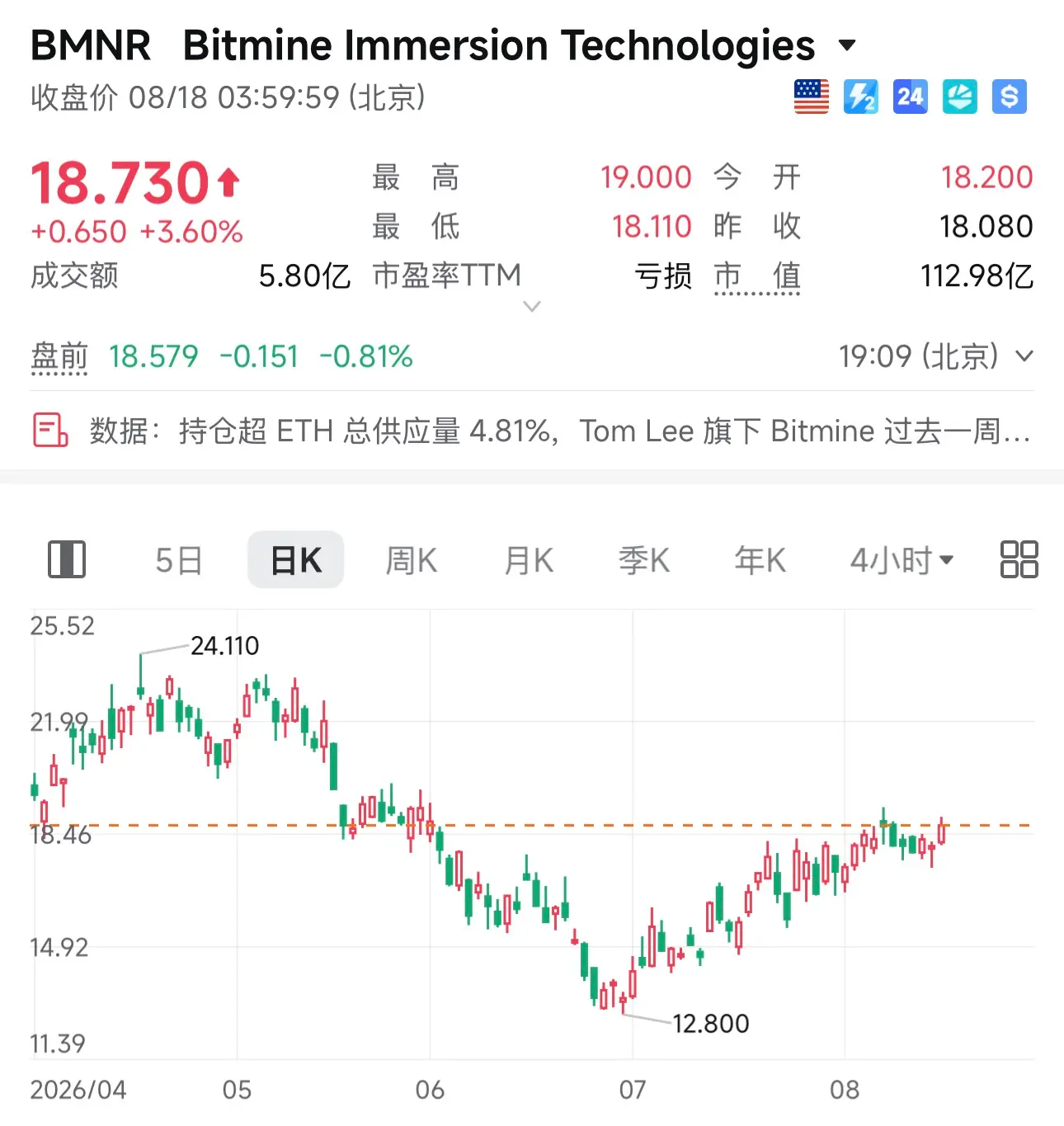
Even Ethereum treasury company BitMine is strengthening simultaneously, with its stock price rising from about $13.3 at the end of June to nearly $19, an increase of about 40%.

 Risk warning




Popular articles





