Beyond Mining Pools: How EMCD Opens a New Profitable Stage for Global Mining

 EMCD mining pool joins forces with Vnish firmware: After the halving, profits are compressed, and miners' competition has shifted from "which pool to choose" to "how to make every kilowatt-hour more valuable."
Overview
++EMCD++ is one of the world's leading Bitcoin mining pools, with over nine years of operational experience, serving miners in more than 120 countries.
Vnish is a leading ASIC firmware developer, providing auto-tuning and mining machine management solutions aimed at enhancing mining hardware efficiency.
++EMCD and Vnish++ have joined forces to combine mining pool infrastructure with hardware optimization, helping miners improve profitability in an increasingly competitive post-halving market.
For many years, choosing a mining pool was relatively simple: miners compared fees, payout models, server stability, and reputation. Once these were satisfactory, profitability mainly depended on electricity prices and the efficiency of the ASICs themselves.
Today, the situation is drastically different.
The 2024 Bitcoin halving will reduce the block reward from 6.25 BTC to 3.125 BTC, immediately tightening miners' profit margins. According to Hashrate Index data, the price of computing power in USD fell by 56% in the second quarter of 2024, forcing operators to rethink the sources of profit. In this environment, reducing operational losses by a few percentage points often makes more sense than switching to a slightly cheaper mining pool.
At EMCD, this shift is becoming increasingly evident. As a Bitcoin mining pool serving miners in over 120 countries and operating for more than nine years, the company has observed changes in the mining economics across different markets: communication with customers is no longer solely focused on pool fees or payment frequency, and more miners are beginning to inquire about how to enhance the performance of their existing machines.
This trend is particularly pronounced among the Chinese mining community.
Migration of Hashrate: The Globalization of the Chinese Mining Sector
The regulatory changes introduced in China in 2021 fundamentally altered the locations of Bitcoin mining but did not diminish the influence of the Chinese mining community on the industry itself.
Mining companies have relocated overseas, but hardware manufacturing, engineering expertise, and technical services remain primarily in the hands of Chinese teams. According to the "2025 Cambridge Digital Mining Industry Report," Bitmain accounts for approximately 82% of the surveyed ASIC market share, MicroBT about 15%, and Canaan about 2%. In other words, although the distribution of hashrate has become globalized, the global mining industry still heavily relies on Chinese technical expertise.
However, for Chinese miners, international expansion has brought about a new operational reality.
Machines are no longer concentrated in a single province or country: a mining company might source equipment from China, deploy it in Ethiopia or Kazakhstan, finance it from Hong Kong, and manage it remotely through Singapore. Each additional layer—hosting providers, climate conditions, maintenance teams, power contracts—introduces variables that directly impact profits.
This has changed the way professional miners evaluate infrastructure service providers.
The key question is no longer just "Which mining pool pays the most?" but rather "Which ecosystem can help me derive more value from every kilowatt-hour consumed by my equipment?"
Why Mining Pools Can Only Address Part of the Problem
Operating one of the largest mining pools globally gives EMCD unique insights into the actual causes of miners' losses.
Mining pool infrastructure determines whether shares can be processed correctly, whether payments are predictable, and whether miners can maintain stable network connections. However, mining pools cannot reduce unnecessary power consumption, optimize chip performance, or prevent machines from overheating. By the time the hashrate reaches the mining pool, many of the most critical economic decisions have already been made within the ASICs.
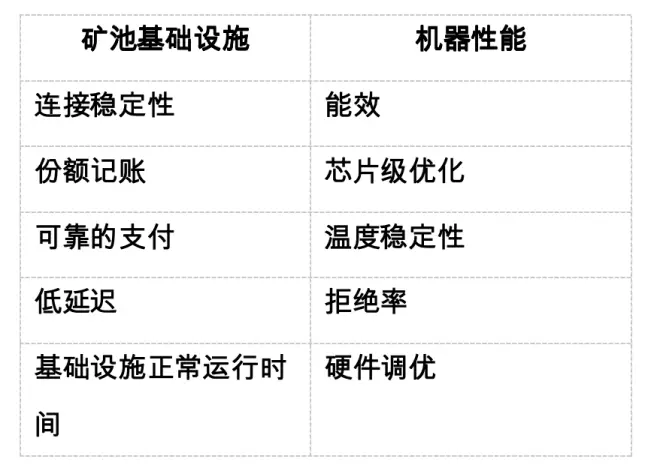
Since the halving, this distinction has become increasingly important.
When mining profits were relatively high, inefficient firmware or unstable operating parameters typically had a limited impact on profits. Today, even minor losses, when multiplied across hundreds or thousands of machines, can become significant.
Consider a mining cluster consisting of 1,000 ASICs: reducing the average power consumption of each machine by 100 watts can lower the sustained power demand by 100 kilowatts. At an electricity price of $0.05 per kilowatt-hour, this equates to approximately $44,000 in annual electricity savings, not accounting for additional gains from improved stability or reduced downtime.
These are merely illustrative calculations and not guaranteed results, but they sufficiently demonstrate why optimization has become a strategic focus for large-scale miners.
Want to learn more about ++EMCD Mining Pool++? Feel free to visit the ++Chinese official website++ to explore supported currencies, payment models, and pool features.
Why EMCD Chose to Collaborate with Vnish
Recognizing these changes, EMCD has gradually expanded its understanding of "what a mining ecosystem should provide."
The company's core expertise remains in mining infrastructure—stable pool operations, transparent revenue accounting, and reliable payments. However, to help miners enhance profitability, there is an increasing need to focus on another aspect of the mining process: the machines themselves.
This is where ++Vnish++ comes into play.
EMCD has not attempted to develop firmware on its own but has chosen to collaborate with a company focused on ASIC optimization. The firmware developed by Vnish enhances machine management through chip-level auto-tuning, real-time monitoring, dynamic power strategies, and mining machine cluster management tools. EMCD focuses on ensuring that accepted hashrate is processed efficiently, while Vnish concentrates on improving the initial generation of hashrate.
From this perspective, the collaboration is less about adding a service and more about connecting two complementary aspects of mining operations.
One party is responsible for managing the infrastructure once the hashrate reaches the mining pool.
The other helps miners enhance the quality of that hashrate before it arrives.
For operators managing geographically distributed mining clusters—this is the common reality for today's Chinese mining enterprises—tightening the integration of these two aspects can simplify daily operations and enhance the visibility of the entire mining process.
++Learn how EMCD and Vnish work together++ to improve mining efficiency.
More Than Just Fees: The Next Phase of Competition
Competition among mining pools has traditionally revolved around uptime, fee structures, and payment models. These factors remain important and will continue to be so.
However, the economic landscape of Bitcoin mining is evolving.
As hardware becomes increasingly standardized and profit margins tighten, long-term competitiveness increasingly depends on operational efficiency rather than any single metric. Miners may choose the lowest-fee pool but could still incur greater losses due to unstable firmware, excessive energy consumption, or unnecessary downtime.
For Chinese operators running international mining businesses, this reality is particularly relevant. Their competitive advantage no longer solely comes from acquiring hardware or cheap electricity but from managing every aspect of the mining process more efficiently than their peers.
EMCD believes that mining pools should evolve alongside this reality.
Reliable infrastructure remains fundamental, but it is no longer everything. Profitability increasingly depends on the collaborative efficiency between the pool, hardware, and operational layers.
This mindset ultimately explains ++the collaboration between EMCD and Vnish++.
The two companies do not view firmware and mining pools as competing solutions but as different components addressing the same challenge: helping miners convert more of their electricity, equipment, and operational investments into recognized hashrate and predictable income.
In an industry where every percentage point is crucial, this may represent a more meaningful competitive advantage than merely having low fees.
 Risk warning