Morning Report | Prediction market platforms Kalshi and Polymarket jointly sue Kentucky over 14.25% trading tax; Bridgewater founder discusses decision-making in the AI era: principled thinking should run parallel with AI, human insight remains irreplaceable

 Overview of Important Market Events on June 14
Compiled by: ChainCatcher
Important News:
What important events happened in the past 24 hours?
According to ChainCatcher, as reported by Abcnews, several prediction market platforms, including Kalshi, Crypto.com, and Polymarket, have formed an alliance and filed a lawsuit in state court this Friday, attempting to block Kentucky's newly implemented 14.25% trading tax on prediction markets.
This tax was passed by the Kentucky legislature in April of this year and applies to transaction fees on prediction market platforms, with a rate of 14.25%, which is higher than the local horse racing industry's tax burden of about 9.75%. The plaintiffs in the lawsuit claim that the tax is discriminatory, unconstitutional, and may conflict with federal law.
Prediction market platforms allow users to trade contracts on real-world events (such as economic data, election results, etc.), essentially belonging to the event derivatives market. The plaintiffs argue that this tax will significantly raise compliance costs and may force trading activities to shift to less regulated offshore platforms.
Kentucky Attorney General Russell Coleman stated that he will vigorously defend the law in court and claimed that the state government is capable of handling the related challenges.
Meanwhile, Kalshi stated that excessive state-level tax burdens will weaken the competitiveness of the legal market and may drive users to illegal trading platforms that lack regulation and protection.
This case is seen as the latest development in the ongoing conflict between the U.S. prediction market industry and state regulatory and tax systems.
According to ChainCatcher, the U.S. SEC has officially approved T. Rowe Price's application for a rule change to list the T. Rowe Price Active Crypto ETF on NYSE Arca. NYSE Arca submitted the rule change application as early as November 2025 and received final approval after two revisions.
The ETF aims for long-term capital appreciation and will normally hold 5 to 15 crypto assets. As of the date of the application submission, the qualified assets identified by the initiators include: Bitcoin (BTC), Ethereum (ETH), Solana (SOL), XRP, Cardano (ADA), Avalanche (AVAX), Litecoin (LTC), Polkadot (DOT), Dogecoin (DOGE), Hedera (HBAR), Bitcoin Cash (BCH), Chainlink (LINK), Stellar (XLM), Shiba Inu (SHIB), and Sui (SUI).
Additionally, the fund may hold USDC as operating capital for paying fees and purchasing assets, but not as an investment target.
According to ChainCatcher, based on a regulatory document and sources familiar with the matter, the total underwriting fee for SpaceX's initial public offering is approximately $500 million, accounting for about 0.7% of its $75 billion fundraising amount.
Lead underwriters Goldman Sachs and Morgan Stanley will take the largest share, collectively earning 40% of the fees, or about $100 million each. Bank of America, Citigroup, and JPMorgan are expected to earn about $75 million each, while several other banks are expected to earn about $10 million or less.
Humanity releases security incident investigation report: mainnet bridge unaffected, attack tools and methods show characteristics of North Korean hackers
According to ChainCatcher, Humanity released an independent investigation report by Quantstamp, which disclosed that in the H token security incident, the attackers used tools and methods characteristic of North Korean hackers, communicating by disguising themselves as Bithumb exchange through phishing emails to lure project directors into clicking malicious attachments, thereby deploying remote control trojans on their devices, ultimately gaining full desktop control and wallet private keys. They then launched on-chain attacks on Ethereum and BNB Chain: on the Ethereum side, they stole keys to upgrade contracts and transferred approximately 141.18 million H tokens, while on the BSC side, they took over the ProxyAdmin contract and minted new tokens. The stolen assets were subsequently sold off on Uniswap and PancakeSwap for about 8 hours, causing significant impacts on liquidity and market prices.
Currently, the H token contract on the Ethereum side has been frozen, the mainnet bridge remains unaffected, but the BSC deployment has been controlled by the attackers and still has minting permissions. The team is working with exchanges and security parties to advance follow-up disposal and recovery plans, while reminding users to be cautious of fake "compensation/claim" links and stating that they will release further updates through official channels.
Previously, the Humanity Protocol was attacked, resulting in the leak of a private key from a Humanity Foundation member, leading to over $31 million in funds being stolen.
Bridgewater founder discusses decision-making in the AI era: principled thinking should run parallel with AI, human insights remain irreplaceable
According to ChainCatcher, Ray Dalio, founder of Bridgewater Associates, recently published a lengthy article sharing his thoughts on the investment decision-making system in the AI era, emphasizing that human insights still hold irreplaceable value in financial markets.
Dalio believes that investing is essentially a "value-added zero-sum" competitive environment. When certain information has become widely recognized, its investment value often declines rapidly. Therefore, even the most advanced AI systems are not sufficient for investors to rely on completely or follow blindly; the true competitive advantage still lies in unique human understanding and deep insights.
Combining Bridgewater's 50 years of development experience, Dalio proposed that decision-making should be based on a clear, understandable, and verifiable principle system. He stated that principled thinking does not rely on intuition or experiential judgment but rather systematizes decision-making standards by analyzing situations and causal relationships, recording core principles, and utilizing historical data for verification, ultimately transforming them into computable and automatically executable decision systems.
He also pointed out that the formation of principles cannot rely solely on data mining or directly asking AI, but must be based on logical deduction and an understanding of the operational laws of the real world.
Dalio described this process as a "collaborative game" between humans and AI. In this model, AI provides systematic suggestions based on established principles, while humans engage in independent thinking based on their own principle framework, continuously optimizing the decision-making system through comparison, discussion, and logical verification.
He believes that truly valuable principles should be able to withstand the test of time and geography, being validated across different historical cycles and market environments. If a principle fails, it is necessary to re-examine the causal relationships behind it and continuously revise it.
Dalio stated that he has already applied this method in his family office to fully leverage the new generation of AI technology and plans to continue sharing relevant methodologies with the public. He also reminded market participants that as AI technology continues to develop, the ability to effectively combine artificial intelligence with principled thinking may become an important dividing line for future competitiveness.
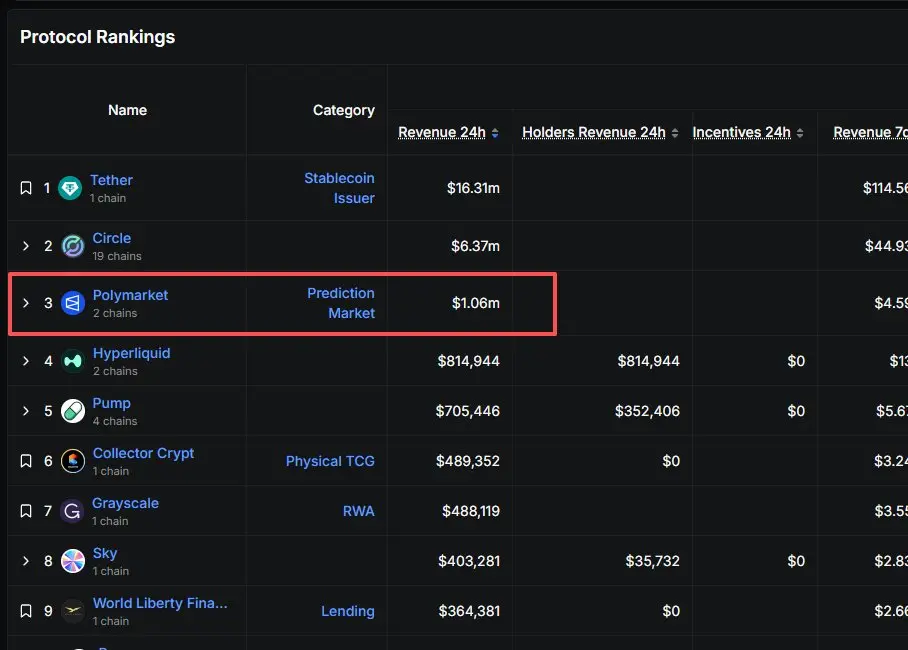
Data: During the World Cup, Polymarket's 24-hour revenue surpassed Hyperliquid for the first time, becoming the third largest project after USDT and USDC
According to ChainCatcher, X user @vonzz6 disclosed that during the World Cup, Polymarket's 24-hour revenue surpassed Hyperliquid for the first time, becoming the third largest project after USDT issuer Tether and USDC issuer Circle.
Michael Saylor releases Bitcoin Tracker information again, may disclose increased holdings data next week
According to ChainCatcher, Michael Saylor, founder and executive chairman of Bitcoin treasury company Strategy, released Bitcoin Tracker-related information again, captioned: "Still adding dots,"
Based on previous patterns, Strategy always discloses increased Bitcoin holdings information the day after relevant news is released.
Meme Popularity Rankings
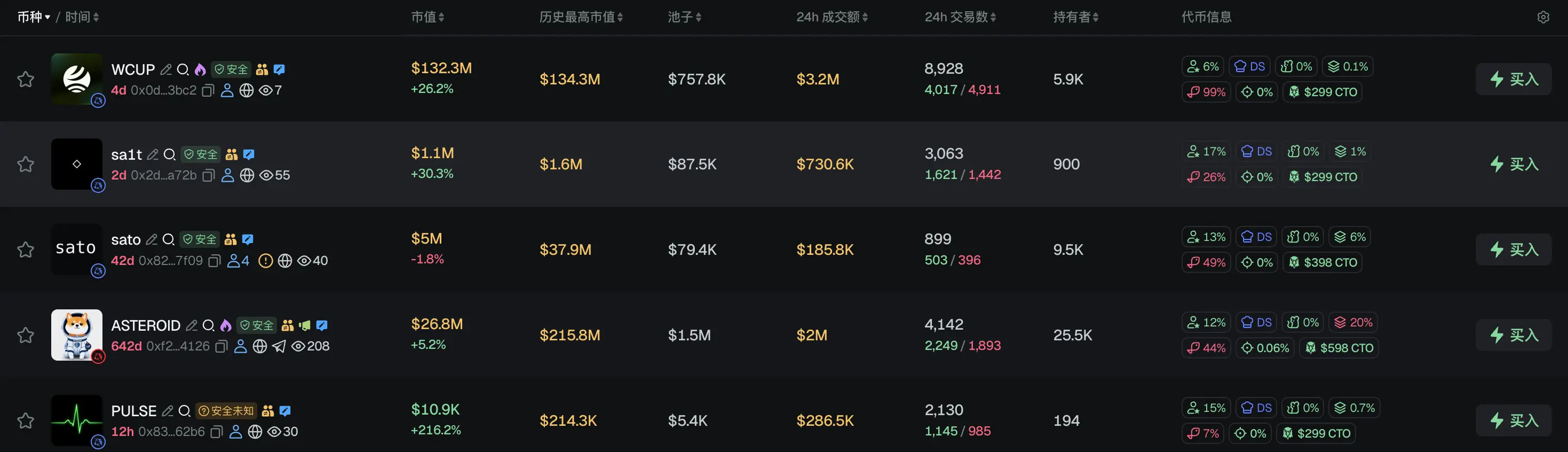
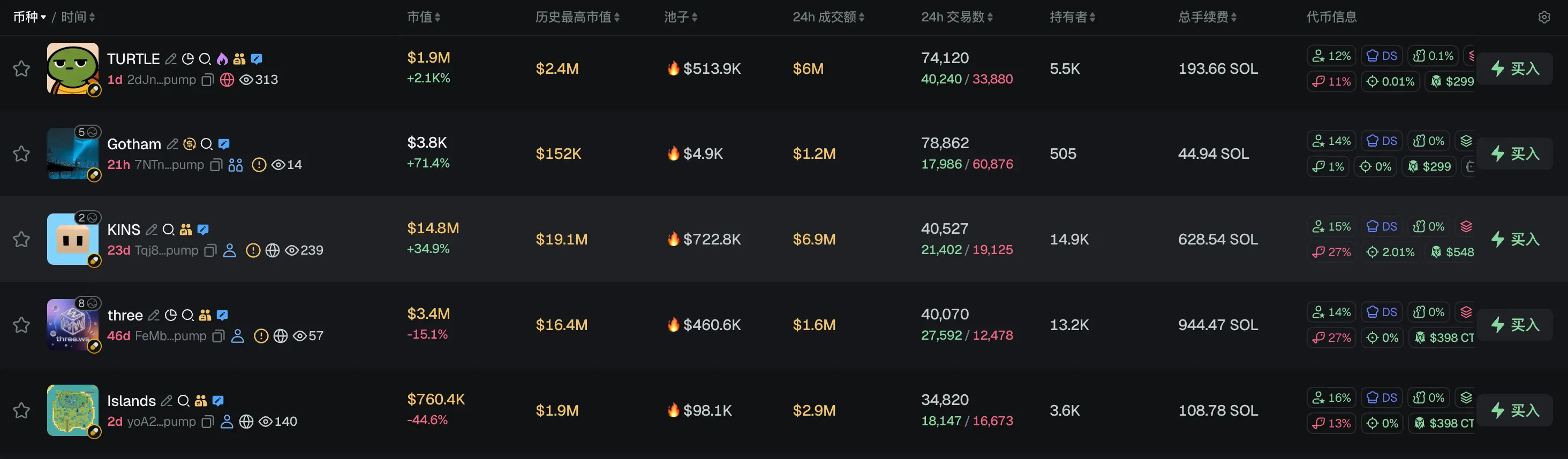
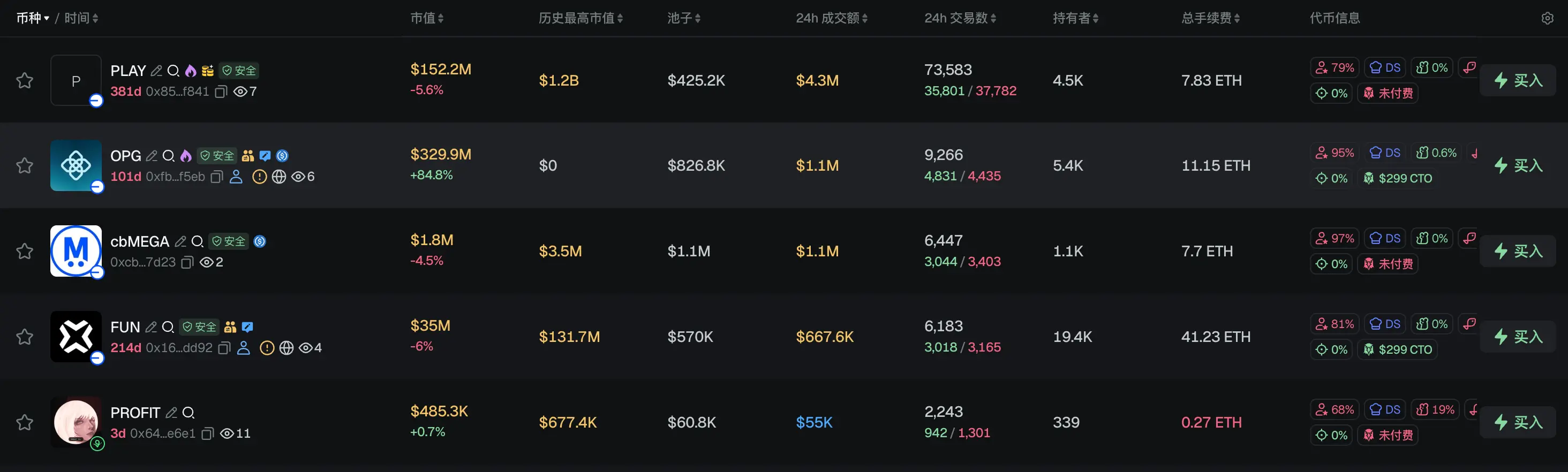
According to data from the meme token tracking and analysis platform GMGN, as of June 15 at 09:00,
The top five popular tokens in ETH over the past 24 hours are: WCUP, sa1t, sato, ASTEROID, PULSE
The top five popular tokens in Solana over the past 24 hours are: TURTLE, Gotham, KINS, three, Islands
The top five popular tokens in Base over the past 24 hours are: PLAY, OPG, cbMEGA, FUN, PROFIT
What are some exciting articles worth reading in the past 24 hours?
U.S. government bans foreigners from using Fable 5, Anthropic issues rebuttal
The U.S. government, citing national security, issued an export control directive to Anthropic, requiring an immediate suspension of all foreign entities' access to the AI models Fable 5 and Mythos 5. This directive has a wide scope, applying not only to foreign users outside the U.S. but also to foreign citizens within the U.S., including foreign employees within Anthropic.
As a compliance measure, Anthropic had to completely shut down access to these two models for all users—this is currently the only feasible solution to ensure compliance, as the company cannot technically distinguish between "foreign entities" and "U.S. citizens." Access to the company's other models is unaffected, and users will automatically revert to Claude Opus 4.8.
This emergency halt came unexpectedly. Fable 5 and Mythos 5 were officially released on June 9, just three days ago. The sudden removal of these two models has caused widespread shock in the tech and AI communities.
The other side of Musk's trillion-dollar fortune: 85% cannot be sold
SpaceX's 4,400 millionaires provide a benchmark. In comparison, if Anthropic and OpenAI were to go public at their current private valuations, what would be the total value of employee stock holdings?
Reports from CNBC and Morningstar confirm that Anthropic completed Series H financing at a valuation of $965 billion, with an ARR of $30 billion. Reports from Forbes and Sacra show that OpenAI is valued at $852 billion, with an annual revenue of about $25 billion. Both companies are not publicly listed, and the proportion of employee option pools and the exact number of employees have not been disclosed.
Setting core assumptions: If both companies were to IPO at their current private valuations, with employee option pools accounting for 10% to 15% of total equity (a common practice for Silicon Valley unicorn IPOs). Under this assumption:
For Anthropic, under the 10% option pool assumption, the total value of employee stock holdings would be about $96.5 billion; under the 15% assumption, about $144.8 billion.
For OpenAI, under the 10% option pool assumption, the total value of employee stock holdings would be about $85.2 billion; under the 15% assumption, about $127.8 billion.
Even under the most conservative 10% option pool assumption, the total value of employee stock holdings for Anthropic and OpenAI is 22 times and 19 times the known minimum value of SpaceX ($4.4 billion), respectively. This gap arises from a structural reason: Musk holds a very high proportion of SpaceX's $1.77 trillion valuation (85.1% voting power means that even if the economic rights proportion is lower, he still occupies a significant share), limiting the proportion of the pie available to employees. In contrast, as AI-native companies, Anthropic and OpenAI have smaller employee sizes (OpenAI has about 1,200 employees, Anthropic has about 1,500 to 2,000 employees, both estimated from public reports), and their equity is more dispersed.
 Risk warning