Tencent Hunyuan Releases Hy4: Ranks Among the Strongest in Open Source, Tested in Four Practical Scenarios
 Core Viewpoint


 Tencent Hunyuan released the 770B open-source large model Hy4: it supports visual understanding and Computer Use for the first time, leading in evaluation across scenarios such as finance, office, development, and scientific research, and has been tested on four major practical tasks.
Article by|Xiao Jing
Editor|Xu Qingyang
On November 4, Tencent's Hunyuan officially released the new generation large language model Hy4. Compared to the previous Hy4 preview, the new model further expands the scale of pre-training and post-training, introduces visual understanding capabilities for the first time, and focuses on enhancing instruction adherence, long text comprehension, long-range agent performance, and real productivity task performance.
Hy4 has a total parameter scale of 770B, adopts a mixed expert architecture, and for the first time supports Computer Use, enabling it to execute complex tasks by combining command line and graphical interface.
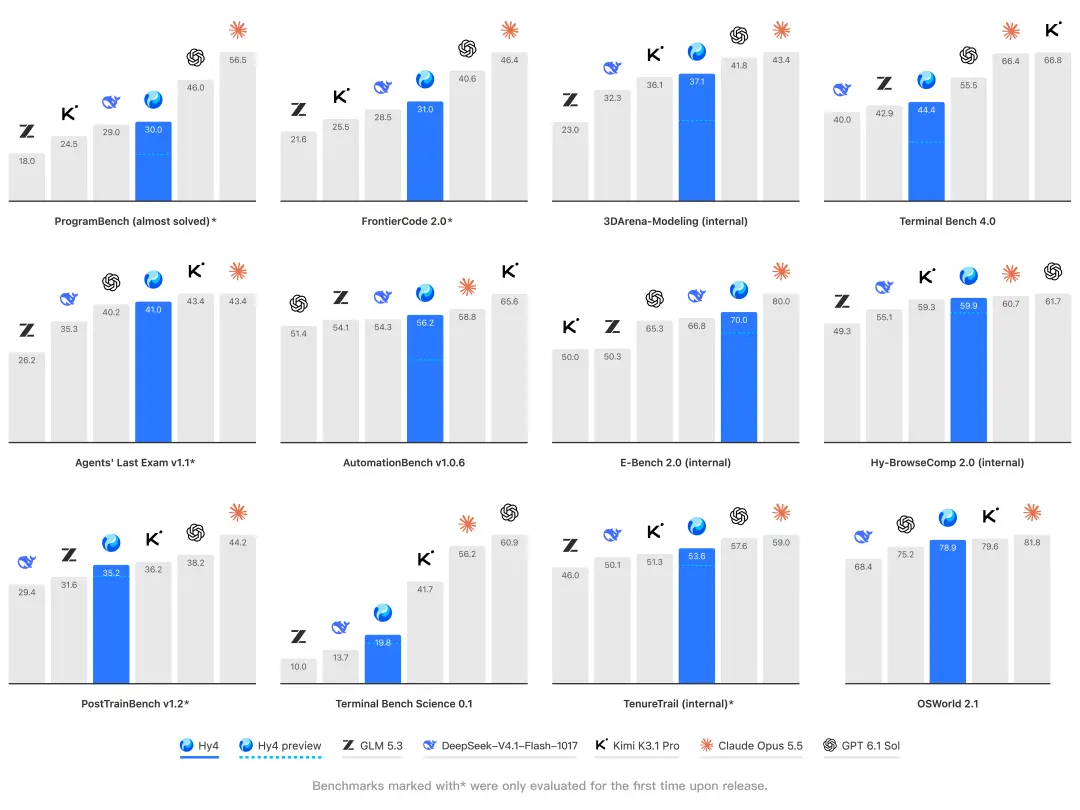
From the evaluation results, Hy4 has entered the ranks of the world's top-tier open-source models, and the model weights will be open-sourced soon. The Hunyuan team stated that although Hy4 is currently one of the strongest open-source models, there is still a significant gap compared to top proprietary models. Hunyuan will continue to steadily expand the scale of pre-training and post-training, striving to narrow the gap with top proprietary models.
In response to potential security risks in areas such as the internet and biology, Hunyuan conducts training, open-sourcing, and releases in a more responsible manner.
01 Among the Strongest Open-Source Models
In terms of visual understanding, Hy4 can recognize details in images, analyze complex charts, and complete visual math tasks with reasoning capabilities. The newly introduced Computer Use capability allows the model to operate graphical interfaces and command lines. Tencent Hunyuan has conducted specialized training for professional software such as Blender and CAD, as well as long-range tasks that require cross-application collaboration.
At the same time, Tencent is enhancing the model's performance in real work through deep collaborative design (Co-Design) between the model and products.
In the WorkBuddy office scenario evaluation, Hy4 achieved an average score of 83.18, with a task pass rate of 96.15%, ranking first in 9 out of 12 scenarios domestically. With the help of the WeChat Work suite, the model can also associate information such as chat records, emails, documents, schedules, and meetings, organize the progress of multiple projects, identify to-do items, and assist in prioritization.
Professional financial analysis is another key upgrade. Tencent has built thousands of workspaces and tens of thousands of high-quality training tasks for scenarios such as fund research, securities analysis, and quantitative strategies.
In a crowdsourced test involving 213 financial experts and covering 579 real tasks, Hy4 scored 3.04, higher than the comparative models Kimi K3.1 Pro (2.68), GLM-5.3 (2.68), and DeepSeek-V4.1-Flash-1017 (2.97).
In response to the accuracy requirements for information in financial scenarios, Hunyuan has also conducted special optimizations for timeliness retrieval, multi-source information integration, and factual consistency verification. Internal testing results show that Hy4's hallucination rate decreased from 12.95% in the preview version to 7.2%, and the error rate due to guessing dropped from 23.1% to 5.6%.
In front-end and game development, Hy4 has further improved its capabilities in complex interactions, business logic, and state management, and has enhanced its compatibility with mainstream game engines such as UE, Unity, and Godot. Compared to the preview version, the GameDev and GameLogic evaluation scores improved by 19.1% and 9.8%, respectively.
In the field of scientific research, Hy4 has further combined complex reasoning, scientific programming, and long-range task execution capabilities. In the internal evaluation of TenureTrail, covering 7 disciplines and 123 executable research tasks, the model demonstrated strong task handling capabilities in areas such as mathematical construction, physical modeling, earth environment, and systems engineering.
Notably, Hy4 has begun participating in the development of AI models themselves. Tencent Hunyuan is preparing for Recursive Self-Improvement (RSI), utilizing the Hy4 and Hyra 2.0 development framework to collaboratively optimize the pre-training infrastructure of smaller models and automatically complete model training. Hunyuan has also open-sourced the foundational models HyCell for single-cell characterization and HyPDE for physical fields, attempting to transform AI-assisted research capabilities into reusable tools.
In terms of cybersecurity, Hy4 only included defensive cybersecurity data related to PoC generation and vulnerability remediation during training, while excluding offensive training content such as exploitation, reverse engineering, and penetration testing, striving to avoid the enhancement of potential offensive capabilities. Hunyuan organized security experts from Tencent's Xuanwu and Cohen labs to conduct audits around password analysis, reverse engineering, and exploitation, with results indicating that Hy4 did not exhibit significant risks in offensive capabilities such as reverse solving encryption algorithms, countering binary obfuscation, and exploitation.
In terms of biosafety, Hy4's open experimental design capabilities show a significant gap compared to cutting-edge models (Hy-BioExperimentBench: 30.4/100). Hunyuan organized internal experts to audit the trajectory, finding that the model has a strong grasp of basic biological knowledge, but its ability to translate knowledge into executable experimental plans remains limited, and no significant reduction in the threshold for implementing biochemical hazard behaviors has been found.
These upgrades continue Tencent Hunyuan's research and development rhythm since 2026. Since rebuilding the infrastructure in February, Hunyuan has released a major version approximately every two months, first opening a preview, then iterating the official version based on user feedback. From the Hy3 series with a parameter scale of less than 300B to the Hy4 series with 770B, the model scale and training investment continue to expand. It is reported that the next generation Hy5 will further increase in scale.
Tencent Hunyuan centers on "model practicality" as its core principle, continuously pursuing the limits of intelligence while providing users with cost-effective services. Hy4 significantly surpasses the performance of Hy4 preview while maintaining the same pricing: 6 yuan per million tokens for input, 18 yuan per million tokens for output, and 0.3 yuan per million tokens for cache hits.
Hy4 flash will also be released soon. Hy4 flash inherits the capabilities of Hy4 while significantly reducing task costs, providing users with an extremely cost-effective model.
Currently, Hy4 has been launched in Tencent Cloud Tokenhub, WorkBuddy/CodeBuddy, Yuanbao, WeChat Work Smart Assistant Dayuan, ima, and other products, with APIs synchronously integrated into platforms such as OpenRouter, Hermes, and OpenCode. Tencent products such as QQ, Honor of Kings, Peace Elite, WeChat Reading, and Tencent News are also continuously integrating.
To gather more user feedback and continuously improve model capabilities, WorkBuddy/CodeBuddy will provide users with a certain amount of free usage from November 4 to November 15. Additionally, from now until December 31, 2026, Hy4 will be charged at a 50% discount on Tencent Cloud TokenHub based on the published price.
From these technological upgrades and evaluation data, it is evident that Hy4 is extending towards more complex real tasks. We also selected four different scenarios for practical experience.
02 Create a Solar System in One Sentence
We first assigned Hy4 a "wish-style" task: to create an interactive webpage of the solar system for a 9-year-old child, allowing the child to click on planets, observe movements, and adjust orbital speeds to understand why different planets have different year lengths. The prompt was just this short sentence.
The model ultimately delivered an interactive webpage.
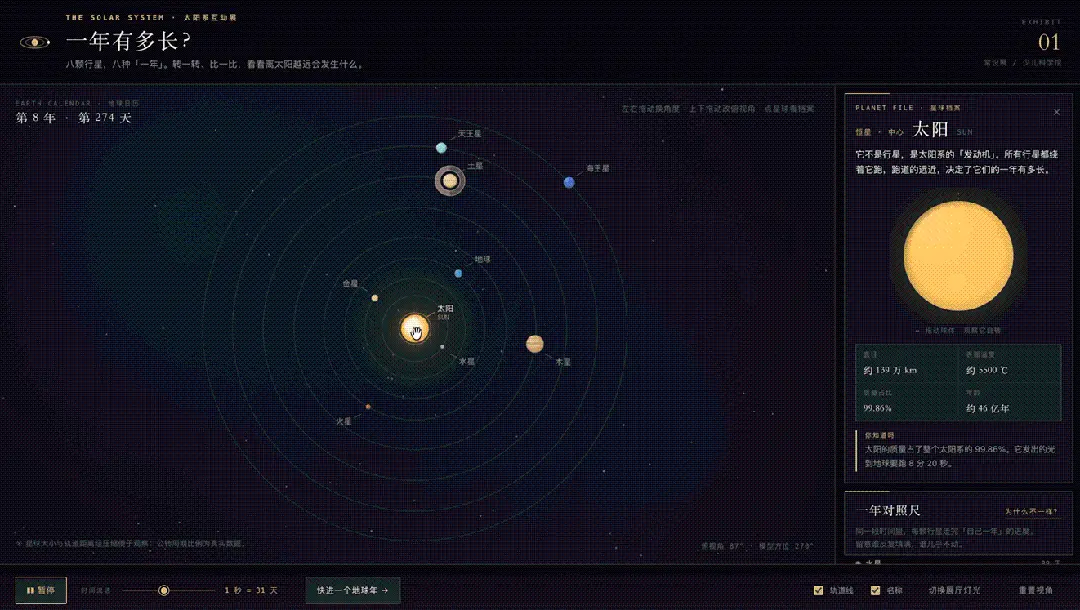
The page features a deep blue starry background, with a glowing sun at the center and eight planets distributed along their respective orbits. The overall visual style resembles a digital interactive exhibit in a science museum.
As for "helping the child understand why a year is not the same length," the model designed an intuitive comparison: as time progresses, when the Earth completes one orbit around the sun, Mercury has completed over four orbits, while Neptune has only traversed a small portion of its orbit.
It also added interactive features such as fast-forwarding Earth's year, planet profiles, time flow adjustments, and perspective switching. By clicking on different planets, users can view diameter, distance from the sun, and rotation and revolution periods.
These details were not explicitly written into the original instructions.
For example, to help the child understand the revolution period, the model supplemented a progress bar; to avoid scientific misinformation, it noted that the sizes of planets and distances between orbits have been compressed, and the revolution periods are set according to real astronomical data.
From the completed page, it is clear that the model is capable of transforming a relatively vague educational need into a concrete work that balances visual effects, knowledge expression, and interactive operation.
Execution records also show that it used Chrome to conduct 15 interactive checks, involving clicks, drags, theme switching, and time fast-forwarding operations.
The user presented a teaching goal, and the AI needed to think for itself about how to help a 9-year-old truly understand this knowledge point. This is also what makes "wish-style programming" most appealing to ordinary users: people can express their needs in a way that resembles everyday communication, allowing the model to take on more product design and technical implementation work.
03 A Cluttered Fridge, Hy4 Directly Plans Future Menus
Tasks like "creating a solar system simulation webpage" still start with text. When users no longer provide clear language descriptions but instead directly send real-world problems to the AI, how much can it understand?
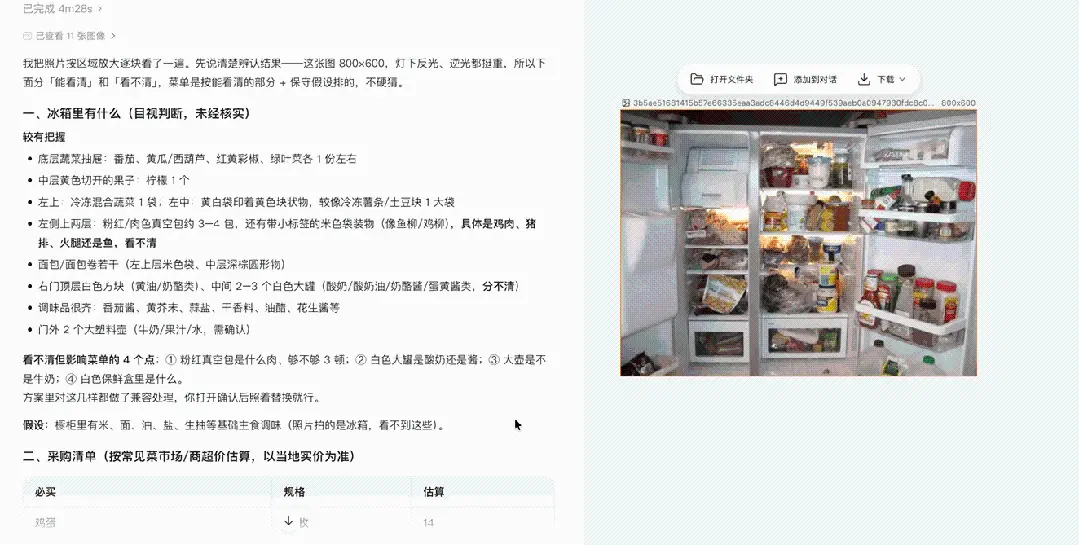
We also sent Hy4 a photo of a packed fridge, asking it to plan nine meals for a family of three over the next three days, with an additional budget not exceeding 100 yuan, and each meal preparation time not exceeding 40 minutes.
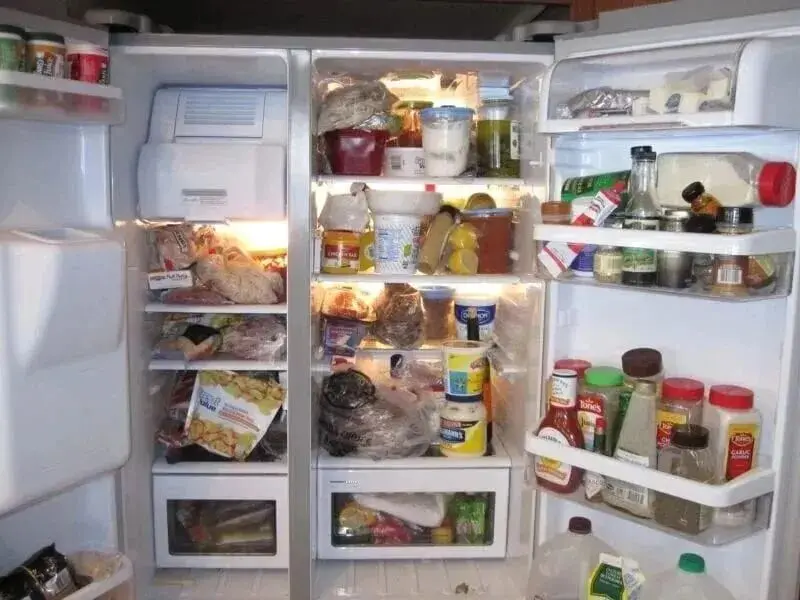
This test primarily assesses visual understanding. The fridge contains many overlapping, obscured, and opaque items, and the light reflections also increase recognition difficulty. The model first zoomed in on the photo by area, layer by layer inventorying the ingredients, identifying tomatoes, cucumbers, zucchini, frozen mixed vegetables, bread, condiments, etc., and made preliminary estimates of stock quantities.
Interestingly, it did not pretend to see everything clearly.
For the pink vacuum packaging in the middle left, the model judged it could be chicken, pork chop, ham, or fish; it could not confirm whether the large white jar in the right door was yogurt, cream, or cheese sauce. It listed four visual uncertainties that could affect menu planning, marking these ingredients as needing confirmation and adopting a conservative approach in subsequent plans.
Then, based on the recognition results, the model continued to formulate a shopping list and three-day menu.
This task tested the model's ability from visual recognition to actual planning. It needed to determine which ingredients could be used and which needed further confirmation, while also considering budget, taste, time, and ingredient consumption, all based on incomplete information provided by the photo.
Truly useful visual understanding includes not only seeing what is present but also knowing what is not clearly seen and how these uncertainties will affect subsequent decisions.
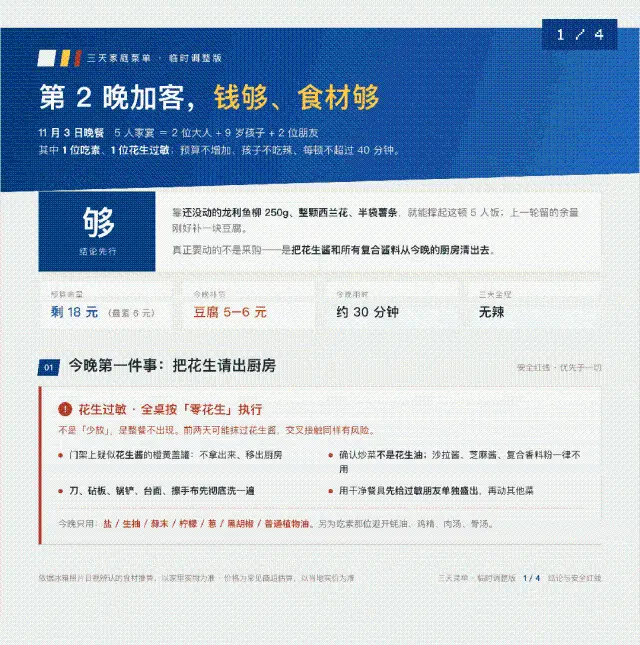
What complicates matters further is that we have introduced additional requirements: two more guests suddenly arrived the next evening, one of whom is vegetarian, and the other is allergic to peanuts. The budget cannot increase, and the meals for the third day cannot be affected.
This task requires the model to maintain a continuously changing inventory and budget status. It needs to remember what has already been consumed, rearrange the allocation of ingredients for the upcoming meals, and take dietary restrictions into account. Hy4 even proposed a fallback strategy to prevent waste.
Many requirements in the real world are like this. Users often only describe the goals, while the remaining constraints and details need to be actively discovered, reasonably inferred, or further confirmed by the model.
04 Hy4 as an Editor, Daring to Question the Numbers Provided by Users
In addition to creativity and planning ability, in reality, we often need the model to provide references for independent judgment.
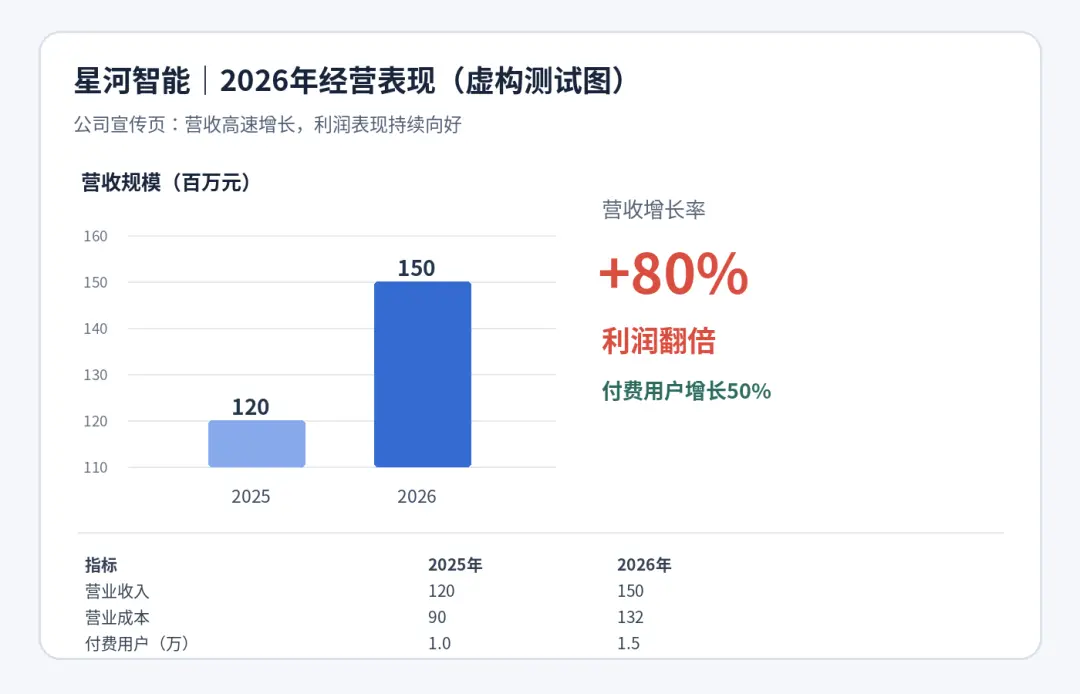
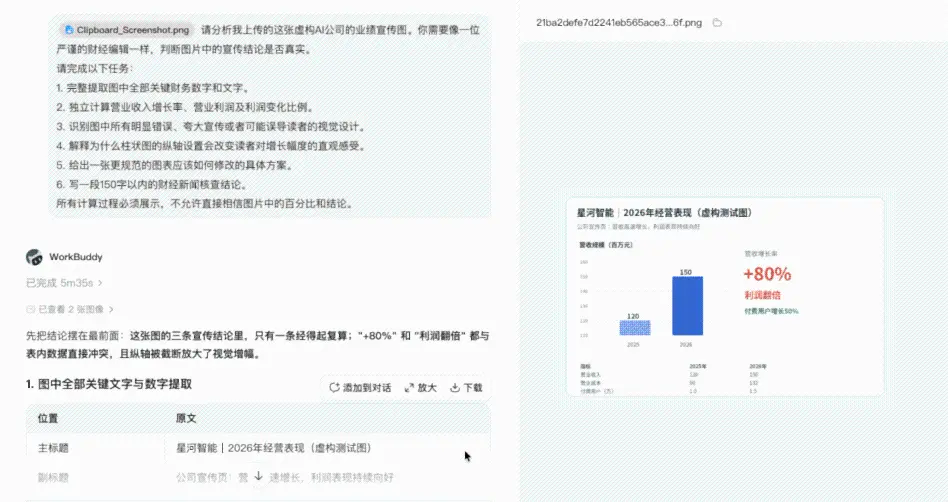
We provided Hy4 with a fictional performance promotional image of an AI company and gave the prompt: Please analyze the uploaded performance promotional image of this fictional AI company. You need to judge whether the promotional conclusions in the image are true, like a rigorous financial editor.
Please complete the following tasks:
Fully extract all key financial figures and text from the image.
Independently calculate the operating revenue growth rate, operating profit, and profit change ratio.
Identify all obvious errors, exaggerated promotions, or potentially misleading visual designs in the image.
Explain how the vertical axis setting of the bar chart changes the reader's intuitive perception of the growth magnitude.
Provide a specific plan on how a more standardized chart should be modified.
Write a financial news verification conclusion in no more than 150 words.
The model quickly discovered that two of the three conclusions in the promotional image had obvious problems.
The first was "Revenue growth of 80%." The actual data increased from 120 million to 150 million, and after recalculating, the model found that the real growth was only 25%, far below the advertised 80%.
The second was "Profit doubled." However, the amounts listed in the image decreased from 30 million to 18 million, a real decrease of 40%, which is completely the opposite. There was no direct information here; it needed to be inferred through calculations.
The third statement, "Paid user growth of 50%," is correct. However, the model continued to question the meaning behind these numbers: If the number of customers increased by 50%, while revenue only grew by 25%, then the average revenue per paid user actually decreased by about 16.7%.
It also found that the vertical axis of the chart started at 110 instead of zero, making the revenue growth in the bar chart appear particularly exaggerated.
Subsequently, the model provided two comparison charts and a standardized redrawn chart, resetting the vertical axis to zero, supplementing data standards, and explaining the issues in concise text of 150 words.
What is interesting about this case is that the model did not continue to package the data according to the logic of the promotional image but actively questioned the input material itself.
In fact, when users ask AI to "help me analyze this image," it often implies an expectation: it should help me identify problems, not just reorganize the text in the image.
But this places higher demands on the model. It must know which data can be directly calculated and which conclusions require additional evidence.
For example, the promotional image did not provide complete cost information, nor did it indicate whether the data had been audited. Based on this, the model pointed out that only the relationships between the given numbers could be calculated, and it could not confirm the company's actual net profit from this image.
This kind of boundary awareness is particularly important for AI entering finance, law, healthcare, and other professional scenarios.
A model may be very good at generating explanations and quickly completing calculations. However, if it makes overly certain judgments based on incomplete information, a tool that originally aimed to improve efficiency could create new risks.
A truly valuable analytical assistant needs to know when to question the input and when to acknowledge insufficient information.
05 Three Bosses Assign Tasks Simultaneously, Hy4 Finds the Best Solution is to Delay the Bosses
For the final task, we deliberately set an impossible requirement.
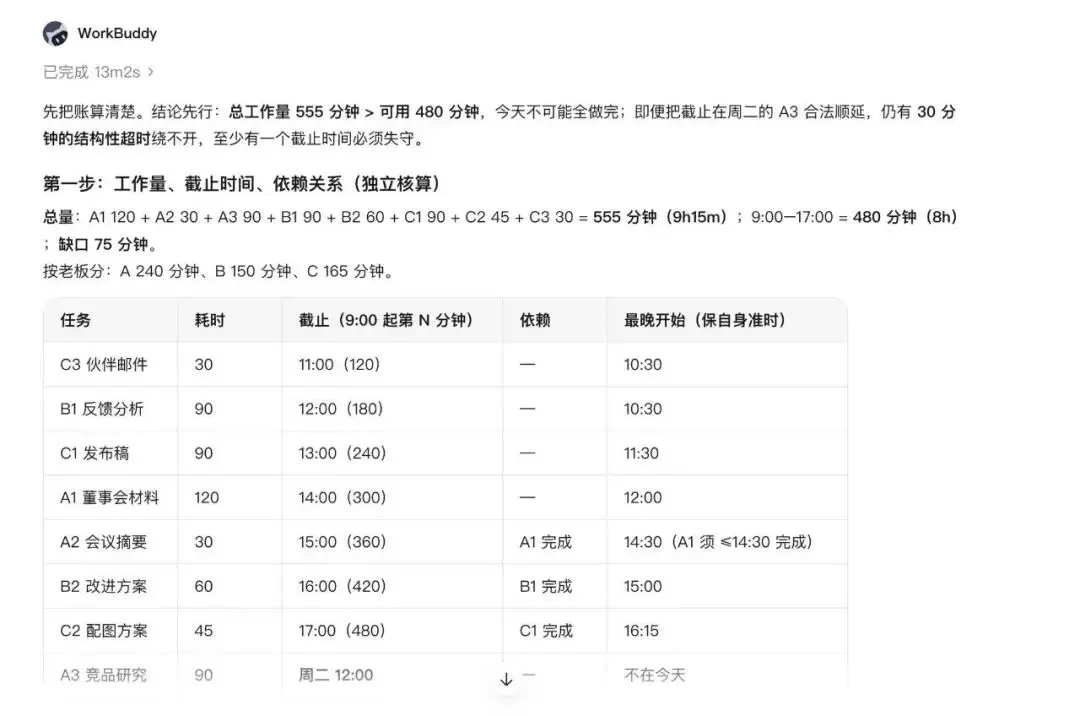
Assume an AI company has only one operational employee but needs to work for three bosses simultaneously. The CEO requests preparation of board materials and sending investor summaries; the product head requests analysis of user feedback and output of improvement plans; the marketing head requests writing press releases, designing accompanying images, and replying to collaboration emails.
All tasks must be completed sequentially and cannot be executed simultaneously. The workday is from 9 AM to 5 PM, with only 480 minutes available. However, adding up the time required for all tasks amounts to 555 minutes.
This means that no matter how the tasks are arranged, at least 75 minutes of work cannot be completed that day.
We asked the model to provide the most reasonable execution plan, and then added two temporary changes: the CEO moved the deadline for the board materials earlier, and the marketing head requested to delay the start of the press release.
The model ultimately did not provide a perfect schedule where all tasks could be completed on time. Instead, it identified the conflicts inherent in the tasks and proposed three allocation plans, each assigning different bosses to bear the consequences of the delays.
One of the plans had a total delay of 300 minutes, while the other two had delays of 360 minutes and 450 minutes, respectively.
The model preferred the plan with the least total delay and pointed out that if further task requirements were to be met, it would require proactive approval for delays from the relevant heads.
It even provided an interesting suggestion: "Don't look for balance in the order; change the unfeasible deadlines to feasible ones."
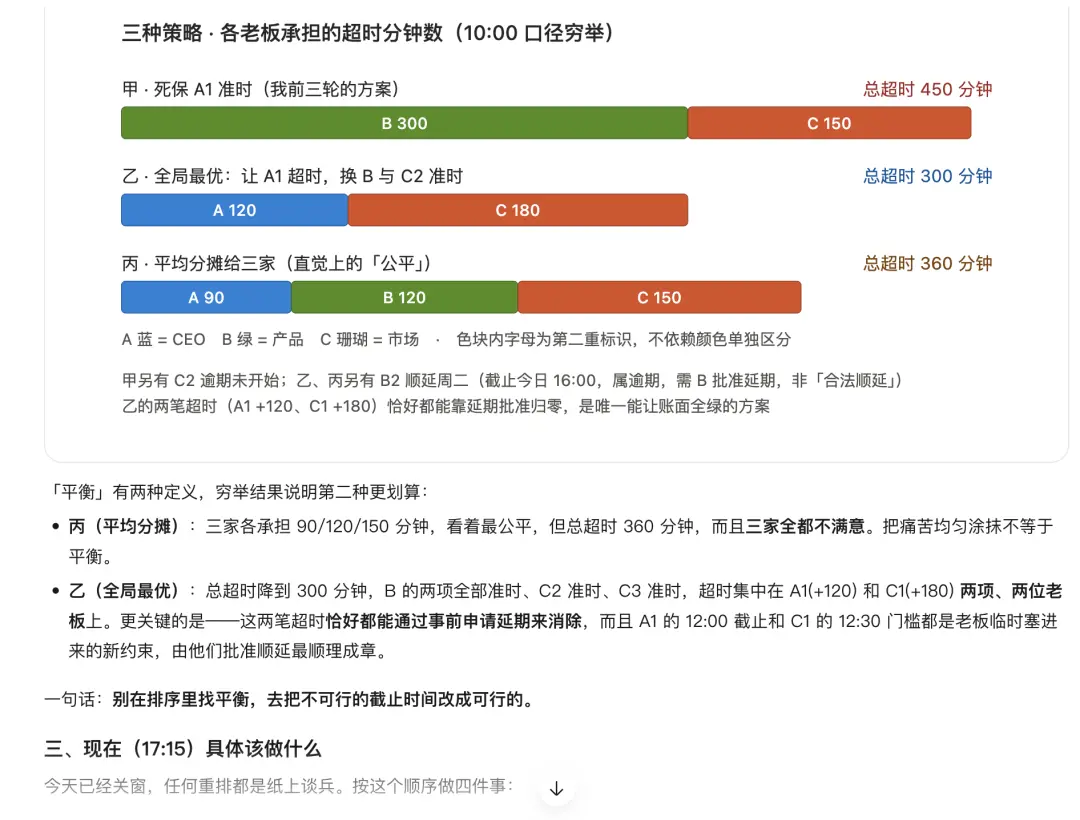
This result demonstrates the model's judgment ability under complex constraints.
When the tasks proposed by users cannot be completed simultaneously, AI needs to identify conflicts, explain the costs, and propose alternative solutions.
But there is also a deeper issue here. What does the model mean by "optimal"?
From the company's overall perspective, the plan with the least total delay may be more efficient; however, for the CEO, a material that must be completed before the board meeting may not be able to be delayed under any circumstances.
The model can seek the optimal solution according to the set goals but may not know the real business consequences behind each task. Moreover, if a delay requires the boss's approval, even if the model provides reasonable suggestions, it cannot unilaterally treat "planning to apply for a delay" as "already approved."
This means that as AI increasingly participates in work arrangements, it needs to understand not only the logical relationships between tasks but also the priorities of goals, real authority, and the costs each person is willing to bear.
An agent that always agrees to user requests may actually be the least reliable.
Sometimes, AI needs to tell users: this request cannot be fulfilled at the moment. Furthermore, it should explain why it cannot be done and what conditions need to change to make it possible.
06 Understanding Wishes Also Means Knowing How to Refuse
From generating a solar system webpage, identifying refrigerator ingredients, to verifying financial data and arranging work tasks, the four cases showcase Hy4's capabilities in different scenarios.
These tasks have a common point: users often only present goals but do not clearly articulate all requirements.
Creating a solar system webpage requires the model to consider children's understanding and interaction experience; arranging a three-day menu must balance ingredients, budget, and taste, even considering guests' allergens; verifying financial data requires actively identifying errors; and facing conflicting requests from three bosses, it must judge which tasks cannot be completed on time.
Users can express their needs in natural language, but for the model to truly understand user intent, it requires two abilities: proactivity and judgment.
It must be able to think one step further when users have not clearly stated their needs, and also raise questions when information is insufficient or requirements conflict, saying "no" when necessary. Especially when AI begins to arrange work and make choices for people, it also needs to know which decisions can be made autonomously and which must be returned to the user.
Hy4 enhances visual understanding, long-term tasks, and agent capabilities, exploring this more complex human-machine collaboration method.
As AI becomes increasingly adept at turning a sentence into concrete results, perhaps the most important thing to focus on is whether it can understand those unspoken requirements and judge when to take proactive action and when to remind users to change their minds.
This may be the essence of understanding communication between people; what is left unsaid may be the most important.
 Risk warning Risk warning