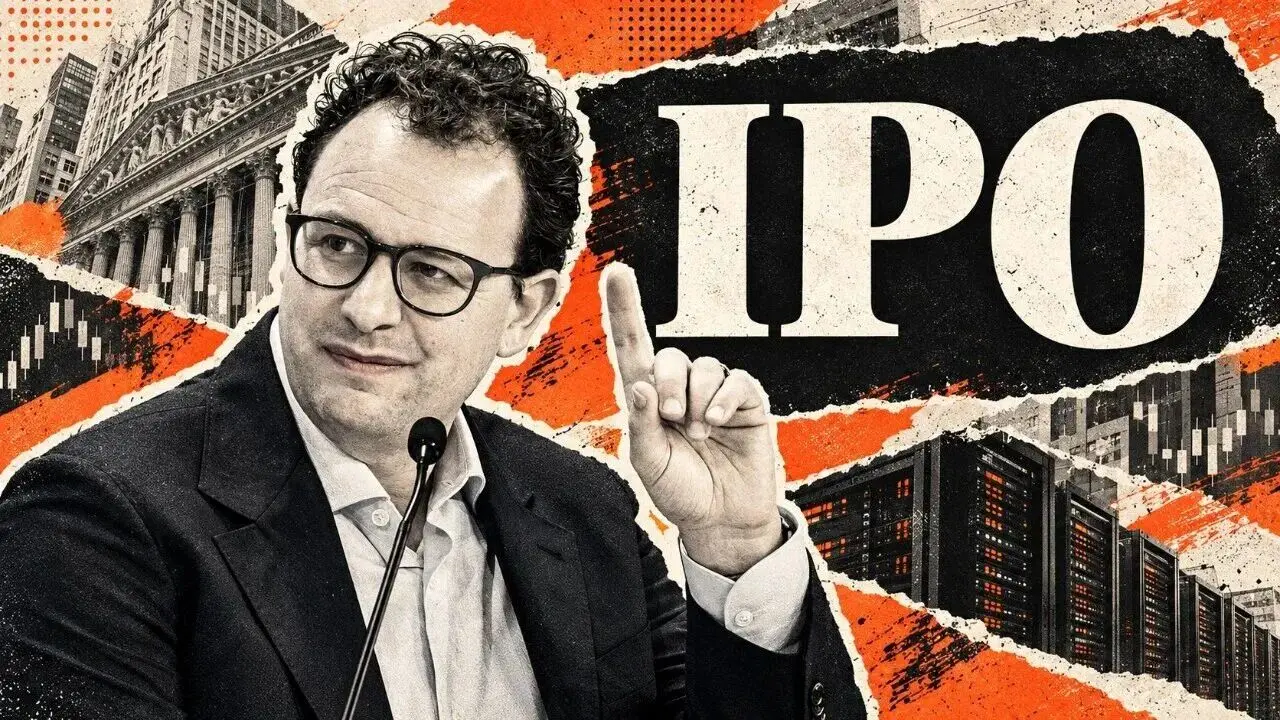
Kalshi's valuation surged to 40 billion USD: Sequoia continues to increase its investment, accelerating expansion towards the boundaries of traditional exchanges
 Core Viewpoint


 Kalshi has chosen a slow path that emphasizes heavy assets, strict compliance, and top-level capital operations: first solidifying licenses and institutional relationships, and then deepening the moat with a globally unified liquidity pool and derivative categories.
Author: Gu Yu, ChainCatcher
The capital narrative of prediction markets has been rewritten again today by Kalshi.
On October 29, the prediction market platform Kalshi announced the completion of a $1 billion Series G financing round, with a post-money valuation of $40 billion. This round was co-led by Sequoia Capital and Wellington Management, with participation from Baillie Gifford, Morgan Stanley Investment Management, Coatue Management, and Andreessen Horowitz. According to Reuters, Tiger Global and Dragoneer were also involved.
This is the second time Kalshi has raised $1 billion within five months. In May of this year, during its Series F round, its valuation was $22 billion; looking back a year earlier, during the Series D round in October 2025, this figure was $5 billion.
Eight times in a year, twenty times in fifteen months. On the same day, Predict.fun marked a fully diluted valuation of $1.64 billion for its token with a presale window of only two hours—less than one twenty-fourth of Kalshi's valuation.
1. Sequoia's Fourth Investment
For Sequoia Capital, this is not a new bet, but a follow-up investment.
In February 2021, Sequoia led a $30 million Series A investment in Kalshi, when its valuation was $145 million. Subsequently, it continued to invest in the Series C round in June 2025 ($2 billion), the Series D round in October 2025 ($5 billion, co-led with a16z), and the Series F round in May 2026 ($22 billion). This round marks its first appearance as a co-lead in Kalshi's late-stage rounds.
The speed of valuation increase is steeper than the pace of financing: $2 billion in June 2025, $11 billion in December, $22 billion in May 2026, and $40 billion in October. The secondary market is also pricing in early—according to Forge Global, Kalshi's Forge Price reached $970.53 on October 1, corresponding to a valuation of $36.4 billion, while a year ago this price was $44.96.
Supporting this valuation is actual revenue. The Information reported that World Cup trading has pushed Kalshi's annualized revenue to over $4 billion, double that of two months ago; research firm InGame estimates that as of October 6, 2026, it has collected approximately $2.04 billion in fees based on its publicly available fee formula, compared to about $263.5 million for the entire year of 2025. In terms of trading volume, it reached an annualized $178 billion in May, with the World Cup in July bringing in $27 billion in trading volume and 3 million new users.
Many views see this round as the last private placement before an IPO. CEO Tarek Mansour only acknowledged "discussions" without providing a timeline; he mentioned in June this year on CNBC that the IPO would not be earlier than 2027.
2. From Prediction Market to "Comprehensive Exchange"
However, more noteworthy than the amount is Kalshi's self-redefinition in the financing announcement.
"Prediction markets are just the starting point." Kalshi wrote in its blog, stating that its goal is to build a comprehensive financial exchange. This statement has already been reflected in its products: in 2026, after CFTC approval, it entered the perpetual contract market, first launching crypto perpetuals, then expanding to stock indices and metals, and subsequently launching its first non-prediction market products—gold and silver perpetual contracts, becoming the first exchange in the U.S. to launch such products. The new funds will be used for leveraged trading, individual stock perpetual futures, and contracts around AI computing power as a tradable commodity.
This is a direct path aimed at CME Group and Intercontinental Exchange (ICE, parent company of the New York Stock Exchange). A company that started with "who wins the Super Bowl" is applying to become what a futures exchange should look like. The supporting clearing layer is also being established: the proprietary clearinghouse Kalshi Klear has been approved, replacing the previous MIAXdx, supporting faster listings and settlements, and providing an annualized interest of 3.75% on positions.
The institutional side is also advancing. Kalshi disclosed in September that it has established partnerships with 500 institutional entities, with institutional trading volume accounting for 25% of total trading volume after excluding market makers. The shareholder list has also shifted from crypto VCs to Wellington Management, Morgan Stanley Investment Management, and Baillie Gifford—names that previously rarely appeared in the shareholder list of an "event contract" company. Globalization is also unfolding simultaneously: after the Series D round in October 2025, it opened to over 140 countries, reached data cooperation with CNN and CNBC, and publicly stated its intention to find "local Robinhoods" as partners in every major market.
Not all news on this path is positive. Two federal appellate courts have ruled that states have the right to regulate sports event contracts, while a third appellate court has made a contrary ruling; this week, the Utah Attorney General filed criminal charges against Kalshi and two executives, accusing them of illegally promoting online gambling, while New York State filed a lawsuit in August seeking $36 billion in damages and demanding the platform's shutdown.
A company valued at $40 billion still operates its core product in the jurisdictional gray area between various states and the federal government in the U.S.
3. Two Perspectives on Time in the Race
The duopoly pattern of Kalshi and Polymarket has already solidified. In the second quarter of 2026, the global nominal trading volume of prediction markets reached $111 billion, a year-on-year increase of 1764%, surpassing the total for 2024 and 2025 combined, with Kalshi accounting for about 63% and Polymarket about 28%, totaling over 90%; by August, Kalshi's global share rose to about 60%, while in 2025 this figure was 35%.
Polymarket is struggling on the other side. It is undergoing a financing round led by 1789 Capital, with a post-money valuation of $21 billion—more than double the $9 billion valuation when ICE invested in 2025, but only half of Kalshi's. After acquiring the CFTC-licensed exchange QCEX, its existing software could not handle the trading volume, and the U.S. platform almost needs to be rebuilt; the CFTC has initiated a new round of investigations, and the NFA has threatened to terminate its membership due to record-keeping issues. Management is also in turmoil: CEO Shayne Coplan has been reported to have used company funds to pay for private jets and apartment rentals, prompting investors to demand reforms and appoint a CFO, who was only hired in September this year.
Distributors are becoming competitors. Robinhood was once Kalshi's most important channel, routing over half of Kalshi's trading volume in the second quarter of 2025; however, in November, it formed a joint venture with Susquehanna, acquired MIAXdx, and renamed it Rothera, building its own CFTC-licensed exchange and clearinghouse, with prediction market customers exceeding 1 million and an annualized revenue of $415 million in the first quarter. During the World Cup, outcome and championship contracts have migrated to Rothera. Coinbase has provided contracts through its partnership with Kalshi, achieving over $100 million in annualized revenue within two months of launch; Gemini and Crypto.com have also entered the market by layering trading verticals. Hyperliquid launched an on-chain prediction market in May, but has only captured 0.3% of the trading volume—barriers to liquidity networks are higher in prediction markets than in DeFi.
Traditional gambling and tech giants are also entering the market. DraftKings and FanDuel each plan to invest $200 million to $300 million in building prediction market applications in 2026, while Meta has announced the development of an independent prediction market application codenamed Arena. According to industry statistics, the number of active prediction market platforms has exceeded 125, compared to just 15 in 2020.
And on the same day that Kalshi announced its financing, Predict.fun launched a Pre-TGE Prime Sale on Binance Wallet, with a window of only two hours from 08:00 to 10:00 UTC, and participation required Binance Alpha points. Its native token PREDICT has a fixed total supply of 1 billion, with 16% unlocked at TGE, pre-market pricing at $14.52, and a fully diluted valuation of approximately $1.64 billion. It was founded by dingaling, co-founder of PancakeSwap, based on the BNB Chain, focusing on "yield-generating prediction markets"—users trade YES/NO shares with USDT, while the underlying collateral simultaneously generates returns, having previously received investment from YZi Labs.
The token design itself is not rough: a five-year unlocking period, full lock for early supporters at TGE, and airdrop settings with lock-up options are all relatively restrained arrangements. The issue lies in the timing—on one side is a CFTC license earned over five years, a proprietary clearinghouse, 500 institutional clients, and a $40 billion valuation; on the other side is a platform whose product is not yet formed, handing pricing power to the market within a two-hour window.
Kalshi has chosen a slow path focused on heavy assets, compliance, and top-level capital operations: first solidifying its licenses and institutional relationships, then deepening its moat with a globally unified liquidity pool and derivatives categories. Predict.fun represents another light, fast, tokenized path—rapidly gathering community and liquidity through token economics and exchange listings, but at the cost of value support being highly dependent on secondary market expectations, and always operating outside the regulatory gray area.
It can be said that the two differ in scale and path, and issuing tokens is also a routine action in the crypto-native market. But routine does not equal reasonable. When the most valuable company in the race is transforming itself into an exchange using licenses, global marketing, and top-level capital operations, another group of players is still using token issuance to solve growth issues—this is not two parallel paths, but two different answers to "what to do first," and the market has already expressed its preference with a 24-fold valuation difference.
Conclusion
Today's simultaneous appearance is highly symbolic: on one side is a $40 billion valuation, four investments from Sequoia, and a licensed giant aiming at the traditional exchange landscape; on the other side is a company with a valuation not even reaching its fraction, yet on the same day pushing its token onto Binance Alpha and the decentralized newcomer MEXC.
The ultimate outcome of the market is likely not determined by "who issues the coin first," but rather by "who obtains legal status first and who establishes institutional-level liquidity first." Kalshi's $1 billion is not just a valuation, but a ticket to the mainstream financial system; while the token frenzy of Predict.fun and others ultimately has to answer the same question in the face of regulation and real trading volume—what your price really reflects, information or speculation?
 Risk warning Risk warning



Popular articles