Daily Observation of Cryptocurrency Policy: The UK's FCA Targets Decentralized Finance, Launches DeFi Regulatory Guidelines to Clarify Anti-Money Laundering and Smart Contract Red Lines

 Released on October 23, 2026. As decentralized exchanges (DEX) account for nearly one-fifth of the global spot trading volume, UK regulators have officially extended their compliance reach into the on-chain deep waters. The Financial Conduct Authority (FCA) of the UK recently released a significant "DeFi Regulatory Guidance Consultation Draft," which systematically clarifies the operational resilience and anti-money laundering obligations that regulated entities must fulfill when using DeFi facilities such as smart contracts, cross-chain bridges, and oracles. The FCA sternly warns that adopting code automation in DeFi protocols does not equate to an exemption from statutory regulatory licensing, and this guidance will delineate clear boundaries for the compliance of future UK Web3 financial services.
Market Expansion Forces Regulation: DEX Trading Volume Approaches 20%
The rapid development of DeFi has made it no longer a marginal testing ground for the traditional financial system.
The FCA disclosed a set of key data in this guidance document: from January to August 2026, the trading volume of decentralized exchanges (DEX) accounted for 14% to 19% of the total global trading volume of crypto assets. This massive flow of funds without intermediaries poses a severe challenge to the traditional anti-money laundering (AML) system and financial stability, prompting the FCA to clarify the compliance baseline when licensed institutions interact with DeFi protocols as soon as possible.
Clarifying Compliance Blind Spots: Code Automation is Not a Regulatory Safe Haven
In the early narrative of decentralized finance, some market participants mistakenly believed that as long as asset transfers were executed automatically by smart contracts, they could evade licensing requirements.
The FCA completely shattered this illusion in this consultation draft. The document clearly emphasizes that the use of DeFi protocols or smart contracts by regulated entities to provide financial services does not automatically exempt them from existing regulatory licensing requirements. This guidance is not intended to impose entirely new regulatory obligations but rather to horizontally translate existing financial rules, clearly explaining how current compliance regulations should accurately penetrate and apply to complex on-chain transaction networks.
Focusing on Four Core Risks: From Oracle Distortion to AML Vulnerabilities
To achieve penetrating regulation of the DeFi ecosystem, the FCA has identified the most vulnerable technical and compliance nodes in on-chain interactions as key review points:
Technology and Third-Party Dependence: Focused review of institutions' code audits, price manipulation defenses, and operational resilience when using smart contracts, cross-chain bridges, and Oracles;
Financial Crime Prevention and Control: Institutions are required to establish anti-money laundering mechanisms, customer due diligence (KYC), and real-time on-chain transaction monitoring systems suitable for decentralized environments to prevent the infiltration of mixers and malicious hacker funds.
Industry Impact: Seizing Global DeFi Rule-Making Dominance
In light of the regulatory trends in Europe and against the backdrop of the gradual implementation of the EU MiCA legislation, the UK FCA is now launching specialized guidance on DeFi, aiming to fill some legislative gaps left by MiCA in the decentralized field. The consultation window for this draft will close on November 18, and the final formal regulatory guidance is planned to be issued in the first quarter of 2027. As the rules settle, the UK will not only clear compliance obstacles for traditional financial institutions to safely embrace DeFi but is also expected to seize key definitional power in the global Web3 regulatory landscape.
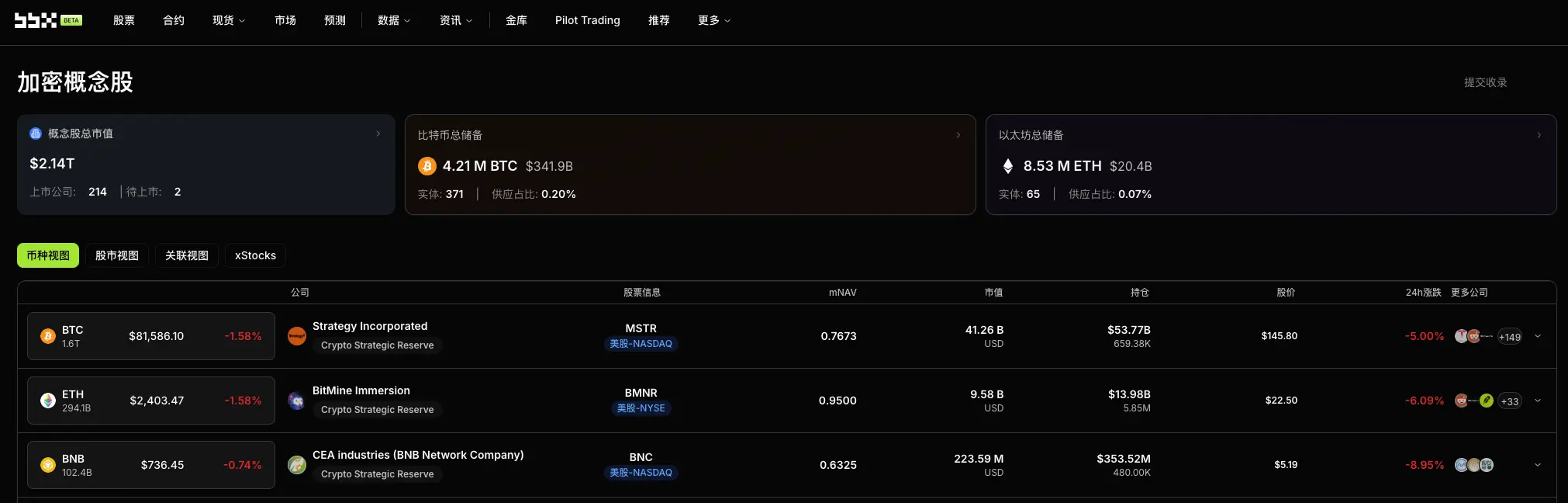
Source: https://bbx.com/ Crypto Concept Stock Information Database, compiled based on yesterday's announcements from global listed companies and SEC/TSE disclosure documents.
 Risk warning